ThePricer Media
  • Latest: The Cost to Cool an AI Data Center
  • Cost Guides
  • News & Investigations
  • Daily Price Puzzle (60s)
  • Methodology
  • Press & Mentions
  • Contact
  • Click to open the search input field Click to open the search input field Search
  • Menu Menu
Beauty Products & Treatments, Family & Lifestyle, Fashion, Health & Beauty

How Much Does an Armband Tattoo Cost?

Updated on August 4, 2026 | Written by Alec Pow
This article was researched using 9 sources. See our methodology and corrections policy.

An armband tattoo generally costs $150 to $600 in 2026. A narrow solid-black band may cost $100 to $300, while a custom geometric, ornamental, floral, Celtic-inspired, or shaded design commonly costs $300 to $800. Wide bands, dense blackwork, multiple colors, cover-ups, and work by highly sought-after specialists can cost $800 to $1,500+.

The complete personal budget can be higher than the artist’s quote. A deposit, discretionary tip, aftercare supplies, travel, parking, and a later touch-up can add another $50 to $400+. A large wraparound design may also require two sessions rather than one.

An armband is not the same as a half sleeve or full sleeve. It covers a limited section of the upper arm or forearm and wraps around its circumference. A full sleeve covers most or all of the arm and commonly costs $2,500 to $8,000+.

Article Highlights

Jump to sections
  • Armband Tattoo Prices by Design
  • A Wraparound Tattoo Costs More
  • Artist Rates and Studio Minimums
  • How Style Changes the Price
  • Cultural and Traditional Armband Designs
  • Deposits, Design Work, and Rescheduling
  • Three Realistic Armband Budgets
  • A thin solid-black band generally costs $100 to $300 (at $30 per hour, earning that amount would take about 0.4 to 1.3 full-time workdays, before taxes).
  • A custom decorative armband commonly costs $300 to $800.
  • Wide, colorful, detailed, or cover-up bands can reach $800 to $1,500+.
  • Established artists commonly charge approximately $150 to $300 per hour.
  • Deposits generally range from $50 to $300+ and may apply to the final price.
  • Basic aftercare supplies usually cost $10 to $40.
  • The skin surface may settle within two to four weeks, while deeper healing takes longer.
Armband Tattoo Design Cost

Armband Tattoo Prices by Design

Armband tattoo style Typical 2026 price Likely session time
Thin solid-black band $100 to $250 (about 0.4 to 1 full-time workdays at $30 per hour) About 1 to 2 hours
Two or three simple black bands $175 to $400 About 1.5 to 3 hours
Simple decorative or floral band $200 to $500 About 2 to 4 hours
Custom geometric or ornamental band $350 to $800 About 3 to 6 hours
Wide shaded or colored armband $500 to $1,200+ About 4 to 8 hours
Cover-up armband $600 to $1,500+ Often multiple sessions
Half sleeve $1,200 to $3,500+ Multiple sessions
Full sleeve $2,500 to $8,000+ Several long sessions

These are planning ranges rather than fixed national prices. Tattoo artists may charge hourly, quote a flat amount for the complete piece, or use half-day and full-day rates for longer work.

One established California studio, Six Feet Under Tattoo Parlor, reports artist rates from $160 to $300 per hour. A broader 2026 industry pricing guide from Art Collector Tattoo places experienced artists around $150 to $300 per hour, with lower and higher amounts depending on experience, demand, location, and style.

Related guides

  • How Much Does an Eyebrow Tattoo Cost?
  • How Much Does it Cost to Dry Clean a Leather Jacket?
  • How Much Does a Koi Fish Tattoo Cost?

A Wraparound Tattoo Costs More

An armband may cover less skin than a large forearm illustration, but wrapping a design cleanly around a cylindrical, tapering arm creates its own technical difficulty.

The artist must position the stencil so the design appears level when viewed from the front, side, and back. The beginning and end of the pattern must meet naturally, parallel borders must remain visually even, and the artwork has to accommodate the way the arm narrows toward the elbow or wrist.

The inner arm can distort more easily than the outer surface. Skin movement, muscle shape, and the natural resting position of the arm can also make a perfectly straight stencil look uneven from some angles. A skilled artist adjusts for those visual effects rather than simply wrapping a rectangular image around the limb.

Solid black bands also require more work than their simple appearance suggests. The ink must be packed evenly across the entire circumference. Patchy saturation, visible streaks, wobbly borders, or inconsistent width become obvious once the tattoo heals.

A narrow band may be completed in one to two hours, while a wide geometric or ornamental design can require four to eight hours. Some artists divide the work into two sessions to preserve precision and reduce swelling.

Artist Rates and Studio Minimums

Most professional studios have a minimum charge covering setup, sterile supplies, equipment preparation, cleaning, paperwork, and the artist’s time. A common shop minimum is approximately $100 to $200 (about 3.3 to 6.7 hours of work at $30 per hour), even when the actual tattoo takes less than one hour.

Junior artists may charge approximately $75 to $150 per hour. Established artists commonly charge $150 to $300, while specialists with strong demand may charge $250 to $400+ per hour or quote day rates exceeding $1,000.

A current tattoo-business guide from Tattooing 101 places professional rates broadly between $50 and $300 per hour, depending on experience and market. The lower end should not automatically be treated as a bargain. A faster, more experienced artist can sometimes complete better work for a lower total than a cheaper artist who needs twice as long.

Many armband specialists quote by the finished piece. Flat pricing gives the customer a clearer ceiling and prevents normal breaks or stencil adjustments from increasing the charge unexpectedly. Ask whether the quote covers the full design, stencil revisions, second session, and one early touch-up.

How Style Changes the Price

A simple solid band occupies the lower end of the range, but widening it or adding several parallel bands increases both stencil time and the amount of black pigment that must be packed consistently.

Geometric and ornamental designs cost more because small alignment errors become visible where the pattern meets around the arm. Dotwork can also take many hours even though it uses only black ink.

Blackwork is a broad category rather than a single-needle technique. It may include bold solid areas, negative space, fine lines, geometry, ornamental elements, or dot shading. Dense blackwork often requires a second pass after healing to correct light areas.

Color can increase the total when the design uses several pigments, gradients, or repeated color changes. The artist must clean the needle grouping and skin carefully between colors, and heavily saturated designs may be split across more than one session.

Script can be affordable when it consists of a short name or date, but wrapping a long phrase around an arm creates readability problems. Text must remain large enough to age well, and the curve of the arm can distort letters. An experienced artist may recommend a partial wrap rather than forcing a sentence into a complete circle.

Cultural and Traditional Armband Designs

Armbands inspired by Polynesian, Māori, Samoan, Filipino, Indigenous, Celtic, or other traditional art can carry meanings that go far beyond decoration. Specific forms may represent lineage, status, community, spiritual commitments, protection, or significant life events.

The word “tribal” is too broad to describe these traditions accurately. A pattern copied from an image search may combine unrelated symbols or reproduce a design intended for a specific person, family, or role.

Someone seeking a culturally specific armband should work with an artist who understands that tradition, can explain the composition, and knows which motifs are appropriate to use. Research and consultation may increase the price, but they also reduce the risk of receiving meaningless, incorrectly combined, or disrespectful artwork.

A culturally knowledgeable artist may develop the band around the wearer’s story, body shape, and intended symbolism rather than copying a generic flash design. That custom process commonly places the tattoo toward the upper end of the price range.

Deposits, Design Work, and Rescheduling

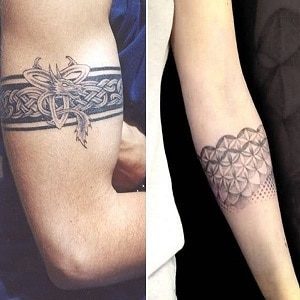
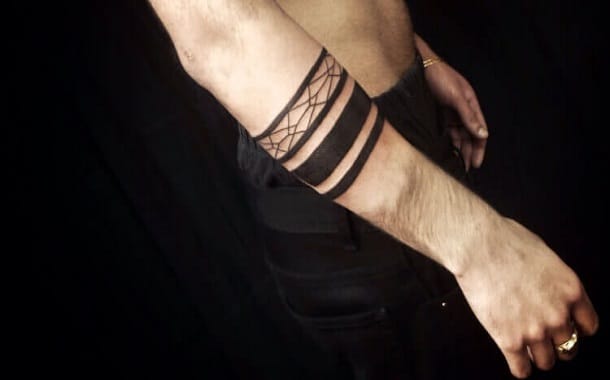
Black decorative armband tattoo wrapping around the upper arm

A deposit of approximately $50 to $300+ is common when booking an armband tattoo. It reserves the artist’s time and may compensate for drawing and preparation if the client cancels.

The deposit is often applied to the final tattoo price, but policies differ. Before paying, confirm whether it is refundable, transferable, or forfeited when the client reschedules late, arrives too late to complete the appointment, changes the concept substantially, or switches artists.

Custom drawing is not always a separate fee. Many artists include design time in the quoted price or deposit. Others charge for extensive redrawing, several concept changes, or artwork prepared before the appointment.

A useful written quote should identify the estimated total, hourly or flat pricing, expected session length, deposit treatment, balance due date, revision limits, and touch-up policy. It should also explain whether tax or payment-processing charges apply.

Three Realistic Armband Budgets

Thin black band. A studio has a $150 minimum, and the band requires one additional hour at $175. The tattoo itself costs $325. A discretionary 20% tip adds $65, while fragrance-free cleanser and moisturizer cost $20. The complete personal budget is approximately $410.

Custom geometric band. The artist expects four hours at $200 per hour, producing an $800 tattoo quote. The $150 deposit is credited toward that amount rather than added to it. A 20% tip adds $160, and aftercare supplies cost $25. The total budget reaches approximately $985.

Wide color armband. The tattoo requires two appointments. The first lasts four hours and costs $900. The second lasts three hours and costs $675. A 20% tip across both sessions adds $315, aftercare costs $30, and travel and parking add $80. The complete outlay is approximately $2,000.

These are ThePricer calculations rather than invoices from named clients. Actual tipping practices, hourly rates, session lengths, and aftercare costs vary.

Tipping and Other Hidden Costs

Tipping is customary at many U.S. studios but is discretionary rather than a legally required fee. Some clients tip approximately 15% to 25%, while others give a fixed amount, bring a gift, or return for future work. For a $600 tattoo, a 20% tip adds $120.

Travel can become significant when the chosen specialist works in another city. Fuel, flights, hotels, rideshare fares, parking, and meals may add hundreds of dollars to a tattoo that already carries a premium rate.

Clients may also lose wages or use vacation time for a long appointment. A seven-hour session can occupy an entire working day once travel, setup, breaks, and checkout are included.

Aftercare usually costs only $10 to $40. Most clients need a mild fragrance-free cleanser and plain fragrance-free moisturizer. A studio may include the initial protective film or charge separately for additional bandages.

Choosing a Safe and Skilled Artist

Price should not outweigh sanitation and relevant experience. A technically weak armband is difficult to hide because uneven borders and a mismatched seam remain visible from several angles.

Review photographs of healed armband tattoos rather than judging only fresh work. Fresh tattoos are swollen, glossy, and strongly saturated, which can temporarily hide patchiness and line inconsistencies.

Ask the artist to show complete wraparound views, including the inner arm and the point where the design joins. A portfolio full of front-facing photographs may not reveal whether bands meet cleanly at the back.

Safety requirements vary by state and locality, but the studio should use sterile single-use needles, fresh ink caps, new gloves, appropriate surface barriers, and proper sharps disposal. The artist should open sterile items in front of the client and provide written aftercare guidance.

The U.S. Food and Drug Administration warns that tattooing can cause infections and allergic reactions. The agency has also found microorganisms in some sealed tattoo inks, meaning good studio technique cannot eliminate every ink-related risk.

Healing and Aftercare

The surface of an armband tattoo commonly improves substantially within two to four weeks, although deeper skin recovery can continue longer. Heavy black saturation, broad color, friction from clothing, health conditions, and the tattoo’s location can alter the timeline.

Follow the artist’s written instructions because the recommended bandage duration depends on the product used. A traditional dressing may be removed within hours, while adhesive protective film may remain longer when applied correctly.

Wash the tattoo gently with clean hands and a mild fragrance-free cleanser. Pat it dry rather than rubbing it. Apply only a thin layer of the recommended fragrance-free moisturizer, since excessive ointment can trap moisture and irritate the area.

Avoid swimming pools, lakes, oceans, hot tubs, and prolonged soaking until the surface has healed. Do not pick flakes or scabs, and avoid tight sleeves that repeatedly rub the band.

The Cleveland Clinic’s current tattoo-aftercare guidance cautions against applying heavy petroleum jelly, which can block pores and contribute to inflammation. It also explains that deeper skin layers can continue healing after the surface appears normal.

Keep a new tattoo out of direct sunlight. Once the skin has healed, regular broad-spectrum sunscreen can help slow fading and preserve contrast.

Warning Signs After Tattooing

Some redness, tenderness, warmth, and clear fluid can occur early in healing. Symptoms should generally improve rather than intensify.

Seek medical care when redness spreads, pain becomes worse, swelling increases substantially, or the tattoo produces pus, foul-smelling drainage, red streaks, fever, or chills. A worsening rash, widespread hives, severe blistering, or breathing difficulty may indicate an allergic reaction requiring prompt attention.

The Mayo Clinic identifies infection, allergic reactions, granulomas, and keloids among tattooing risks. The American Academy of Dermatology also provides examples of tattoo-related skin reactions and advises medical evaluation when concerning symptoms appear.

Do not rely on the tattoo artist to diagnose an infection or allergic reaction. Artists can explain normal healing from their experience, but medical complications require a qualified healthcare professional.

Touch-Up Costs

A minor early touch-up may cost $0 to $200+. Some artists include one appointment after the tattoo has healed, provided the client schedules it within a defined period and followed the aftercare instructions.

A free touch-up commonly covers small areas where ink healed lighter than expected. It may not cover changes to the original design, normal aging, sun damage, client-caused injury, work performed years later, or corrections by another artist.

A solid black band may need a second pass if swelling or healing leaves small areas less saturated. Ask about this before booking, because an included touch-up can materially improve the value of the original quote.

Our separate guide explains the broader cost of tattoo touch-ups for new and older designs.

How Much Would Removal Cost?

Laser removal is much more expensive than the original tattoo in many cases. An armband covers the full circumference of the limb and may contain dense black ink, making the treatment area larger than it appears in a front-facing photograph.

Current guidance from Removery places individual laser sessions broadly between $150 and $500, depending on tattoo size and other factors. Multiple sessions are normally required, and complete removal is not guaranteed.

A narrow black band may cost approximately $1,000 to $3,000+ to remove over several appointments. A wider or more saturated band may cost $2,000 to $6,000+, while dense color or cover-up work can exceed $8,000.

Ink color, density, tattoo age, skin characteristics, scarring, immune response, and treatment technology all influence how many appointments are needed. The Mayo Clinic’s tattoo-removal overview notes that removal can involve laser treatment, surgery, or dermabrasion, each with limitations and risks.

When an Armband Tattoo Is Worth the Cost

An armband may be a good choice when the client likes how the design looks from every angle, understands its cultural context, and is willing to pay for an artist with strong wraparound work.

A cheaper artist is not a saving when the band heals unevenly or fails to join correctly. Correcting a crooked band may require expanding the design, adding more black, creating a cover-up, or beginning laser treatment.

Take time to review the stencil in a mirror from the front, sides, and back before tattooing begins. Move and relax the arm, since muscle tension can change how the band appears. Do not approve the placement until the width and alignment look intentional from all directions.

Anyone uncertain about a solid permanent band can first test the appearance with a temporary design or body-safe marker. This will not reproduce the final precision or darkness, but it can reveal whether the placement feels too high, low, wide, or visually restrictive.

What We Verified

We checked current professional tattoo rates, studio minimums, aftercare guidance, FDA ink-safety information, medical risks, and laser-removal pricing. These sources support a main armband price of $150 to $600, with complex work reaching $800 to $1,500+.

The previous removal-company citation was removed from the tattoo-pricing evidence. Full sleeves were also separated from armband costs, and the incorrect claim that blackwork is inherently a single-needle style was replaced.

The aftercare section now distinguishes visible surface recovery from deeper healing and recommends medical attention for spreading redness, worsening pain, drainage, fever, or serious allergic symptoms.

Related Tattoo Costs

For a broader comparison of size, placement, and artist rates, read our guide to the average cost of a tattoo.

Small placements can still carry studio minimums and technical challenges. Our separate article covers the cost of a knuckle tattoo.

Answers to Common Questions

How much does a simple black armband tattoo cost?

A narrow solid black band generally costs $100 to $300. Several bands or a wider saturated design can cost more.

How much does a custom armband tattoo cost?

Custom geometric, floral, ornamental, or shaded bands commonly cost $300 to $800. Highly detailed or specialist work can reach $1,500+.

How long does an armband tattoo take?

A simple band may take one to two hours. Detailed wraparound work commonly takes three to eight hours and may be divided into multiple sessions.

Why are armband tattoos difficult?

The artist must align the design around a curved, tapering arm and make the ends meet cleanly while maintaining consistent borders and spacing.

Does the tattoo deposit cost extra?

It usually applies to the final tattoo price, but studio policies differ. Confirm the terms before paying.

Should I tip my tattoo artist?

Tipping is discretionary. Many U.S. clients tip approximately 15% to 25%, but it is not a required part of the quoted price.

How long does an armband tattoo take to heal?

The surface commonly settles within two to four weeks. Deeper recovery may continue beyond that, particularly with wide or heavily saturated designs.

Are touch-ups free?

Some artists include one minor early touch-up, while others charge their shop minimum or hourly rate. Ask about the policy before booking.

How painful is an armband tattoo?

The outer upper arm and forearm are often moderately uncomfortable, while the inner arm and areas near the elbow can be more sensitive. A complete band passes through several different pain zones.

How much does armband tattoo removal cost?

Complete laser removal may cost approximately $1,000 to $6,000+, with dense, wide, or multicolored bands potentially costing more.

Disclosure: Educational content, not medical advice. Pricing varies by provider, location, and insurance. Confirm eligibility, coverage, and out-of-pocket costs with a licensed clinician and your insurer. See our methodology and corrections policy.

by Alec Pow
ThePricer cost research Independent price research used by media, universities and public institutions.

We research provider pricing, market examples, buyer reports, hidden fees and public records.

Methodology · Citations · Newsroom
© 2014 - 2026 - ThePricer Media, LLC, 4 Grove Street, New York, NY, 10014, Phone: (212) 431-2441
We don’t use affiliate links or paid placements. All sources are cited only for verification.
  • Link to X
  • Link to LinkedIn
  • Link to Facebook
  • Link to Instagram
  • Link to Pinterest
  • Link to Youtube
  • Contact Us
  • About Us
  • Press & Mentions
  • Careers
  • Meet the Founder
  • Privacy Policy
  • Editorial Ethics
  • Methodology
  • Corrections
  • Disclosure
  • Terms and Conditions
Scroll to top Scroll to top Scroll to top