ThePricer Media
  • Latest: The Cost to Cool an AI Data Center
    • New: How Much Will Gas Prices Rise After the Iran Strikes?
  • Daily Price Puzzle (60s)
  • Talk to Alec
  • Blog
  • Podcast
  • eBook
  • Click to open the search input field Click to open the search input field Search
  • Menu Menu
Cooking & Eating, Family & Lifestyle, Fancy

How Much Does a Bottle of Cristal Champagne Cost?

Updated on July 13, 2026 | Written by Alec Pow
This article was researched using 11 sources. See our methodology and corrections policy.

A standard 750 mL bottle of Louis Roederer Cristal 2016 commonly costs $320 to $400 at U.S. retail. Cristal Rosé is much more expensive at about $700 to $850 per bottle, while restaurant prices, older vintages, Vinothèque releases, and large formats can range from $550 to more than $10,000.

The price depends on more than the Cristal name. Check the vintage, bottle size, Brut versus Rosé, gift-box packaging, storage history, seller, and whether the amount is a retail price, restaurant wine-list price, auction estimate, or completed auction total.

Cristal is Louis Roederer’s prestige vintage Champagne. The current widely available release is Cristal 2016, made from 58% Pinot Noir and 42% Chardonnay. It should not be confused with the less expensive Louis Roederer Collection, Vintage, Rosé Vintage, or Brut Nature wines.

Article Highlights

Jump to sections
  • Does a Bottle of Cristal Champagne Cost?
  • What you are buying
  • Brut versus Cristal Rosé
  • Restaurant price versus retail
  • Large bottle sizes
  • The $25,000 Cristal bottle
  • Older vintages and auctions
  • Cristal 2016 commonly costs $320 to $400 (at $30 per hour, earning that amount would take about 1.3 to 1.7 full-time workdays, before taxes) for a 750 mL bottle at U.S. retail.
  • A restaurant may charge $550 to $1,000+ for a standard bottle.
  • Cristal Rosé 2014 currently sells near $740 at one U.S. specialty retailer.
  • A 1.5 L Cristal Magnum can cost around $700 to $1,500+.
  • A 6 L Methuselah was listed at $11,699.99, but rarity and vintage drive large-format prices.
  • Auction buyers must add premiums, taxes, shipping, and storage charges to the winning bid.
  • The famous five-figure 2002 Jeroboam was a limited gold-covered edition, not an ordinary 3 L bottle.
Cristal Champagne Cost

How Much Does a Bottle of Cristal Champagne Cost?

Cristal product Current planning price What changes the amount
Cristal 2016, 750 mL $320 to $400 (about 1.3 to 1.7 full-time workdays at $30 per hour) Retailer, state, gift box, tax, and availability
Cristal at a restaurant $550 to $1,000+ Venue, vintage, location, and wine-list markup
Cristal Rosé, 750 mL $700 to $850+ Vintage, limited supply, and retailer
Older Cristal vintage, 750 mL $400 to $1,500+ Vintage reputation, condition, provenance, and seller
Magnum, 1.5 L $700 to $1,500+ Vintage and whether sold at retail, restaurant, or auction
Jeroboam, 3 L $2,500 to $6,000+ Vintage, packaging, scarcity, and provenance
Methuselah, 6 L $8,000 to $12,000+ Extremely limited availability and handling requirements
Decorated limited editions $10,000 to $25,000+ Special packaging, edition size, auction demand, and condition

Total Wine listed a 750 mL bottle of Cristal 2016 at $339.99, with a discounted multi-bottle price of $305.99 at the time checked. The retailer warns that price and availability vary by store on its current Roederer listings.

Wine.com listed the gift-boxed Cristal 2016 at about $379.97 after a promotional discount from $400. That gift-box listing shows why two stores can differ by $40 or more for the same vintage.

Related guides

  • How Much Does Bluefin Tuna Cost?
  • How Much Does a Butler Cost?
  • How Much Does the AP x Swatch “Royal Pop” Collab Cost?

What you are buying

Cristal is a vintage Champagne, meaning the grapes come from one declared harvest year rather than a blend of several years. Louis Roederer created the cuvée in 1876 for Tsar Alexander II of Russia. Its clear, flat-bottomed bottle became part of the product’s identity.

The current Cristal 2016 comes from 32 vineyard plots in seven named crus. Louis Roederer’s 2016 technical sheet lists a blend of 58% Pinot Noir and 42% Chardonnay, with 31% of the wine vinified in oak and a dosage of 7 grams per liter.

The price also covers the prestige-cuvée position within the Roederer range, long cellar aging before release, estate-grown fruit, the distinctive bottle, packaging, distribution, and retailer margin. It does not mean every Cristal vintage has the same market value or tasting profile.

Louis Roederer says Cristal can keep for more than 20 years under suitable storage conditions. Its official Cristal archive currently lists releases from 2000 through 2016.

Brut versus Cristal Rosé

The standard gold-wrapped bottle is Cristal Brut. Cristal Rosé is a separate and more limited wine, not a pink version sold at a small color premium.

A U.S. specialty retailer listed Cristal 2016 at $339.99 (about 1.4 full-time workdays at $30 per hour) and Cristal Rosé 2014 at $739.99. On the same Louis Roederer price page, the Rosé costs about $400 more, or 118% above the current Brut listing.

Louis Roederer states that Cristal Rosé is produced from Pinot Noir and Chardonnay using a cold-maceration and saignée method. The current Cristal Rosé description lists a blend of 55% Pinot Noir and 45% Chardonnay.

A seller advertising “Cristal” without naming Brut or Rosé has not provided enough information for a price comparison. The vintage and bottle volume should also appear in writing.

Restaurant price versus retail

A restaurant bottle costs more because the price includes storage, glassware, service, inventory risk, rent, licensing, and the restaurant’s wine margin. The markup is not a rare-wine auction premium. It is part of the dining bill.

A published restaurant wine list priced Cristal Brut 2015 at $550 per standard bottle and $1,500 per Magnum. Cristal Rosé was listed at $1,250. Those figures appear in the restaurant’s priced wine collection menu.

Using the current $339.99 retail example, a $550 restaurant bottle carries a markup of about $210, or 62%. A venue charging $900 is asking about 2.65 times the retail price.

The full dinner cost may also include sales tax, a service charge, and a tip. A $900 bottle with 9% tax and a 20% tip calculated on the pretax amount reaches approximately $1,161 before food.

Large bottle sizes

Large Champagne bottles are often named incorrectly in product descriptions. For Champagne, a Magnum holds 1.5 L, a Jeroboam holds 3 L, a Rehoboam holds 4.5 L, and a Methuselah holds 6 L.

The official Champagne bottle-size list confirms those capacities. A 3 L bottle is not a Methuselah, and a 4.5 L bottle is not a Jeroboam.

A standard 750 mL bottle provides about five restaurant-size 5-ounce pours or six smaller Champagne servings. A Magnum holds two standard bottles. A Jeroboam holds four, and a Methuselah holds eight.

Large formats do not always cost the standard-bottle price multiplied by volume. The bottle itself is harder to produce, pack, ship, store, and serve. Large-format Cristal is also released in much smaller quantities.

One retailer listed Cristal 2012 at $699.99 for a 1.5 L Magnum and $11,699.99 for a 6 L Methuselah. Eight 750 mL bottles at the retailer’s current $339.99 Brut price would total about $2,720. The Methuselah listing was more than four times that volume-equivalent amount.

The $25,000 Cristal bottle

The five-figure Cristal frequently mentioned online was not an ordinary large bottle. It was a special 3 L Jeroboam of Cristal 2002 covered in a handmade lattice finished with 24-karat gold.

The edition was limited to 400 bottles. Each bottle used seven meters of gold-plated brass ribbon and required work from master craftspeople. Louis Roederer’s 2002 Jeroboam page identifies it as a special limited edition.

Historical reports placed the release price near $25,000. That figure should not be used as the normal value of a Cristal Jeroboam. The buyer was paying for the wine, rare vintage, oversized bottle, designer casing, limited production, and presentation piece.

An ordinary 3 L Cristal bottle can still cost several thousand dollars, but the gold-covered edition belongs in a separate category.

Older vintages and auctions

An older year is not automatically more valuable. Price depends on the vintage, critic demand, bottle condition, storage, fill level, label, capsule, original box, seller reputation, and documented ownership history.

A bottle stored upright in a hot room for 20 years may be worth less than a younger bottle kept in temperature-controlled storage. A low auction estimate can also become a much higher invoice after bidding and fees.

Sotheby’s currently adds a 24% buyer’s premium to Global Wines and Spirits hammer prices, plus a 1% overhead premium. Its June 2026 fee schedule says taxes may also apply.

A Cristal lot won at a $1,000 hammer price would therefore reach $1,250 after the 24% and 1% premiums, before sales tax, shipping, insurance, or storage. A winning bid is not the buyer’s final cost.

People comparing Cristal with homemade or unregulated liquor should not use the price of moonshine as a quality or value benchmark. Cristal’s price is tied to a protected Champagne origin, vintage production, brand position, and regulated distribution.

How to check an old bottle

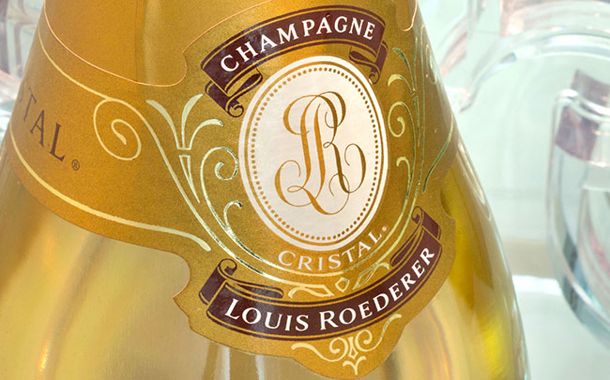
Louis Roederer Cristal Champagne bottle with gold wrapping

An expensive old bottle needs more scrutiny than a current release from a national retailer. Ask for clear photographs of the front label, back label, bottle number, fill level, capsule, base, original packaging, and storage conditions.

Louis Roederer provides an official bottle identification tool that uses the number printed on the rear label. That can help identify the wine, but it does not replace proof of storage or ownership.

A marketplace listing should state whether the bottle has been professionally stored, purchased on release, moved between climates, or consigned from a documented cellar. Missing provenance matters more as the price rises.

Shipping is another risk. Alcohol-delivery laws vary by state, and temperature exposure can damage Champagne. Ask who bears the loss if the bottle leaks, freezes, overheats, or arrives with a damaged label.

Three buying scenarios

Current retail bottle: A buyer pays $339.99 for Cristal 2016 and 8% sales tax. The checkout total is about $367.19. Shipping or an adult-signature charge can raise it further.

Restaurant celebration: A restaurant lists Cristal at $550. With 9% tax and a 20% tip on the bottle price, the wine portion of the bill reaches about $709.50. Food is separate.

Auctioned older vintage: A bottle wins at $800. Sotheby’s current 25% combined wine-and-spirits premiums add $200, bringing the subtotal to $1,000. Tax, shipping, and insurance can move the delivered total above $1,100.

A wedding or large celebration may need several bottles rather than one oversized format. Compare the bottle budget with the wider cost of a winery wedding, including service, corkage, glassware, and venue alcohol rules.

Why Cristal costs more

The current vintage is sourced from selected estate vineyard plots and released only in years Louis Roederer chooses to declare. The wine spends years in production and cellar aging before reaching stores.

Supply is limited compared with non-vintage Champagne, while international recognition supports demand. Retailers also pay for importation, distribution, insurance, storage, and the cost of carrying a bottle that may sit in inventory.

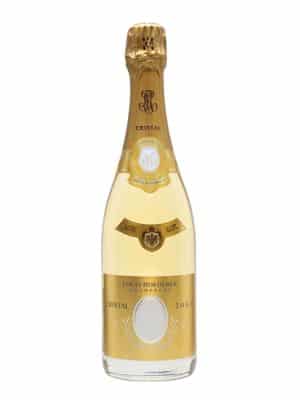
Packaging adds little compared with the wine and brand value, but the clear bottle requires protection from light. The gold wrapping is functional as well as recognizable.

The premium is not based on production cost alone. Cristal is a prestige product, so collectors, restaurants, gifts, and status-driven demand affect the market price.

When the premium makes sense

May make sense if:

  • You want a specific prestige Champagne for a milestone or gift.
  • The current vintage, storage history, and seller are documented.
  • You value the Champagne itself rather than only the gold packaging.
  • The restaurant markup is acceptable for the setting and service.
  • You can store an unopened bottle in stable, cool, dark conditions.

May not make sense if:

  • You are buying solely because an old vintage is assumed to appreciate.
  • The seller cannot document provenance or provide the bottle number.
  • The price comparison mixes Brut, Rosé, Magnum, and standard bottles.
  • The restaurant charge leaves little budget for the rest of the event.
  • A less expensive Champagne would meet the same serving need.

Cristal is sometimes paired with premium French food, but the cost of escargot is small beside the Champagne bill. A restaurant may charge more for one Cristal bottle than for an entire multi-course dinner for two.

What to check before buying

  • Checked whether the listing is for Cristal Brut, Cristal Rosé, or another Louis Roederer wine.
  • Confirmed the vintage, bottle size, gift box, and stated storage history.
  • Cross-referenced the seller’s price with current U.S. retail listings.
  • Verified that a 3 L bottle is a Jeroboam and a 6 L bottle is a Methuselah.
  • Checked auction premiums, taxes, insurance, and delivery before bidding.
  • Confirmed the rear-label number through Louis Roederer’s identification tool when buying an older bottle.

Answers to Common Questions

How much is a normal bottle of Cristal?
A current 750 mL bottle of Cristal 2016 commonly costs $320 to $400 at U.S. retail.

Why is Cristal Rosé more expensive?
Cristal Rosé is produced in smaller quantities and uses a separate production method and blend. Current U.S. listings are around $740, more than twice the price of Cristal Brut 2016.

How much does Cristal cost at a restaurant?
A standard bottle may cost $550 to $1,000+. Tax, service charges, and tips can push the amount much higher.

How many glasses are in one Cristal bottle?
A 750 mL bottle provides about five 5-ounce pours or six smaller Champagne servings.

Is an old bottle of Cristal a good investment?
Not automatically. Resale value depends on vintage, provenance, storage, condition, fees, and buyer demand. A bottle bought at retail may sell for less after auction commissions and shipping costs.

Disclosure: Educational content, not financial advice. Prices reflect public information as of the dates cited and can change. Confirm current rates, fees, taxes, and terms with official sources before purchasing. See our methodology and corrections policy.

by Alec Pow
ThePricer cost research Independent price research used by media, universities and public institutions.

We research provider pricing, market examples, buyer reports, hidden fees and public records.

Methodology · Citations · Newsroom
© 2014 - 2026 - ThePricer Media, LLC, 4 Grove Street, New York, NY, 10014, Phone: (212) 431-2441
We don’t use affiliate links or paid placements. All sources are cited only for verification.
  • Link to X
  • Link to LinkedIn
  • Link to Facebook
  • Link to Instagram
  • Link to Pinterest
  • Link to Youtube
  • Contact Us
  • About Us
  • Press & Mentions
  • Careers
  • Meet the Founder
  • Privacy Policy
  • Editorial Ethics
  • Methodology
  • Corrections
  • Disclosure
  • Terms and Conditions
Scroll to top Scroll to top Scroll to top