ThePricer Media
  • Latest: The Cost to Cool an AI Data Center
    • New: How Much Will Gas Prices Rise After the Iran Strikes?
  • Daily Price Puzzle (60s)
  • Talk to Alec
  • Blog
  • Podcast
  • eBook
  • Click to open the search input field Click to open the search input field Search
  • Menu Menu
Building and Construction, Business, Home and Garden

How Much Does Class 5 Gravel Cost?

Updated on July 14, 2026 | Written by Alec Pow
This article was researched using 9 sources. See our methodology and corrections policy.

Class 5 gravel costs about $20 to $45 per ton when picked up or roughly $35 to $65 per cubic yard at Minnesota and Upper Midwest landscape suppliers. A residential truckload delivered to the property often totals $350 to $800, while spreading, grading, excavation, and compaction can raise a driveway project to $1,000 to $5,000 or more.

The gravel itself may be the smallest part of the invoice. Delivery distance, truck capacity, minimum-load charges, loose-to-compacted volume, site access, geotextile fabric, excavation, and machine work determine the real total.

Class 5 is a dense-graded aggregate base used mainly in Minnesota and nearby markets. It contains larger aggregate, smaller particles, and fines that lock together when compacted. It is not the same as clean drainage stone.

Article Highlights

Jump to sections
  • Does Class 5 Gravel Cost?
  • What Class 5 Means in Minnesota
  • Ton Prices Versus Yard Prices
  • Area One Yard Covers
  • The Compaction Quantity
  • Delivery Changes the Real Price
  • A Driveway Cost Example
  • Current Minnesota pickup prices commonly fall near $20 to $45 (at $30 per hour, earning that amount would take about 0.7 to 1.5 hours of work, before taxes) per ton.
  • Landscape yards selling by volume list Class 5 near $36 to $65 per cubic yard.
  • One compacted cubic yard covers about 81 square feet at 4 inches deep or 54 square feet at 6 inches deep.
  • Loose material settles during grading and compaction, so the order may need 10% to 30% more than the finished volume.
  • A low quarry price does not include delivery, spreading, excavation, fabric, grading, or compaction.
  • Class 5 contains fines and should not be confused with clean stone used in French drains.
Class 5 Gravel Cost

How Much Does Class 5 Gravel Cost?

Class 5 is sold by the ton at many quarries and by the cubic yard at landscape supply yards. The listed prices below show why buyers must check the unit before comparing quotes.

Supplier or purchase type Listed unit Current listed price Delivery included?
Plaisted Companies Per ton $19.95 (about 40 minutes at $30 per hour) No
Bracht Bros. road gravel Per ton $28.50 No
Bracht Bros. recycled Class 5 Per ton $28.40 No
A+ Garden Center Per cubic yard $36 No
The Showroom Minnesota Per cubic yard $35.99 No
Gertens minus limestone Per cubic yard $49.99 No
Pahl’s Market Per cubic yard $64.99 No

Plaisted Companies lists Class 5 at $19.95 per ton before zoned hauling charges on its Class 5 order page. The checkout lists delivery zones adding approximately $150 to $225 per order, showing how a low material price can change after transportation.

Bracht Bros. lists Class 5 road gravel at $28.50 per ton and recycled Class 5 at $28.40 per ton on its 2026 landscape pricing page.

Suppliers selling by volume show a wider retail range. A+ Garden Center lists the product at $36 per cubic yard, while Gertens lists minus limestone Class 5 at $49.99 per cubic yard. Pahl’s Market lists its one-inch-minus limestone product at $64.99 per cubic yard.

These prices should not be treated as a national average. Class 5 is strongly associated with Minnesota aggregate terminology, and material sold under the same label can vary in rock type, gradation, recycled content, and unit weight.

Related guides

  • How Much Does Crushed Asphalt Cost?
  • How Much Does Crushed Limestone Cost?
  • How Much Does It Cost to Copy a Key?

What Class 5 Means in Minnesota

Class 5 is an aggregate base rather than one exact rock. Minnesota Department of Transportation specifications classify aggregate used for road surfaces, bases, and shoulders by gradation and material requirements.

The current MnDOT construction specifications include Specification 3138 for aggregates used in surface and base courses. Class 5 may contain natural aggregate, crushed material, or permitted recycled components that meet the required specification.

Retail products often contain rock up to about three-quarters of an inch or one inch, mixed with sand-sized material and fines. A+ Garden Center describes its product as three-quarter-inch rock with sand and binder material on its Class 5 product listing. Gertens describes its minus limestone as a graded sand-and-gravel mixture with a maximum particle size of one inch.

The fines are deliberate. They fill spaces between larger particles and help the base form a firm, dense surface under mechanical compaction.

Class 5 is commonly used for:

  • Gravel driveways and parking pads
  • Road and asphalt base
  • Construction access routes
  • Base beneath concrete slabs
  • Selected paver and retaining-wall base applications
  • Driveway shoulders and compacted pathways

Outside Minnesota, suppliers may use terms such as road base, crusher run, dense-graded aggregate, aggregate base course, three-quarter-inch minus, or crushed stone with fines. Those products may be similar, but the names do not prove that the gradation is identical.

Ton Prices Versus Yard Prices

A ton measures weight. A cubic yard measures volume. They are not interchangeable without a density estimate.

Class 5 can weigh roughly 1.0 to 1.5 tons per cubic yard, depending on the rock type, moisture, fines, and whether the material is measured loose or compacted. One Minnesota delivery provider uses approximately 1.4 tons per cubic yard for its Class 5 conversion.

Using 1.4 tons per yard:

  • $20 (about 40 minutes at $30 per hour) per ton equals about $28 per cubic yard.
  • $28.50 per ton equals about $39.90 per cubic yard.
  • $40 per ton equals about $56 per cubic yard.

A supplier selling at $36 per yard could be cheaper than a supplier selling at $30 per ton, or it could be more expensive. The answer depends on the actual weight per yard and whether either price includes hauling.

Ask for all quotes in one unit before comparing them. A useful comparison is the delivered price per ton or delivered price per cubic yard for the same material and the same quantity.

How Much Area One Yard Covers

One cubic yard contains 27 cubic feet. Coverage depends entirely on the finished depth.

  • At 2 inches deep: about 162 square feet
  • At 3 inches deep: about 108 square feet
  • At 4 inches deep: about 81 square feet
  • At 6 inches deep: about 54 square feet
  • At 8 inches deep: about 40.5 square feet

To calculate cubic yards, multiply the length by the width by the depth in feet, then divide by 27.

A driveway measuring 12 feet wide and 50 feet long has 600 square feet of surface. A four-inch finished layer requires:

12 × 50 × 0.333 ÷ 27 = about 7.4 compacted cubic yards.

That is the finished volume, not always the amount that should be ordered. Loose gravel reduces in volume when it is spread, watered, shaped, and compacted.

The Compaction Quantity

A+ Garden Center tells customers to add 30% to the calculated quantity for compaction. That is a useful retail allowance, though the needed percentage changes with the material, moisture, base condition, equipment, and finished density.

For the 12-by-50-foot driveway requiring 7.4 compacted yards:

  • Adding 10% produces an order of about 8.1 cubic yards.
  • Adding 20% produces an order of about 8.9 cubic yards.
  • Adding 30% produces an order of about 9.6 cubic yards.

At $36 per cubic yard, the material portion would cost approximately $292 to $346. At $49.99 per yard, it would cost approximately $405 to $480.

Ordering exactly 7.4 loose yards for a 7.4-yard finished requirement could leave the final layer shallow. Ordering excess material also creates a problem because the unused pile may need to be moved or removed.

The supplier should recommend an allowance based on its own product rather than a universal percentage.

Delivery Changes the Real Price

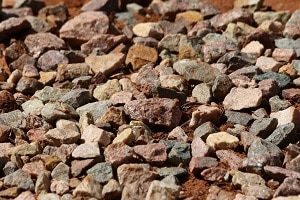
Pile of Class 5 gravel used for a compacted driveway base

Delivery can add $100 to $300 or more per load in local markets. Long distances, small orders, fuel charges, multiple trips, and restricted access can raise that amount.

Suppose a homeowner orders 10 tons at $28.50 per ton. The material costs $285. A $175 delivery charge raises the dropped-load total to $460, or $46 per ton delivered.

Add $450 for skid-steer spreading, shaping, and compaction, and the installed total becomes $910. The effective installed price is now $91 per ton, even though the supplier advertised the aggregate at only $28.50 per ton.

Delivery quotes should state:

  • The quantity carried by each truck
  • The hauling zone or mileage charge
  • Whether fuel charges are included
  • Whether the driver will tailgate-spread the load
  • Whether waiting time costs extra
  • Where the truck is permitted to dump
  • Whether a second load creates another full delivery charge

A dump truck is heavy and needs firm, open access. The driver may refuse to enter soft ground, pass beneath low wires, cross a weak culvert, or dump where the truck cannot raise its bed safely.

For a broader truckload comparison, see the expected cost of a dump truck load of gravel.

A Driveway Cost Example

Consider a 12-by-50-foot driveway that needs a four-inch compacted layer. The project uses nine loose cubic yards after allowing for settlement and shaping.

The itemized budget could look like this:

  • Nine cubic yards at $40 per yard: $360
  • Local delivery: $175
  • Geotextile fabric: $180
  • Skid-steer spreading and crown shaping: $350
  • Mechanical compaction: $250

The all-in total is $1,315, or about $2.19 per square foot.

A second property may need six inches of unsuitable soil removed first. Excavation and disposal could add $1,000 to $2,500, depending on volume, equipment access, hauling distance, and disposal fees. The same visible driveway could then cost $2,300 to $3,800 rather than $1,315.

The cheapest load is not always the cheapest finished driveway. A cheaper supplier located farther away may erase the material saving through a larger hauling charge.

Three Buying Scenarios

Small parking pad: A 10-by-20-foot pad with a four-inch finished layer requires about 2.5 compacted yards. After adding material for compaction, the order may be 3 to 3.25 yards. Material and delivery can total $250 to $500, before grading.

Existing driveway refresh: A 12-by-60-foot driveway receiving two inches of fresh Class 5 needs about 4.4 compacted yards. An order near 5 to 5.75 yards may cost $300 to $600 delivered. This only works when the existing base remains stable and drainage is already acceptable.

New rural driveway: A 12-by-100-foot driveway with a six-inch base needs about 22.2 compacted yards. After the loose-volume allowance, the order can exceed 25 yards, often requiring more than one truck. Material, hauling, excavation, fabric, culvert work, grading, and compaction can push the project into the $4,000 to $10,000 range.

Class 5 Is Not Drain Rock

Class 5 compacts because it contains small particles and fines. Clean stone drains because those fines have been removed, leaving connected spaces between the larger pieces.

That distinction makes Class 5 a poor default choice for a French drain, footing drain, or open drainage trench. Water does not pass through dense compacted road base as freely as it moves through washed drain rock.

A quarry material comparison explains that clean stone lacks the smaller dust particles needed for tight compaction, while crusher-run products use those smaller particles to fill voids. The difference is described in this clean stone and crusher-run guide.

Use Class 5 for a compacted load-bearing base. Use an approved washed or open-graded aggregate where the design depends on rapid water movement.

Class 5 may appear beneath a retaining wall or paver patio as part of the structural base. The drainage zone behind a wall may still require separate clean stone and a drain pipe.

Virgin or Recycled Class 5

Virgin Class 5 is produced from newly mined natural aggregate. Recycled Class 5 may contain processed concrete, asphalt, or other permitted recycled material.

Bracht Bros. prices its recycled Class 5 at $28.40 per ton, nearly the same as its $28.50 road-gravel product. Recycled aggregate is not automatically much cheaper.

The choice should be based on specification, contamination control, particle distribution, intended use, and local acceptance rather than price alone. MnDOT research notes that virgin Class 5 is widely used in Minnesota rural pavement bases in its aggregate base study.

For another recycled base option, compare the cost of crushed concrete. Do not compare the two only by the listed ton price. The delivered weight, gradation, compaction behavior, and project specification must also match.

When Class 5 Makes Sense

Makes sense if:

  • You need a dense base for a driveway, road, parking pad, or slab.
  • The supplier can identify the material gradation and intended use.
  • The site can be shaped to drain away from buildings.
  • You have access to suitable grading and compaction equipment.
  • The finished surface does not need the appearance of decorative stone.

Does not make sense if:

  • The project requires clean, open drainage stone.
  • You are filling a French drain or footing drain.
  • The underlying soil failure has not been repaired.
  • You want a loose decorative gravel surface without visible fines.
  • The product does not meet the engineer’s or local authority’s specification.

A plate compactor may work for a small pad or thin lift. Larger driveways may need a roller or heavier compaction equipment. The Home Depot rents plate compactors and related equipment through its compaction rental department, but availability and rates vary by location.

What to Check Before Ordering

  • Checked: Current Minnesota pickup listings place Class 5 near $19.95 to $28.50 per ton at the cited aggregate suppliers.
  • Confirmed: Retail per-yard listings currently range from about $36 to $64.99 per cubic yard, depending on supplier and material.
  • Cross-referenced: MnDOT treats Class 5 as a specified aggregate base category rather than one universal limestone product.
  • Verified: One cubic yard covers about 81 square feet at four inches before allowing for compaction and grading loss.
  • Checked: Some Minnesota driveway connections require public-road access permits. Maplewood states that driveways entering county roads require both city and county approval on its driveway permit page.

Before paying, confirm the unit, maximum rock size, fines content, material source, estimated tons per yard, delivery charge, truck capacity, dump location, compaction allowance, and return policy.

A new driveway may also need a culvert, approach permit, erosion control, or drainage review. A gravel surface does not remove local access requirements.

A future hard-surface upgrade should be planned at the base stage. The cost of a concrete driveway will be much higher, but proper excavation and drainage work completed now may still be useful later.

Answers to Common Questions

How much is a yard of Class 5 gravel?

Current Minnesota retail listings place one cubic yard near $36 to $65 before delivery. Quarry pricing by weight may produce a lower converted yard price.

How much is Class 5 gravel per ton?

Pickup prices commonly fall near $20 to $45 per ton. Delivery and machine work can raise the effective installed price above $70 to $100 per ton.

How many square feet does one yard cover?

One cubic yard covers about 81 square feet at four inches deep, 54 square feet at six inches, or 162 square feet at two inches.

How much Class 5 do I need for a driveway?

Multiply driveway length by width by depth in feet and divide by 27. Add a supplier-recommended allowance, often 10% to 30%, for compaction, shaping, and grade corrections.

Can Class 5 gravel be used in a French drain?

Class 5 is not the preferred French-drain aggregate because it contains fines that compact and restrict open water flow. Washed drainage stone is the better match for that use.

Disclosure: Educational content, not financial advice. Prices reflect public information as of the dates cited and can change. Confirm current rates, fees, taxes, and terms with official sources before purchasing. See our methodology and corrections policy.

by Alec Pow
ThePricer cost research Independent price research used by media, universities and public institutions.

We research provider pricing, market examples, buyer reports, hidden fees and public records.

Methodology · Citations · Newsroom
© 2014 - 2026 - ThePricer Media, LLC, 4 Grove Street, New York, NY, 10014, Phone: (212) 431-2441
We don’t use affiliate links or paid placements. All sources are cited only for verification.
  • Link to X
  • Link to LinkedIn
  • Link to Facebook
  • Link to Instagram
  • Link to Pinterest
  • Link to Youtube
  • Contact Us
  • About Us
  • Press & Mentions
  • Careers
  • Meet the Founder
  • Privacy Policy
  • Editorial Ethics
  • Methodology
  • Corrections
  • Disclosure
  • Terms and Conditions
Scroll to top Scroll to top Scroll to top