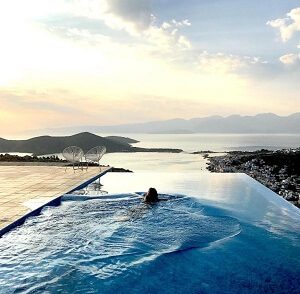
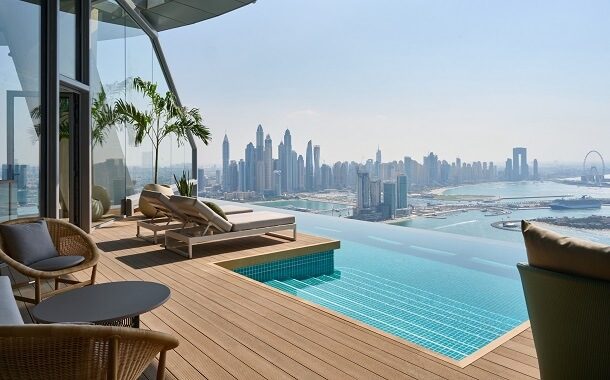
,

How Much Does an Infinity Pool Cost?

Last Updated on October 19, 2025 | Prices Last Reviewed for Freshness: November 2025
Written by Alec Pow – Economic & Pricing Investigator | Content Reviewed by CFA Alexander Popinker

Educational content; not financial advice. Prices are estimates; confirm current rates, fees, taxes, and terms with providers or official sources.

An infinity edge, also called a zero edge or negative edge, carries water over a weir into a catch basin where it is filtered and pumped back into the main vessel. That elegant line is the cost driver. Buyers are not paying only for a liner or gunite shell, they are funding careful elevation control, consistent coping lines, a secondary basin, surge capacity, and additional plumbing.

Published price guides converge on a high but predictable spectrum. HomeGuide lists $100 to $300 per square foot installed and $60,000 to $150,000 on average for complete projects, a range echoed across its pool-build overview pages. Angi’s 2025 guide gives an average near $95,000, with smaller builds from $55,000 and premium builds up to $200,000, and it suggests budgeting roughly $80 to $130 per square foot for many designs.

Fixr’s project pages center typical installations around $90,000 to $105,000 depending on size and features. Pool Magazine frames a common band of $55,000 to $130,000 for most homeowners.

Regional markets nudge the math. A Southern California builder pegs many inground projects at $85,000 to $150,000 with custom showpieces above $400,000, and notes that hillside piers and soils work can push infinity pool pricing higher than a flat-yard build. Those realities affect both the initial quote and the contingency buffer you should keep in reserve.

Article Highlights

  • National guides cluster around $55,000–$150,000 for many infinity pools, with premium customs to $200,000+ as of October 2025.
  • Per square foot pricing often runs $100–$300, with many projects billed at $80–$130 for mainstream builds.
  • Edge engineering typically adds $15,000–$20,000, and some projects see $20,000–$26,000 or more beyond a standard inground build (California Pools).
  • Routine maintenance averages $80–$150 per month, with ownership totals often $3,000–$6,000 per year including utilities (HomeGuide).
  • City pool permit examples include Phoenix at $180 plus $30 surcharge and Washington, DC at $260 up to 15,000 gallons then $33 per 1,000 gallons.

How Much Does an Infinity Pool Cost?

Think in tiers, then adjust for site and finish. Most homeowners fall into one of three bands, and the table below aligns with national trackers as of October 2025.

Table 1. Typical infinity pool tiers by project scope (installed totals)

Tier What it usually includes Typical total
Entry, compact Small vessel, one vanishing edge, basic plaster, standard pump and filter, simple deck $55,000–$85,000
Midrange, family size Medium vessel, one vanishing edge, upgraded interior finish, variable-speed pump, heater or automation, expanded deck $85,000–$130,000
Premium, custom Large vessel, complex weir geometry, glass tile or high-end finish, spa, water features, lighting design, extensive hardscape $130,000–$200,000+

Those bands line up with HomeGuide’s $60,000–$150,000 average, Angi’s $55,000–$200,000 practical window, Fixr’s ~$90,000–$105,000 center for common sizes, and Pool Magazine’s $55,000–$130,000 summary. Per square foot, the consensus runs roughly $100–$300 nationally, with Angi’s 2025 update highlighting many projects between $80 and $130 per square foot.

Two implications follow. First, edge engineering is an adder, not a line you can skip, and California Pools notes that choosing an infinity edge typically adds around $15,000 to $20,000 to a comparable custom build. Second, Fixr’s broader pool guide suggests a similar premium, estimating at least $20,000 to $26,000 more than a standard inground build for the structural and design elements required.

Real-life cost examples

Midrange backyard in Atlanta, Georgia, 12 × 26 feet
Gunite shell with one vanishing edge, pebble finish, variable-speed pump, cartridge filter, 350 square feet of broom-finish deck, basic LED lights. Builder fee $82,500. City permit and inspections $900. Electrical and gas stubs $2,600. Landscaping touch-ups $1,750. First-year chemicals and service $1,200. All in near $88,950. Ongoing monthly maintenance around $80–$150 fits national averages.

You might also like our articles on the cost of an endless pool, a pool house, or an above-ground pool.

Hillside view lot in San Diego County, California, 15 × 35 feet
Gunite with glass tile on the weir, catch basin below, automation, heater, raised spa tied to the edge, 800 square feet of porcelain pavers, engineered piers for slope stability. Base contract $178,000. Structural piers and soils report $18,500. County permits and plan check $2,400. Utility upgrades $3,800. Owner-supplied furniture and lighting $5,200. Total roughly $207,900. Local builders report many SoCal installations in the $85,000–$150,000 band, with complex hillside projects well above that.

Tight urban lot in Austin, Texas, 9 × 20 feet plunge
Small concrete vessel with a short negative edge into a narrow trough, compact heat pump, automation, and a modest ipe deck. Builder contract $68,000. City of Austin style permit schedules vary, but large cities often levy flat plus valuation-based fees; for a concrete example of a city’s published pool permit charge, Phoenix lists a $180 minimum plus a $30 aquatics surcharge, while Washington, DC shows $260 up to 15,000 gallons then $33 per 1,000 gallons beyond that. Using those scale cues, permit, plan review, and inspections land around $500–$1,500 in many cities, which aligns with the homeowner’s $1,050 combined line here. Final adders for electrical and gas $2,200. Total about $71,250 before furniture.

Short paragraph: not every project needs a spa, glass tile, or a hill. Smart scope trims the bill.

Cost breakdown

Structure and edge engineering
The infinity effect requires a precise weir, a surge basin sized to hold displaced water, and extra plumbing. California Pools cites a typical adder of $15,000–$20,000 for the edge itself. Fixr’s pool guide places the broader premium at $20,000–$26,000 once design and retaining structures are included, with complex sites doubling a standard pool’s price in outlier cases.

Materials and shell
Concrete or gunite remains the default for custom infinity pools. HomeGuide’s concrete pool page shows typical inground concrete totals of $50,000–$120,000 installed, before adding the vanishing edge premium. Fiberglass options exist for smaller or modular edges, often pricing below concrete when site conditions are simple.

Mechanical systems
A variable-speed pump, filter, heater or heat pump, and automation run from the low thousands to five figures depending on brand and capacity. Angi’s energy guide pegs monthly electricity for pumps at roughly $10–$50 for variable-speed units and $40–$150 for single-speed units, with separate heat pump energy costs when used.

Decking and hardscape
Infinity Pool with a ViewBasic broom-finish concrete is the budget move. Porcelain pavers, natural stone, or hardwood decking push totals higher. Many midrange builds allocate five figures to hardscape because the edge looks best when the surroundings match the architecture.

Permits and inspections
Published fee schedules vary widely. Phoenix lists a swimming pool minimum permit fee of $180 plus a $30 aquatics surcharge. Washington, DC publishes $260 up to 15,000 gallons, then $33 per 1,000 gallons beyond that. Some counties add plan-check surcharges or valuation-based fees.

Maintenance and ownership
HomeGuide’s 2025 maintenance guide shows $80–$150 per month for routine service, or $960–$1,800 per year, with annual ownership totals often $3,000–$6,000 once electricity and water are included. Concrete resurfacing every 10 to 15 years typically costs $6,000–$15,000.

Hidden ownership costs, quick hits
Chemicals and service $80–$150 monthly, electricity for pumps $10–$150 monthly depending on pump type, heater energy when used, leak detection if needed, insurance adjustments, and seasonal opening or closing typically $300–$600. Plan for contingencies.

Worked example, midrange family pool, Tampa, Florida

  • 14 × 28 gunite shell, one vanishing edge, pebble interior: $78,000
  • Infinity edge adder and weir tile: $17,500
  • Variable-speed pump, cartridge filter, gas heater, automation: $8,600
  • 500 sq ft concrete deck with drains: $7,200
  • Lighting, railings, safety cover: $3,150
  • Permit, plan review, inspections: $950
  • Electrical and gas connections: $2,100
  • Start-up chemicals and first-season service: $1,500

Estimated total: $119,000. This sits squarely in the midrange band and mirrors national trackers for a family-size installation in 2025.

Factors influencing the cost

Material and finish
Concrete dominates custom infinity work, bringing flexible shapes and premium finishes like glass tile on the weir. HomeGuide’s concrete ranges, $50,000–$120,000, set the core of many projects before edge and hardscape upgrades.

Size and geometry
Longer edges and complex turns add labor and require larger catch basins. Taller edges with big elevation drops need stronger structure and more finish material. More gallons also increase pump and heater sizing, which nudges both upfront and utility costs.

Site conditions and engineering
Slopes, expansive clay, or poor soils can require retaining walls or piers. A Sonoma builder explains that infinity and zero-edge designs often need piers even when a standard pool might not, which is one reason hillside views often carry higher bids.

Labor market and builder expertise
Experienced teams that specialize in negative edges charge more, but they also reduce risk of rework. That premium typically appears in dense coastal markets and vacation regions where outdoor amenities command top dollar.

Code requirements and permitting
Some cities publish flat or formula-based pool fees. Phoenix shows a posted minimum plus a surcharge, while Washington, DC scales by gallons. Large coastal counties may add plan-review surcharges. Those administrative costs are small next to the build, but they matter for budgeting.

Energy and long-term operation
Pump selection changes monthly spend. Angi’s guide pegs variable-speed pump electricity at $10–$50 per month versus $40–$150 for single-speed units, with separate heating energy if you run a heat pump or gas heater often.

Alternative products or services

Traditional inground pool
If the visual effect is less important than water time, a standard inground build usually lands lower. HomeGuide’s 2025 pages price many inground projects between $25,000 and $100,000 for typical sizes and $50,000–$120,000 for concrete shells, with Infinity noted as a higher-priced subtype.

Lagoon or natural-style pool
Organic shapes and boulder work can approach midrange infinity pricing, but there is no edge basin or weir. Angi’s design comparison lists lagoon builds around $50,000–$150,000 depending on complexity.

Lap or plunge pool
Compact vessels serve small lots and training needs. Short lengths with clean lines stay below many infinity bids. Angi and HomeGuide show common lap or plunge totals below six figures unless you add elaborate finishes or enclosure systems.

Above-ground pool with deck
The budget path. Materials and labor run a fraction of a custom inground build, though durability and aesthetic value differ substantially.

Contractor perspective on edge adders
Two builder sources reiterate the same theme: the edge and its hydraulics are the premium. California Pools quotes $15,000–$20,000 as a common adder for the edge, while Aqua Blue Pools lays out model-based ranges, about $90,000–$110,000 for fiberglass infinity and $100,000–$130,000 for concrete.

Answers to Common Questions

What is the most reliable national range for 2024–2025?
HomeGuide lists $60,000–$150,000 and $100–$300 per sq.ft., Angi cites $55,000–$200,000 with an average near $95,000, Fixr centers common builds around $90,000–$105,000, and Pool Magazine shows $55,000–$130,000.

How much more does the negative edge add versus a standard pool?
Builder and cost guides point to a premium of $15,000–$26,000 depending on site and design, with outliers higher on slopes or complex geometries.

What will I spend each month to own it?
Plan $80–$150 for routine service, $10–$150 for pump electricity depending on equipment, and seasonal energy if you heat the water. Concrete resurfacing every decade often costs $6,000–$15,000.

Are permit fees a big part of the bill?
They are modest compared with construction. As examples, Phoenix posts $180 plus $30 for swimming pool permits, and Washington, DC shows $260 up to 15,000 gallons, then $33 per 1,000 gallons.

What single choice has the biggest impact on the quote?
Scope. The edge and its basin, finish selection, and hardscape drive the premium, and the long sentence you need to remember is that a midrange shell near $80,000 can quickly become $120,000–$150,000 once you add a well-detailed weir, a generous deck, good lighting, and a proper equipment set. See Angi for additional context.

If your target is a specific number, start with the tier that fits the yard, confirm local permit fees, choose a variable-speed pump, and phase non-essentials. That is how you keep an infinity edge beautiful and the budget under control.

0 replies

Leave a Reply

Want to join the discussion?
Feel free to contribute!

People's Price

No prices given by community members Share your price estimate

How we calculate

We include approved comments that share a price. Extremely low/high outliers may be trimmed automatically to provide more accurate averages.

Leave a Reply

Your email address will not be published. Either add a comment or just provide a price estimate below.

$
Optional. Adds your price to the community average.