
How Much Does It Cost to Reglaze Windows?
Updated on | Researched and reviewed by Alec Pow, Founder & Pricing Investigator
Prices, claims, and calculations checked against 11 cited sources. See our research methodology and corrections policy.
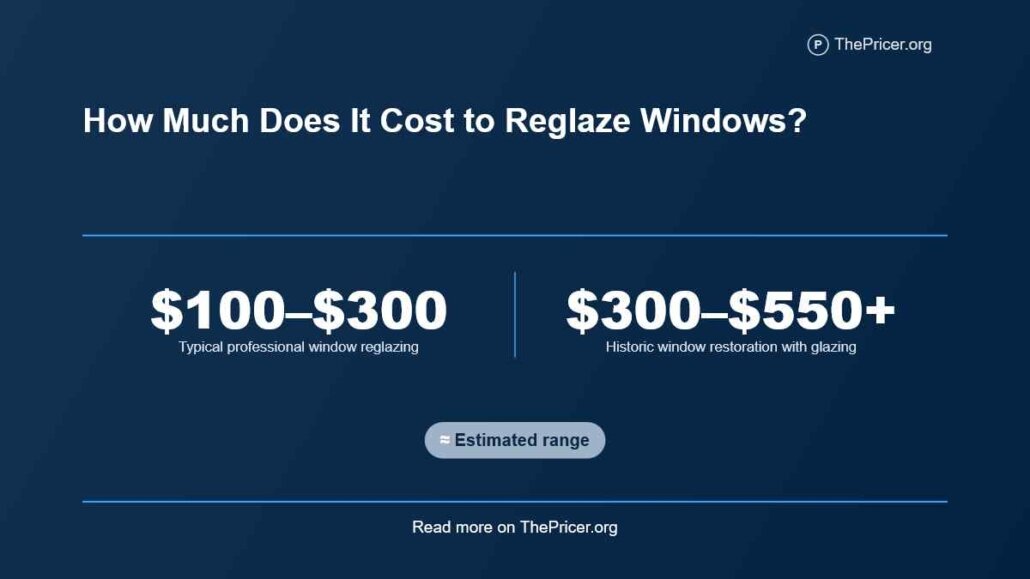
Reglazing an intact traditional single-pane wood window typically costs about $100 to $300 per window in 2026, while a fuller historic-window restoration that includes glazing, sash repair, paint preparation, weatherstripping, or wood repair commonly costs about $300 to $550 or more per window. If the glass itself is cracked and must be replaced, the project can move into the $180 to $650+ range depending on pane size, glass type, and window construction.
The important distinction is that reglazing does not normally mean installing new double-pane glass. Traditional reglazing means removing failed glazing compound around an existing pane and replacing it with new putty or another compatible glazing material so the glass remains secure and weather-resistant.
Article Highlights
Jump to sections
- Basic professional reglazing: $100–$300 per window
- Historic wood-window restoration: $300–$550+
- Standard window glass replacement: about $181–$414 in current Angi data
- Broader installed glass replacement: roughly $300–$650 for many projects
- Single-pane glass replacement can cost about $150–$400.
- A 32-ounce tub of standard glazing compound currently costs about $15.
- Full replacement windows commonly cost $450–$1,500+ each installed.
- Pre-1978 painted windows can involve lead-paint hazards and special work practices.
How Much Does It Cost to Reglaze Windows?
Reglazing is most common on older wood windows where individual panes are held in the sash by glazing points and putty.
A simple professional job in which the glass and sash are still sound can often be budgeted around:
| Window Work | Typical 2026 Cost |
|---|---|
| Minor glazing-putty repair | $75–$150 |
| Full reglazing of a typical sash/window | $100–$300 |
| Window restoration with glazing and wood repair | $300–$550+ |
| Glass replacement | $181–$650+ |
| Full replacement window | $450–$1,500+ |
Angi’s current 2026 window-restoration data puts professional restoration around $300 to $550 per window, with a much wider overall range when the project includes serious wood, sash, hardware, glass, or historic-preservation work.
That is a better comparison for a deteriorated old window than treating every $300-to-$550 project as “reglazing.”
Reglazing vs Glass Replacement
These services solve different problems.
Reglazing replaces deteriorated putty or glazing material around an existing pane.
Glass replacement means the pane itself is broken, cracked, fogged, or otherwise unusable.
Window restoration can include glazing plus sash repair, stripping, repainting, weatherstripping, new cords or hardware, and wood repairs.
Window replacement removes the old sash or entire window unit and installs a new one.
Current Angi project data puts standard professional glass replacement at an average of about $285 per window, with most reported jobs around $181 to $414.
HomeGuide’s 2026 data is somewhat higher, at roughly $300 to $650 per window for many installed glass-replacement jobs.
Glass Costs More
If the original glass is intact, reglazing can be relatively inexpensive because most of the project is labor.
If the pane is broken, the economics change.
This Old House’s current 2026 research puts installed glass replacement around $300 to $880 overall, with single-pane glass commonly around $150 to $400 and double-pane glass roughly $150 to $600.
Larger panes become much more expensive. Its current examples include:
| 24 × 36-inch pane | $130–$180 |
| 30 × 36-inch pane | $160–$270 |
| 36 × 42-inch pane | $320–$420 |
| 46 × 54-inch pane | $650–$810 |
This is why “window reglazing cost” should not automatically include new glass.
Worked Example
Suppose you have six original wood windows with sound glass but deteriorated glazing compound.
A contractor quotes $175 per window to remove loose glazing, prepare the glazing rabbets, reset loose panes where necessary, and apply new compound.
The project costs:
6 × $175 = $1,050
Now assume two of those windows also have cracked panes costing $225 each to replace.
Additional glass cost:
2 × $225 = $450
Total project:
$1,050 + $450 = $1,500
The broken glass increases the job by approximately:
$450 ÷ $1,050 × 100 = 42.9%
This demonstrates why a quote should separate reglazing from replacement glass.
What Reglazing Actually Does
A traditional wood window has a groove, or glazing rabbet, that holds the glass.
Glazing points mechanically help hold the pane in place, while glazing compound seals the exterior edge between the glass and the wood.
The National Park Service describes traditional putty as a combination of linseed oil and calcium carbonate that bonds to the wood, keeps water out, and remains flexible enough to accommodate movement between the wood sash and rigid glass.
As putty ages, it can:
- Crack
- Separate from the glass
- Fall away from the sash
- Allow water into the wood
- Allow the pane to rattle
Reglazing restores that protective seal.
Signs You Need Reglazing
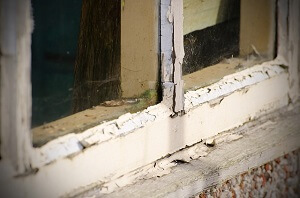
The National Park Service recommends checking old wood windows for cracked, loose, or missing glazing because failed putty can allow water to saturate the surrounding wood.
Typical warning signs include:
- Cracked or missing putty
- Loose glass
- Rattling panes
- Visible gaps between glass and putty
- Water reaching the sash
- Peeling paint around the glazing edge
A draft alone does not automatically mean the glazing putty is failing. Air can also leak through sash joints, meeting rails, weatherstripping, or the rough opening around the window.
Glazing Compound Cost
Material cost is small compared with labor.
For example, Home Depot currently sells a 32-ounce container of DAP ’33’ glazing compound for about $15.48.
That makes the claim that a small container of ordinary glazing compound typically costs $75 to $120 unrealistic for common residential products.
A DIY project may require:
| Glazing compound | $10–$20 |
| Glazing points | $5–$10 |
| Putty knife / scraper | $5–$20 |
| Primer / paint | $15–$40 |
| Replacement glass if needed | Varies substantially |
If you already own the basic tools and the glass is intact, the material cost can stay well under $50 per window.
Labor Drives the Bill
Reglazing takes patience because deteriorated compound must be removed without breaking the pane or damaging the sash.
This Old House currently puts professional glazing and window-repair labor at roughly $50 to $125 per hour.
A small simple pane may not take long, but a multi-light sash with 6, 8, or 12 individual panes requires much more work.
The price can increase further if the contractor must:
- Remove the sash
- Strip paint
- Repair rotted wood
- Replace glass
- Restore historic hardware
- Prime and paint the sash
- Handle lead-painted surfaces
Multi-Pane Windows
Traditional divided-light windows can be particularly labor-intensive.
A one-over-one sash may have two large panes.
A six-over-six double-hung window contains 12 separate panes, each with its own glazing perimeter.
Even if every pane is small, the contractor has substantially more putty to remove, more corners to tool, more glazing points to inspect, and more opportunity for old glass to break.
This is why an old Colonial or Victorian sash can cost considerably more to reglaze than a similarly sized single-pane picture window.
Historic Window Restoration
For historic windows, reglazing is often part of a larger restoration rather than the entire service.
The National Park Service Preservation Brief 9 recommends evaluating the paint, frame, sill, sash, glazing, hardware, and overall window condition before deciding how much work is needed.
The NPS also recommends repair as the first option for historically significant windows when deterioration can reasonably be repaired.
Window Preservation Alliance likewise maintains restoration standards and resources for preserving older wood windows rather than automatically replacing them.
A full restoration can therefore include:
- Removing sash
- Removing failed glazing
- Repairing wood
- Replacing damaged glass
- Restoring hardware
- Re-cording sash weights
- Weatherstripping
- Repainting
- Reinstallation
That level of work explains why Angi’s current professional restoration range starts around $300 to $550 per window and can climb much higher.
Repair vs Replacement
Full replacement is not automatically cheaper or better.
Current Fixr data puts window replacement around $450 to $1,200 per window, with an average near $800.
HomeGuide reports an even broader current average of roughly $450 to $1,500 for a basic single-hung replacement window installed.
By comparison, a sound historic window that only needs $150 to $250 worth of glazing work may be an obvious repair candidate.
If the sash is severely rotted, the frame is structurally compromised, glass is failing, and several hardware components need replacement, the economics become less clear.
Restoration Math
Consider ten old wood windows.
If reglazing costs $200 each:
10 × $200 = $2,000
If replacement averages $800 each:
10 × $800 = $8,000
The immediate difference is:
$8,000 – $2,000 = $6,000
Reglazing costs 75% less in this example.
That does not mean reglazing is always the better financial choice. A deteriorated sash requiring extensive carpentry can narrow the gap rapidly.
Energy Efficiency
New glazing putty can help stop water and some air leakage around the glass edge, but it does not transform a single-pane window into an insulated double-pane window.
The U.S. Department of Energy explains that energy performance also depends on the frame, glass layers, low-E coatings, gas fills, spacers, weatherstripping, and installation.
For historic buildings, DOE guidance identifies repair, air sealing, weatherstripping, and storm windows as possible ways to improve old windows while preserving them.
Readers comparing restoration with modern replacements can also see our guide to energy-efficient window costs.
Old Glass Has Value
Historic glass can be one reason to repair rather than discard an old sash.
Older panes may have visible waves, imperfections, or character that modern float glass does not reproduce exactly.
If an original pane is sound, reglazing allows it to remain in place.
The Window Preservation Alliance publishes methods for cleaning and reusing original glass during restoration rather than automatically replacing it.
For decorative glass, replacement economics can be even more dramatic. Custom architectural glass is discussed separately in our guide to stained glass window costs.
Lead Paint
This is one of the most important hidden issues on old windows.
Homes built before 1978 may contain lead-based paint, and window work can disturb painted surfaces.
The U.S. Environmental Protection Agency warns that sanding, cutting, window replacement, and similar renovation activities can create hazardous lead dust.
For contractors working for compensation, the EPA’s Renovation, Repair and Painting rule can require certified firms and lead-safe work practices when covered painted surfaces are disturbed.
That can add labor, containment, cleanup, and testing expense to historic-window work.
Hidden Costs
The glazing compound itself is rarely the expensive part.
The budget grows when a contractor discovers:
- Cracked glass
- Rotten muntins
- Rotted sash rails
- Damaged sill
- Loose joints
- Lead paint
- Broken sash cords
- Missing hardware
- Water damage
A $175 reglazing quote can therefore turn into a $400 restoration once carpentry and painting are added.
DIY Cost
If the pane is intact and the wood is sound, reglazing can be a reasonable DIY project for an experienced homeowner.
This Old House currently rates single-pane replacement and reglazing as a moderate-skill project and puts materials plus glass for a pane replacement around $75 to $600, depending heavily on the glass.
For reglazing alone, without new glass, the cash cost can be far lower because a container of glazing compound costs only around $15.
The biggest DIY risks are breaking old glass, damaging wood, producing a poor weather seal, and disturbing lead paint on older windows.
Anyone working on a pre-1978 painted window should review EPA lead-safe guidance before scraping, sanding, heating, or otherwise disturbing old coatings.
Do Not Confuse Double Glazing
The word “glazing” causes another common misunderstanding.
In traditional window restoration, reglazing means renewing the material that secures and seals glass in a sash.
In modern window sales, double glazing usually means an insulated glass unit containing two panes separated by a sealed air or gas-filled space.
A failed modern double-pane unit is generally replaced as a sealed glass unit rather than opened and packed with traditional putty between the panes.
The Department of Energy explains that modern insulating windows rely on sealed glazing layers, spacers, and often argon or krypton gas fills.
Replacing old putty around a traditional sash does not create that system.
When to Replace Instead
Full replacement becomes more attractive when:
- The frame is extensively rotted
- The sash is structurally failing
- Several components need reconstruction
- The window no longer operates properly
- Modern performance is a higher priority than historical fabric
- The repair quote approaches the cost of a suitable replacement
But for an intact original wood window with failed putty, replacement can be unnecessary.
The National Park Service specifically notes that even significantly deteriorated historic windows can often be repaired, although replacement eventually becomes appropriate when deterioration is beyond practical repair.
For an example of current replacement-window pricing, see our guide to Pella window costs.
Ways to Spend Less
Keep sound original glass. Reglazing around intact glass avoids paying for a replacement pane.
Bundle multiple windows. Setup, travel, paint preparation, and cleanup become more efficient when a contractor handles several sashes together.
Separate cosmetic work from structural repair. Ask the contractor which items are necessary now and which can wait.
Repair early. Missing glazing lets water reach the sash, potentially turning inexpensive putty maintenance into expensive carpentry.
Compare restoration with replacement. Get both prices when the window needs more than simple reglazing.
Do not choose replacement solely for energy savings. Air sealing, weatherstripping, and storm windows may improve performance without discarding a repairable historic sash.
What We Verified
We checked current 2026 window-repair, glass-replacement, restoration, and full-replacement pricing from multiple independent sources.
Professional historic-window restoration currently runs around $300 to $550 per window in Angi’s data, while simpler reglazing can cost considerably less when the sash and glass remain sound.
Current glass-replacement data put many standard projects around $181 to $414 through Angi and approximately $300 to $650 through HomeGuide. This Old House reports a broader $300-to-$880 installed range when larger and more complicated panes are included.
We also verified current retail material pricing. A 32-ounce container of DAP ’33’ glazing compound is around $15, meaning traditional glazing putty itself represents a small fraction of most professional bills.
National Park Service preservation guidance confirms that cracked or missing putty can allow moisture into historic wood sash, while EPA guidance confirms that work disturbing painted pre-1978 windows can present lead hazards requiring appropriate precautions.
Answers to Common Questions
How much does it cost to reglaze a window?
A straightforward professional reglazing job typically costs about $100 to $300 per window. Full restoration costs more.
Is reglazing cheaper than replacing a window?
Usually, if the existing sash and glass are structurally sound. Full replacement commonly costs roughly $450 to $1,500 or more per window.
Does reglazing include new glass?
Not necessarily. Traditional reglazing usually means replacing failed glazing compound around existing glass. Broken glass is a separate replacement cost.
How much does replacement window glass cost?
Many standard professional jobs currently fall around $181 to $414, while larger, specialty, or insulated panes can reach $650 to $880 or more.
How much does glazing putty cost?
Ordinary residential glazing compound can cost around $10 to $20 per container. A current 32-ounce DAP product is about $15.
Can old windows be reglazed instead of replaced?
Yes. Traditional wood windows are particularly repairable when the sash remains structurally sound. Historic-preservation guidance generally favors repair when practical.
Will reglazing make a window energy efficient?
It can improve the seal around the glass, but it does not convert single-pane glass into double-pane insulated glazing. Weatherstripping and storm windows may provide additional improvements.
Is DIY window reglazing safe?
It can be manageable on a sound single-pane sash, but broken glass and lead paint create meaningful risks. Pre-1978 painted windows deserve particular caution because disturbing lead-based coatings can create hazardous dust.
How do I know when glazing putty needs replacement?
Look for cracking, missing sections, separation from the glass, rattling panes, or water reaching the wood around the glass.
Disclosure: Educational content, not financial advice. Prices reflect public information as of the dates cited and can change. Confirm current rates, fees, taxes, and terms with official sources before purchasing. See our methodology and corrections policy.