
How Much Does Dog Broken Tooth Treatment Cost?
Updated on | Written by Alec Pow
This article was researched using 14 sources. See our methodology and corrections policy.
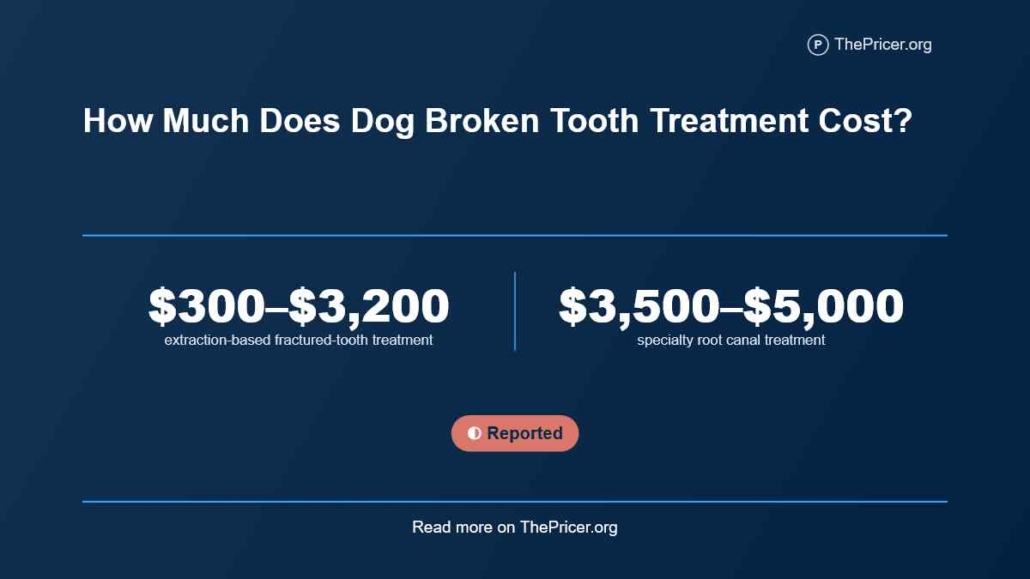
Dog broken tooth treatment can cost about $300 to $3,200 when an anesthetized dental procedure and extraction are both needed. A 2025 veterinarian-reviewed fractured-tooth cost review places the dental procedure under anesthesia at $100 to $700 and extraction of the fractured tooth at another $200 to $2,500 per tooth. Root canal treatment follows a different price path and can reach several thousand dollars at a dental specialty hospital.
The final bill depends on whether the fracture exposes the pulp, which tooth is damaged, whether the tooth can be restored, how difficult extraction would be, and whether a primary veterinarian or dental specialist performs the work. Dental X-rays and general anesthesia are central parts of proper diagnosis and treatment, so a low per-tooth extraction figure is rarely the whole invoice.
Article Highlights
Jump to sections
- An extraction-based fractured-tooth case can fall around $300 to $3,200 (at $30 per hour, earning that amount would take about 0.3 to 2.7 full-time workweeks, before taxes) using current published procedure and extraction ranges.
- Current national data lists dental X-rays at $187, routine dental cleaning at $379, simple extraction at $78 per tooth, and complex extraction at $130 per tooth.
- One dental practice lists root canal therapy from $700, while one specialty hospital lists $3,500 to $5,000.
- A fracture with exposed pulp usually requires extraction or tooth-saving endodontic treatment rather than watchful waiting.
- The full treatment plan may not be known until the dog is anesthetized and dental radiographs are reviewed.
How Much Does Dog Broken Tooth Treatment Cost?
The useful answer depends on the treatment path. A chipped tooth without pulp exposure may need monitoring or restorative care. A pulp-exposed fracture can require extraction or endodontic treatment. Published national figures also separate the cost of the dental event from the cost assigned to the damaged tooth, which is why a quote based on one line item can look much lower than the amount paid at discharge.
CareCredit’s February 2026 dog extraction cost study lists dental X-rays at an average $187 (about 6.2 hours of work at $30 per hour), routine dental cleaning at $379, simple extraction at $78 per tooth, and complex extraction at $130 per tooth. Its figures include an exam, while anesthesia, recovery, medication, dog size, clinic charges, and the number of teeth can still affect the bill. The first two rows below repeat the PetMD figures cited in the opening. The other rows use the CareCredit study just cited.
| Dental cost component | Current published figure | Scope |
|---|---|---|
| Dental procedure under anesthesia | $100 to $700 | Broad veterinary dental procedure range |
| Fractured-tooth extraction | $200 to $2,500 per tooth | Added extraction cost, with difficult specialist cases at the high end |
| Dental X-rays | $187 average | National procedure figure |
| Routine dental cleaning | $379 average | National procedure figure in the extraction study |
| Simple extraction | $78 per tooth average | National simple extraction figure |
| Complex extraction | $130 per tooth average | National complex extraction figure |
What the Fracture Type Changes
The fracture type determines which costs belong in the estimate. VCA separates uncomplicated crown fractures, where dentin is exposed but the pulp is not, from complicated fractures that expose the pulp. Its fractured-tooth treatment guidance says a tooth without pulp exposure may be restored without root canal therapy, while a tooth with exposed pulp is usually treated with root canal therapy or extraction. Young dogs with a recent fracture may have another pulp-preserving endodontic option.
This distinction fixes a common pricing mistake. A visible chip is not enough to decide whether the dog needs a filling, extraction, or root canal. The crown above the gum can look modestly damaged while the pulp, root, or surrounding bone changes the treatment plan. Dental radiographs help the veterinarian see what cannot be judged from the visible surface alone.
The damaged tooth matters too. Extraction difficulty is not uniform, which is why current national pricing separates simple from complex removal. Tooth-saving treatment also changes with the tooth involved and the condition of its root. Price follows the procedure needed for that exact tooth, not the size of the visible chip. A small-looking fracture can still reach structures that are hidden below the visible crown.
Extraction Cost
Extraction can be the lower-priced treatment path, but the extraction line itself can be misleading. The current CareCredit components already cited separate the tooth removal from the dental cleaning and X-rays around it. That structure matters because the per-tooth extraction figure may represent only a small share of the payable dental total. Large canine and carnassial teeth can also require more involved surgical work than a small single-rooted tooth.
Using those national CareCredit components, a modeled single-tooth case with cleaning, X-rays, and one simple extraction totals $644 (about 2.7 full-time workdays at $30 per hour). The arithmetic is $379 + $187 + $78 = $644. Replacing the simple extraction with the $130 complex extraction figure produces $696. These are calculated line-item scenarios, not bundled quotes, and they exclude any anesthesia amount that a clinic bills separately.
The calculation exposes the hidden comparison problem. In the $696 complex-extraction model, the extraction line accounts for only about 19% of the subtotal. Cleaning and X-rays account for about 81%. A reader who sees a $130 per-tooth figure and expects a bill near $130 is comparing one surgical line with a dental event that may require several other services. The current dog tooth extraction cost page covers that procedure in more detail.
Root Canal Cost
Root canal therapy preserves the tooth by removing diseased pulp, disinfecting the canal, filling it, and restoring the crown opening. VCA’s root canal explanation says the procedure requires advanced training and specialized equipment that many primary veterinarians do not have. Extraction of a large healthy-rooted tooth can also require soft-tissue surgery and bone removal, so the comparison is not simply a minor extraction against an elaborate root canal.
Published prices show how strongly the provider setting changes the number. Pet Dental USA lists root canal therapy from $700. OakVet Animal Specialty Hospital lists a $3,500 to $5,000 specialty root canal price, depending on the tooth, and says that figure does not include full periodontal treatment at a later visit. Those prices come from different practices and scopes, so they should not be blended into a national average.
Root canal treatment also requires restoration of the access made into the tooth, and specialty estimates may separate later periodontal care from the endodontic procedure. The OakVet price above expressly excludes full periodontal treatment at a later visit. A public national price for every possible restoration is not established well enough here to attach one generic add-on to each root canal. The written specialist estimate should state what restoration and follow-up imaging are included.
The Dental Package
A fractured tooth is treated inside a dental procedure, not as a quick awake repair. AAHA states that general anesthesia with intubation, monitoring, and physiologic support is necessary for dental procedures. That requirement explains why anesthesia-free cleaning prices or a stand-alone extraction figure do not describe the same service.
Location can move the baseline before the fracture repair is added. CareCredit’s April 2026 dog dental cleaning data places the national average at $388, with state averages ranging from $310 in Mississippi to $696 in Hawaii.
The high state figure is about 2.25 times the low state figure, a $386 difference before adding fracture-specific treatment. Its separate extraction study uses $379 for the cleaning component. The $9 difference between those published figures is small beside the geographic spread.
The package can also include pre-anesthetic bloodwork, IV catheter placement, fluids, local dental nerve blocks, monitoring, dental charting, scaling and polishing, take-home pain medicine, and rechecks. Clinics package these services differently.
Ask which items are already inside the written estimate before adding outside cost guides line by line. Readers comparing the base dental event can use the current dog dental cleaning cost article for a closer look at the cleaning and anesthesia portion.
Why the Estimate Can Change
A veterinarian can inspect a broken tooth while the dog is awake, but the complete treatment plan may stay conditional until anesthesia and radiographs. AAHA says the full treatment plan and dental cost can be accurately determined only after the anesthetized oral examination and intraoral radiographs have been reviewed. That is the hidden reason a pre-procedure estimate can contain ranges or conditional authorization.
The X-ray may show a root fracture, bone loss, infection around the root tip, another diseased tooth, or anatomy that changes the difficulty of extraction. The finding can move the case from a simple removal to surgical extraction, or from a planned tooth-saving procedure to a different plan. It can also reveal unrelated dental disease that the owner may choose to address during the same anesthetic event.
Ask for a written estimate that separates the planned work from conditional work. A useful estimate states what happens if the tooth can be saved, what happens if it cannot, and how the clinic handles an unexpected second tooth. That keeps a necessary change in treatment from looking like an unexplained fee added after the dog is already anesthetized.

Comparing Treatment Quotes
The cheapest line on paper may not represent the cheapest comparable case. One estimate may quote only the extraction. Another may bundle radiographs, anesthesia, cleaning, nerve blocks, monitoring, and medication.
A specialty root canal quote may cover a different facility, staffing model, tooth, and follow-up requirement from a primary-care extraction quote. Compare the complete plan for the same diagnosed fracture.
Insurance can change the owner’s share without changing the veterinary price. Pets Best says traumatic dental fractures can qualify for endodontic or extraction coverage when the policy requirements are met, including rules around prior signs, waiting periods, and inappropriate chewing behavior. Coverage terms differ by insurer and policy. A fracture already documented before enrollment can fall outside coverage.
Makes sense if
- You compare written estimates for the same tooth and the same diagnosed fracture.
- You check whether anesthesia, radiographs, cleaning, medication, and rechecks are included.
- You compare insurer reimbursement only after checking the deductible, reimbursement percentage, limits, and exclusions.
- You ask a specialist what follow-up imaging or restoration may be needed after tooth-saving treatment.
Does not make sense if
- You compare a per-tooth extraction line with an all-in specialty procedure total.
- You assume a root canal starting price includes a crown or later periodontal work.
- You treat an insurance benefit limit as the veterinary procedure price.
- You choose a quote without knowing whether the pulp or root is involved.
The current pet insurance cost page can help separate premium price from reimbursement rules.
Preventing Another Fracture
Many broken dog teeth come from chewing objects that are harder than the tooth can tolerate. VCA lists ice cubes, bones, hard nylon chews, antlers, and animal hooves among common fracture hazards and advises that chew items should bend or give under pressure. Its dog dental disease guidance also explains the difference between fractures that expose dentin and those that expose the pulp.
Tooth brushing and professional dental care address plaque and periodontal disease, but they do not make an antler or rock safe to chew. Fracture prevention has a mechanical side. Removing very hard chew objects can address one direct cause of tooth trauma, while oral hygiene addresses a different set of dental risks.
Prevention also protects the budget from another anesthetic dental event. A new fracture can mean another examination, radiographs, anesthesia, and treatment. Use chew products that fit the dog’s size and chewing style, and ask about damaged or worn teeth during routine examinations. The current emergency vet visit cost page is relevant when a tooth fracture occurs with a larger injury that sends the dog to emergency care.
Verification checks
- Checked AAHA dental radiograph guidance, which recommends full-mouth intraoral radiographs for dental patients and pre- and post-extraction radiographs at minimum.
- Confirmed broken-tooth urgency guidance stating that a broken tooth is painful but is not usually an emergency by itself, while major trauma can create a separate emergency.
- Cross-referenced another dental coverage policy, which shows that dental sublimits and exclusions can differ from one insurer to another.
Answers to Common Questions
How much does it cost to fix a dog’s broken tooth?
An extraction-based case can land around $300 to $3,200 using current published ranges for an anesthetized dental procedure plus fractured-tooth extraction. A root canal follows a different pricing path and can cost several thousand dollars at a specialty hospital.
How much does a dog tooth extraction cost?
Current national data lists a simple extraction at $78 per tooth on average and a complex extraction at $130 per tooth on average, but the dental visit can also include X-rays, cleaning, anesthesia, medication, and recovery costs.
Does pulp exposure mean a dog needs a root canal?
Pulp exposure usually means the damaged tooth needs definitive treatment. The main paths are root canal therapy or extraction, with the choice based on the tooth, fracture, root health, surrounding tissues, and veterinary assessment.
Is a broken dog tooth an emergency?
A fractured tooth is painful and should be evaluated promptly, but a tooth fracture by itself is not normally a life-threatening emergency. Major facial trauma, severe bleeding, or another acute injury can change the urgency.
Does pet insurance cover a broken dog tooth?
Some accident-and-illness policies cover traumatic dental fractures, extractions, or endodontic treatment, subject to waiting periods, pre-existing-condition rules, policy limits, and other terms. Coverage should be checked against the actual policy before treatment.
Disclosure: Educational content, not medical advice. Pricing varies by provider, location, and insurance. Confirm eligibility, coverage, and out-of-pocket costs with a licensed clinician and your insurer. See our methodology and corrections policy.