How Much Does a Dune Buggy Cost?
Updated on | Written by Alec Pow
This article was researched using 8 sources. See our methodology and corrections policy.
A dune buggy can cost about $400 to $700 for a children’s electric model, $1,500 to $5,500 for a small recreational off-road buggy, and $4,000 to $12,000+ for a larger adult machine. Used Volkswagen-based dune buggies commonly cost $5,000 to $20,000+, while custom sand rails and modern high-performance side-by-sides can cost $20,000 to $50,000+.
The advertised price is only the beginning. Freight, dealer setup, sales tax, a trailer, safety gear, registration, insurance, tires, accessories, and first-year service can add another $2,000 to $12,000+. A new dune-capable side-by-side advertised at $19,999 can easily become a $28,000 to $32,000 first-year commitment.
Rental prices are also higher than older guides suggest. Current dune rentals generally cost about $250 to $400 for the first hour, $400 to $900 for several hours, and $900 to $1,500+ for a full day in a high-performance machine.
Article Highlights
Jump to sections
- Children’s electric dune buggies usually cost $400 to $700 (at $30 per hour, earning that amount would take about 1.7 to 2.9 full-time workdays, before taxes).
- Small adult off-road buggies generally cost $2,500 to $5,500.
- Larger recreational buggies can cost $4,000 to $12,000+.
- Used VW-based dune buggies commonly cost $5,000 to $20,000+.
- Modern dune-capable side-by-sides start around $17,000 to $20,000.
- High-performance machines can exceed $40,000 to $50,000.
- A trailer, safety gear, tax, setup, and insurance can add 25% to 60% to the advertised price.

How Much Does a Dune Buggy Cost?
| Dune buggy type | Typical price | Best suited for |
|---|---|---|
| Children’s electric buggy | $400 to $700 (about 1.7 to 2.9 full-time workdays at $30 per hour) | Supervised low-speed recreational use |
| Youth gas off-road go-kart | $1,200 to $3,000 | Private property and designated trails |
| Adult 150cc to 300cc buggy | $2,500 to $5,500 | Recreational trail and property use |
| Larger 400cc to 800cc buggy | $4,000 to $12,000+ | Adults, passengers, and more demanding terrain |
| Used VW-based dune buggy | $5,000 to $20,000+ | Classic styling, streets where legal, and light off-road use |
| Custom sand rail | $8,000 to $40,000+ | Open dunes, performance driving, and custom builds |
| Modern recreational side-by-side | $15,000 to $35,000+ | Trails, dunes, passengers, and all-around off-road use |
| High-performance dune side-by-side | $25,000 to $50,000+ | Fast dune riding, long suspension travel, and premium features |
| Dune buggy rental | $250 to $400 per hour | Occasional recreational use without ownership costs |
One current entry-level example is the 2026 Hammerhead GTS 150, which dealers list near $3,899. Dealer freight, assembly, documentation, and tax can move the out-the-door price above the advertised amount.
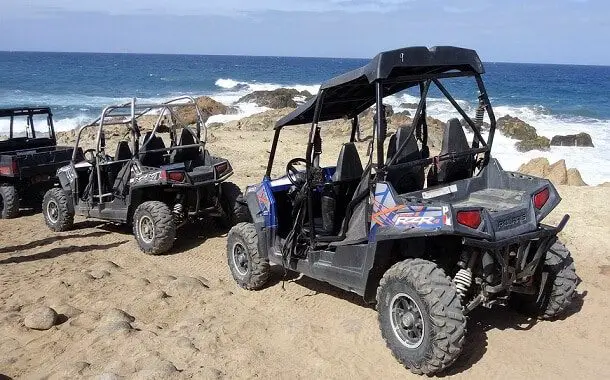
At the modern side-by-side end of the market, the 2026 Polaris RZR XP starts at $19,999 plus a listed $1,195 destination charge. The manufacturer notes that setup, tax, title, license, registration, accessories, and dealer pricing are additional.
Four-seat, premium, and high-performance trims can move well beyond $30,000. A 2026 Polaris RZR Pro R 4 Ultimate, for example, has been listed at an MSRP of $47,999 before purchase charges and accessories.
What You Are Actually Buying
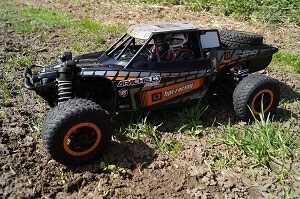
“Dune buggy” is a broad informal label rather than one precise vehicle class. It may refer to a small off-road go-kart, a Volkswagen-based fiberglass buggy, a custom tube-frame sand rail, or a modern recreational side-by-side.
A children’s electric buggy is not directly comparable with an adult 150cc go-kart. Neither is equivalent to a 200-horsepower side-by-side with four-wheel drive, long-travel suspension, electronic controls, and seating for four.
Traditional VW-style dune buggies use a shortened or modified Volkswagen chassis, a fiberglass body, and an air-cooled engine. Sand rails typically use an exposed tubular frame and are built primarily for low weight and open-sand performance. Modern side-by-sides are factory-produced off-highway vehicles with roll structures, suspension, seat belts or harnesses, and established dealer networks.
The price is therefore driven by the vehicle’s actual category, not merely whether the seller calls it a beach buggy, sand rail, go-kart, or UTV.
Children’s Buggy vs. Adult Off-Road Buggy
Children’s models usually use electric motors or small gasoline engines, limited speeds, compact seats, and simplified controls. A current Razor-style electric dune buggy commonly costs $400 to $700 (about 1.7 to 2.9 full-time workdays at $30 per hour).
Even a children’s buggy can include suspension. Razor’s official product information describes its Dune Buggy as having terrain-following rear suspension, correcting the misconception that dune buggies are defined by having no suspension.
Adult recreational models commonly add:
- Larger engines or electric drive systems
- Hydraulic disc brakes
- Independent or swing-arm suspension
- Full-size seats and belts
- Reverse gear
- Lights and electrical accessories
- More ground clearance
- Heavier frames and stronger axles
A small adult buggy may be suitable for private property and easy trails but remain inappropriate for deep dunes, public roads, severe rock crawling, or high-speed riding.
VW Dune Buggy and Sand Rail

A Volkswagen-based dune buggy can cost $3,000 to $7,000 as a rough project, $6,000 to $15,000 as a running recreational vehicle, or $15,000 to $30,000+ when restored, titled, modified, or built with a desirable branded body.
Recent auction and marketplace records compiled by Classic.com show that dune-buggy transactions span from inexpensive projects into the five-figure range. Sale price alone does not reveal whether the vehicle has a transferable title, safe frame, reliable engine, or road registration.
A custom sand rail commonly costs:
- Unfinished project: $3,000 to $10,000
- Basic running rail: $8,000 to $18,000
- Well-built performance rail: $15,000 to $40,000
- High-power custom build: $40,000 to $100,000+
Custom rails may use VW, motorcycle, Subaru, V6, V8, or other engines. Engine displacement alone is not a reliable pricing guide because horsepower, transmission, suspension, fabrication quality, brakes, wiring, safety equipment, and title status can matter more.
How Much Does It Cost to Rent a Dune Buggy?
A current dune buggy or side-by-side rental generally costs much more than $50 to $170 per hour. At Ride the Oregon Dunes, current prices include approximately:
- Standard rental: $289 for one hour
- Standard rental: $589 for four hours
- Standard rental: $989 for a full day
- High-performance turbo rental: $399 for one hour
- High-performance turbo rental: $929 for four hours
- High-performance turbo rental: $1,489 for a full day
Those published Oregon dune-rental prices include fuel, insurance, and goggles. Other operators may charge separately for helmets, fuel, damage waivers, park access, taxes, cleaning, or additional drivers.
Polaris Adventures also lists a one-hour Oregon dune rental starting near $249.
A refundable or credit-card damage deposit may be required. The renter remains financially responsible for damage outside the included insurance or waiver terms, so the contract deserves the same attention as the hourly price.
Three Dune Buggy Buying Scenarios
Small adult recreational buggy
A buyer chooses a 150cc buggy advertised at $3,899. Freight and dealer setup add $700, while 7% sales tax adds approximately $322.
Two helmets cost $300, tie-downs and basic tools cost $150, and a used utility trailer costs $2,500.
The initial cost reaches approximately $7,871. The trailer and purchase charges add more than 100% to the buggy’s advertised price.
Used VW-based buggy
A running titled buggy costs $11,000. A pre-purchase inspection costs $250, transport costs $700, and immediate brake, tire, and electrical work costs $1,800.
Registration, tax, and insurance add an assumed $1,000. The first-year total reaches $14,750.
Modern dune side-by-side
A 2026 Polaris RZR XP starts at $19,999. Destination, dealer setup, tax, title, and registration add an assumed $3,200.
A trailer costs $5,000, while helmets, goggles, communication equipment, tie-downs, and tools add $1,100. Insurance and permits add $900.
The first-year commitment reaches about $30,199, approximately 51% above the base MSRP.
Rental vs. Ownership Calculation
Suppose a couple wants to ride four times per year and rents a two-seat dune vehicle for four hours at $589 per trip.
- Four rentals: $2,356 per year
- Five years of rentals: $11,780
- Ten years of rentals: $23,560
Compare that with a $20,000 vehicle that requires another $10,000 for tax, trailer, safety equipment, setup, and initial ownership expenses. Insurance, maintenance, tires, storage, depreciation, and repairs continue each year.
For four recreational outings annually, renting may remain less expensive for a decade or longer. Ownership becomes more attractive when the machine is used frequently, storage and transport are already available, and the owner values unrestricted access.
Dune Buggy Ownership
A realistic budget should include more than the machine itself:
- Destination and dealer setup: $300 to $1,500+
- Freight delivery: $500 to $2,000+
- Sales tax: location-specific
- Trailer: $1,500 to $8,000+
- Trailer hitch and wiring: $500 to $1,500+
- Helmet and eye protection: $100 to $500 per rider
- Harnesses or upgraded restraints: $150 to $800+
- Tires: $300 to $1,500+ per set
- Battery: $80 to $300+
- Drive belt or chain: $50 to $300+
- Annual service: $200 to $1,000+
- Storage: $0 to $2,400+ per year
A tow vehicle may be the largest hidden expense. Buyers should confirm the buggy and trailer’s combined loaded weight, the tow vehicle’s rated capacity, tongue-weight limit, hitch class, wiring, and braking requirements.
The cost of a professional trailer hitch installation can range from a basic receiver setup to a more expensive system with seven-pin wiring and a brake controller.
Maintenance, Tires, and Insurance
Maintenance depends on the vehicle. A small chain-driven buggy may require frequent chain adjustment, lubrication, air-filter cleaning, brake inspection, and bolt checks. A belt-driven side-by-side can require costly drive-belt replacement and manufacturer-specified service.
Sand creates specific maintenance concerns. It can enter air filters, accelerate bearing and seal wear, contaminate moving parts, and damage engines when filtration is neglected. Saltwater and beach use can also promote corrosion.
Insurance cannot be reduced to one reliable national range. The premium depends on whether the buggy is:
- Off-road only or road registered
- Factory-built or homemade
- Titled with a recognized VIN
- Used recreationally or competitively
- Stored in a locked garage or outdoors
- Insured for liability, theft, collision, or agreed value
Some home-built sand rails are difficult to insure. Obtain a written quote using the exact VIN, title classification, modifications, storage location, drivers, and intended use before purchasing.
Is a Dune Buggy Street Legal?
Lights, mirrors, turn signals, seat belts, and a horn do not automatically make a buggy street legal. Road use depends on state law, vehicle classification, title history, emissions rules, safety requirements, local ordinances, and insurance availability.
California’s DMV classifies dune buggies among off-highway vehicles. These vehicles generally use an OHV identification plate or placard rather than ordinary highway registration when operated off public roads.
California also warns that noncomplying off-highway vehicles cannot be converted to ordinary highway registration merely by adding equipment. Rules differ in other states, and some permit limited use on designated county roads or through special multipurpose-vehicle programs.
Before buying, verify:
- Whether the vehicle has a valid title
- Whether the VIN matches the frame and paperwork
- How the state classifies the vehicle
- Whether public-road registration is possible
- Which roads remain prohibited
- What safety equipment is mandatory
- Whether an insurer will issue the required policy
A seller’s statement that the buggy is “street ready” is not proof that it can be legally registered in the buyer’s state.
Choosing the Right Buggy
Suspension, ground clearance, tires, drive system, cooling, and protection should match the intended terrain. Dune buggies do not universally perform poorly on grass or near mountains, nor do they all have low ground clearance.
For open sand, buyers may prioritize:
- Low weight
- Adequate horsepower
- Paddle-style rear tires
- Suitable front steering tires
- Air filtration
- Engine cooling
- Long suspension travel
For rocky trails, more important features may include four-wheel drive, skid plates, higher ground clearance, low-range gearing, strong suspension components, and all-terrain tires.
Some traditional lightweight sand rails use rear-focused braking systems, but missing front brakes should never be promoted as a speed advantage. Braking design affects stopping distance, control, stability, and legal compliance.
When Buying a Dune Buggy Makes Sense
Buying may make sense if:
- The buggy will be used regularly throughout the year.
- Storage, transport, and a suitable tow vehicle are already available.
- The buyer understands maintenance and repair requirements.
- Nearby legal riding areas justify ownership.
- The title, VIN, registration, and insurance have been verified.
Renting may make more sense if:
- The vehicle will be used only a few times per year.
- The buyer lacks storage or a tow vehicle.
- The preferred riding area is far from home.
- The buyer wants to try several vehicle types first.
- Maintenance, depreciation, and repair risk are undesirable.
The cheapest buggy is not necessarily the lowest-cost choice. A poorly titled project requiring a trailer, engine work, wiring, brakes, and suspension repair can cost more than a well-maintained running vehicle.
What We Verified
- Checked a current 2026 Hammerhead GTS 150 price near $3,899.
- Verified the 2026 Polaris RZR XP starting MSRP of $19,999.
- Confirmed that destination and setup are not included in the RZR base MSRP.
- Checked current Oregon dune-rental prices from $249 to $399 for one hour.
- Verified that dune buggies can use suspension systems.
- Confirmed California’s separate OHV registration treatment for dune buggies.
- Reviewed current VW-based and custom dune-buggy market records.
Related Off-Road Vehicle Costs
A smaller off-road buggy overlaps with the cost of a go-kart, although adult dune machines usually add more suspension, power, seating, and safety equipment.
Buyers comparing handlebar-controlled vehicles can review the cost of a four-wheeler. Four-wheelers require different riding skills and do not provide the same seated side-by-side passenger layout.
A trail or property buyer may also compare a dune buggy with the cost of a John Deere Gator. The Gator is more work-focused, with cargo capacity, towing features, and utility accessories.
Safety gear is another part of the purchase. The cost of a motorsports helmet varies widely by certification, construction, communication hardware, and intended speed.
Answers to Common Questions
How much does a basic dune buggy cost?
A small recreational adult buggy generally costs $2,500 to $5,500. Children’s electric models cost less, while larger adult and performance vehicles cost considerably more.
How much does a street-legal dune buggy cost?
A titled VW-based buggy may cost $6,000 to $30,000+. Street legality depends on state law and the vehicle’s title, construction, equipment, registration, and emissions status.
How much does it cost to rent a dune buggy?
A one-hour rental commonly costs $250 to $400. Several hours may cost $400 to $900, while a full day can cost $900 to $1,500+.
Do dune buggies have suspension?
Most adult recreational buggies, sand rails, and side-by-sides use suspension. The design and travel vary by model and intended terrain.
Do I need a trailer?
Most off-road-only buggies must be transported to legal riding areas. A trailer commonly costs $1,500 to $8,000+, excluding hitch equipment and registration.
How much does dune buggy insurance cost?
There is no dependable universal amount. Premiums depend on the title, VIN, vehicle class, value, modifications, road use, drivers, coverage, and storage location.
Is buying cheaper than renting?
Buying may be cheaper for frequent use, especially when storage and a trailer are already available. For only a few outings per year, renting can remain less expensive for many years.
Disclosure: Educational content, not financial advice. Prices reflect public information as of the dates cited and can change. Confirm current rates, fees, taxes, and terms with official sources before purchasing. See our methodology and corrections policy.