
How Much Does a Hibachi Grill Cost?
Updated on | Written by Alec Pow
This article was researched using 14 sources. See our methodology and corrections policy.
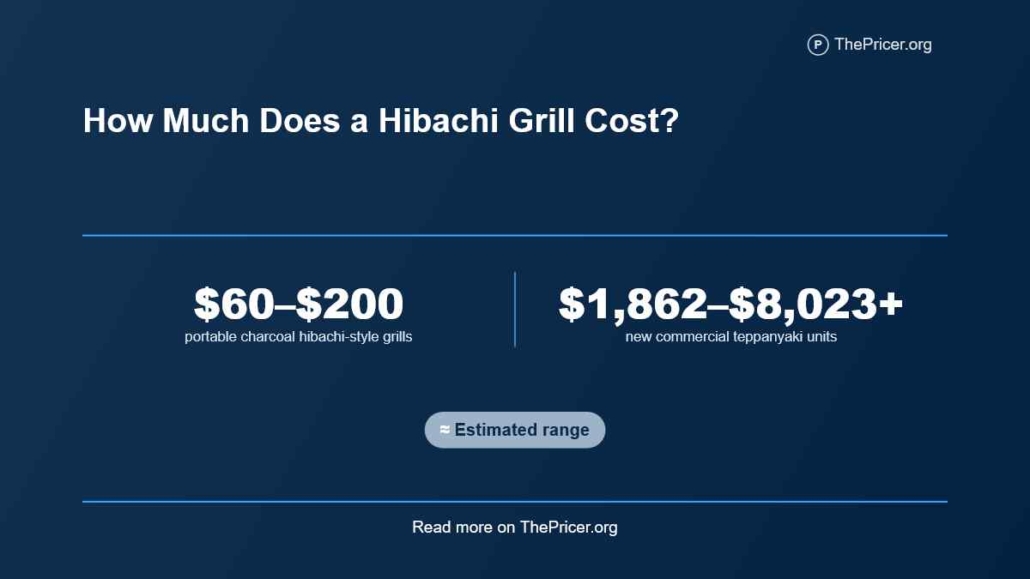
A practical current budget for a hibachi-style grill at home is about $60 to $200 for a current portable charcoal model. A restaurant-style flat-top unit, more accurately called a teppanyaki griddle, is a separate class of equipment. Current new commercial examples run from about $1,862 to $8,023+ before installation. The large gap exists because shoppers use the word hibachi for two very different products.
For a portable grill, price moves with cast iron versus stainless steel construction, cooking area, airflow control, weight, and included accessories. Commercial teppanyaki pricing depends on width, fuel type, electrical requirements, brand, counter configuration, and restaurant installation. Charcoal hibachi-style grills belong outdoors. Gas and electric teppanyaki equipment can be installed indoors when the appliance, utilities, ventilation, and local requirements are suitable for that use.
Article Highlights
Jump to sections
- Current portable hibachi-style charcoal grills start near $60 (at $30 per hour, earning that amount would take about 2 hours of work, before taxes), while established cast-iron and stainless models in the current sample sit around $150 to $200.
- Lodge currently lists its Sportsman’s Pro at $149.90 sale price, while the YAK charcoal grill is $199.97.
- New commercial teppanyaki units in the current sample span roughly $1,862 to $8,023 before installation.
- Charcoal grills should never be used indoors because burning charcoal produces carbon monoxide.
- Fuel and accessories can push the first-use cost above the grill’s sticker price.
How Much Does a Hibachi Grill Cost?
The home market starts below $100 (about 3.3 hours of work at $30 per hour). Home Depot currently lists a portable cast-iron hibachi at $59.99. That is a useful entry point for shoppers who want a small outdoor grate rather than a full-size backyard grill.
| Current example | Listed price | Type and scope |
|---|---|---|
| MegaChef portable cast iron | $59.99 | Budget home charcoal grill |
| Lodge Sportsman’s Pro | $149.90 sale price | Cast-iron hibachi-style grill |
| YAK charcoal grill | $199.97 | Stainless tabletop charcoal grill |
| American Range 24-inch | $1,862 | Commercial gas teppanyaki |
| Garland 36-inch electric | $5,282 | Commercial electric teppanyaki |
| Imperial 60-inch | $8,023 | Commercial gas teppanyaki |
The first three rows are home charcoal products. The last three are restaurant equipment and should not be blended into one consumer average. A shopper who wants a compact patio grill can build a realistic budget around $60 to $200. A restaurant owner shopping for a chef-facing iron plate is in a market measured in thousands of dollars before facility work.
Across the home examples, the gap from $59.99 to $199.97 is $139.98. The first commercial example at $1,862 costs more than nine times the YAK price before any installation work. That jump reflects a change in equipment class rather than a normal upgrade step.
Hibachi and Teppanyaki
The word hibachi creates much of the price confusion. In Japanese usage, hibachi refers to a fire bowl or brazier historically associated with heating. The small charcoal cooking stove that North American shoppers often call a hibachi is closer to a shichirin. An academic review of Japanese food loanwords notes that English-language use shifted toward a portable barbecue meaning and that hibachi-style restaurant cooking became associated with teppanyaki.
Teppanyaki uses a solid heated iron plate rather than an open charcoal grate. That difference changes the product, fuel system, installation, cooking style, and price. A portable charcoal grill is built for direct radiant heat over a grate. A restaurant teppanyaki unit is a heavy commercial appliance designed around a flat steel cooking surface, grease management, utility connections, and service access.
This distinction matters before comparing prices. A $150 (about 5 hours of work at $30 per hour) cast-iron grill and a $5,000 electric teppanyaki unit are not cheap and premium versions of the same appliance. They serve different buyers. The home section uses the common U.S. phrase hibachi-style grill for compact charcoal products, while the commercial section calls flat-top restaurant equipment teppanyaki.
Home Grill Price Tiers
At the low end, a cast-iron hibachi-style grill can stay below $100. The budget example in the price table shows that a buyer does not need to spend several hundred dollars for a compact outdoor charcoal cooker. The tradeoff is that size, weight, vent design, grate construction, replacement parts, and warranty support differ from model to model.
Lodge places its cast-iron option around the middle of the current home sample. The Sportsman’s Pro listing shows a $149.90 sale price and $169.95 regular price. The grill weighs 33.25 pounds and uses dual air vents, so it favors heat retention and stability over ultralight portability.
The YAK model sits higher at $199.97. Its published specifications list a 15 by 7 inch cooking area, 15.2-pound weight, charcoal fuel, and capacity for about four burgers, two large steaks, or nine skewers. The spread from the $59.99 MegaChef to the $199.97 YAK is $139.98. The higher-priced example costs about 3.3 times as much, showing how material, design, and brand can outweigh the basic fact that both are small charcoal grills.
Fuel and Accessory Costs
A portable hibachi-style grill does not need professional installation, but the purchase price is not always the first-use total. Charcoal is the recurring expense. YAK currently lists a 5-pound bag of Thaan charcoal at $29.99. Natural lump charcoal and ordinary briquettes can cost differently, and burn rate changes with grill size, airflow, cooking temperature, and how long the fire stays lit.
A simple starter scenario shows the difference between sticker price and ready-to-cook cost. The YAK grill at $199.97 plus one $29.99 bag of charcoal totals $229.96 before tax, food, gloves, or other tools. Adding the company’s current yakitori rods at $34.99 raises that defined setup to $264.95. The rods are optional, so they should not be folded into the base grill price.
Cast-iron ownership also includes care. Lodge tells Sportsman’s Pro owners to hand wash, dry, and oil the grill. Rust risk does not make cast iron a weak material. It means storage and drying matter. Stainless products avoid some cast-iron seasoning work, but they have their own cleaning needs. Food costs can exceed fuel quickly when the menu includes ribeye steak, salmon, or other premium ingredients.
Commercial Teppanyaki Prices
Restaurant teppanyaki belongs in another budget class. WebstaurantStore’s current commercial teppanyaki listings show American Range gas models at $1,862 for 24 inches, $2,691 for 36 inches, $3,628 for 48 inches, and $4,418 for 60 inches. Within that one brand line, moving from 24 to 60 inches adds $2,556, or about 137%.
Width is only one price driver. Garland’s current 36-inch electric model costs $5,282 and requires a 240-volt, three-phase electrical supply in that configuration. An Imperial 60-inch gas teppanyaki unit is currently $8,023.
The same-width comparison is revealing. The $8,023 Imperial 60-inch unit costs $3,605 more than the $4,418 American Range 60-inch example, an increase of about 82%. Brand, plate design, controls, construction, and commercial specification can matter nearly as much as physical size. A restaurant buyer should compare matched widths and utilities rather than treating inches alone as the price scale.
Installation and Indoor Use
Charcoal changes the safety boundary. The U.S. Consumer Product Safety Commission warns that charcoal produces carbon monoxide and should not be burned in enclosed spaces. Its charcoal warning guidance covers grills and hibachis used inside. A portable charcoal hibachi-style grill should be treated as outdoor cooking equipment, not as a normal indoor tabletop appliance.
Commercial gas and electric teppanyaki units are different. They are built as restaurant equipment, but the appliance price is still not the installed project price. A commercial electric griddle installation manual calls for the specified electrical supply, service clearance, ventilation, and a base that supports the appliance. Gas models can add fuel-piping work. Local building, fire, electrical, gas, and health rules determine the final installation scope.
Do not use a generic “installation may cost thousands” allowance without a site plan. A drop-in electric unit may need counter fabrication and a dedicated circuit. A gas model may need a gas connection and restaurant ventilation work. Existing infrastructure can reduce those costs, while a new restaurant build-out can raise them sharply. Get the equipment specification sheet first, then quote the electrical, gas, counter, and ventilation work around that exact model.
Three Real Cost Scenarios
A budget home setup can start with the $59.99 MegaChef example. Add ordinary charcoal and basic tools already owned by the household, and the grill itself remains the main new purchase. This is the closest match to someone searching for a cheap portable hibachi-style grill for occasional outdoor cooking.
A better-equipped tabletop scenario uses the YAK figures already cited. Grill plus one 5-pound charcoal bag costs $229.96. Add the optional rods and the total becomes $264.95. That setup has a published 105-square-inch grate and is sized for small-batch cooking. Someone planning steaks can compare food costs separately through current prime rib prices or the ribeye link above rather than treating meat as part of grill ownership.
A restaurant scenario begins at a different scale. The American Range 24-inch teppanyaki unit costs $1,862 before installation. Moving to its 60-inch model raises equipment cost to $4,418. Choosing the 60-inch Imperial example raises the equipment line again to $8,023. That means the commercial appliance alone can cost about 31 times the $264.95 home YAK setup. The ratio is not a quality ranking. It shows why consumer hibachi grills and restaurant teppanyaki stations should never share one “average price.”
Which Type Makes Sense
The right budget starts with the cooking method. A portable charcoal grill fits someone who wants direct high heat, a compact grate, and outdoor cooking. A heavier cast-iron model makes sense when heat retention and stability matter more than carrying weight.
A lighter stainless tabletop model can be easier to move and clean. The key purchase details are cooking area, weight, vent control, grate design, replacement parts, and where the grill can safely be used.
A commercial teppanyaki purchase makes sense only when the buyer actually needs a flat steel restaurant cooking surface. Home shoppers seeking the Benihana-style flat-top experience should search for a griddle or teppanyaki appliance rather than assume every product labeled hibachi will provide that cooking method. The category name changes the products returned, and that changes the price by thousands of dollars.
Makes sense if
- You want a compact outdoor charcoal grill for steaks, skewers, seafood, or vegetables.
- You can store and maintain cast iron or stainless cooking equipment properly.
- You value a small high-heat cooking area more than full-size grill capacity.
- A commercial flat-top is part of a planned restaurant kitchen with the needed utilities.
Does not make sense if
- You need an indoor charcoal grill.
- You expect a small grate to replace a full-size grill for large groups.
- You want restaurant-style flat-top cooking but are shopping only open-grate charcoal models.
- You are budgeting for commercial equipment without installation and facility costs.
Answers to Common Questions
How much does a good home hibachi grill cost?
A practical current budget is about $60 to $200 for a portable charcoal hibachi-style grill. Better-known cast-iron and stainless examples in the current sample cluster around $90 to $200.
Is hibachi the same as teppanyaki?
No. In common U.S. usage the names are often mixed, but a small hibachi-style home grill uses an open grate and charcoal, while teppanyaki uses a solid heated iron plate.
Can I use a charcoal hibachi grill indoors?
No. Burning charcoal creates carbon monoxide. Portable charcoal grills should be used outdoors according to their manufacturer instructions.
How much is a restaurant hibachi grill?
If you mean a commercial teppanyaki griddle, current new examples reviewed here run from about $1,862 to $8,023+ before installation. Width, brand, fuel type, and electrical configuration change the equipment price.
What extra costs come with a hibachi grill?
Home charcoal grills need fuel and may use optional skewers, grates, gloves, or carrying accessories. Commercial teppanyaki equipment can require electrical or gas work, counter modification, ventilation, and other restaurant installation work.
Disclosure: Educational content, not financial advice. Prices reflect public information as of the dates cited and can change. Confirm current rates, fees, taxes, and terms with official sources before purchasing. See our methodology and corrections policy.