
How Much Do Ray-Ban Meta Audio Glasses Cost?
Published on | Written by Alec Pow
This article was researched using 11 sources. See our methodology and corrections policy.
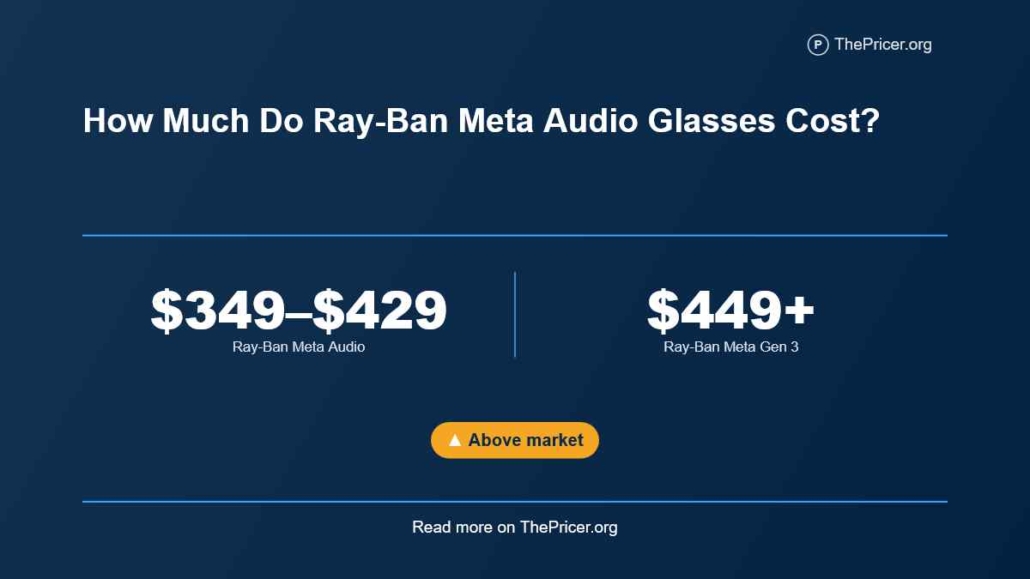
Ray-Ban Meta Audio glasses cost about $349 to $429 in the United States, depending on the frame, lens, and color combination. Meta introduced the camera-free smart glasses on September 23, 2026, with a $349 starting price. Ray-Ban currently lists $349 configurations with clear or standard lenses, while several Transitions versions cost $429. Preorders are open now, with Meta saying shipments begin October 13.
The price includes the glasses and their charging case. There is no camera, no photo or video storage, and no display in the lenses. Instead, Ray-Ban Meta Audio uses two open-ear speakers, six microphones, Bluetooth, touch and voice controls, and Meta AI for music, podcasts, calls, messages, and spoken assistance. Meta’s official launch announcement says battery life reaches up to 12 hours per charge, with another 48 hours available through the included charging case.
Article Highlights
Jump to sections
- Ray-Ban Meta Audio starts at $349 (at $30 per hour, earning that amount would take about 1.5 full-time workdays, before taxes) in the United States.
- Premium lens combinations such as Transitions currently reach about $429.
- The glasses come in Clubmaster and Burbank styles with 23 frame-and-lens combinations announced at launch.
- The included charging case provides up to 48 additional hours of charging beyond the glasses’ 12-hour single-charge rating.
- There is no camera, which distinguishes Meta Audio from the $449-and-up Ray-Ban Meta Gen 3 line.
- The $349 starting price is roughly $49 to $150 above several competing audio-focused smart glasses.
How Much Do Ray-Ban Meta Audio Glasses Cost?
Meta gives $349 (about 1.5 full-time workdays at $30 per hour) as the official starting price, but lens selection can increase the purchase price by $80 or more. Ray-Ban’s live U.S. listings show the following examples.
| Ray-Ban Meta Audio configuration | Current U.S. price | Price difference |
|---|---|---|
| Clubmaster, clear blue-violet filter | $349 | Base price |
| Clubmaster, Transitions lenses | $429 | +$80 |
| Burbank, Transitions lenses | $429 | +$80 |
| Ray-Ban Meta Gen 3 | $449+ | +$100 vs Audio base |
| Amazon Echo Frames | $299.99 | -$49.01 vs Audio base |
| Solos AirGo 3 | $199 to $299 | Up to $150 less |
The official Ray-Ban Meta Audio Clubmaster listing shows a $349 version with clear blue-violet-light-filter lenses. A Clubmaster with Transitions lenses is $429, an $80 increase.
Ray-Ban also lists the rectangular Burbank with Transitions lenses at $429. Not every frame and lens combination carries the same price, so the practical advertised range for the launch collection is about $349 to $429 before prescription upgrades and sales tax.
At a $30 hourly wage, earning the $349 base price takes about 11 hours and 38 minutes of gross work. A $429 configuration represents approximately 14 hours and 18 minutes.
What Comes With the $349 Price?
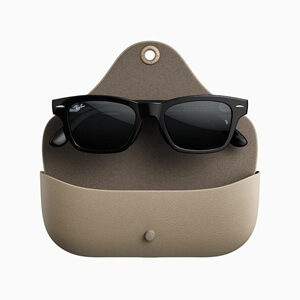
The standard purchase includes the Ray-Ban Meta Audio glasses and a charging case. Meta says the case supplies up to another 48 hours of charging after the glasses’ battery is depleted.
The glasses themselves weigh only 43 grams. Meta says they are its lightest and slimmest AI glasses so far. The frames use adjustable or replaceable nose pads, professional-adjustable temple tips, and overextension hinges to make longer wear more practical.
Ray-Ban’s current smart-glasses comparison lists two open-ear speakers and a six-microphone array. Controls include touch and voice input, while the wireless connection is Bluetooth 5.3. Compatible phones need at least iOS 17 or Android 10.
There is no onboard camera or photo and video memory. That omission is intentional rather than a missing feature from a cheaper version of the camera-equipped Ray-Ban Meta line.
Why Did Meta Remove the Camera?
Ray-Ban Meta Audio is Meta’s first Ray-Ban AI-glasses model built around audio without a camera. The product arrives after years of concern over camera-equipped smart glasses being worn in restaurants, workplaces, gyms, schools, and other places where people may not want to be recorded.
Reuters reported on growing privacy concerns around camera-equipped AI wearables immediately before Meta Connect 2026, including broader industry interest in products that can provide wearable AI without continuous camera hardware.
The new Audio model removes that entire part of the equation. It cannot take photographs, record video, livestream, or let Meta AI inspect something in front of you through a camera. In exchange, Meta gets a lighter frame and substantially longer battery life.
Tom’s Guide’s hands-on test described the Audio glasses as noticeably lighter and more conventional-looking than camera-equipped smart glasses, while also pointing out that $349 (about 1.5 full-time workdays at $30 per hour) is a substantial price for a product centered primarily on audio and AI.
The Battery Advantage
The standard Ray-Ban Meta Audio battery rating is up to 12 hours on one charge. The included case contributes another 48 hours, giving a theoretical combined charging capacity of about 60 hours before the case itself needs charging.
That does not mean the glasses run continuously for 60 hours. The glasses need to be returned to the case between charges. Actual runtime also changes with call time, volume, AI use, Bluetooth activity, temperature, and other settings.
The difference from camera-equipped Ray-Bans is still meaningful. Ray-Ban’s current comparison gives Meta Audio up to 12 hours, versus up to 9 hours for Ray-Ban Meta Gen 3.
That is roughly a 33% increase in maximum single-charge runtime. Removing the camera also eliminates the energy used to capture, process, and store photos and 3K video.
Clubmaster vs Burbank
Meta Audio launches in two Ray-Ban styles. Clubmaster uses the familiar browline design associated with the long-running Ray-Ban model. Burbank is a more conventional rectangular frame.
Meta says there are 23 frame-and-lens combinations across the two styles. Ray-Ban currently shows six Clubmaster combinations and five Burbank color families, with different lens variations creating the larger overall range.
The starting hardware technology does not change between the two. Both use open-ear speakers, six microphones, Meta AI, Bluetooth 5.3, touch controls, and the same claimed 12-hour battery life.
The price difference instead comes mainly from the optical configuration. A $349 clear-lens model and a $429 Transitions configuration use the same core smart-glasses hardware, meaning the $80 increase is primarily a lens upgrade rather than a technology upgrade.
Prescription Lenses
Both Meta Audio styles support prescription lenses. That matters because someone who wears corrective lenses may use these as their everyday glasses rather than as a second wearable device.
Ray-Ban accepts prescription information during checkout and says customers can enter it manually, upload a prescription, or send it after purchase. The company also accepts many vision-insurance plans and allows benefits to be applied during eligible purchases.
There is no single published prescription surcharge that applies to every buyer. Single-vision, progressive, high-index, Transitions, coatings, insurance benefits, and prescription strength can all change the final amount.
That means a prescription buyer should use $349 to $429 as the frame-and-smart-hardware starting point, not as a guaranteed final checkout price. Our existing guide to Meta sunglasses pricing shows how prescription Ray-Ban Meta configurations can move above the advertised base price once premium lenses are added.
No Mandatory Monthly Hardware Subscription
 Meta and Ray-Ban do not list a required monthly subscription for normal Ray-Ban Meta Audio operation. You do need a compatible smartphone, a Meta account, the Meta AI app, and wireless internet access for applicable AI functions.
Music and podcast services can create separate expenses. Someone using Spotify, Apple Music, Amazon Music, Audible, or another paid service will still pay that provider’s normal subscription price. The glasses do not include those subscriptions merely because they can play their content.
The same applies to mobile connectivity. Audio is sent through the paired phone, so any cellular data or voice-plan expenses remain part of the phone bill rather than a separate Ray-Ban charge.
This makes the purchase structure simpler than a wearable with a mandatory service plan. For most users, the ongoing product cost is mainly the services they already use rather than a new $10 or $20 smart-glasses bill every month.
The Charging Case Is Included
The charging case is an important inclusion because the glasses charge through it. Losing the case can therefore become a replacement expense, although Ray-Ban had not published a separate replacement price specifically for the new Audio case at launch.
One small omission is easier to price because many buyers already own the part. Ray-Ban says the glasses ship without a charging cable to reduce electronic waste.
If you already own the required compatible charging equipment, this adds nothing to the purchase. If not, a cable and suitable power adapter become a minor additional cost.
The same issue exists across other modern smart eyewear, where the carrying case is part of the power system rather than a simple protective accessory.
Meta Audio vs Ray-Ban Meta Gen 3
The new camera-equipped Ray-Ban Meta Gen 3 starts at $449, according to Meta’s September 23 announcement. That makes it $100 more than the $349 Audio starting price, or about 28.7% more.
For the extra $100, Gen 3 adds a 12MP camera, 3K video recording, local media storage, Wi-Fi, and visual features that Audio cannot perform. It also has shorter rated battery life, at up to nine hours rather than 12.
TechRadar’s Gen 3 hands-on coverage confirms that Meta is now deliberately splitting the Ray-Ban range between camera-equipped AI glasses and a separate camera-free Audio line.
If you want to take photos or videos from your point of view, the $100 hardware difference is relatively modest. If cameras are a reason you would avoid smart glasses altogether, paying for Gen 3 adds a feature you specifically do not want.
Our broader smart-glasses pricing guide shows how much the category has changed from early display-heavy products to lighter audio and AI wearables.
Are $349 Audio Glasses Expensive?
Against other camera-free audio glasses, Ray-Ban Meta Audio carries a premium. Amazon Echo Frames are still listed around $299.99 at major U.S. retailers. That puts the Meta Audio base price about $49 higher, or roughly 16.3% above Amazon’s list price.
Solos sells its AirGo 3 audio smart glasses from about $199 to $299 depending on the frame. A $299 AirGo configuration is about $50 below Ray-Ban Meta Audio, while a $199 model is $150 cheaper.
Ray-Ban’s premium is not solely for electronics. Buyers are also paying for Ray-Ban frame design, optical-retailer support, prescription compatibility, and the EssilorLuxottica eyewear network.
There are also far more expensive audio-focused glasses for specialized use. EssilorLuxottica’s new Nuance Audio Plus starts at $829, but that product incorporates FDA-cleared over-the-counter hearing-assistance technology and is not a direct music-and-AI alternative.
A Realistic First-Year Cost
A buyer choosing the base $349 Clubmaster and needing no prescription upgrade can remain close to the advertised price. At an example 8% sales-tax rate, the $349 glasses would cost about $376.92 at checkout.
A $429 Transitions pair subjected to the same example tax rate would cost approximately $463.32.
The difference between those two checkouts is $86.40, including the example tax. Over three years, there is no mandatory smart-glasses subscription to add, so ownership can remain close to the original purchase price if the glasses, battery, and charging case remain in service.
A prescription buyer can land higher. The correct way to estimate that purchase is to price the required optical lenses at checkout, apply any insurance benefit, and then compare the resulting out-of-pocket amount rather than applying a generic prescription surcharge.
Warranty and Replacement Risk
Ray-Ban’s product information states that manufacturer defects are covered for one year in the United States. Buyers in the EU or EFTA receive a two-year limited warranty period under the published terms.
The main hardware pieces worth protecting are the frames, electronics, battery, speakers, microphones, and charging case. Unlike normal Ray-Bans, damage to the temples can involve electronics rather than only frame material.
A lost charging case is also more consequential than losing a normal eyeglass case because the case supplies power to the glasses. Ray-Ban has not yet posted a standalone U.S. Audio-case price, so that replacement cost should be treated as unconfirmed rather than copied from older Ray-Ban Meta generations.
Who Gets the Most Value From Them?
They make more sense if:
- You already wear glasses for many hours per day and want audio without earbuds.
- You use voice calls, podcasts, music, messages, and AI frequently.
- You specifically do not want a camera on your face.
- You need prescription compatibility.
- You value longer battery life more than photo and video capture.
They make less sense if:
- You mainly want inexpensive Bluetooth audio.
- You rarely use voice assistants.
- You already wear comfortable earbuds for most of the day.
- You want hands-free photos and video.
- A $199 to $299 competing audio-glasses model already covers your needs.
People deciding between audio glasses and immersive headsets are comparing two very different products. Our VR headset cost guide covers devices that place displays in front of your eyes rather than using ordinary-looking lenses with open-ear audio.
What We Verified
- Meta announced Ray-Ban Meta Audio on September 23, 2026, with a starting price of $349 and shipments beginning October 13.
- Ray-Ban’s U.S. store shows a $349 Clubmaster configuration and $429 Transitions configurations for both Clubmaster and Burbank.
- Meta confirms 12 hours of rated battery life plus up to 48 additional hours from the included case.
- The glasses weigh approximately 43 grams and use two open-ear speakers and a six-microphone array.
- Engadget’s Meta Connect 2026 coverage independently confirmed the launch of Meta’s new camera-free Ray-Ban line.
- Competing audio smart glasses are available below the $349 Ray-Ban starting point, including Solos models from $199 to $299 and Echo Frames around $299.99.
Answers to Common Questions
How much do Ray-Ban Meta Audio glasses cost?
Ray-Ban Meta Audio glasses start at $349 in the United States. Current premium lens configurations reach about $429 before prescription upgrades and sales tax.
Do Ray-Ban Meta Audio glasses have a camera?
No. They are Meta’s first Ray-Ban AI glasses built specifically without a camera. They focus on music, podcasts, calls, messaging, open-ear audio, and Meta AI.
Do Ray-Ban Meta Audio glasses require a subscription?
Meta does not list a mandatory monthly subscription for their standard functions. You need a Meta account, the Meta AI app, a compatible smartphone, and internet access for applicable AI services. Music or media subscriptions remain separate.
How much are Ray-Ban Meta Audio glasses with Transitions lenses?
Several Transitions configurations are currently listed at $429, or $80 above the $349 starting price.
Are Ray-Ban Meta Audio glasses cheaper than regular Ray-Ban Meta glasses?
Yes compared with the new generation. Ray-Ban Meta Gen 3 starts at $449, making the base Audio model $100 cheaper. Gen 3 adds cameras, photo and video capture, and local storage.
Disclosure: Educational content, not financial advice. Prices reflect public information as of the dates cited and can change. Confirm current rates, fees, taxes, and terms with official sources before purchasing. See our methodology and corrections policy.