
How Much Does a Hysterectomy Cost?
Updated on | Written by Alec Pow
This article was researched using 14 sources. See our methodology and corrections policy.
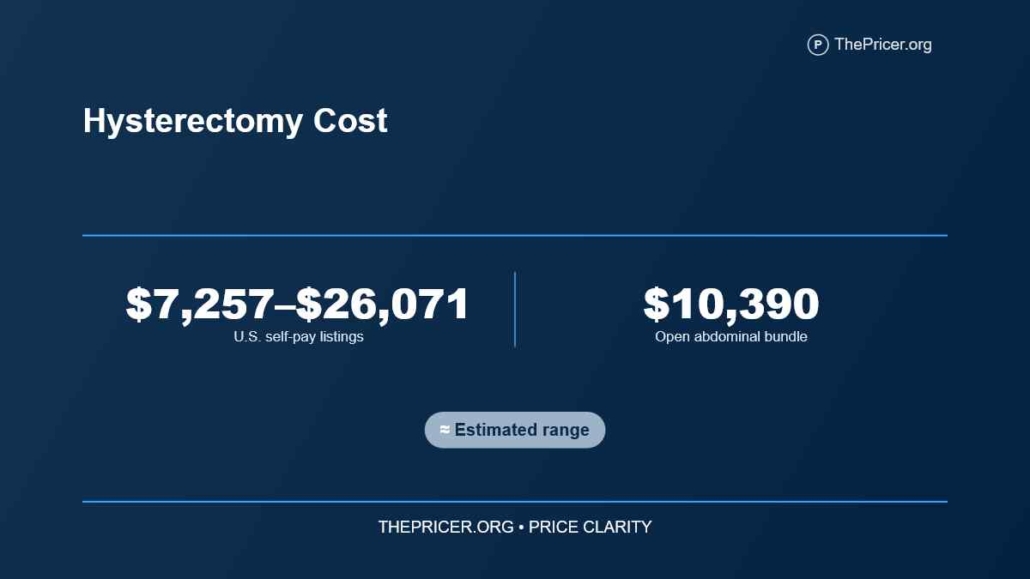
A hysterectomy can cost roughly $7,257 to $26,071 in current U.S. self-pay marketplace listings, depending on the surgical route, facility, location, and what the package includes. MDsave lists current vaginal hysterectomy prices of $7,257 to $17,638, with a marketplace average of $10,090, while laparoscopic hysterectomy prices run from $8,569 to $26,071, with a marketplace average of $17,557.
Those figures are self-pay price references, not universal hospital bills. An insured patient may owe far less than the cash price, while a hospital charge can be far higher. The useful comparison is the amount tied to the exact procedure, facility, surgeon, anesthesia arrangement, insurance network, and expected recovery setting.
Article Highlights
Jump to sections
- Current self-pay listings place common hysterectomy procedures from about $7,257 to $26,071 (at $30 per hour, earning that amount would take about 1.4 to 5 months of full-time work, before taxes).
- MDsave’s current marketplace averages are about $10,090 for vaginal hysterectomy and $17,557 for laparoscopic hysterectomy.
- Surgery Center of Oklahoma currently posts an open abdominal hysterectomy with an overnight stay at $10,390.
- A low surgical bundle can exclude the first consultation, imaging, laboratory work, specialist clearance, and care for complications.
- Insurance changes the patient’s bill because the negotiated amount is filtered through the deductible, coinsurance, network rules, and the plan’s out-of-pocket limit.
- Recovery can create a second cost through unpaid leave, travel, help at home, and childcare.
How Much Does a Hysterectomy Cost?
A hysterectomy removes the uterus. A total hysterectomy removes the uterus and cervix, while a supracervical hysterectomy leaves the cervix in place. Removal of the fallopian tubes or ovaries is a separate part of the operative plan rather than an automatic part of every hysterectomy. The ACOG hysterectomy guidance also separates the surgical route from the organs removed, which matters when comparing two prices that use the same broad procedure name.
The operation may be performed through the vagina, through abdominal incisions with laparoscopy, with robotic assistance, or through a larger open abdominal incision. These approaches can have different facility requirements, operating times, recovery plans, and eligibility limits.
A quote for a vaginal hysterectomy for a smaller uterus is not automatically comparable with a robotic case involving adhesions, a large uterus, or another procedure performed at the same time.
The diagnosis matters too. Fibroids, prolapse, abnormal bleeding, endometriosis, adenomyosis, and cancer can lead to very different operative plans. Price research is most useful after the surgeon has identified the planned route and whether another procedure will be performed with the hysterectomy.
Prices by Surgical Route
Current self-pay data show why one national hysterectomy average can mislead. The vaginal and laparoscopic figures below are the same MDsave prices cited in the opening. Open abdominal surgery is harder to reduce to one current national cash number, so the table uses a direct provider offer rather than blending unrelated hospital charges with marketplace prices.
| Surgical route | Current self-pay range | Marketplace average | Price scope |
|---|---|---|---|
| Vaginal hysterectomy | $7,257 to $17,638 (about 1.4 to 3.4 months of full-time work at $30 per hour) | $10,090 | MDsave marketplace listings |
| Laparoscopic hysterectomy | $8,569 to $26,071 | $17,557 | MDsave marketplace listings |
| Open abdominal hysterectomy | $10,390 | Not a national average | Direct provider bundle with overnight stay |
The numbers also correct a common pricing assumption. Within the same marketplace, the laparoscopic average of $17,557 is about 74% above the vaginal average of $10,090. That does not prove laparoscopy itself causes a 74% premium because patient selection, provider mix, geography, and bundles differ. It does show that a smaller incision does not guarantee the lowest self-pay quote.
Direct provider pricing adds another useful reference. The posted open abdominal price at Surgery Center of Oklahoma is $10,390 and includes an overnight stay. That one price is a provider-specific cash offer, not a national average.
What the Quote Includes
A hysterectomy quote can represent a complete surgical bundle or only one part of the episode. The major billed components are the surgeon, operating facility, anesthesia, routine supplies, recovery-room care, pathology when included, and follow-up covered by the surgical package. Patients comparing a hospital estimate with an ambulatory surgery center price should first match those components line by line.
Published bundled prices can still leave work outside the package. Surgery Center of Oklahoma states in its published pricing exclusions that its posted surgical prices include the facility, surgeon, anesthesiologist, and uncomplicated follow-up care. Its initial consultation costs another $250 (about 1 full-time workday at $30 per hour). Diagnostic studies such as laboratory work, MRI, X-rays, and specialist consultations are outside the posted bundle.
That is the hidden-price issue worth checking before comparing two quotes. A lower number may exclude testing that another provider has already included. A separate anesthesia cost line can also appear when the surgical quote is not bundled. Preoperative imaging may include a pelvic ultrasound or an MRI, depending on the diagnosis and operative planning. Ask for the quoted scope in writing rather than adding generic fee estimates that may not apply to the case.
Insurance and Medicare Costs
There is no single insured hysterectomy price. With commercial insurance, the patient usually pays according to the plan’s allowed amount, remaining deductible, copayment or coinsurance, network status, and remaining out-of-pocket limit. CMS defines the main health insurance cost terms used on medical bills, including allowed amount, deductible, coinsurance, in-network provider, and out-of-pocket limit.
A patient with a high deductible can owe a large share of the negotiated rate even when the surgery is covered. A patient who has already met most of the deductible may owe a much smaller balance. This is why a hospital’s cash price, billed charge, insurer-negotiated amount, and patient responsibility should never be presented as if they were the same number.
Medicare also separates inpatient and outpatient payment. Medicare states that it covers many medically necessary surgical procedures under Part A or Part B and advises patients to confirm whether the case is inpatient or outpatient because the cost can differ. Its surgery coverage guidance also tells patients to ask the doctor and facility about the procedure and care afterward. A Medicare estimate is a federal benefit calculation, not a normal uninsured cash quote.
A Worked Self-Pay Total
 A real provider bundle gives a cleaner worked example than a fictional hospital bill. Surgery Center of Oklahoma currently posts its open abdominal hysterectomy at $10,390, including an overnight stay. Its pricing policy separately states that the initial consultation is $250. Adding those two known amounts produces a minimum scheduled-care subtotal of $10,640.
The arithmetic is $10,390 plus $250, which equals $10,640. This is a calculated provider-specific subtotal, not a national average. It still excludes any required laboratory work, imaging, specialist risk assessment, and care outside the uncomplicated package. Those excluded services should not be filled with invented estimates because the required tests differ by patient.
This example also shows why the advertised surgery number is not always the true amount needed before the operation. Even with an unusually transparent bundle, the known preoperative cash commitment is already $250 above the headline surgical price before diagnostics enter the picture. If another facility quotes $11,000 but includes the consultation and required testing, it could be financially comparable with a lower surgical price that does not. The right comparison is the matched episode of care.
Recovery
Recovery affects household cost even when the medical bill is fixed. Cleveland Clinic reports that vaginal and laparoscopic recovery often takes about two to four weeks, while abdominal hysterectomy recovery can take up to six weeks. Its hysterectomy recovery guidance says return to work can fall within roughly two to six weeks, depending on the procedure and the type of work.
Lost wages can exceed several smaller medical add-ons. Using a labeled illustration, a worker earning $25 per hour who misses two unpaid 40-hour workweeks loses $2,000 in gross pay. Six unpaid weeks at the same assumed wage equal $6,000. Paid sick leave, disability coverage, remote work, and a faster or slower recovery would change that result.
Other indirect expenses can include childcare, transportation, hotel stays for patients traveling to a distant center, help with meals or household tasks, and parking for follow-up visits. These are not reasons to select one surgical route over another. The surgeon’s clinical plan comes first. They are budgeting items that explain why two patients with the same medical bill can face different household costs.
Alternatives
A hysterectomy is definitive because the uterus is removed, but it is not the only procedure used for every benign uterine condition. The alternative depends on the diagnosis, symptoms, fertility goals, prior treatment, anatomy, and the clinician’s medical judgment. A cost comparison is useful only after the alternatives are medically applicable to the same problem.
For uterine fibroids, ACOG describes fibroid treatment options that can include medication, myomectomy, uterine artery embolization, radiofrequency ablation, and hysterectomy. Myomectomy removes fibroids while leaving the uterus in place. Current myomectomy cash prices on MDsave run from $5,072 to $12,938, with a marketplace average near $8,043.
That range may overlap the lower end of hysterectomy pricing, so the cheaper procedure cannot be chosen from the price label alone. A fibroid patient comparing procedures can also read the related fibroid surgery cost analysis.
For prolapse, endometriosis, adenomyosis, abnormal bleeding, or cancer, the relevant alternatives and billing scope can be different. The same applies when fertility preservation changes the treatment goals. Price should follow the medically appropriate options rather than define them, and two procedures should be compared financially only when both are realistic choices for the same diagnosis.
Compare Hysterectomy Quotes
Start with the exact procedure name and route. Ask whether the quote covers the surgeon, facility, anesthesia, pathology, routine follow-up, and any expected overnight stay. Then identify what is outside the quote, including the first consultation, blood work, imaging, specialist clearance, prescriptions, and treatment for complications. For insured care, confirm network status for each billing group rather than only the hospital.
For the financial choice between a cash package and insurance billing, use these filters after the surgical setting has been settled with the treating clinician.
Makes sense if
- You are uninsured or plan to pay without submitting the claim to insurance.
- The package price is lower than the expected insurance cost sharing for the same scope.
- The surgeon and facility confirm that the package fits the planned procedure and medical setting.
- The written exclusions are limited enough that the remaining costs can be budgeted.
Does not make sense if
- Using insurance would put the patient below the cash package after deductible and coinsurance.
- The cash package excludes major services that are included in the insurance estimate.
- The facility cannot perform the procedure in the setting the surgeon says is appropriate.
- Paying cash would prevent the spending from counting toward plan benefits that matter later in the year.
Uninsured and self-pay patients can also request a written estimate before scheduled care. CMS says its good faith estimate rules require many providers and facilities to provide expected charges before non-emergency care, with a federal dispute process when the final bill is at least $400 above the estimate in covered circumstances.
Verification
- Checked hospitalization and recovery ranges against a second academic medical source.
- Cross-referenced bundle inclusion details for surgeon, facility, and anesthesiologist fees.
- Verified uterine artery embolization guidance as a diagnosis-specific fibroid alternative rather than a universal substitute for hysterectomy.
Answers to Common Questions
How much does a hysterectomy cost without insurance?
Current self-pay marketplace listings put common procedures around $7,257 to $26,071. The exact quote depends on surgical route, provider, location, and package inclusions.
Which hysterectomy route costs the least?
Current MDsave marketplace data show the lowest average among the three routes reviewed for vaginal hysterectomy at about $10,090. That is a pricing observation, not a recommendation. The surgeon determines which routes are medically appropriate.
Does insurance cover a hysterectomy?
Coverage depends on the plan, medical necessity rules, network status, and any authorization requirements. The patient’s final cost can include deductible, copayment, and coinsurance up to applicable plan limits.
Can I get a hysterectomy price before surgery?
Yes. Ask the surgeon, facility, and insurer for written estimates tied to the planned procedure. Uninsured and self-pay patients also have federal good faith estimate protections for many scheduled non-emergency services.
Disclosure: Educational content, not medical advice. Pricing varies by provider, location, and insurance. Confirm eligibility, coverage, and out-of-pocket costs with a licensed clinician and your insurer. See our methodology and corrections policy.