
How Much Does a Missile-Defense Interception Cost?
Published on | Written by Alec Pow
This article was researched using 10 sources. See our methodology and corrections policy.
A U.S. missile-defense interception can consume $4 million to more than $30 million in interceptor missiles, depending on the weapon system and how many rounds are fired.
A Patriot PAC-3 MSE missile costs approximately $4 million to $5 million, a THAAD interceptor roughly $12 million to $15 million, and an SM-3 Block IIA can exceed $25 million. These are missile acquisition benchmarks, not complete costs for operating the defensive system.
If two interceptors are used against one incoming missile, the expended ammunition cost can double. The final expense also involves radar, launchers, trained crews, command systems, testing, maintenance, and replacing depleted stocks.
Public procurement records allow useful estimates, but the Pentagon does not publish a complete financial accounting for every combat interception. A missile launch also does not guarantee that the target was destroyed.
Article Highlights
Jump to sections
- Patriot PAC-3 MSE interceptors generally cost approximately $4 million to $5 million each.
- THAAD missiles cost roughly $12 million to $15 million at recent U.S. procurement levels.
- SM-3 Block IIA procurement costs have approached or exceeded $27 million per missile.
- Two interceptor launches can double the missile expenditure against one incoming threat.
- Radar, launchers, command equipment, and long-term operations add costs not included in missile prices.
- The price of an incoming missile alone does not establish whether intercepting it was economically justified.

How Much Does a Missile-Defense Interception Cost?
Missile defense uses multiple layers because different systems are designed to engage different types of threats. Patriot provides lower-tier air and missile defense, THAAD addresses ballistic missiles at greater altitudes, and the naval SM-3 family primarily intercepts ballistic threats outside the atmosphere.
The Congressional Budget Office’s September 2026 national missile defense testimony provides comparable estimates for several interceptors in 2026 dollars. Its figures represent a hypothetical national defense architecture rather than recorded combat expenditures.
| Interceptor | Estimated cost per round | Two-round expenditure |
|---|---|---|
| Patriot PAC-3 MSE | $4.3 million | $8.6 million |
| THAAD | $13.4 million | $26.8 million |
| SM-3 Block IB | $16 million | $32 million |
| SM-3 Block IIA | $30.4 million | $60.8 million |
| Next-Generation Interceptor | $120 million | $240 million |
The values are rounded from CBO’s modeled quantities and costs. The Next-Generation Interceptor figure represents a future-system planning estimate, not a demonstrated price for an operational combat shot. The two-round column assumes both missiles are expended, without claiming a particular engagement doctrine or outcome.
Actual procurement prices depend on fiscal year, production lot, contract structure, and supporting hardware. A missile purchased years earlier may have a different historical acquisition cost from the amount needed to replace it today.
Patriot PAC-3 Engagement Costs
The PAC-3 Missile Segment Enhancement is among the most prominent modern U.S. ballistic missile interceptors. It is used within the Patriot air-defense system, which also requires radar, communications, launchers, and fire-control equipment.
A Reuters analysis from August 2026 places PAC-3 interceptor prices around $4 million to $5 million each, while a complete Patriot battery can cost more than $1 billion.
Using a midpoint of $4.5 million per missile, one defensive shot expends $4.5 million in interceptor inventory. Two shots expend $9 million, excluding the continuing cost of operating the Patriot system.
The battery price should not be divided by the number of missiles fired to create a supposed individual interception price. Its radar and launchers can support many engagements across their service lives.
The separate Patriot missile cost comparison provides the missile-specific acquisition context. The cost of defending a particular target still depends on the number and type of interceptors consumed.
THAAD Interceptor Spending
THAAD is designed to engage ballistic missile threats during their terminal phase. Its interceptor uses kinetic impact rather than a conventional explosive warhead.
The Congressional Research Service’s July 2025 THAAD assessment valued individual interceptors at approximately $12.7 million and described substantial inventory depletion during the June 2025 Israel-Iran conflict.
Using a planning rate of $12.8 million, firing two THAAD interceptors against one threat represents $25.6 million in missile expenditure. Four missiles would represent $51.2 million.
The THAAD procurement cost analysis also distinguishes flyaway missile cost from the larger weapon-system procurement allocation. A fiscal year 2025 missile-level amount of approximately $12.773 million differed from a broader weapon-system unit figure of about $20.583 million.
Those figures are not contradictory. The larger amount spreads other procurement expenses across the missiles purchased. Applying it as though it were solely the physical interceptor price would misrepresent the budget.
SM-3 and Naval Defense Costs
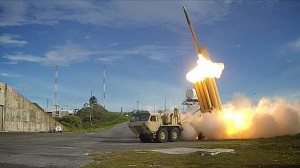 SM-3 interceptors are used by Aegis ballistic missile-defense systems aboard suitable Navy ships and at Aegis Ashore sites.
The Missile Defense Agency’s fiscal year 2026 procurement justification records SM-3 Block IIA purchases at approximately $27.018 million per missile in one historical procurement line, separate from associated launch canisters.
A two-interceptor engagement using that procurement price would expend approximately $54.04 million in missiles. This does not mean the Navy paid that amount for every operational engagement, since inventory can contain rounds purchased under different contracts.
The SM-3 missile pricing comparison details differences between the Block IB and more capable Block IIA. That variant distinction is important because grouping all SM-3 missiles under one price creates a misleading average.
Other naval air-defense missions use different weapons. The SM-6 missile cost analysis identifies recent procurement prices around $5.5 million to $7.841 million for different versions, excluding some launch-container expenses.
An SM-6 engagement and an SM-3 ballistic missile interception are not interchangeable capabilities. The lower missile price alone does not determine which system is appropriate.
Hidden Cost
Headlines often present one interceptor price as the cost of defeating an incoming missile. That assumes a single shot was fired and that it succeeded.
In reality, a defensive engagement may consume more than one interceptor. Multiple shots can reflect uncertainty, defensive requirements, or the behavior of the incoming threat. Public reports do not always identify how many missiles were fired at each individual target.
Consider a modeled Patriot engagement using an interceptor price of $4.5 million. One shot costs $4.5 million, while two shots cost $9 million in missile inventory.
Suppose ten incoming threats are engaged with two such interceptors each. Twenty launched missiles represent $90 million in ammunition expenditure.
At one interceptor per target, the same ten engagements would consume $45 million. The extra round per target doubles expenditure before considering outcomes or operating costs.
This is an arithmetic sensitivity model, not a claim that Patriot universally fires two missiles against every threat. The actual number of shots and any subsequent engagements depend on operational circumstances.
A Worked Interception Budget
Consider an illustrative defensive operation involving five incoming ballistic missiles. Assume the defender expends two PAC-3 MSE interceptors per threat, using the previously established $4.5 million procurement benchmark.
- Incoming threats engaged: 5
- Interceptors expended: 10
- Assumed interceptor cost: $4.5 million each
- Total missile expenditure: $45 million
- Radar, launcher, personnel, and support costs: not allocated
The modeled ammunition expenditure is $45 million, equivalent to $9 million per incoming missile engaged.
That is not the verified cost per successful interception. The calculation establishes the cost of the shots, without assuming that all five targets were destroyed.
There is a second important budget implication. If only four threats were successfully stopped, the same $45 million expenditure would equal $11.25 million per successful defense, although the fifth unsuccessful engagement still consumed resources.
This distinction matters whenever combat reporting uses the words launched, engaged, intercepted, and destroyed as though they meant the same thing.
Radar and System Operating Costs
Interceptor purchases represent only part of missile-defense spending. Operational systems require continuously maintained sensors, communications networks, launchers, command facilities, personnel, training, power, and spare equipment.
The Congressional Budget Office’s May 2026 national defense cost model estimated approximately $1.2 trillion to acquire and operate its notional nationwide missile-defense architecture across twenty years.
That estimate includes extensive ground and space-based infrastructure. It is not a forecast of the approved Golden Dome program’s final cost and should not be divided by a guessed number of missile interceptions.
CBO estimated an average $8.3 billion annually in operation and support expenses for its notional architecture, separate from much of the acquisition spending.
These system costs exist even when there is no combat engagement. Allocating them to a single interception would require defensible assumptions about operating life, readiness, utilization, and the total number of engagements.
For budgeting, the most transparent approach is to report interceptor expenditure and system ownership costs separately.
Why Procurement Contracts Mislead
Major defense contracts often cover more than the final missiles delivered. Production tooling, supplier investments, development, engineering, testing, and long-term support may all be represented.
In October 2026, Reuters reported that Raytheon received an agreement worth up to $6.3 billion for SM-3 Block IB production and sustainment.
The contract ceiling is not a published price for a fixed number of identical operational missiles. Dividing that ceiling by an assumed delivery quantity could produce a false unit cost.
Similarly, a July 2026 Lockheed Martin agreement worth up to $58.6 billion supports expansion of PAC-3 production rather than representing the confirmed purchase of one precisely defined inventory of interceptors. October reporting on PAC-3 production also describes efforts to increase manufacturing output.
Public accounting must therefore distinguish a contract ceiling, appropriated amount, flyaway unit cost, weapon-system unit cost, and completed missile delivery.
The Cost of Replacing Inventory
A successful interception still reduces available missile inventory. Replenishment spending depends on which interceptor was used, current procurement conditions, and factory capacity.
The Missile Defense Agency’s fiscal year 2026 budget request included approximately $840.1 million for THAAD procurement associated with 37 interceptors and related program costs.
Dividing that entire budget by 37 produces roughly $22.7 million per interceptor-equivalent. It would be incorrect to describe this as the interceptor’s factory price because the broader procurement budget includes more than missile hardware.
The CSIS analysis of interceptor production highlights the pressure created by extensive wartime expenditure and slow inventory replenishment.
Production shortages mean that the financial burden cannot be assessed using nominal missile prices alone. A defense ministry must also account for readiness and the opportunity cost of using a scarce missile that may take years to replace.
These are national-defense procurement constraints, not retail price surcharges automatically applied after every launch.
Is Intercepting a Cheap Threat Wasteful?
Missile defense can involve striking relatively inexpensive weapons with costly interceptors. That creates an unfavorable ammunition price ratio without necessarily making the engagement economically irrational.
The CSIS cost-exchange assessment explains why comparing the price of an incoming drone or missile with an interceptor can obscure the larger value of the infrastructure, personnel, and civilians being protected.
A $4.5 million interceptor used against a hypothetical $100,000 attacking weapon creates a 45-to-1 missile-price ratio. It does not establish that the defensive expenditure was unjustified.
The attack could threaten an aircraft, power installation, military base, or populated area whose potential losses far exceed the interceptor cost.
Equally, expensive interceptors are not an unlimited answer to inexpensive mass-produced threats. Defensive systems must maintain enough ammunition and capabilities to handle later attacks.
The CSIS research on massed attacks describes how larger, more frequent mixed missile-and-drone salvos create sustained pressure on air defenses.
The relevant public-finance question is therefore not simply what the attacker paid. It is what risk the expenditure reduced, what resources were consumed, and what defensive capacity remains afterward.
How Should the Cost Be Reported?
A precise public estimate should state the type of missile, procurement year, number of rounds launched, and whether the figure includes support equipment.
Makes sense if
- The reported figure distinguishes one interceptor from an entire engagement.
- Procurement prices are matched to the correct missile variant and fiscal year.
- Unconfirmed interceptions are not counted as verified successful defenses.
- Radar, launchers, and replenishment expenses are identified separately.
Does not make sense if
- A multibillion-dollar contract ceiling is treated as a missile purchase invoice.
- A two-missile engagement is reported using the price of only one round.
- System construction costs are assigned entirely to one combat interception.
- The attacking weapon’s purchase price is treated as the full value of the defended target.
Missile-defense costs are public procurement and operational expenditures, not consumer prices. Exact expenditure from an ongoing conflict may remain uncertain even when individual interceptor procurement records are available.
Answers to Common Questions
How much does one Patriot interception cost?
One PAC-3 MSE missile costs roughly $4 million to $5 million. Two rounds would consume approximately $8 million to $10 million in interceptors, excluding system costs.
How much does a THAAD interception cost?
One THAAD missile costs approximately $12 million to $15 million. The expense increases when multiple interceptors are launched against a target.
What is the most expensive missile-defense interceptor?
Among the systems discussed, CBO’s future Next-Generation Interceptor estimate is about $120 million per round. It is a modeled future acquisition cost, not a demonstrated combat expenditure.
Why fire an expensive missile at a cheaper weapon?
The value of the people, facilities, or military assets being protected can greatly exceed the attacker’s weapon cost. Interception decisions cannot be evaluated through ammunition prices alone.
Does a successful interception cost more than the missile itself?
Yes, when system operation and support are included. A reliable full cost per successful interception requires information about infrastructure, personnel, lifetime usage, missiles fired, and confirmed outcomes.
Disclosure: Educational content, not financial advice. Prices reflect public information as of the dates cited and can change. Confirm current rates, fees, taxes, and terms with official sources before purchasing. See our methodology and corrections policy.