How Much Does A Tomahawk Steak Cost?
Updated on | Written by Alec Pow
This article was researched using 12 sources. See our methodology and corrections policy.
A raw tomahawk steak usually costs $18 to $50 per pound for USDA Choice, Prime, or dry-aged beef, placing a 2.5 to 3.5-pound steak near $50 to $175. American Wagyu tomahawks commonly cost $65 to $90 per pound, while restaurant versions often carry menu prices of $150 to $275 before side dishes, drinks, tax, and tip.
The displayed weight includes the long rib bone, so a tomahawk priced at $30 per pound does not provide the same amount of edible beef as a boneless ribeye at the same rate. Grade, marbling, aging, breed, steak weight, bone length, shipping, and restaurant service all change the real cost.
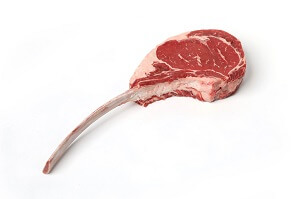
A tomahawk is a thick-cut bone-in ribeye sold by total raw weight. Most pieces weigh about 2 to 3.5 pounds and are designed to serve two people, although appetite, side dishes, and bone weight affect the number of portions.
Article Highlights
Jump to sections
- A raw Choice or Prime tomahawk commonly costs $18 to $50 (at $30 per hour, earning that amount would take about 0.6 to 1.7 hours of work, before taxes) per pound.
- A typical 2.5 to 3.5-pound steak costs about $50 to $175 from a grocery store, butcher, or online seller.
- American Wagyu tomahawks often cost $165 to $175 for a 2.5-pound steak.
- Steakhouse menu prices commonly run from $150 to $275 before extras.
- The bone can account for roughly 15% to 25% of the labeled weight in a large long-bone steak.
- A $90 tomahawk can reach an effective cost near $50 per pound of cooked meat after bone weight and cooking loss.
- A cowboy ribeye provides a similar cut with a shorter bone and often a lower total price.

How Much Does a Tomahawk Steak Cost?
| Tomahawk type | Price range | Likely total per steak |
|---|---|---|
| Grocery-store Choice | $18 to $28 (about 36 to 56 minutes at $30 per hour) per lb. | $50 to $90 |
| Butcher-shop Prime | $25 to $45 per lb. | $70 to $150 |
| Dry-aged tomahawk | $40 to $55 per lb. | $110 to $175 |
| American Wagyu | $65 to $90 per lb. | $160 to $225 |
| Restaurant tomahawk | $150 to $275 | Menu price before extras |
| Luxury Japanese A5 or presentation steak | $500 to $1,000+ | Rare restaurant offering |
Current online listings show how widely prices can spread. Snake River Farms lists a 2.5-pound Double R Ranch tomahawk at $79, while its American Wagyu versions start near $165 and a dry-aged Wagyu tomahawk starts near $175.
Porter Road lists a 2.5 to 3-pound dry-aged steak for $135. That works out to about $45 to $54 per pound, depending on the exact weight delivered.
Omaha Steaks lists two 32-ounce tomahawk ribeyes for $199.99 at the displayed sale price. The four-pound package equals about $50 per pound before any delivery charge or promotion.
What You Are Actually Buying
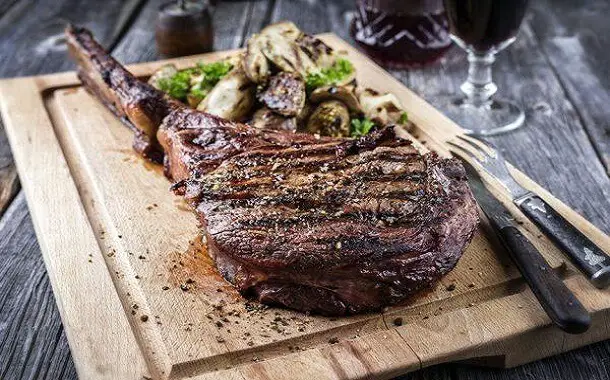
A tomahawk steak is a thick bone-in ribeye with a long section of rib bone left attached. The bone is Frenched, meaning meat and tissue are trimmed away to create the clean handle associated with the cut. An Omaha Steaks cut description identifies it as a large, well-marbled ribeye with the long bone retained.
The cut comes from the rib primal and contains the same main muscles found in a ribeye. A cowboy ribeye is closely related but usually has a shorter exposed bone. A standard bone-in ribeye has even less bone extending past the meat.
The long bone creates a dramatic presentation, but it does not pour flavor into the center of the steak. Marbling, aging, beef grade, browning, seasoning, and cooking control have more influence on taste and tenderness. The bone changes weight, shape, heat movement, packaging needs, and the amount of edible beef purchased.
Most tomahawks are 1.5 to 2 inches thick and weigh 2 to 3.5 pounds. Some retail products are smaller. Whole Foods describes one long-bone rib steak product at 1.5 to 2 pounds per rib, showing why shoppers should check weight instead of assuming every tomahawk feeds the same number of people.
Prime, Choice, Wagyu, and Dry-Aged
USDA grade is one of the strongest price signals. The USDA beef-grade explanation states that Prime has more marbling than Choice, while Choice rib steaks can still be tender and juicy. Prime commands a higher price because richly marbled carcasses make up a smaller share of graded beef.
American Wagyu usually combines Japanese Wagyu genetics with American cattle breeds. The label alone does not establish one marbling level, breeding percentage, or quality grade. Buyers should check the seller’s grading system, breed claim, source ranch, weight, and whether the steak is wet-aged or dry-aged.
Dry aging raises the selling price because the processor loses weight through moisture evaporation and trimming. A seller also ties up refrigerated space for weeks. The higher price buys concentrated flavor and a different texture, not a larger steak.
Two steaks labeled “tomahawk” should not be compared by total price alone. A $79 (about 2.6 hours of work at $30 per hour) Choice steak and a $175 dry-aged American Wagyu steak may have the same approximate weight while differing in marbling, aging loss, breed program, and supply.
How Much of the Price Is Bone?
The butcher weighs the entire steak, including the exposed bone. The exact bone share differs with bone length, steak thickness, trimming, and the animal’s size, but the buyer should expect a meaningful part of the package to be inedible.
Bone-adjusted example
Assume a three-pound tomahawk costs $90, equal to $30 per labeled pound. If the long bone and heavy external trimming weigh 12 ounces, the raw edible portion before further trimming is about 2.25 pounds.
- Store price: $90
- Labeled steak weight: 3 pounds
- Estimated bone and heavy trim: 0.75 pound
- Remaining raw beef: 2.25 pounds
- Effective raw-meat price: $40 per pound
If cooking reduces the remaining weight by 20%, about 1.8 pounds of cooked beef remains. The effective cost becomes $50 per pound of cooked meat before charcoal, seasoning, butter, or side dishes.
This does not mean the bone has no value. Presentation is part of the reason people choose a tomahawk. It does mean that a $30-per-pound tomahawk and a $30-per-pound boneless ribeye are not equal purchases.
Tomahawk vs. Cowboy
A cowboy ribeye gives the buyer a thick bone-in ribeye with a shorter handle. It takes up less space in a pan or grill and places less non-edible bone on the scale. The eating quality can be nearly identical when grade, aging, thickness, and marbling match.
A boneless ribeye offers the clearest meat yield. It is easier to portion, store, sear, and divide among guests. The price per labeled pound may look similar or higher, but almost all of the purchased weight is beef.
Prime rib comes from the same rib section but is sold as a roast rather than one oversized steak. A large group may get better value from a prime rib roast, while a smaller dinner can compare the current ribeye steak price.
The tomahawk makes the most sense when presentation and sharing matter. A cowboy or boneless ribeye is often the stronger purchase when edible yield, pan space, and portion control matter more.
Restaurant Tomahawk Prices
Restaurant pricing includes kitchen labor, aging, trimming, storage, cooking loss, service, rent, breakage, and the risk of holding a large perishable cut. The menu price is not calculated by adding a small markup to the butcher cost.
Fleming’s currently lists a 35-ounce tomahawk at $150. Mastro’s lists a 32-ounce tomahawk chop at $215 and a 40-ounce version at $275.
A British steakhouse menu lists a 36 to 38-ounce sharing tomahawk at £69.95. This shows why restaurant prices must be tied to location, currency, date, weight, and included side dishes.
Worked restaurant total for two
Start with a $175 menu steak. Add two sides at $16 each, two drinks at $18 each, and one sauce or starter at $14. The subtotal reaches $257.
An assumed 8% sales tax adds $20.56. A 20% tip calculated on the pre-tax subtotal adds $51.40. The dinner reaches $328.96, or about $164.48 per person.
The $175 menu price represented only about 53% of the finished dinner bill. Location, alcohol, service charges, and gratuity practices can move the total higher or lower.
Three Buying Scenarios
Choice steak cooked at home
A shopper buys a three-pound Choice tomahawk at $20 per pound. The steak costs $60. Charcoal, seasoning, butter, and two side dishes add $18, making the meal $78. Shared by two people, the cost is $39 per person.
Dry-aged butcher steak
A 2.75-pound dry-aged tomahawk costs $49 per pound, or $134.75. Shipping adds $20, and meal ingredients add $25. The home dinner reaches $179.75, or about $89.88 per person for two.
American Wagyu special occasion
A 2.5-pound American Wagyu tomahawk costs $175. Shipping and packaging add $25, while side dishes and cooking supplies add $30. The total is $230. Four smaller servings cost $57.50 each, while two large servings cost $115 each.
Luxury Tomahawks
The old claim that the world’s most expensive tomahawk always costs $1,300 cannot be supported as a current fixed price. Luxury restaurant dishes change by location, menu revision, steak weight, Wagyu origin, and presentation.
Mastro’s previously introduced a nearly four-pound Japanese A5 long-bone ribeye at $1,000. This was a rare restaurant product with Japanese provenance documentation, not the usual price of a tomahawk steak.
Gold leaf contributes little weight or flavor. The high bill reflects the beef, restaurant setting, labor, scarcity, presentation, branding, and willingness of diners to pay for a spectacle. It is not credible to assign an invented cost to the meat, spices, and gold and declare the rest pure profit.
Luxury steaks should be labeled as restaurant-specific or historical price examples. They should not set the expected budget for a grocery-store or butcher-shop tomahawk.
Cooking a Tomahawk Safely

A thick tomahawk benefits from a two-stage method. The steak can cook slowly over indirect heat or in a low oven, then finish over high heat for browning. A meat thermometer should be placed in the thickest portion without touching the bone.
The previous instruction to cook the center to 95°C to 100°C, equal to 203°F to 212°F, was wrong. That temperature would leave the steak severely overcooked.
The USDA minimum temperature chart calls for whole beef steaks to reach 145°F, or 62.8°C, followed by at least a three-minute rest. Diners who choose a lower culinary doneness should recognize that it falls below the USDA minimum.
Carryover heat can raise the center temperature after the steak leaves the grill. The exact increase depends on steak thickness, cooking temperature, bone, and resting conditions, so a thermometer is more dependable than cooking for a fixed number of minutes.
When Paying for a Tomahawk Makes Sense
Makes sense if:
- The long-bone presentation is part of the occasion.
- The grade, marbling, weight, and aging method are stated.
- Two or more people will share one thick steak.
- The cook has enough grill or oven space for the cut.
- The price remains reasonable after bone weight and shipping are counted.
Does not make sense if:
- The buyer only wants the highest edible-meat yield.
- The seller gives no grade, weight, or aging information.
- A shorter-bone cowboy ribeye costs much less at the same quality.
- The steak is too large for the available pan or grill.
- The purchase is based only on bone length or a social-media presentation.
A current steak-buying guide recommends examining marbling, grade, packaging, and the cut itself instead of treating a premium label as proof of value. That approach matters even more with a tomahawk because the bone makes the package look larger.
What We Verified
- Checked current butcher pricing across Choice, dry-aged, and American Wagyu tomahawks.
- Confirmed restaurant menu examples ranging from $150 to $275.
- Cross-referenced the tomahawk’s ribeye anatomy and long Frenched bone.
- Verified that USDA Prime contains more marbling than USDA Choice.
- Confirmed the USDA minimum of 145°F with a three-minute rest for whole beef steaks.
Related Steak Costs
A tomahawk is a ribeye presentation, so the closest comparison is a standard bone-in or boneless ribeye. Buyers interested in highly marbled beef can compare the cost of Kobe and Wagyu beef, where origin, grading, and authentication affect the price more than bone length.
A porterhouse steak combines strip steak and tenderloin on opposite sides of the bone. It offers a different eating experience and can be a better sharing steak for diners who want two textures rather than one large ribeye.
Answers to Common Questions
How much is a tomahawk steak per pound?
Raw Choice, Prime, and dry-aged tomahawks commonly cost $18 to $50 per pound. American Wagyu may cost $65 to $90+ per pound.
How much is a tomahawk steak at a restaurant?
Many steakhouse tomahawks cost $150 to $275 before side dishes, drinks, tax, and tip. Rare Japanese Wagyu versions can cost much more.
How many people does one tomahawk feed?
A 2.5 to 3.5-pound tomahawk commonly feeds two people generously or three to four people when served with several sides.
Are tomahawk steaks worth the extra cost?
They can be worth it for presentation and sharing. A cowboy or boneless ribeye often gives better edible-meat value at the same grade.
Does the long bone make the steak taste better?
The ribeye’s marbling, aging, seasoning, and cooking have more effect on flavor. The bone mainly changes presentation, weight, and the way the steak cooks.
Disclosure: Educational content, not financial advice. Prices reflect public information as of the dates cited and can change. Confirm current rates, fees, taxes, and terms with official sources before purchasing. See our methodology and corrections policy.