
How Much Does a Treadmill Cost?
Last Updated on January 15, 2024
Written by CPA Alec Pow | Content Reviewed by  CFA Alexander Popinker
Are you looking to bring the full gym experience into your home with a new treadmill? With so many options and features to consider, it’s important to thoroughly understand how treadmill pricing works before making this big fitness investment.
This in-depth article will break down all the major factors that determine cost, the different treadmill types and price ranges, and provide tips for getting the absolute best value when shopping for a home treadmill.
After reading, you’ll know exactly what to expect at different price points and be able to find the perfect treadmill to suit your budget and fitness goals!
How Much Does a Treadmill Cost?
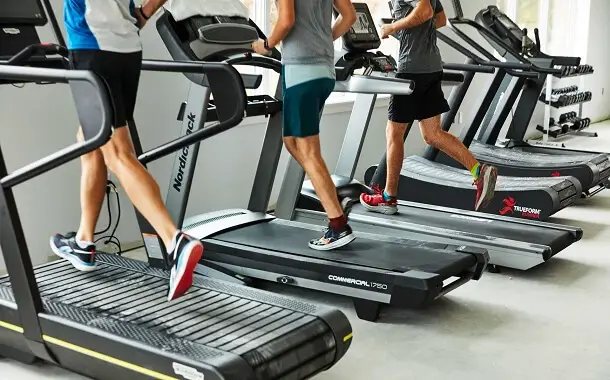
A treadmill costs anywhere between $100 and $15,000 or more, depending on the brand, its features, where you’re getting it from, and so on. Here is an overview of the general treadmill cost ranges by product type and category:
Manual Treadmills
- Price Range: $100-$500
- Non-motorized, rely on self-propulsion
- Best use is for walking, interval training
- Not suitable for serious or long-distance running
- Great budget option if funds are very limited
Compact/Folding Treadmills
- Price Range: $400-$1,500
- Usually fold up vertically for storage
- Ideal for walking, light jogging, beginners
- Smaller frames, motors, running surface
- Limited in incline, tech features, performance
Mid-Range Motorized Treadmills
- Price Range: $1,000-$2,500
- Running surface 16-20” x 55” or larger
- 2.5-3.5 continuous HP drive motors
- Capable for daily running training
- Offer more workout programs, fans, ergonomic handles and perks
High-End Home Treadmills
- Price Range: $2,500-$5,000
- Quality builds, commercial-grade components
- Advanced decks, inclines, cushioning
- Large HD touchscreens, immersive apps
- Compare well against commercial gym models
Commercial Treadmills
- Price Range: $5,000-$15,000+
- Made for gyms, studios, sports facilities
- Heavy duty steel frames, 4+ HP motors
- Huge 22”+ wide belts, ultra high weight capacities
- Advanced performance tracking, controls, diagnostics
As for the treadmill repair, according to TreadmillDoctor.com, the average cost for standard treadmill service is $150 to $200.
Factors That Affect Treadmill Pricing
When considering treadmill costs, there are several variables that affect the price:
Motor Horsepower
The motor is essentially the engine and powerhouse of the treadmill, so this is a major determinant of price. Entry-level treadmills typically have 2.0-2.5 continuous duty HP motors, which support speeds up to 6-10 mph. This is suitable for walking and light jogging for most users.
Mid-range treadmill motors are around 3.0 HP, supporting running speeds up to 10-12 mph. For avid runners or athletes in training, look for motors with at least 3.0 HP strength and top speeds of 12+ mph.
High-end commercial treadmills designed for gyms and training facilities boast heavy duty 3.0-4.0+ HP motors with speed thresholds of 15 mph or more. The more powerful the motor, the higher the price tag.
Running Surface Size
The size of the tread belt or running deck is important for accommodating your natural stride length and gait comfort. Compact folding treadmills usually have relatively short 55” long belts, best for users 5’8” or under. Standard treadmill sizes are around 60” long.
For taller users over 6’0”, look for expanded running decks of at least 20” width and belts 65-75”+ long for enough surface area to run comfortably without cramping form. Wider, longer-running surfaces mean a higher price.
Weight Capacity
Make sure the treadmill you choose can safely support your weight, especially if planning to run. Entry-level treadmills often max out at 250-300 lbs user capacity. Mid-range home models commonly go up to 325 lbs capacity.
Commercial treadmills found in gyms, training centers, and rehab facilities support 350-500+ lbs thanks to ultra-sturdy frames and components. The more heavy-duty construction required for higher-weight loads understandably translates to a higher MSRP cost.
Cushioning and Shock Absorption
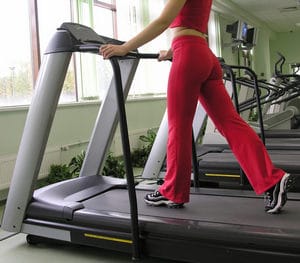 Quality cushioning helps absorb impact on your joints while walking or running on a treadmill. Basic treadmills at lower price points use proprietary foam or rubber padding in the deck.
You might also like our articles about the cost of an endless pool or a personal fitness trainer.
Mid-range and high-end models will use more advanced cushioning systems like FlexDeck or Performance PlushFit shock absorption. The better the cushioning, the more you can expect to pay.
Incline and Decline
Treadmills with powered incline allow you to simulate walking or running up hills by automatically raising the front of the belt 1-15% or more at the touch of a button. This adds variety to workouts and recruits more leg and glute muscles compared to flat road running.
Decline functionality tilts the belt downward up to -5% grades to work different angles. Manual incline adjustments cost less than motorized versions. High-end treadmills meant for training can incline up to 40% grades or more for thousands of dollars more than standard models.
Connectivity and Tech Features
Many new treadmills come loaded with high-tech amenities like full-color LCD touchscreens up to 32”, virtual training apps and classes, Bluetooth audio and device integration, built-in speakers, wireless exercise tracking, Chromecast capability, Explore the World trails, and much more.
You’ll generally pay more for treadmills with the latest tech features, higher-resolution displays, enhanced audio systems, and expanded connectivity. But for many users the superior user experience and entertainment value can be well worth the additional cost.
Folding vs. Non-Folding
Folding treadmills can collapse to save significant space when not in use. This versatility comes at a premium, as the folding mechanism hardware and dampening cylinders add cost compared to fixed frame treadmills.
If home gym space is at a premium, you’ll likely want to pay extra for a folding treadmill model. Just be sure the deck locks securely in place and the treadmill seems stable when extended upright for use.
Warranty Coverage
It’s smart to look at how long parts like the frame, motor, and deck are covered under the manufacturer’s warranty. More comprehensive protection will cost more up front but saves in the long run by safeguarding your investment.
High lifetime warranties on the frame and motor reflect the brand’s confidence in the treadmill’s quality and durability. Look for at least 10 years of assurance on motors and decks minimum.
Why Consider Buying a Treadmill for Home Use
There are many great reasons to invest in a treadmill for your home gym. Treadmills provide an incredibly effective and low-impact cardio workout that can help you:
- Get in tip-top shape and lose weight
- Improve cardiovascular health and lung capacity
- Maintain a regular exercise routine without having to leave the house
- Customize treadmill workouts with adjustable speed, incline, and decline settings
- Walk, jog, or run regardless of weather conditions outdoors
- Reduce harsh impact on joints compared to running outside on pavement
For busy individuals or those with limited mobility, having access to a treadmill at home can make it much easier to squeeze in brisk walking, running, or intervals whenever it fits your schedule.
Treadmills also come packed with user-friendly features like built-in workout programs, performance tracking, entertainment options, and more to provide engaging, fun exercise experiences. Investing in a quality treadmill can help even exercise-averse individuals fall in love with working out in the comfort of home.
Getting the Best Value at Each Price Point
You don’t have to spend a small fortune to get an excellent quality treadmill for your home gym. Here are some of the models that reviewers consistently say deliver exceptional value and performance at different budget levels:
Best Under $500:
MaxKare Folding Treadmill – Excellent bang for the buck under $500 with 18 pre-set programs, LCD display, and heart rate grips. Easy foldable treadmill design great for small spaces.
Best Under $1,000:
NordicTrack T 6.5 Si – This popular model has it all – stream interactive iFit training on the 10” HD touchscreen and automatically adjust your incline and speed hands-free. 1 year iFit membership included.
Best Under $2,000:
Sole F63 – Step up to a spacious 20” x 60” deck and 3.0 CHP motor. Cushion Flex Whisper Deck to protect joints. Heart rate grips and chest strap.
Best Under $3,000:
Horizon Fitness 7.0 AT – Unbeatable quality for under $3k with performance suspension, Bluetooth audio, 10” display, and Passport Ready guided global HD videos.
Best High-End Model:
NordicTrack Commercial X32i – This smart treadmill has it all – 22” HD touchscreen, -6% to 40% Digital Incline control, FlexSelect Cushioning and so much more. Matches far more expensive commercial models at a fraction of the price.
Final Tips for Buying a Treadmill
Here are a few final tips to make sure you choose the right treadmill without overspending:
- Figure out the max speed and incline needed for your goals – don’t overbuy in these areas
- Prioritize cushioning and a spacious running belt if planning to run
- Look for at least a 10” touchscreen and Bluetooth connectivity
- Consider foldability if tight on space
- Try before you buy – test in-store for comfort and construction
- Check the warranty – aim for at least 10 years on the frame
- Set a budget and look for best value, not just most features
Final Words
With some careful comparison shopping, you can find high quality treadmills for under $1,000, $2,000, and beyond. Take the time to figure out your “must-haves” versus “nice-to-haves” and find that sweet spot balancing performance, features, and budget.
Investing in a home treadmill is a big commitment, but also an exciting way to take your fitness to the next level, increase the number of calories burned, and get your money’s worth from this major purchase.

Leave a Reply
Want to join the discussion?Feel free to contribute!