
How Much Does A Wok Cost?
Updated on | Researched and reviewed by Alec Pow, Founder & Pricing Investigator
Prices, claims, and calculations checked against 14 cited sources. See our research methodology and corrections policy.
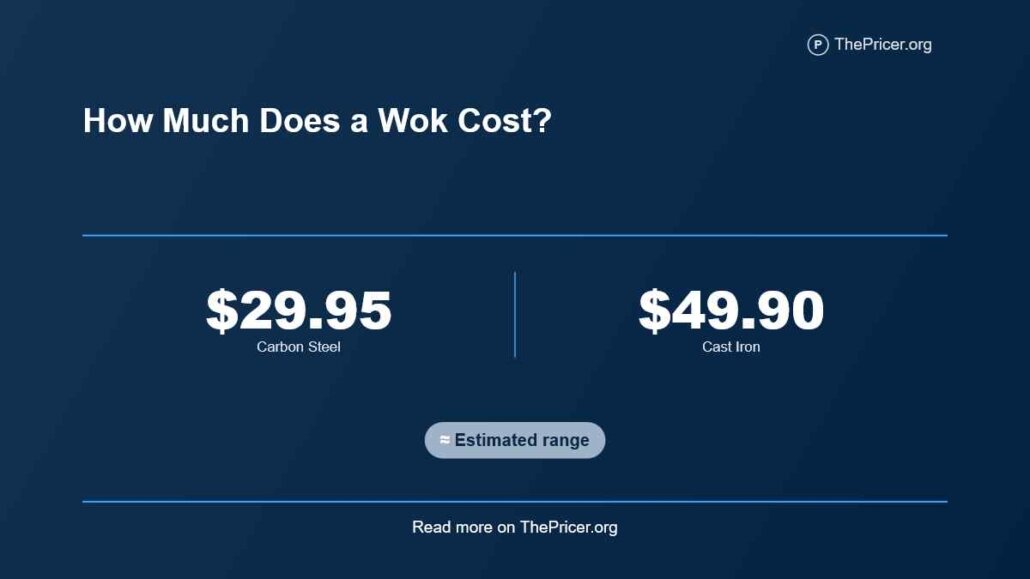
A wok costs approximately $25 to $60 for many practical home models, while premium carbon-steel and stainless-steel woks can cost $100 to $300. A Joyce Chen 14-inch carbon-steel wok is advertised at $29.95, a Lodge 14-inch cast-iron wok at $49.90 on sale, and an All-Clad D3 stainless-steel wok at $229.99. The right budget depends on your stovetop, preferred material, size, and whether you need accessories.
Carbon steel is often the strongest value for stir-frying because it heats quickly, responds to temperature changes, and develops a seasoned cooking surface. Expensive cookware is not automatically better for this purpose. A lightweight, properly shaped wok can be easier to maneuver than a heavy premium model. Buyers should also distinguish flat-bottom and round-bottom designs, uncoated steel and nonstick coatings, and bare pans from complete sets.
Article Highlights
Jump to sections
- Budget nonstick wok: $24.99 at IKEA.
- Joyce Chen 14-inch carbon-steel wok: $29.95.
- U.S.-made carbon-steel woks: approximately $35–$50.
- Lodge 14-inch cast-iron wok: $49.90 on sale.
- Misen 12-inch carbon-steel wok: $144.
- All-Clad D3 stainless-steel wok: $229.99.
How Much Does a Wok Cost?
Retail prices differ considerably across brands and construction methods. The examples below are advertised U.S. prices reviewed in October 2026, not national averages or promises that each model remains available at the same price.
IKEA’s current wok assortment includes the 13-inch MIDDAGSMAT stainless-steel nonstick wok for $24.99 and the 13-inch VARDAGEN carbon-steel wok with a lid for $44.99.
| Wok example | Advertised price | Construction |
|---|---|---|
| IKEA MIDDAGSMAT, 13 in. | $24.99 | Nonstick stainless |
| Joyce Chen, 14 in. | $29.95 | Uncoated carbon steel |
| IKEA VARDAGEN, 13 in. | $44.99 | Carbon steel, lid |
| Lodge, 14 in. | $49.90 | Seasoned cast iron |
| Misen, 12 in. | $144.00 | Preseasoned carbon steel |
| All-Clad D3, 14 in. | $229.99 | Three-ply stainless |
The differences extend beyond material. Sizes, handles, lids, warranties, and cooking surfaces are not identical. The Lodge price is a sale offer, while other figures represent the displayed product or catalog price at the time of checking.
Carbon Steel Woks
Uncoated carbon steel is the traditional choice for many wok-cooking applications. It can tolerate vigorous stir-frying and develops a progressively darker seasoned surface with use.
Target’s Joyce Chen cookware assortment lists a 14-inch uncoated flat-bottom wok with phenolic handles at $29.95. Its 14-inch birch-handle alternative costs $36.95, while a round-bottom version costs $37.95.
The Wok Shop’s U.S.-made models are advertised between $35 and $49.95, depending on size and configuration. They use heavy-gauge carbon steel and require seasoning.
These prices show that an effective wok can cost less than many ordinary frying pans. The additional money charged for a premium model may buy thicker material, a preferred handle, factory seasoning, or other construction features.
Independent testing supports the material’s appeal. Serious Eats tested carbon-steel woks using fried rice, vegetables, eggs, and other cooking tasks. Its findings emphasize heating response, maneuverability, comfortable handles, and useful cooking area rather than price alone.
A carbon-steel wok is a sensible starting point for someone willing to season and maintain cookware.
Cast Iron, Stainless Steel, and Nonstick
Other materials may be suitable when heat retention, easier maintenance, or a particular cooking surface is more important.
Cast iron holds heat well but is generally heavier than carbon steel. Lodge’s 14-inch seasoned cast-iron wok is advertised at $49.90 on sale against a regular price of $69.95. Its weight and fixed handles make it less convenient for repeated tossing than many lighter carbon-steel models.
Stainless steel requires no protective seasoning and suits cooks who want a durable, lower-maintenance interior. All-Clad’s 14-inch D3 wok costs $229.99. Its bonded construction extends through the curved body and uses a flat base for stability.
Nonstick-coated woks are convenient for delicate foods and cleanup. All-Clad also lists nonstick wok options at $79.99 for its 10-inch HA1 model and $129.99 for the 12-inch NS Pro.
Nonstick coatings have operating-temperature and utensil restrictions, depending on the manufacturer. They should not automatically be treated like uncoated carbon steel for extremely high-heat cooking.
The choice is practical. Cast iron favors heat retention, stainless steel favors maintenance convenience, and uncoated carbon steel favors responsive high-heat cooking and manageable weight.
Flat Bottom or Round Bottom?
The stove can determine whether a wok is worth buying before material or brand becomes relevant.
Flat-bottom woks sit directly on common electric, ceramic-glass, and induction cooking surfaces. They also work on most gas burners.
Round-bottom woks are associated with traditional gas-wok cooking arrangements. On a conventional home range, a support ring may be needed to stabilize the pan. A ring does not make an ordinary round-bottom wok compatible with a flat induction cooktop.
The Wok Shop’s two-handle carbon-steel listing offers both shapes and identifies oversized shipping charges for some larger commercial pans. It advertises an appropriate wok ring for approximately $2.95.
Buyer-focused induction wok testing also favors flat, magnetically compatible bases for conventional flat-glass induction cooktops.
Before purchasing, check the cookware manufacturer’s induction compatibility and the diameter of its actual flat cooking surface. The nominal rim diameter does not describe how much of the wok contacts the burner.
Someone already replacing a cooking range can compare appliance types in our oven and range cost guide. Buying a different stovetop solely to accommodate a particular inexpensive wok would rarely be a sensible cookware-budget decision.
Wok Accessories
Some woks are sold as bare pans, while others include a lid, spatula, steamer insert, or wok ring. Accessories can change the actual cost of getting started.
The Wok Shop’s accessory catalog lists domed lids between $14.95 and $22.95, along with wok rings, cleaning brushes, seasoning supplies, and cooking utensils.
For example, a $35 uncoated carbon-steel wok paired with a $19.95 lid costs $54.95 before other supplies or delivery.
By comparison, the IKEA VARDAGEN comes with a lid at a displayed price of $44.99. That does not mean it is directly equivalent to the Wok Shop pan, but it illustrates why included accessories can outweigh a seemingly cheaper base price.
On the other hand, a customer who already owns a suitable lid, spatula, and cleaning supplies does not need to buy them again.
Seasoning oil also costs money, but only a small quantity is normally needed for a properly applied thin coating. Buying an expensive specialty seasoning kit is not a prerequisite for maintaining ordinary carbon steel.
When a Wok Set Is Cheaper
A complete set can be less expensive than selecting individual accessories, provided the included items are genuinely useful.
The Wok Shop’s 10-inch set costs $39.95 and includes a carbon-steel wok and stainless-steel spatula. That size is better suited to small batches than a large family stir-fry.
The seller also advertises a 14-inch carbon-steel set for $70. Its advertised components include a wok, stainless-steel lid, spatula, brush, and steam plate. The round-bottom version includes a ring.
For someone who needs several accessories, this offers a more useful baseline than the price of a bare wok.
The cost difference between a $35 bare wok and a $70 five-piece set is $35. The set is financially preferable only when the buyer values the included accessories at more than that difference and the supplied items suit the intended cooking tasks.
Check whether a product description counts the wok itself as one of the pieces. Advertised set counts do not always represent the number of additional accessories.
A Complete First-Wok Budget
Consider a home cook purchasing a 14-inch flat-bottom carbon-steel wok for stir-frying and occasional steaming.
Use the reviewed Joyce Chen $36.95 birch-handle model as the cookware cost. Add a documented Wok Shop lid price and illustrative allowances for a spatula, oil, and cleaning supplies.
- Joyce Chen carbon-steel wok: $36.95.
- Compatible lid, example allowance: $19.95.
- Wok spatula allowance: $12.00.
- Seasoning oil allowance: $4.00.
- Cleaning supplies allowance: $5.00.
- Illustrative total: $77.90.
The wok and lid amounts are based on advertised prices, with lid compatibility requiring confirmation. Other line items are planning allowances, not verified offers. Delivery and taxes are excluded.
The accessories and supplies total $40.95, more than the wok itself. This is a useful reminder that a bare-pan price may substantially understate the cost for someone starting without kitchen utensils.
Conversely, if the cook already owns the necessary equipment, spending the additional $40.95 offers little benefit.
Is an Expensive Wok Worth Buying?
The difference between entry-level and premium pricing is substantial, but high price does not guarantee better stir-fry results.
Misen’s 12-inch preseasoned carbon-steel wok is advertised at $144. It has a stainless-steel handle and includes features intended to make cooking and maintenance more convenient.
That is approximately 4.8 times the price of the $29.95 Joyce Chen example. Both are carbon-steel woks capable of common stir-frying tasks, although their dimensions, construction, finish, and features differ.
For a cook who makes 150 wok meals per year over five years, the $29.95 wok represents about 4 cents per meal in initial equipment cost. A $144 wok represents approximately 19 cents per meal.
The gap is about 15 cents per meal over that use period, excluding maintenance and replacement. Someone who cooks frequently may consider that premium reasonable for preferred ergonomics or workmanship.
An occasional user may gain more from choosing a correctly sized, affordable carbon-steel model and spending the savings on ingredients.
The broader equipment cost belongs within the kitchen budget, especially for households updating multiple appliances. Our kitchen remodeling cost guide explains why major upgrades can dwarf the cost of smaller pieces of cookware.
Seasoning and Long-Term Care
Uncoated carbon-steel woks need to be seasoned according to the manufacturer’s instructions. This creates a protective cooking surface and helps limit corrosion.
The Joyce Chen seasoning guidance describes cleaning away factory residue, drying the wok completely, and heating a thin layer of suitable cooking oil to begin developing seasoning.
Routine care normally involves cleaning away food residue, thoroughly drying the metal, and applying a light oil film when appropriate. Avoid prolonged soaking and follow the instructions for the exact coating or finish.
The expected lifespan differs by product. Uncoated carbon steel can be restored after many minor seasoning problems, whereas damage to a manufactured nonstick coating may require replacing the pan.
Check oven-safe temperature limits as well. A carbon-steel cooking body may tolerate high heat, but a wooden or plastic handle can have a lower rating. The shape of a wok alone does not determine oven compatibility.
Makes sense if
- A flat-bottom carbon-steel wok matches the existing stovetop.
- The buyer regularly prepares stir-fries and other wok dishes.
- A bundled set contains accessories the household needs.
- The owner is comfortable seasoning and maintaining uncoated steel.
Does not make sense if
- A round-bottom wok will not work safely with the available burner.
- A high-priced model adds features the buyer will not use.
- An oversized commercial wok is impractical for the kitchen.
- A coated nonstick model will be used beyond its rated heat limits.

Answers to Common Questions
How much should a good wok cost?
A functional carbon-steel wok can cost approximately $30–$60. Premium products can exceed $100, but a higher price is not necessary for good stir-frying results.
Is carbon steel better than cast iron for a wok?
Carbon steel is generally lighter and responds faster to burner-temperature changes. Cast iron retains heat well but is often heavier. Either can be useful depending on the cook’s preferences.
Can a wok be used on an induction cooktop?
Yes, when it has a suitable flat, induction-compatible magnetic base. A conventional round-bottom wok is generally not suitable for an ordinary flat-glass induction surface.
Do I need a wok ring?
A round-bottom wok may need an appropriate support ring on a compatible gas burner. A flat-bottom wok generally sits directly on the stove and does not need one.
Disclosure: Educational content, not financial advice. Prices reflect public information as of the dates cited and can change. Confirm current rates, fees, taxes, and terms with official sources before purchasing. See our methodology and corrections policy.