
How Much Does Arizona State University Cost?
Updated on | Written by Alec Pow
This article was researched using 14 sources. See our methodology and corrections policy.
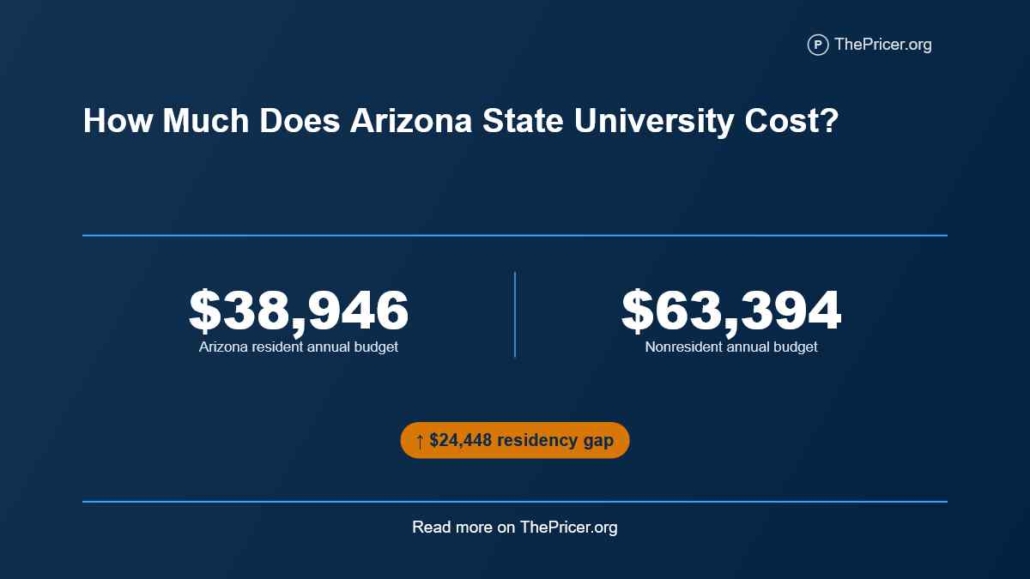
Arizona State University costs about $38,946 per year for an Arizona resident first-year student living on campus in 2026–27. A comparable out-of-state student has a much higher published budget of $63,394. These totals include tuition and fees, estimated Tempe housing and food, books, travel, and personal expenses.
Tuition and mandatory fees average $14,814 for Arizona residents and $39,262 for nonresidents, although the exact amount changes by college and degree program. ASU Online follows a separate model at $580 per undergraduate credit and $605 per graduate credit. Scholarships can change the result sharply, including programs that can cover 100% of resident tuition and fees for eligible Arizona students.
Article Highlights
Jump to sections
- An Arizona resident first-year student’s published budget is $38,946 (at $30 per hour, earning that amount would take about 7.5 months of full-time work, before taxes).
- An out-of-state first-year student’s budget is $63,394.
- Average resident tuition and mandatory fees are $14,814.
- Nonresident tuition and fees average $39,262.
- ASU Online costs $580 per undergraduate credit for most programs.
- The Arizona Promise Program can cover remaining tuition and fees for qualifying Pell-eligible residents.
- ASU ended new WUE participation for students beginning in fall 2026 and introduced new nonresident scholarships.
How Much Does Arizona State University Cost?
ASU’s 2026–27 resident first-year budget starts with $12,177 (about 10.1 full-time workweeks at $30 per hour) in base tuition. A $350 tuition surcharge, $200 Advanced Technology Fee, an estimated $1,280 undergraduate college fee, and $807 in student-initiated fees bring the tuition-and-fee estimate to $14,814.
Housing and food add an estimated $18,819 for a first-year student at the Tempe campus. ASU budgets another $1,320 for books and course materials, $1,650 for travel, and $2,343 for personal spending. The published total is $38,946.
College fees are important because the $14,814 number uses ASU’s highest estimated resident undergraduate college fee. A humanities student can have a lower charge than a student in business, engineering, or nursing. ASU’s fall 2026 schedule shows some residents paying no undergraduate college fee while higher-fee programs can add $640 per semester.
That makes ASU different from a school with one flat tuition price. Program, residency, modality, and campus all change the bill. The university’s headline cost is a planning number rather than one universal invoice.
Resident vs Nonresident
Out-of-state students face the largest price difference. ASU’s 2026–27 nonresident budget lists $35,715 (about 6.9 months of full-time work at $30 per hour) in base tuition, a $350 surcharge, $200 technology fee, up to $2,190 in undergraduate college fees, and $807 in student-initiated fees.
That produces about $39,262 in tuition and mandatory fees before housing. Add the same $18,819 Tempe housing-and-food estimate, $1,320 for books, $1,650 for travel, and $2,343 for personal expenses, and the annual budget reaches $63,394.
The annual difference between ASU’s resident and nonresident first-year budgets is $24,448. Holding those rates flat for four years produces a calculated residency gap of $97,792 before scholarships or future price changes.
Tuition is responsible for almost all of that gap. Housing, books, travel, and personal allowances are the same in ASU’s two examples. Families evaluating an out-of-state offer should focus heavily on merit aid because reducing the nonresident tuition premium has far more financial impact than trimming a few hundred dollars from books or transportation.
That gap is substantial.
Housing and Meal Plans
ASU uses $18,819 as its first-year Tempe estimate for housing and food, but actual residence-hall and meal-plan combinations vary. ASU’s 2026–27 housing schedule shows both campus and room type changing the price.
At Downtown Phoenix, a shared room in Gordon Commons costs $11,718 per academic year. A private room there costs $12,286. A studio in Fusion on First costs $17,720. On the Tempe campus, a private room in McClintock Hall is $9,792.
Meal plans range from $3,930 for the Gold plan with seven meals each week to $7,180 for unlimited dining. First-year students living in designated campus housing must select an eligible residential meal plan.
A McClintock private room plus the Gold plan would cost about $13,722. Pair that room with unlimited dining and the total becomes $16,972. A $17,720 Fusion studio with unlimited dining reaches $24,900. Those examples explain why a household should use the specific residence and meal plan rather than treating ASU’s $18,819 estimate as a fixed charge.
Location changes the math.
Arizona Aid
Arizona residents have access to aid programs that can erase most or all of tuition and mandatory fees. The Arizona Promise Program covers the remaining tuition and fee balance after other gift aid is applied for qualifying Pell-eligible Arizona students.
Applicants must meet Arizona residency requirements, graduate from an Arizona high school with at least a 2.50 GPA, file the FAFSA and required verification documents by the deadline, remain Pell eligible, and enroll full time in an in-person ASU program. ASU Online students do not qualify.
ASU values Arizona Promise coverage at up to $14,215 per year. The College Attainment Grant can cover resident tuition and fees up to about $14,814 annually. The President Barack Obama Scholar Program also covers tuition and fees for qualifying Pell-eligible residents and can provide first-year assistance toward housing and meals.
Residents who are not Pell eligible may still have options. ASU’s newer University Grant provides $3,000 per year to qualifying first-time Arizona freshmen from households earning $120,000 or less. The New American University President’s Award is worth $7,000 per year for qualifying Arizona students.
A resident receiving a $7,000 NAMU President’s Award would reduce the $14,814 average tuition-and-fee amount to about $7,814 before other aid.
Nonresident Scholarships
ASU changed its out-of-state strategy for fall 2026. New students no longer enter through the Western Undergraduate Exchange program. ASU’s WUE update says students admitted in spring 2026 or earlier can retain WUE when renewal rules are met, but fall 2026 entrants use the newer scholarship structure.
The New American University President’s and Provost’s Awards are worth $15,500 to $17,500 per year for qualifying nonresidents. Academic Achievement, University, and Dean’s awards range from $10,000 to $13,500.
ASU also introduced the Commitment Scholarship for first-year out-of-state U.S. students beginning in fall 2026. The Phoenix-area campus award is $7,500 per year. The scholarship can stack with eligible ASU awards up to the student’s total cost of attendance.
A nonresident receiving a $17,500 NAMU award plus the $7,500 Commitment Scholarship would have $25,000 in combined annual awards if eligible for both. Subtracting that from the published $63,394 budget leaves $38,394 before any additional grants or aid.
That brings a heavily awarded nonresident surprisingly close to ASU’s $38,946 resident sticker budget.
ASU Online
The old article says out-of-state online students simply pay the same rate as Arizona residents. ASU now publishes a dedicated online price. For 2026–27, ASU Online costs $580 per undergraduate credit and $605 per graduate credit for most programs.
A 30-credit undergraduate year at the base $580 rate would therefore cost $17,400 in tuition before applicable program or college charges. A 120-credit bachelor’s degree at that same base rate would total $69,600 before fees and future tuition changes.
Transfer credits can change that total substantially. ASU Online says it can accept up to 64 credits from a community, junior, or other two-year college. Students must complete at least 30 credits at ASU to receive an ASU degree.
If a student transferred 60 usable credits and completed the remaining 60 through ASU Online at today’s $580 base rate, the ASU tuition portion would be about $34,800 before program charges. That is less than half the calculated $69,600 base tuition for taking all 120 credits through ASU.
Corporate partnerships can change the price again. ASU says tuition remains covered for eligible students whose programs are funded through participating corporate partners.
Graduate and International
ASU’s standard graduate budget also varies sharply by residency. The 2026–27 graduate estimate is $46,460 for an Arizona resident and $62,315 for a nonresident, based on nine graduate credits per semester.
Resident graduate base tuition is $13,327 for the modeled year, while nonresident base tuition is $29,196. ASU then adds the tuition surcharge, technology fee, graduate support fee, student fees, housing and meals, books, transportation, and personal expenses.
Some graduate degrees charge program-specific tuition on top of the standard rate. A student considering an MBA, engineering master’s, nursing program, or another specialized degree should use ASU’s degree-specific estimator rather than applying the generic graduate figure.
International students have a separate schedule. ASU’s 2026–27 international undergraduate budget uses $39,062 in base tuition, plus college fees, health insurance, and an international student fee. The standard health-insurance amount included in the international budget is $2,765.
International graduate students also pay health insurance and the international student fee on top of graduate tuition and living costs.
Hidden Costs and Four-Year Fit

Health coverage can add a meaningful cost when the student is eligible and chooses ASU’s voluntary plan. ASU’s fall 2026 premium is $1,118, while spring 2027 coverage through August costs $1,838. Together that is $2,956 for the fall and spring coverage periods.
Payment plans add another smaller charge. ASU’s semester payment plan costs $100 for residents and $200 for nonresidents. Using it for both fall and spring adds $200 or $400 per academic year.
Barrett, The Honors College also carries a separate fee. ASU’s fall schedule adds $1,100 per semester, or $2,200 across fall and spring. That charge sits on top of the standard college and student fees.
Holding the published first-year budgets flat produces a four-year sticker scenario of $155,784 for an Arizona resident and $253,576 for a nonresident. Those are planning calculations rather than forecasts because tuition, aid, housing, and spending can change.
Makes sense if
- You qualify for Arizona resident tuition or a strong nonresident scholarship package.
- Your degree fits ASU Online and transferable credits reduce the number of ASU courses required.
- You qualify for Arizona Promise, Obama Scholars, College Attainment Grant, or another tuition program.
Does not make sense if
- You compare ASU using the old $20,000 to $50,000 annual range.
- You assume all majors have the same tuition and college fee.
- You budget ASU Online using the resident campus tuition rate.
Families comparing university prices can also review University of Georgia costs, Syracuse University costs, and High Point University costs.
Answers to Common Questions
How much does ASU cost per year for an Arizona resident?
ASU publishes a 2026–27 first-year resident on-campus budget of $38,946, including tuition, fees, housing, food, books, travel, and personal expenses.
How much does Arizona State cost for an out-of-state student?
The comparable nonresident first-year budget is $63,394. Tuition and fees account for about $39,262 of that amount.
How much is ASU Online?
Most ASU Online programs cost $580 per undergraduate credit or $605 per graduate credit for 2026–27, before applicable program charges.
Can Arizona residents attend ASU tuition-free?
Some can. Programs such as Arizona Promise, College Attainment Grant, and Obama Scholars can cover remaining tuition and mandatory fees for students who meet each program’s eligibility rules.
Does ASU still offer WUE?
Not to new fall 2026 entrants. Students admitted under WUE in spring 2026 or earlier can retain it when renewal conditions are met, while new nonresidents use ASU’s newer scholarship structure.
Disclosure: Educational content, not financial advice. Prices reflect public information as of the dates cited and can change. Confirm current rates, fees, taxes, and terms with official sources before purchasing. See our methodology and corrections policy.