
How Much Does Bowen Therapy Cost?
Updated on | Written by Alec Pow
This article was researched using 11 sources. See our methodology and corrections policy.
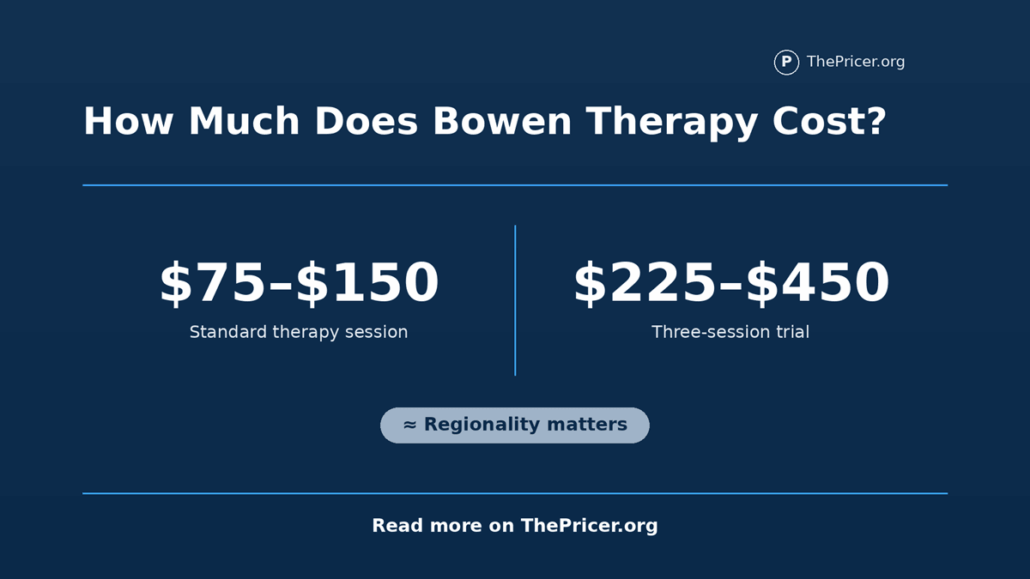
Bowen therapy generally costs $75 to $150 per session in the United States. A shorter follow-up appointment may cost around $60 to $100, while an initial assessment, extended session, home visit, or appointment combined with another type of bodywork can cost $145 to $265+.
A three-session trial typically costs $225 to $450, while six sessions can cost $450 to $900 before package discounts. Most clients pay out of pocket because Bowen therapy is usually treated as complementary bodywork rather than standard medical care.
Bowen therapy uses gentle rolling movements over muscles, tendons, ligaments, skin, and connective tissue. Sessions often include short pauses between sequences of movements. Some people use it for relaxation or alongside conventional care for musculoskeletal discomfort, but the clinical evidence remains limited and condition-specific.
Article Highlights
Jump to sections
- A standard Bowen therapy session commonly costs $75 to $150 (at $30 per hour, earning that amount would take about 2.5 to 5 hours of work, before taxes).
- An initial or extended appointment may cost $100 to $265+.
- Three sessions generally cost $225 to $450.
- Six sessions generally cost $450 to $900.
- Package discounts may reduce the per-session rate by 5% to 20%.
- Health insurance coverage is uncommon and must be verified individually.
- Evidence for effectiveness is limited and does not support Bowen therapy as a replacement for medical treatment.
Current Bowen Therapy Prices
| Bowen therapy service | Typical price | Common appointment length |
|---|---|---|
| Short follow-up session | $60 to $100 (about 2 to 3.3 hours of work at $30 per hour) | 30 to 45 minutes |
| Standard Bowen therapy session | $75 to $150 | 45 to 60 minutes |
| Initial assessment and treatment | $95 to $175 | 60 to 90 minutes |
| Extended or combined bodywork session | $145 to $265+ | 75 to 120 minutes |
| Three-session course | $225 to $450 | Usually completed over several weeks |
| Six-session course | $450 to $900 | Frequency depends on the client and practitioner |
| Mobile or home visit | $100 to $200+ | Travel charges may apply |
| Late cancellation or missed appointment | $40 to full session price | Often applies within 12 to 24 hours |
Current practitioner examples show how much pricing can vary. Heal With Bowen lists a Bowen therapy session at $95. Pure Bowen Therapy lists adult initial and follow-up appointments at $75, while Body Bliss Therapy lists an initial appointment at $165 and a follow-up at $145.
These examples are not a national fee schedule. Some prices may be quoted in currencies other than U.S. dollars depending on the practitioner’s location, so clients should verify the currency, session length, and included services before booking.
What Changes the Session Price?
The practitioner’s location is one of the strongest cost factors. Clinics in large metropolitan areas generally charge more because of higher rent, wages, insurance, and operating expenses. A practitioner working from a small home clinic may charge less than someone renting space inside a medical or wellness center.
Experience and additional qualifications also affect the fee. A practitioner who is additionally licensed as a massage therapist, physical therapist, chiropractor, nurse, or another regulated professional may charge more, particularly when the appointment combines several approaches.
The initial visit is often longer because the practitioner needs time to discuss symptoms, health history, medications, prior injuries, surgeries, and the client’s goals. That assessment may add $20 to $75 (about 0.7 to 2.5 hours of work at $30 per hour) compared with a standard follow-up appointment.
Other cost factors include:
- Appointment length
- Home visits and travel time
- Package discounts
- Clinic overhead and local demand
- Additional massage or movement assessment
- Evening and weekend appointments
- Practitioner training and professional membership
Cost for Three Sessions
Many practitioners suggest beginning with a small number of appointments and then evaluating whether the sessions provide meaningful benefit. This should not be interpreted as a guarantee that three treatments will resolve a condition.
At $75 per session, three appointments cost $225. At a midrange price of $110, the total is $330. At $150 per session, three appointments cost $450.
A practitioner offering a 10% package discount would reduce three $110 sessions from $330 to $297. Ask whether package purchases expire and whether unused sessions can be refunded or transferred.
Six-Session Budget
A longer six-session course costs approximately:
- $450 at $75 per session
- $570 at $95 per session
- $660 at $110 per session
- $900 at $150 per session
Assume a practitioner normally charges $110 but offers five sessions for $500. The discount is $50, or about 9.1%. Adding one full-price session brings a six-visit total to $610 instead of $660.
Do not buy a large nonrefundable package before trying an individual appointment. A lower per-session price has little value when the treatment is uncomfortable, inconvenient, or does not meet the client’s needs.
What Happens During a Session?

A Bowen session commonly lasts 45 to 60 minutes. The client usually lies on a treatment table, although the work may sometimes be performed while seated. Many practitioners can work through light, loose clothing.
The practitioner applies small rolling or cross-fiber movements over selected areas. The session may include pauses lasting several minutes between groups of movements. These pauses are part of traditional Bowen practice, although claims about exactly what the body does during them have not been established conclusively.
Bowen therapy does not normally involve forceful spinal manipulation. Pressure should remain within the client’s comfort level, and the practitioner should explain what will be touched before beginning.
Is Bowen Therapy Effective?
Research on Bowen therapy remains limited. A 2024 Australian government evidence evaluation examined studies involving musculoskeletal pain, fibromyalgia, stress, and other outcomes. Much of the evidence was rated low or very low certainty because studies were small, inconsistent, or at risk of bias.
A systematic review of Bowenwork research found only 15 eligible publications, including one randomized clinical trial. The review reported some favorable findings for pain and mobility, but the small evidence base prevented broad conclusions.
More recent studies have reported short-term improvements for selected groups. One 2024 fibromyalgia trial found improvements in certain pain and sleep outcomes, while another randomized study involving myofascial pain reported improved pain and function.
These results do not prove that Bowen therapy treats every cause of back pain, headaches, neurological symptoms, fibromyalgia, or chronic illness. Larger independent trials with stronger comparison groups and longer follow-up are still needed.
Realistic Expectations
A client may feel relaxed after one session, but immediate relaxation does not establish that an injury or disease has been treated. Pain can fluctuate naturally, and short-term improvement does not always persist.
There is no reliable rule that one session should provide major relief or that three sessions should resolve a condition. The appropriate number of visits depends on the symptoms, diagnosis, response, and whether the client is also receiving medical or rehabilitative care.
Set a measurable goal before starting, such as walking for 20 minutes with less discomfort, sleeping more consistently, or improving a specific movement. Reassess after two or three visits. Stop or seek medical guidance when symptoms worsen, new symptoms appear, or there is no meaningful benefit.
Bowen Therapy Is Complementary Care
Bowen therapy should be treated as complementary bodywork, not as a substitute for diagnosis, medication, physical rehabilitation, surgery, or emergency care. The National Center for Complementary and Integrative Health advises consumers not to use an unproven practice to replace conventional treatment or delay seeing a healthcare professional.
A person with persistent back or neck pain may benefit from a medical evaluation before spending several hundred dollars on bodywork. This is especially important when pain follows trauma or occurs with weakness, numbness, unexplained weight loss, fever, or bladder and bowel changes.
Bowen therapy may be used alongside a clinician-approved treatment plan, but clients should tell their physician or physical therapist about every complementary approach they use.
When to Seek Medical Care First
Do not book bodywork as the first response to a possible medical emergency. Seek prompt medical evaluation for:
- New weakness or loss of coordination
- Numbness around the groin or saddle area
- Loss of bladder or bowel control
- Chest pain or breathing difficulty
- Severe headache with neurological symptoms
- Pain after a major fall, collision, or other trauma
- Fever, unexplained weight loss, or night sweats
- A hot, swollen, or suddenly painful limb
- Suspected fracture, infection, or blood clot
People who are pregnant, recovering from surgery, taking anticoagulants, receiving cancer treatment, or managing a serious neurological condition should discuss manual therapy with their healthcare provider first.
Is Bowen Therapy Safe?
Bowen therapy is generally described as gentle, but no treatment should be presented as universally safe for every person and every condition. Risk depends on the client’s health, the practitioner’s competence, the amount of pressure, and whether serious symptoms have been properly evaluated.
Possible temporary effects reported after bodywork can include tenderness, fatigue, soreness, headache, dizziness, or symptom aggravation. Severe or persistent reactions should be discussed with a healthcare professional rather than automatically being described as a normal healing response.
The NCCIH safety guidance recommends considering the practitioner’s training, communicating existing conditions, and evaluating the known evidence before using a complementary approach.
Choosing a Practitioner
Bowen therapy regulation differs by location. In many U.S. states, “Bowen therapist” is not a standalone licensed healthcare profession. A practitioner may still need a massage-therapy or other professional license when state law classifies the service as massage or manual therapy.
Ask the practitioner:
- Which Bowen training program did you complete?
- Do you hold a state professional license?
- Do you carry professional liability insurance?
- How do you screen clients for medical red flags?
- What conditions are outside your scope of practice?
- Will you communicate with my physician or physical therapist?
- What is your cancellation and refund policy?
The UK-based Bowen Therapy Professional Association requires registered members to hold recognized qualifications, insurance, and follow a professional code. U.S. clients should look for comparable evidence of education, insurance, ethical standards, and compliance with local law.
Insurance Coverage
Most U.S. health insurance plans do not list Bowen therapy as a standard covered benefit. A claim may be denied because the service is considered complementary care, because the practitioner is not an eligible provider, or because the treatment lacks a recognized billing code.
Coverage is more plausible when the practitioner also holds a covered professional license and provides the treatment within that licensed scope. Even then, the plan may cover a physical therapy or massage service without recognizing Bowen therapy by name.
Before booking, ask the insurer whether it requires:
- A physician referral
- A covered medical diagnosis
- A licensed or in-network provider
- Preauthorization
- A specific billing code
- A detailed receipt or treatment note
Do not rely solely on the practitioner saying that a service “may be covered.” Obtain the answer from the insurance plan and request it in writing when possible.
Can You Use an HSA or FSA?
Bowen therapy is not automatically eligible for payment from a health savings account or flexible spending account. Eligibility generally depends on whether the service is used primarily to diagnose, mitigate, treat, or prevent a specific medical condition rather than for general relaxation or wellness.
IRS Publication 502 states that therapy received as medical treatment may qualify as a medical expense. The rule does not mean that every form of wellness bodywork is eligible.
An HSA or FSA administrator may request a letter of medical necessity, prescription, diagnosis, itemized receipt, or proof that the practitioner is qualified. Confirm the requirements before using tax-advantaged funds.
Packages and Cancellation Fees
Package pricing may reduce the cost by 5% to 20%. For example, a practitioner charging $110 per session might offer five sessions for $500, reducing the effective cost to $100 per visit.
Read the terms before paying. Packages may expire within three, six, or twelve months. They may also be nonrefundable or restricted to one client.
Cancellation policies commonly require 12 to 24 hours of notice. A missed appointment can cost $40, 50% of the session rate, or the full price. One current practitioner charges the full appointment fee for cancellations received less than 12 hours before the scheduled time.
Aftercare Claims
A practitioner may suggest drinking water, taking a light walk, or noticing how symptoms change after the appointment. These are generally low-risk comfort measures for most healthy adults, but hydration should not be presented as a proven way to make fascia respond better to Bowen therapy.
There is also no established universal medical rule requiring every client to avoid massage, physical therapy, acupuncture, chiropractic care, or exercise for a full week. Follow the advice of the clinician managing the underlying condition and avoid combining treatments in a way that causes pain or makes it difficult to identify what is helping.
Clients should not stop prescribed exercises, medication, or medical appointments because a bodywork practitioner says the Bowen session needs time to work.
Bowen Therapy vs Other Options
Bowen therapy usually costs about the same as private massage therapy. A massage session commonly costs $70 to $150, although memberships such as those discussed in the guide to Massage Envy prices can reduce the recurring appointment rate.
Cupping therapy commonly costs $40 to $100 as a standalone appointment or add-on. Like Bowen therapy, evidence varies by condition, and visible marks are possible after cupping.
Cold laser therapy may cost $50 to $150 per session. Physical therapy can cost more without insurance but has a larger evidence base for many musculoskeletal injuries and includes diagnosis-linked exercise, progression, and functional rehabilitation.
| Service | Typical self-pay cost | Main difference |
|---|---|---|
| Bowen therapy | $75 to $150 | Gentle manual movements with pauses |
| Massage therapy | $70 to $150 | Longer continuous soft-tissue work |
| Cupping therapy | $40 to $100 | Suction cups applied to the skin |
| Cold laser therapy | $50 to $150 | Low-level light device rather than manual pressure |
| Physical therapy | $100 to $350+ | Clinical assessment, exercise, and rehabilitation |
Three Cost Scenarios
Single relaxation visit: A 60-minute Bowen session costs $95. An optional tip is not expected in every clinical setting, so the client pays the listed $95.
Three-session trial: The initial 75-minute appointment costs $145, followed by two $110 sessions. The total is $365.
Six-session package: A practitioner charges $110 per visit but offers six sessions for $570. The package saves $90, reducing the effective rate to $95 per session.
When Bowen Therapy May Fit
May be reasonable if:
- You want gentle bodywork for relaxation or temporary symptom relief.
- A healthcare professional has ruled out serious causes of your symptoms.
- You understand that evidence is limited.
- The cost fits your budget without replacing necessary medical care.
- You set clear goals and reassess after a small number of sessions.
May not be a good fit if:
- You have unexplained or rapidly worsening symptoms.
- The practitioner promises to cure a disease.
- You are told to stop medical treatment or rehabilitation.
- The practitioner cannot describe training, insurance, or scope of practice.
- You are pressured to buy a large nonrefundable package immediately.
What We Verified
- Checked current practitioner fees ranging from approximately $75 to $165 for common appointments.
- Reviewed the 2024 Australian government evidence evaluation.
- Cross-referenced systematic reviews and recent clinical trials through PubMed.
- Confirmed federal guidance that complementary care should not delay conventional treatment.
- Separated practitioner claims from findings supported by clinical research.
Answers to Common Questions
How much does Bowen therapy cost?
A standard Bowen therapy session generally costs $75 to $150. Initial, extended, or combined appointments may cost $145 to $265+.
How many Bowen sessions will I need?
There is no evidence-based universal number. Some clients try two or three sessions and reassess. Chronic or complex symptoms should be evaluated by an appropriate healthcare professional.
Does health insurance cover Bowen therapy?
Coverage is uncommon. It may depend on the practitioner’s professional license, the diagnosis, billing code, referral requirements, and the individual insurance plan.
Can I pay for Bowen therapy with an HSA or FSA?
Possibly, when the service is primarily used to treat a diagnosed medical condition and meets the plan’s documentation requirements. General wellness sessions may not qualify.
Is Bowen therapy scientifically proven?
Some small studies report short-term benefits for selected pain and fibromyalgia outcomes, but the overall evidence remains limited and low certainty. It is not proven for every condition practitioners may advertise.
Is Bowen therapy safe for everyone?
No treatment should be described as universally safe. People with serious symptoms, recent surgery, major injuries, pregnancy complications, cancer, clotting risks, or neurological conditions should seek medical guidance first.
Can Bowen therapy replace physical therapy?
No. Bowen therapy may be used as complementary bodywork, but it does not replace diagnosis, prescribed rehabilitation, medication, surgery, or emergency treatment.
Disclosure: Educational content, not medical advice. Pricing varies by provider, location, and insurance. Confirm eligibility, coverage, and out-of-pocket costs with a licensed clinician and your insurer. See our methodology and corrections policy.