
How Much Does Driveway Sealing Cost?
Published on | Written by Alec Pow
This article was researched using 14 sources. See our methodology and corrections policy.
Driveway sealing covers two pavement-maintenance services, asphalt sealcoating and concrete sealing. Asphalt contractors coat prepared blacktop, while concrete contractors use sealers made for masonry. HomeAdvisor, Angi, and HomeGuide publish national service data, and Henry and Gardner publish product coverage and application guidance. Square footage, pavement condition, pressure washing, crack filling, coat count, contractor minimums, slope, access, and curing conditions all shape the job.
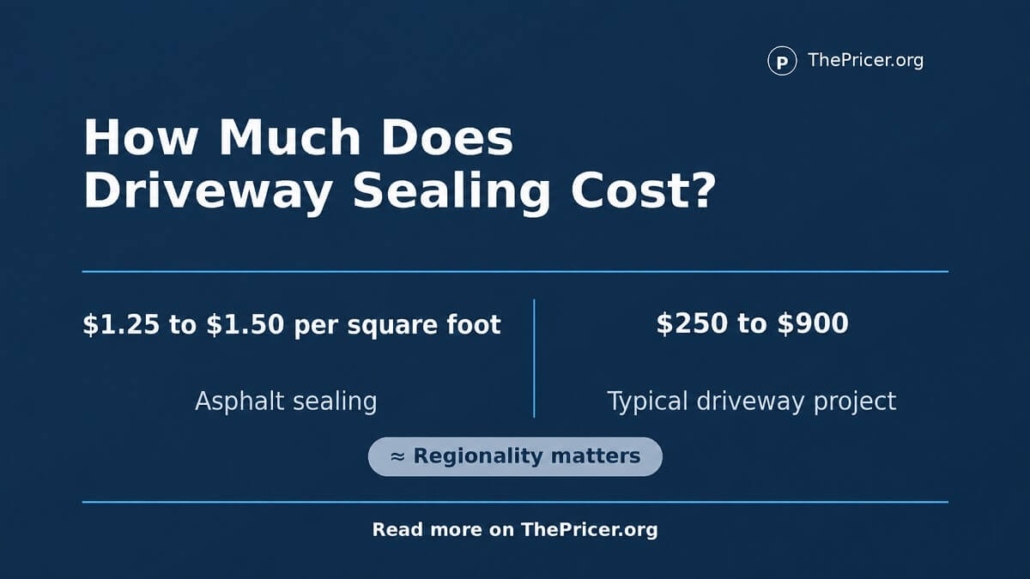
For asphalt, HomeAdvisor’s June 2026 professional asphalt rates put materials and labor at $1.25 to $1.50 per square foot and separate pressure washing at $0.27 to $0.39 per square foot when billed apart. For concrete, HomeGuide’s 2026 concrete sealing rates place cleaning and sealing at $1 to $3 per square foot. Sealcoat cannot correct a failed base or substitute for resurfacing.
Professional driveway sealing is quoted per square foot or per project. Pavement type, repair load, local labor, crew minimums, and access change the bill before a contractor selects and applies the coating.
How Much Does Driveway Sealing Cost?
Jump to sections
- Base asphalt: Current 2026 professional service runs $1.25 to $1.50 per square foot in Angi’s May 2026 asphalt sealing data.
- Base concrete: HomeGuide’s 2026 driveway size table places a 400-square-foot driveway at $400 to $800 (at $30 per hour, earning that amount would take about 1.7 to 3.3 full-time workdays, before taxes) and a 576-square-foot driveway at $580 to $1,200.
- Common cleaning add-on: LawnStarter’s 2023 pressure-washing benchmark put separate pressure washing at $0.27 to $0.39 per square foot.
What you’re actually buying
Driveway sealer is a maintenance product placed on an existing paved surface after cleaning and preparation. Asphalt sealcoat covers blacktop with a protective coating. Concrete sealer may penetrate the slab or leave a surface film, depending on the product. The work is aimed at the pavement surface rather than the soil and base beneath it. It does not rebuild compacted stone, drainage layers, or damaged pavement structure.
A sealing job is different from resurfacing, replacement, patch reconstruction, or adding a new slab. Those jobs replace pavement material or correct deeper defects. The distinction matters because a dark new coating can change appearance without correcting failed pavement underneath. Concrete driveway maintenance details also place sealing alongside other care work rather than treating it as a substitute for a new driveway. A useful proposal names the pavement, prep tasks, repair scope, coating, and application method.
Labor versus materials
Labor starts before sealer touches pavement. A crew may remove debris, trim edges, clean oil spots, prepare cracks, protect adjoining surfaces, mix product, apply the coating, and close the driveway during curing. Materials include the sealer itself plus crack filler, patch compounds, cleaners, primers, and disposable application supplies when those items are part of the scope.
A low material bill does not mean a low service bill. Crew travel, setup, cleaning, hand edging, crack preparation, application, and return visits can consume more job time than spreading the coating. The written proposal should show which tasks are included so two bids can be compared on the same scope.
| Quote line | What it covers | What can change it |
|---|---|---|
| Surface prep | Blowing, washing, degreasing, edge work | Dirt, oil, vegetation, porosity |
| Repairs | Crack filling and small patches | Crack length and pavement damage |
| Sealing | Product and application labor | Area, coating system, coat count |
| Mobilization | Crew and equipment setup | Distance, access, small-job minimum |
What we verified
- Checked surface preparation, application temperature, crack repair, and cure guidance against Gardner’s surface preparation and cure guidance.
- Confirmed the dividing line between surface work and deeper pavement work with driveway resurfacing and repaving data.
- Cross-referenced how pavement area and project geometry change contractor scope using driveway widening cost research.
Three quote scenarios
Budget case. Michelson’s April 2026 Ohio pricing guide lists a driveway of 600 to 1,000 square feet at $180 to $320 (about 0.8 to 1.3 full-time workdays at $30 per hour), with contractor minimum charges of $200 to $300. The main driver in this case is regional crew economics, including setup and minimum billing rather than square footage alone.
Typical case. Angi’s July 2026 professional sealing range places driveway sealing at $250 to $900, with larger projects reaching $2,000. Size is the main driver in that case. High case. Surface type changes the equation. Angi’s July 2026 concrete cost table lists a 500-square-foot professional concrete job at $625 to $1,250. These published planning cases show why one national square-foot figure can miss local minimums, driveway size, and differences between asphalt and concrete work.
Line items
Cleaning is only one possible extra. Cracks may need filling, oil spots may need treatment, loose edges may require hand work, and small damaged areas may need patching before the coating can bond. A second application can also raise material use and crew time. A detailed quote separates these tasks from the sealing line instead of hiding them inside one unexplained total.
Damage can move the project out of maintenance territory entirely. If a contractor finds base failure, broad cracking, potholes, or pavement that needs rebuilding, the project may shift from coating work to asphalt repair. That change affects both crew time and materials because the contractor is no longer preparing a sound surface for sealer.
Real driveway-sealing quote
An itemized estimate should give the measured area, preparation scope, coating type, repair work, application method, and any minimum charge. A modeled 500-square-foot asphalt job shows how the arithmetic can work. This is a planning calculation rather than a contractor bid, and it uses an older audited benchmark so the date needs to remain attached to the figures.
Using Bob Vila’s April 2024 labor benchmark, which lists labor near $1.15 per square foot and installed service at $1.25 to $1.50 per square foot, 500 times the installed rate produces $625 to $750, and 500 times the labor rate produces $575, leaving an implied nonlabor portion of $50 to $175. That subtraction helps test whether an estimate leaves room for materials before separate cleaning or repair lines enter the scope.
- Measured pavement area, 500 square feet
- Modeled labor, $575
- Implied nonlabor portion, $50 to $175
- Modeled base sealing total, $625 to $750
- Crack repair and separate cleaning, not included
Driveway size
Square footage controls how much coating the crew must place, yet unit rates can fall as a job gets larger because travel, setup, equipment unloading, and cleanup are spread across more pavement. Small jobs can price oddly.
A contractor minimum may set the invoice before the square-foot calculation becomes large enough to matter, which is why a short single-car driveway can carry a higher effective rate than a broad paved area. That fixed setup burden matters most when there is little surface area over which to spread it.
An audited March 2024 benchmark from Forbes Home’s 500-square-foot labor example lists labor at $1.10 per square foot, so 500 times $1.10 produces $550 before materials and added services. The same benchmark notes that contractors may apply a minimum labor fee on small sealing jobs. Multiplying area by a published rate is useful for screening a quote, but the contractor’s minimum, repair scope, coating specification, and site access can still change the invoice.
Regional pricing and driveway access
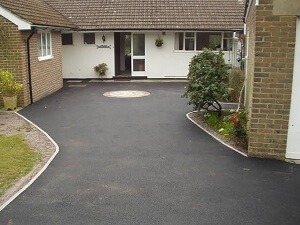 Two contractors can measure the same driveway and still quote different totals because crew travel, local wages, pavement porosity, slope, edge work, weather windows, and the contractor’s minimum charge all change productive application time.
A steep driveway adds control problems during application, and a long narrow driveway may require more equipment repositioning than a compact rectangle with the same area. Tight garage edges, adjoining concrete, walls, gates, and difficult turnaround space can slow preparation and coating work. Weather adds another local constraint because sealers need acceptable surface conditions during application and curing.
In the Bay Area, Portillo’s April 2026 Bay Area pricing places asphalt sealcoating at $0.15 to $0.40 per square foot and a two-car project at $200 to $600, illustrating how a regional contractor’s figures can differ from national consumer-service data.
Compare the written scope before comparing the final number. A lower bid may contain less preparation, fewer repair lines, a different coat count, or a different sealer formulation. Those scope differences matter more than a small gap between two headline square-foot rates because they change what the crew is actually being paid to do.
When DIY becomes a false economy
DIY can make sense on a sound, manageable asphalt surface when the owner can clean thoroughly, repair cracks, protect edges, apply the product at the specified rate, and keep traffic off the pavement during curing. The material quantity is easy to underestimate because rough or weathered asphalt absorbs more sealer than a recently treated, tightly compacted surface. The risk rises when cracks, oil staining, rough aggregate, or uncertain drying weather add preparation steps.
Henry’s current five-gallon coverage specification lists 250 to 500 square feet per pail depending on surface texture and describes the product for asphalt surfaces with minor cracks up to one-eighth inch. That coverage spread shows why material quantity can change on rough pavement. Cleaning, crack work, edge protection, and drying conditions still affect the job before coating starts. Buying too little material, spreading unevenly, or coating a dirty surface can leave the owner purchasing more product or paying a contractor to correct the work.
Who this cost makes sense for
Sealing fits pavement that is still structurally sound but needs surface protection and maintenance. It is a weaker choice for extensive potholes, sinking pavement, widespread breakup, or a failed base. Asphalt resurfacing and replacement guidance separates a stable base that can accept surface work from pavement that needs deeper rebuilding. Sealer cannot rebuild a failed base.
The quote also has to match the surface. Asphalt sealcoat and concrete sealer are different products applied for different maintenance goals. Paying for sealing makes sense when cleaning and repair can prepare the existing pavement for a coating. If structural work is already needed, money placed into a cosmetic surface treatment may have little effect on the defects driving future repairs.
Makes sense if
- The asphalt remains firm and the defects are limited to manageable surface wear.
- Cracks can be treated before the coating goes down.
- The concrete is sound and needs a compatible protective sealer.
- The quote identifies prep work and product type before application.
Doesn’t make sense if
- Large pavement sections are sinking or breaking apart.
- Water or base failure keeps reopening the same damage.
- The driveway needs resurfacing rather than a coating.
- The contractor treats sealing as a substitute for structural repair.
Answers to Common Questions
How often should an asphalt driveway be sealed?
Follow the coating manufacturer’s instructions and judge the existing pavement condition before scheduling another application. Product, climate, traffic, and prior coating condition change the interval.
Does driveway sealer fill cracks?
Surface coatings are not a substitute for meaningful crack repair. Cracks and holes may need separate preparation and filling before the sealer is applied.
Is concrete sealing priced the same as asphalt sealcoating?
No. Concrete uses different sealing systems and preparation methods, so asphalt square-foot figures should not be used as a concrete budget.
Why can a small driveway have a high unit rate?
Crew travel, equipment setup, cleaning, and minimum billing are spread across fewer square feet, raising the effective rate on a small project.
Disclosure: Educational content, not financial advice. Prices reflect public information as of the dates cited and can change. Confirm current rates, fees, taxes, and terms with official sources before purchasing. See our methodology and corrections policy.