
How Much Does It Cost to Charter an Oil Tanker?
Updated on | Written by Alec Pow
This article was researched using 14 sources. See our methodology and corrections policy.
Chartering an oil tanker can cost under $1 million for a short product-tanker voyage or approximately $80 million for a long-haul VLCC voyage in the October 2026 market. On October 9, the Baltic Exchange’s U.S. Gulf-to-China benchmark reached $79.61 million, while Reuters reported November-loading charter indications around $80 million. A one-year VLCC time charter was separately assessed near $200,000 per day in late September, equal to about $73 million of base hire across 365 days.
Those figures cannot be treated as one normal price. Rates are changing quickly, so every benchmark below is tied to a stated date. Tanker class, cargo size, route, charter type, laycan, fuel allocation, insurance exposure and delay terms can move the payable amount by millions of dollars.
Article Highlights
Jump to sections
- A U.S. Gulf-to-China VLCC voyage reached $79.61 million (at $30 per hour, earning that amount would take about 1.3 thousand years of full-time work, before taxes) on October 9, 2026, compared with approximately $51.74 million one week earlier.
- For a cargo of 2 million barrels, an $80 million voyage costs approximately $40 per barrel in freight alone.
- A 38,000-metric-ton MR voyage from the U.S. Gulf to the Caribbean was assessed at $785,700 in Baltic Exchange Week 39 data.
- A late-September one-year VLCC time charter was assessed near $200,000 per day.
- Three extra days at a historical $525,000-per-day VLCC demurrage indicator would add $1.575 million.
- Recent Hormuz-related insurance and transit costs have been reported at $10 million to $20 million in some cases, separate from base vessel freight.
How Much Does It Cost to Charter an Oil Tanker?
October 2026 is an unusually expensive tanker market, so the figures below are dated route benchmarks rather than a long-run average. The October 9 Baltic Exchange shipping update reported that the TD22 VLCC route from the U.S. Gulf to China climbed another $24.8 million (about 397 years of full-time work at $30 per hour) during the week to $79,611,111. Shorter product-tanker routes can still be measured in hundreds of thousands or low millions, but long-haul crude and clean-product voyages can run into eight figures.
| Vessel and route | Cargo basis | Published freight | Approx. freight per metric ton |
|---|---|---|---|
| MR, U.S. Gulf to Caribbean | 38,000 mt | $785,700 | $20.68/mt |
| LR1, Middle East Gulf to UK Continent | 65,000 mt | $12.03 million | $185.08/mt |
| LR2, Middle East Gulf to UK Continent | 90,000 mt | $17.27 million | $191.89/mt |
| VLCC, U.S. Gulf to China, September 25 | 270,000 mt | Just over $52.5 million | About $194.44/mt |
| VLCC, U.S. Gulf to China, October 9 | 270,000 mt | $79.61 million | About $294.86/mt |
The earlier product-tanker assessments and September VLCC comparison come from the Baltic Week 39 tanker report, published September 25. The October 9 VLCC figure is a later assessment of the same U.S. Gulf-to-China route.
The per-ton column is ThePricer’s calculation from the published cargo bases and lump-sum freight. It shows why vessel size alone cannot predict cost. The MR trip is far shorter than the long-haul routes, so its calculated freight was about $20.68 per metric ton, versus approximately $294.86 per metric ton on the October 9 U.S.-China VLCC assessment. Distance, directional vessel supply and risk can outweigh the economies of a larger hull.
The October 9 figure also demonstrates the speed of the market’s change. The same VLCC route was assessed near $51.74 million on October 2. The subsequent increase of approximately $27.87 million represented a weekly jump of roughly 54%. These are route assessments, not proof that every vessel was contracted at those prices.
How Tanker Chartering Works
An oil tanker can be hired for one voyage or for a period of time. Under a voyage charter, the commercial question is the freight for moving a stated cargo between agreed loading and discharge areas. Under a time charter, the charterer takes the ship for an agreed period and pays daily hire, with voyage expenses allocated under the contract. A bareboat charter transfers still more operating responsibility, but it is a different transaction from the spot freight question most oil traders mean when they talk about fixing a tanker.
Crude-oil voyages are often quoted in Worldscale rather than a simple dollar amount. The Baltic tanker chartering guide explains that WS100 equals 100% of the route’s published flat rate, with WS175 equal to 175% and WS75 equal to 75%. The Worldscale model uses a notional 75,000-metric-ton tanker, defined speed and fuel assumptions, four port days, and route costs such as canal and port expenses. That makes Worldscale a freight-pricing convention, not a universal daily rental rate.
TCE figures need another distinction. Time-charter equivalent converts voyage economics into an owner-focused daily earnings measure after modeled voyage costs. A TCE of $400,000 (about 6.4 years of full-time work at $30 per hour) per day is not automatically a charterer’s daily invoice. The freight rate, bunker responsibility, port costs, demurrage, commissions and other charter-party terms still have to be read separately.
Spot vs Period Hire
A spot voyage locks in one movement. A time charter buys access to the vessel for months or years and is quoted as daily hire. On September 23, Breakwave Advisors reported a recent three-year VLCC time charter at $100,000 per day and assessed a one-year charter on a similar ship near $200,000 per day. The late-September VLCC assessment shows how much premium the market was placing on near-term vessel availability.
The annualized math is large. A full year at $200,000 per day equals $73.0 million of base hire. Three years at $100,000 per day equals $109.5 million across the full term, or $36.5 million per year before contract-specific voyage expenses. Paying twice the daily rate for the one-year term can make sense only if the buyer values shorter exposure enough to justify that front-loaded premium.
Earlier 2026 contracts show how fast the period market moved. Frontline disclosed actual one-year VLCC charters at an average $76,900 per day for seven ships fixed in January, $93,500 per day for one ship in February, $110,000 per day for two newbuildings fixed in April and $120,000 per day for two more fixed in May. Those are documented contracts from earlier months, not October quotes.
Vessel Size and Cargo
The ship has to match the parcel and the ports. MR tankers move refined products on smaller parcels and regional routes. LR1 and LR2 vessels carry larger clean-product parcels. Aframax and Suezmax tankers cover many crude routes where port limits or cargo size do not call for a VLCC. A VLCC is built for very large crude parcels and long-haul trades, but a larger ship does not automatically create a cheaper charter if the route is tight or the vessel list is scarce.
Clean-product rates can move separately from crude. Gibson’s September 25 tanker report put the TC1 LR2 round-trip TCE near $265,000 per day, TC5 LR1 near $194,250 per day, TC7 MR near $60,000 per day and TC18 MR near $35,250 per day. Those TCE figures describe route economics, not a direct daily rental menu. They still show that product grade, route and vessel class create separate freight markets.
Capacity also changes the economic unit a buyer cares about. A crude trader may compare dollars per barrel or dollars per metric ton, not only the lump-sum fixture. Someone comparing charter expense with vessel ownership can use the separate oil tanker purchase-cost analysis. Purchase price, financing and operating cost answer a different question from the cost of securing transport for one cargo.
Route Changes the Bill
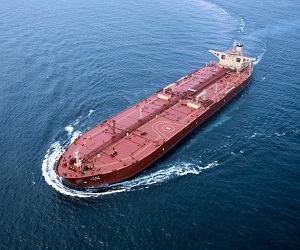
Two ships of the same class can command very different freight because the route determines sailing time, ballast position, port exposure, canal use, security risk and the chance of finding a paying next cargo.
September’s market gives a sharp real-world illustration. Reuters reported that an Aframax carrying about 700,000 barrels from Jose, Venezuela, to the U.S. Gulf cost about $3.5 million, up from $1.35 million near the start of 2026. The Venezuela freight report attributes the figures to Signal Maritime.
The increase is $2.15 million, or about 159%. The cargo capacity did not grow 159%. Freight conditions changed. That is why a quote copied from January can be useless in October even when the vessel class and ports look unchanged. The same logic applies when a vessel is forced onto a longer route or arrives in a region where available ships are scarce.
The October increase on the U.S. Gulf-to-China trade is an even more dramatic case. Reuters reported that record freight rates were making some U.S. crude shipments uneconomic for Asian refiners. Disruptions around the Strait of Hormuz, inefficient ship-to-ship transfers and stronger demand for Atlantic Basin crude have increased competition for available vessels. The October 9 freight investigation describes an approximately $80 million VLCC movement carrying 2 million barrels.
That produces a freight cost of approximately $40 per barrel before considering the oil’s purchase price and other separately payable charges. A refinery buying crude must assess whether its expected refining margin can absorb the transport bill. A cheaper cargo at the loading port can become more expensive than a competing grade delivered from a nearer source.
Rerouting can create another layer of expense through extra sailing days and fuel. The separate analysis of rerouting a tanker around Africa models that problem directly. For chartering, the commercial question is who bears those extra voyage costs under the charter party and whether the route change was already reflected in the freight quote.
A VLCC Worked Example
A useful current scenario is a VLCC moving approximately 2 million barrels from the U.S. Gulf to China. The October 9 Baltic assessment put the route at $79.61 million. Separately, CommodityScope’s VLCC demurrage indicator for the same U.S. Gulf-to-China basis was $525,000 per day on September 24. That historical demurrage indicator is not a clause in the October Baltic assessment, so the calculation below is an illustrative delay scenario rather than a quoted charter.
Illustrative freight and delay total
- Assumed voyage freight, rounded to $80 million.
- Assumed cargo, 2 million barrels.
- Freight per barrel, $40.
- Assumed excess delay, 3 days.
- Illustrative demurrage, 3 × $525,000 = $1.575 million.
- Modeled freight plus delay, $81.575 million.
- Combined freight and modeled delay per barrel, approximately $40.79.
Three days of delay add approximately 2% to the assumed voyage freight. Ten excess days at the same historical indicator would add $5.25 million, lifting the modeled total to $85.25 million. The practical lesson is not that every U.S.-China VLCC will incur those charges. It is that laytime and demurrage language can turn a small schedule miss into a seven-figure addition. The charter party’s actual allowed laytime, rate and exceptions control the real bill.
The higher freight rate also changes the economics of cargo sourcing. If the same two-million-barrel shipment had cost $51.74 million in early October, its freight component would have been approximately $25.87 per barrel. At $79.61 million, that rises to approximately $39.81 per barrel, an increase of nearly $13.94 per barrel in one week. That calculation compares two published assessments for the same route, not two confirmed invoices.
Delay and Extra Charges
Demurrage is only one charge outside the headline freight number. Port expenses, canal tolls, bunkers, agency costs, tug and pilot services, ship-to-ship transfers, security measures and commissions can sit with the owner or charterer depending on the contract. Worldscale incorporates modeled route costs into its flat-rate system, but the final charter party still determines which real expenses are payable by each side. U.S. readers dealing with government-related port charges can keep those separate from the broader U.S. port-fee cost analysis.
War-risk exposure can dwarf routine port costs. Reuters reported on September 9 that ENOC director Paul Bradshaw had seen cargo insurance reach as much as roughly 5% to 6% of cargo value, potentially adding $10 million, with added war-risk premiums quoted as high as 10% in some cases. He put combined transit costs in the $10 million to $20 million range for some Hormuz movements. The Hormuz transit-cost report makes clear that these are conflict-driven costs, not a standard surcharge on every oil-tanker charter.
Insurance and freight should not be merged silently. A charter quote can be valid even when cargo insurance is purchased elsewhere. The buyer needs a line-by-line view of freight, fuel exposure, port and canal costs, insurance, demurrage, taxes, commissions and any security premium before treating a single lump sum as the transport total.
The unusually high October market adds another hidden expense: the opportunity cost of a voyage that no longer makes commercial sense. A buyer may secure a cargo at an attractive crude price but discover that freight has increased enough to eliminate its expected trading margin. If the contract permits a change of loading origin, comparing delivered cargo costs can be more valuable than negotiating a small reduction in the vessel’s freight rate.
How to Compare a Quote
Start by matching the charter type and the commercial unit. A voyage quote in Worldscale, dollars per metric ton or a lump sum cannot be compared directly with a daily time-charter rate. Ask for the vessel class, cargo basis, loading and discharge range, laycan, included voyage costs, bunker responsibility, commissions, laytime and demurrage rate. A quote also needs a date because a tanker market can reprice within days.
A U.S. government solicitation shows why daily hire is not always the full evaluated cost. A 2026 Military Sealift Command 60-day tanker charter called for evaluation of both charter hire and estimated fuel use. Its fuel template used $1,500.83 per metric ton for MGO/MDO and modeled loaded sailing, ballast sailing, loading idle time and discharge time. The disclosed solicitation did not publish the winning vessel price, but its cost structure shows why a daily hire number alone can be incomplete.
Makes sense if
- The quote matches the exact cargo size, tanker class and route.
- Voyage freight and time-charter hire are compared on their own contract basis.
- Laytime, demurrage, fuel and insurance responsibilities are written into the comparison.
- The quote date is recent enough for the intended laycan.
Does not make sense if
- A TCE number is treated as the charterer’s invoice.
- A January or September fixture is used as an October market quote without adjustment.
- A short MR voyage is used to estimate a long-haul VLCC movement by tonnage alone.
- War-risk insurance is assumed to be included when the freight quote does not say so.
Answers to Common Questions
How much does it cost to charter a VLCC?
An October 9, 2026 U.S. Gulf-to-China spot benchmark reached approximately $79.61 million for a 270,000-metric-ton voyage. A late-September one-year VLCC time charter was separately assessed near $200,000 per day. These are different contract structures.
How much does it cost to charter a smaller oil tanker?
The price depends heavily on route. A 38,000-metric-ton MR voyage from the U.S. Gulf to the Caribbean was assessed at $785,700 in late September 2026, while longer product-tanker routes were above $10 million.
Why does an oil tanker voyage cost $80 million?
The approximately $80 million October benchmark concerns a large crude tanker moving about 2 million barrels from the U.S. Gulf to China. Long sailing distances, limited available tonnage, high regional shipping demand and geopolitical disruption have contributed to exceptionally expensive freight conditions. It is not a standard worldwide tanker charter price.
How much does tanker freight add per barrel?
At $80 million for a two-million-barrel cargo, freight alone equals approximately $40 per barrel. That excludes the purchase price of the crude and any additional expenses not included in the charter.
What is Worldscale in tanker chartering?
Worldscale is a route-based freight-rate system. WS100 represents 100% of the published flat rate for the stated voyage, and negotiated tanker freight can trade above or below that level.
Is TCE the price a charterer pays?
No. TCE is an economic measure used to express voyage earnings as a daily equivalent. It is useful for comparing vessel economics but should not be copied into a budget as though it were the charterer’s daily invoice.
Can demurrage add millions to a tanker charter?
Yes. At a historical $525,000-per-day VLCC demurrage indicator, three excess days equal $1.575 million. The real charge depends on the agreed charter-party rate, allowed laytime and contractual exceptions.
Disclosure: Educational content, not financial advice. Prices reflect public information as of the dates cited and can change. Confirm current rates, fees, taxes, and terms with official sources before purchasing. See our methodology and corrections policy.