
How Much Does It Cost To Make A Burger?
Updated on | Written by Alec Pow
This article was researched using 14 sources. See our methodology and corrections policy.
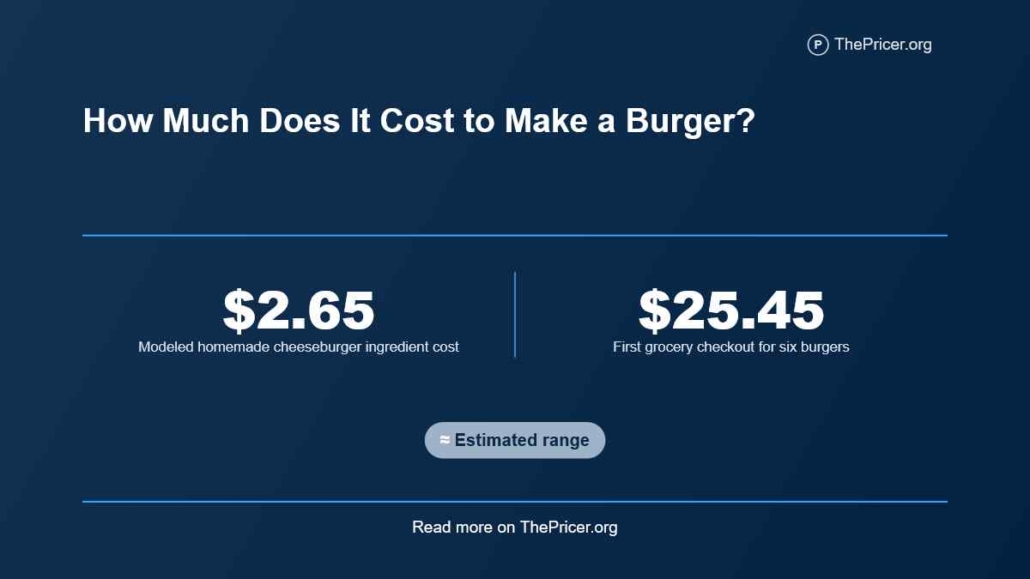
A basic quarter-pound homemade cheeseburger costs about $2.65 in ingredients in a current low-cost grocery scenario. The meat input uses the August 2026 U.S. average of $6.923 per pound for regular ground beef. Low-cost buns, cheese, produce, ketchup, and mustard bring the modeled burger to about $2.65.
A six-burger batch uses roughly $15.90 of food, while buying all the packages can put about $25.45 on the first grocery receipt. Store, brand, and location can change the total. Taxes are not part of this model. The gap between consumed ingredient cost and checkout cost is the useful budgeting distinction.
Article Highlights
Jump to sections
- A basic quarter-pound homemade cheeseburger can use about $2.65 of ingredients in a current low-cost grocery scenario.
- The quarter-pound beef patty is about $1.73 at the latest national regular ground-beef price.
- Six basic cheeseburgers use about $15.90 (at $30 per hour, earning that amount would take about 32 minutes, before taxes) of food in the modeled batch.
- Buying all the packages for that six-burger batch can put about $25.45 on the first grocery receipt.
- Beef accounts for about 65% of the consumed ingredient cost in the basic modeled burger.
- A larger one-third-pound patty made from lean or extra-lean beef costs about $2.86 before the bun or toppings.
How Much Does It Cost to Make a Burger?
The cost depends on what is counted. A recipe-cost calculation should charge only the amount of each ingredient actually used. A grocery-trip calculation has to pay for the full bun pack, cheese pack, produce, and condiment bottles. Both numbers are useful, but they answer different questions.
The national beef input cited above makes a quarter-pound patty cost about $1.73. That is already more than the old article’s low-end estimate for an entire burger. It also shows why current beef pricing has to sit at the center of the calculation instead of being treated as a small topping-level expense.
For the basic cheeseburger modeled here, the consumed ingredient cost is about $2.65. That figure uses inexpensive store-brand buns, one cheese slice, modest produce, ketchup, and mustard. More tomato, pickles, thicker cheese, or higher-priced bread raises the total. This is a defined homemade food-cost scenario, not a national average for every burger recipe.
The burger can still cost less at home in many cases, but the savings depend on what you already have. If ketchup, mustard, onions, and lettuce are in the refrigerator, your new cash outlay can be much lower than someone buying every ingredient from scratch.
Cost of a Basic Cheeseburger
The table uses one quarter-pound beef patty, one bun, one American cheese slice, two ounces of tomato, half an ounce of shredded lettuce, and half an ounce of onion. Condiments are added separately in the calculation that follows. Retail examples reflect September 2026 online listings and can vary by store or location.
| Ingredient | Current price input | Portion per burger | Consumed cost |
|---|---|---|---|
| Regular ground beef | $6.923 per pound | 1/4 lb | $1.73 |
| Hamburger bun | $1.48 for 8 buns | 1 bun | $0.19 |
| American cheese | $2.69 for 24 slices | 1 slice | $0.11 |
| Roma tomato | $3.42 per pound | 2 oz | $0.43 |
| Shredded iceberg lettuce | $1.97 for 8 oz | 1/2 oz | $0.12 |
| Yellow onion | $2.54 for 3 lb | 1/2 oz | $0.03 |
Those six ingredients total about $2.60. Current store-brand ketchup and mustard examples put modest burger-size portions at only a few cents each. A $1.97 ketchup bottle contains about 53 one-tablespoon servings, while a $1.00 mustard bottle contains 20 ounces. Using one tablespoon of ketchup and one teaspoon of mustard brings the modeled basic burger to about $2.65, before pickles, mayonnaise, or cooking energy.
What Six Burgers Cost
A six-burger batch needs 1.5 pounds of beef for quarter-pound patties. At the current $6.923 per pound beef input, that portion costs about $10.38 (about 21 minutes at $30 per hour). Six buns use about $1.11 of an eight-pack, six cheese slices use about $0.67, and the modeled tomato, lettuce, onion, ketchup, and mustard portions make up the rest.
The itemized consumed-food total is about $15.90 for six cheeseburgers, or about $2.65 each. That figure assumes the portions in the table and inexpensive sauces. It excludes cooking fuel, pickles, bacon, avocado, fries, drinks, disposable plates, and food waste. Those items belong in the budget only when the cookout actually uses them.
Batch size matters because burger ingredients are sold in packages. Six burgers use six of the eight buns and six of 24 cheese slices, leaving food for later meals. The same applies to sauces and onions. The unused food should not be assigned entirely to the six burgers when calculating consumed food cost.
This is also why homemade burger comparisons can look contradictory. Someone can say six burgers cost about $15.90 to make and still spend about $25.45 at checkout. Both statements can be true. One measures food consumed. The other measures cash leaving the wallet during the shopping trip.
Checkout Cost vs. Food Used
Suppose the kitchen starts with none of the core ingredients. Buying 1.5 pounds of beef at the national price input costs about $10.38 (about 21 minutes at $30 per hour). Add the full eight-pack of buns at $1.48, the 24-slice cheese pack at $2.69, one pound of tomatoes at $3.42, shredded lettuce at $1.97, three pounds of onions at $2.54, ketchup at $1.97, and mustard at $1.00.
The modeled first-trip checkout total is $25.45. Yet the six burgers consume only about $15.90 of those groceries. The difference is $9.55 of food left in the kitchen under the model, assuming it is later used rather than spoiled. That leftover value is why a homemade burger can cost around $2.65 to eat while the first shopping trip feels much more expensive.
The distinction matters most for small batches. One person making a single burger from an empty kitchen would still have to buy packages that contain several future servings. A family already keeping cheese, onions, ketchup, and mustard at home faces a much smaller incremental bill.
Price comparisons should state which measure they use. Recipe cost is better for comparing one burger with another recipe. Checkout cost is better for answering how much cash you need before a cookout. Mixing the two makes homemade food look either unrealistically cheap or unfairly expensive.
Patty Size and Premium Ingredients
Beef drives the bill. In the basic $2.65 scenario, the $1.73 quarter-pound patty accounts for about 65% of the consumed ingredient cost. A change in meat price or patty weight moves the total more than a few extra onion slices or a squirt of mustard.
Patty size is an easy place to see the difference. The latest BLS average for lean and extra-lean ground beef is $8.573 per pound. A one-third-pound patty at that price costs about $2.86 by itself. That is about $1.13 more than the quarter-pound regular-beef patty before changing the bun, cheese, or toppings.
Keeping the same bun, cheese, produce, ketchup, and mustard while replacing the quarter-pound regular patty with a one-third-pound lean or extra-lean patty raises the modeled burger from $2.65 to about $3.78. Bacon, avocado, specialty cheese, mushrooms, or premium bread would add more based on the buyer’s actual grocery price. Pricing those upgrades individually is more useful than assigning every premium burger one broad range.
Buying more expensive ingredients is a preference rather than a required cost. The same cookout can mix basic burgers and a few upgraded versions. That is often cheaper than buying premium ingredients for every serving when only some guests want them.
Homemade vs. Fast Food
Fast-food burger prices vary too much to treat one chain as the market. A July 2026 Business Insider comparison of 13 double cheeseburgers found sampled prices from $4.69 to $17.75, excluding tax and fees in several cases. The sample included McDonald’s, Wendy’s, Burger King, In-N-Out, Shake Shack, Five Guys, Sonic, and regional chains.
That range should not be compared directly with the $2.65 homemade burger as if the products are identical. Many of the restaurant examples use two patties, more cheese, different bun sizes, sauces, and restaurant labor. The useful comparison is that a basic homemade burger can start below the price of many prepared burgers because the home cook is paying mainly for ingredients.
Restaurant convenience carries value too. Fast food eliminates grocery shopping, cooking, cleanup, and leftover management. Apps and limited promotions can also reduce the effective menu price below the regular listing. Readers comparing chain meals can see how those extras affect a separate McDonald’s sandwich price.
At home, adding a side can still be inexpensive. A burger cookout paired with homemade or frozen fries may remain below a restaurant meal, but the comparison should include the side on both sides rather than comparing a sandwich alone with a complete meal.
Homemade vs. Restaurant
Sit-down burger prices include more than ingredients. One current Applebee’s menu page lists a Classic Bacon Cheeseburger with fries at $13.99. It includes an all-beef patty, two cheese slices, bacon, lettuce, tomato, onion, pickles, a brioche bun, and fries.

Six of those restaurant orders would total $83.94 before tax and tip. The modeled six basic homemade cheeseburgers use about $15.90 of ingredients. The difference is $68.04, but this is not a matched-product savings claim because the restaurant order adds bacon, a larger restaurant service package, and fries.
The comparison still explains where money goes. Restaurant pricing must cover staff, occupancy, equipment, utilities, cleaning, spoilage, service, and profit as well as food. A home cook supplies the labor and kitchen. That is why ingredient cost alone cannot reveal a restaurant’s profit margin.
Readers who want restaurant-only pricing can compare current hamburger menu costs. For a home cookout, the better question is whether the convenience of eating out is worth the extra cash relative to the food and work required at home.
Making Burgers at Home
Homemade burgers become more economical when several people are eating, pantry staples are already available, and leftover ingredients will be used. The bun pack, cheese pack, sauces, and produce spread across multiple meals instead of being charged to one serving. The six-burger model shows this effect well because the consumed cost is $15.90 while the first shopping trip is $25.45.
The economics weaken when premium toppings are bought for one meal and the leftovers spoil. They also weaken when the cook buys a specialty meat, oversized patties, expensive buns, several cheeses, and restaurant-style sides. Homemade does not automatically mean cheap.
Makes sense if
- You are cooking several burgers from one pound or more of beef.
- You already have sauces, onions, seasoning, or cheese in the kitchen.
- You will use leftover buns, produce, and condiments in later meals.
- You want control over patty size and topping cost.
Does not make sense if
- You are buying many full-size packages for one burger.
- Premium toppings will be discarded after the meal.
- A restaurant promotion makes a prepared meal unusually cheap that day.
- You value the saved cooking and cleanup time more than the ingredient savings.
Burgers also fit naturally beside other cookout foods. Comparing the batch economics with homemade hot dog costs can help decide how to split a party menu without assuming every guest needs the same item.
Verification checks
- Checked USDA guidance requiring 160°F for ground beef measured with a food thermometer.
- Confirmed the previous state-price figures came from a 2022 Purdue burger model, so they were not reused as current 2026 state prices.
- Cross-referenced McDonald’s official restaurant timeline, which says fries replaced potato chips on its menu in 1949.
Answers to Common Questions
How much does it cost to make one burger at home?
A basic quarter-pound homemade cheeseburger uses about $2.65 of ingredients in the defined low-cost grocery scenario.
How much does it cost to make six burgers?
The modeled six-burger batch uses about $15.90 of food. Buying all the required packages from an empty kitchen can put about $25.45 on the first grocery receipt.
What is the most expensive part of a homemade burger?
Ground beef is the largest cost in the basic scenario. The quarter-pound patty costs about $1.73 and represents roughly 65% of the modeled burger’s consumed ingredient cost.
Is it cheaper to make burgers or buy fast food?
A basic homemade burger can have a lower ingredient cost than many prepared burgers, but restaurant pricing also pays for cooking, labor, premises, cleanup, and convenience. Promotions can narrow the difference.
How much does a premium homemade burger cost?
Using the same basic toppings but a one-third-pound lean or extra-lean patty raises this model to about $3.78. Bacon, avocado, specialty cheese, mushrooms, or premium bread would add more at the buyer’s actual grocery price.
Disclosure: Educational content, not financial advice. Prices reflect public information as of the dates cited and can change. Confirm current rates, fees, taxes, and terms with official sources before purchasing. See our methodology and corrections policy.