
How Much Does Laser Tag Cost?
Updated on | Researched and reviewed by Alec Pow, Founder & Pricing Investigator
Prices, claims, and calculations checked against 11 cited sources. See our research methodology and corrections policy.
Laser tag typically costs about $10 to $15 per person for one arena game. Playing two or three games usually costs around $18 to $30 per person, while unlimited-play specials can cost about $20 to $30.
A laser tag birthday party for 10 children commonly costs around $290 to $440, depending on how many games, food, arcade credits, and party-room time are included. If you want laser tag brought to your home, park, school, or event venue, a hosted mobile laser tag setup usually costs around $300 to $600 for roughly two hours.
Buying laser tag equipment for home use is much cheaper. Current two-player toy sets cost around $35 to $50, while commercial equipment for a laser tag business starts in the five figures.
Article Highlights
Jump to sections
- One laser tag game usually costs about $10–$15 per person.
- Two or three games commonly cost $18–$30 per person.
- Unlimited-play specials can cost about $20–$30 per person.
- A 10-person laser tag birthday party commonly costs $290–$440.
- Mobile laser tag typically costs $300–$600 for around two hours.
- Home laser tag sets currently start around $35–$50 for two players.
- Commercial starter systems cost around $12,000–$18,000.
- A full commercial arena can require $100,000–$250,000+ once equipment, construction, leasehold improvements, and startup capital are included.
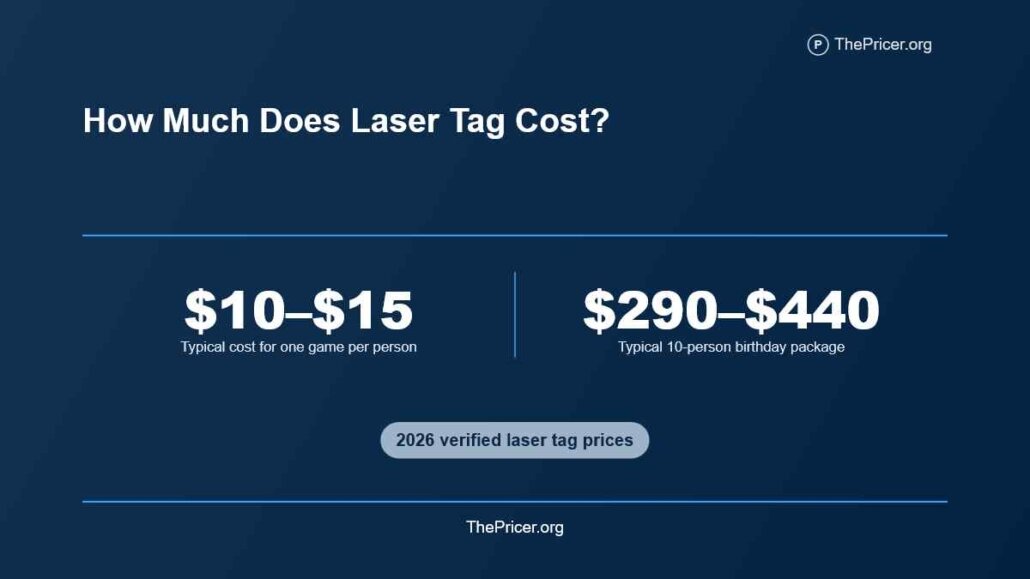
How Much Does Laser Tag Cost?
Current U.S. entertainment-center pricing puts one laser tag game close to $10 to $15. Scene75 currently charges $10 for laser tag in its large arena.
Andretti Indoor Karting & Games currently charges $15 for a 10-minute laser tag experience at its Marietta location. Its arenas can span roughly 4,000 square feet over two levels and include interactive targets and different game modes.
| Laser Tag Option | Typical 2026 Price |
|---|---|
| One arena game | $10–$15/person |
| Two games | $18–$25/person |
| Three games | $24–$30/person |
| Unlimited-play promotion | $20–$30/person |
| 10-person birthday party | $290–$440+ |
| Mobile laser tag party | $300–$600+ |
| Home laser tag set | $35–$100+ |
Game length matters as much as ticket price. One venue may charge $10 for a short session while another charges $15 but provides more arena time, a larger arena, or more elaborate equipment.
How Long Is a Game?
A laser tag “game” does not usually mean an hour of continuous play.
At Andretti, the published experience is 10 minutes. Ultrazone says each of its games includes about 15 minutes of actual play, plus another 10 to 15 minutes for briefing and preparation.
Ultrazone recommends allowing around 90 minutes when a group wants to play two or more games.
This means a $12 laser tag ticket can equal roughly $48 to $72 per hour of actual arena play if a game lasts only 10 to 15 minutes.
That sounds expensive on an hourly basis, but the venue price also funds briefing time, staff, equipment, arena construction, scoring systems, lighting, maintenance, and downtime between groups.
Multiple Games
Buying several games together usually gives better value than paying for each one separately.
If one game costs $12 and a three-game package costs $27:
$27 ÷ 3 = $9 per game
That is a 25% lower per-game cost than buying three $12 sessions separately.
Some venues go further with unlimited-play events. Ultrazone currently offers its Friday and Saturday Power Play session for $25.99 per player, allowing customers to play as many games as scheduling permits during the event.
If a player gets five games in for $25.99, the effective cost becomes:
$25.99 ÷ 5 = $5.20 per game
For someone who wants more than one round, unlimited nights and multi-game packages often provide the strongest value.
Birthday Parties
Laser tag birthday parties cost considerably more than simply buying game tickets because the package typically includes a private room or reserved area, food, drinks, a host, invitations, arcade credits, or additional activities.
Ultrazone currently charges $289.90 for its 10-person Super Party. The package includes one laser tag game, a private room for 1.5 hours, a party host, pizza, unlimited soft drinks, and party supplies.
Its two-game Ultimate Party currently costs $399.90 for 10 guests, with additional guests priced at $39.99 each.
That equals:
$399.90 ÷ 10 = $39.99 per guest
Xtreme Action Park offers another real-world benchmark. Its current Gamer Frenzy birthday package costs $439 for 10 guests and combines one laser tag game, virtual reality, XD Dark Ride, arcade play, pizza, drinks, and a private room.
For a simple laser-tag-focused birthday, plan around $30 to $40 per child. Packages with food, arcades, VR, private rooms, and multiple attractions can move closer to $40 to $60+ per child.
A 12-Person Party
Suppose a venue charges $39.99 per guest for its party package and you invite 12 children.
12 × $39.99 = $479.88
Add a $40 birthday cake, $25 in extra food, and a $20 tip for the host:
| Expense | Cost |
|---|---|
| 12-player laser tag party | $479.88 |
| Cake | $40 |
| Extra food | $25 |
| Host tip | $20 |
| Total | $564.88 |
That works out to approximately $47 per child.
At a $30 hourly wage, the $565 party represents almost 19 hours of gross earnings.
The Hidden Price
 The hidden cost of laser tag is usually everything attached to the game ticket.
A family entertainment center may tempt visitors with a $10 or $15 laser tag game, but a full outing can also include arcade cards, food, drinks, bowling, VR, parking, taxes, and additional attractions.
Andretti, for example, currently sells a $30 one-attraction combo that can include laser tag plus 100 arcade points, while its two-attraction combination costs $40.
A family of four buying $30 combinations therefore spends:
4 × $30 = $120
before food or additional games.
For a basic outing, laser tag itself may cost only $40 to $60 for the family. The larger entertainment-center visit can easily double that.
Mobile Laser Tag
Mobile laser tag brings the equipment and arena setup to your backyard, park, gym, school, church, or event venue.
Instead of paying per player, these businesses generally charge a flat group price.
Newton’s Laser Tag currently charges:
- $299 for up to 8 players for two hours
- $337 for up to 14 players
- $389 for up to 20 players
- $469 for up to 30 players
The 20-player option works out to just:
$389 ÷ 20 = $19.45 per person
for a two-hour hosted event.
Another provider, Parties Inc., currently charges $365 for one hour, $515 for two hours, $665 for three hours, and $815 for four hours. Its setup includes 14 player systems, bunkers, computerized scoring, and a referee.
Current mobile pricing therefore supports a general budget of around $300 to $600 for a normal birthday-sized event.
When Mobile Is Cheaper
For a small group, visiting a laser tag arena is usually cheaper.
Ten people paying $12 each for one game spend:
10 × $12 = $120
A $350 mobile setup costs nearly three times as much.
But the economics change with a larger group and longer play time.
Twenty people buying three $12 arena games spend:
20 × 3 × $12 = $720
A two-hour mobile package around $389 could be approximately $331 cheaper, assuming the package accommodates the group and provides the type of play you want.
Playing at Home
Families who play frequently can buy consumer laser tag equipment rather than pay arena prices.
Current Target laser tag listings include two-player Laser X sets around $43 to $50 and other basic two-player sets around $35.
A current four-player Laser X set has also sold around $86.
If a family pays $50 for a two-player system and uses it ten times, the equipment cost averages:
$50 ÷ 10 = $5 per session
Home equipment does not reproduce the themed arena, lighting, interactive targets, staff, or commercial scoring system, but it is dramatically cheaper for repeat casual play.
Arena vs. Home
The choice depends on what you’re actually buying.
A commercial arena offers immersive lighting, barriers, large playing areas, vests or sensors, sophisticated scoring, multiple game modes, and groups of strangers or friends.
A home set buys reusable equipment.
For a family that wants laser tag once or twice a year, spending $10 to $15 per game is reasonable. For children who want to play every weekend, a $40 to $100 home setup can quickly become the cheaper option.
Business Startup Cost
The old version of this article focused heavily on this question, but it is a separate financial decision from what customers pay to play.
Commercial equipment remains expensive.
Battlefield Sports’ current 2026 commercial pricing puts:
- 12–16 player starter equipment at $12,000–$18,000
- 24–30 player systems at $25,000–$45,000
- 40–60+ player systems at $60,000–$100,000+
Those figures cover equipment, not necessarily the building or a completed themed arena.
Current iCOMBAT arena construction guidance estimates buildout around $12 to $42 per square foot for a traditional arena and up to $60+ per square foot for more elaborate tactical environments.
Arena Startup Example
Suppose an operator opens a 3,000-square-foot arena.
At $25 per square foot for the arena build:
3,000 × $25 = $75,000
Add:
| Startup Item | Example |
|---|---|
| 30-player equipment system | $35,000 |
| Arena construction | $75,000 |
| POS / computers / networking | $10,000 |
| Furniture / lobby / party rooms | $20,000 |
| Permits / signs / miscellaneous | $10,000 |
| Initial working capital | $30,000 |
| Illustrative total | $180,000 |
That example excludes purchasing the building itself and shows why the old blanket “$100,000 to $250,000” startup range was plausible but incomplete.
A mobile laser tag company can start much more cheaply because it avoids constructing and leasing a permanent arena.
Business Profit
There is no defensible rule that a laser tag business will earn $40,000 to $100,000 of profit during its first three years.
Revenue depends on attendance, ticket prices, birthdays, rent, payroll, food and beverage sales, equipment uptime, local competition, marketing, and debt.
One useful benchmark comes from the equipment industry’s own current pricing guidance. The Laser Tag industry pricing guide recommends treating birthday parties and groups as separate products rather than simply discounting individual admission, with around 8 to 12 players being a strong target for many birthday groups.
Profit should therefore be modeled from actual expected attendance and expenses rather than a universal number.
Is Laser Tag Expensive?
Compared with many family entertainment activities, laser tag sits near the middle.
A $10 to $15 game is more expensive than a single arcade play but much cheaper than many escape rooms, premium VR experiences, or amusement-park admission.
The economics become especially favorable when a venue offers multi-game or unlimited-play discounts.
ThePricer also covers the cost of Urban Air, Sky Zone, and building a splash pad.
What We Verified
Answers to Common Questions
How much does one game of laser tag cost?
Most current commercial arena examples fall around $10 to $15 per person.
How much does laser tag cost for two hours?
At an arena, two hours containing multiple games might cost roughly $20 to $30 per person. A private mobile event for a group usually costs about $300 to $600 total.
How much is a laser tag birthday party?
A typical 10-person party costs around $290 to $440. More elaborate packages with VR, arcades, food, and multiple attractions can cost more.
How much does mobile laser tag cost?
Current hosted mobile packages commonly fall around $300 to $600 for one to two hours, depending on player capacity, travel, equipment, and staffing.
How much does a home laser tag set cost?
Basic two-player systems currently cost around $35 to $50, while larger four-player and premium sets can cost $80 to $100 or more.
How long is one laser tag game?
Commercial games commonly provide about 10 to 15 minutes of arena time. Briefing, equipment fitting, and score review can make the complete session longer.
How much does it cost to start a laser tag business?
Commercial equipment starts around $12,000 to $18,000 for a small system. A permanent commercial arena can easily require $100,000 to $250,000+ after equipment, construction, leasehold improvements, furniture, technology, and startup capital.
For most customers, the useful 2026 answer is therefore $10 to $15 for one laser tag game, $20 to $30 for several games, and roughly $30 to $45 per guest for a full birthday-party package. The old six-figure arena-development question is real, but it is not what most people searching “How Much Does Laser Tag Cost?” are trying to find out.
Disclosure: Educational content, not financial advice. Prices reflect public information as of the dates cited and can change. Confirm current rates, fees, taxes, and terms with official sources before purchasing. See our methodology and corrections policy.