
How Much Does Memorabilia Restoration Cost?
Published on | Written by Alec Pow
This article was researched using 15 sources. See our methodology and corrections policy.
Memorabilia restoration can cost about $20 to $400 for straightforward cleaning, relacing, pressing, and collectible repairs, while professional conservation of fragile paper, photographs, historic documents, textiles, or mixed-material artifacts can start around $500 to $600 and reach $1,000+.
A paper conservator may charge $150 per hour, and some institutional conservation laboratories have treatment minimums reaching $1,800. The wide price spread reflects the difference between relatively simple work such as cleaning and relacing a baseball glove and specialist treatment intended to stabilize a fragile signed poster, historic document, game-used textile, or other irreplaceable artifact.
The item’s material, physical condition, dimensions, age, prior repairs, historical importance, intended use, and treatment goal determine which specialist should handle it and how the project is priced.
Article Highlights
Jump to sections
- Routine collectible cleaning and repair can start around $20 to $100, depending on the item and work required.
- Baseball glove cleaning, relacing, and restoration commonly appears in current service menus from about $55 to $150.
- Basic paper restoration currently ranges from $100 to $425 for photographs and $325 to $750 for posters at one specialist studio.
- Professional paper conservation can cost $150 per hour plus materials, with one current studio setting a $600 treatment minimum.
- Comic cleaning and pressing can start at $12 to $25+, while structural conservation and true restoration can cost $90 to $140 per hour.
- Examination, materials, shipping, insurance, grading, appraisal, framing, and display can sit outside the restoration quote.
How Much Does Memorabilia Restoration Cost?
There is no useful single average for every kind of memorabilia because service scope changes dramatically with the object. Current baseball-glove services provide the low end of the market: professional cleaning and conditioning can cost around $55, while a clean, condition, and full relace package can cost $95 with return shipping included. The same service lists a $10 surcharge for catcher and first-base mitts because they require more lace and labor. Those prices apply to playable leather equipment rather than museum conservation.
Paper memorabilia occupies a different price tier. One current U.S. restoration studio publishes base treatment prices of $100 to $425 for photographs, $175 to $425 for documents, and $325 to $750 for posters. Its base treatment includes cleaning, deacidification, and pressing. Frame removal, debacking, dematting, archival mounting, mold treatment, retouching, and substantial tape removal are excluded, so a damaged signed poster can exceed the displayed range.
| Memorabilia or treatment | Published price | Scope or qualification |
|---|---|---|
| Baseball glove cleaning | $55 | Deep cleaning and conditioning |
| Baseball glove full restoration | $95 | Cleaning, conditioning and relacing |
| Extensive glove restoration | $150 to $399 | Structural leather or component work |
| Photograph restoration | $100 to $425 | Basic paper treatment |
| Document restoration | $175 to $425 | Basic paper treatment |
| Poster restoration | $325 to $750 | Basic treatment; major extras excluded |
| Comic cleaning and pressing | $12 to $25+ | Depends on age and value |
| Comic conservation | $90/hour | Structural stabilization and repairs |
| Comic restoration | $140/hour | Can include rebuilding, fills and color work |
| Professional paper conservation | $150/hour | Materials charged separately |
The table is a set of documented service examples, not a national price average. Comparing them without their scopes would produce a misleading range. A $55 leather cleaning service does not buy the same professional work as a $600 conservation treatment, even though both can appear in searches for memorabilia restoration.
Repair, Restoration, or Conservation?
The words repair, restoration, and conservation can describe different objectives. A repair may address a broken glove lace, loose seam, torn page, or other localized defect. Restoration can include cosmetic and structural work intended to return more of an object’s earlier appearance. Conservation puts greater weight on stabilizing original materials and slowing further deterioration, which can involve testing, documentation, reversible materials, and restrained treatment.
The distinction matters most for historically important memorabilia. A stain on a game-used jersey, wear on a player’s glove, or marks on a signed object can form part of its provenance. Removing every visible sign of use may conflict with the collector’s preservation goal.
Specialists working with sports artifacts may perform cleaning, repairs, fumigation, stabilization, and customized display work while recognizing that stains and damage can carry historical meaning. A treatment intended for a wearable modern jersey can differ from treatment of a game-worn uniform destined for archival display.
Comic books show the same divide. Dry cleaning and pressing can remove or reduce certain bends, dents, and surface defects without rebuilding missing material. Structural conservation can repair tears and reinforce weak areas.
True restoration can go farther by rebuilding a spine, filling missing portions, recreating art, and adding color. The collector needs to define the desired result before comparing prices because each level involves a different amount of labor and alteration.
What Drives the Quote
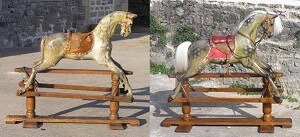 Condition is one of the strongest price drivers. Surface dirt and dry leather can need relatively little work, while torn leather, mold, brittle paper, adhesive residue, missing sections, failed stitching, severe staining, or previous poor repairs can require several treatment stages. Size matters as well. One paper-restoration price schedule states that items with an edge of 40 inches or more may exceed its normal ranges because dimensions affect handling and treatment.
Material can change both the specialist and the method. Leather may need cleaning, conditioning, stitching, relacing, or patching. Paper can require dry cleaning, washing, deacidification, flattening, tear mending, tape removal, or loss compensation. Historic textiles can call for analysis, wet or dry cleaning, stabilization, mounting, and archival storage. One textile-conservation service currently lists $300 for an initial conservation report, with additional charges when staff must travel to perform the examination.
A useful quote request gives the specialist enough information to judge those variables. Textile-conservation guidance recommends supplying the object’s dimensions, history, condition concerns, desired appearance, intended use, and photographs. That information is particularly relevant for jerseys, uniforms, flags, banners, and fabric memorabilia where a photograph alone may not reveal weak fibers, old repairs, or mounting problems.
Access and turnaround can also affect the job. Large framed pieces may need removal from an existing mount. Oversized objects can create transport and workspace requirements. Rush work may carry an additional fee when offered. A mailed project also creates packaging, outbound shipping, insurance, and return-shipping costs that a local drop-off avoids.
Gloves and Leather Memorabilia
Baseball gloves provide some of the clearest published restoration prices. A current mail-in service charges $55 for cleaning and conditioning and $95 for a full clean, condition, and relace, with return shipping included. Catcher’s and first-base mitts add $10. Another current provider lists full glove restoration at $79.99 for an infielder or outfielder glove and $89.99 for a catcher or first-base mitt.
Deeper damage moves the price higher because relacing cannot fix failed leather, padding, binding, or structural components. More extensive services can include leather reconstruction and restoration priced at $150 to $250, with complete restoration reaching $399. The same repair business lists insured signature return shipping at $25 per order.
That shipping charge creates a small but useful all-in calculation. A $175 restoration plus $25 return shipping reaches $200 before the collector’s outbound shipping. The return charge adds about 14.3% to the service price because $25 ÷ $175 × 100 = 14.3%. Comparing only the restoration line would understate the mail-in cost.
Repair can also compete directly with replacement when the object is still meant to be used. A $95 full restoration is substantially below the $150 to $400 new-glove comparison published by the same restoration service. That comparison stops being useful for an autographed, vintage, inherited, or game-used glove whose provenance cannot be replaced by buying new equipment.
Paper, Photos, and Posters
Paper memorabilia can include autographed photographs, concert posters, sports programs, tickets, letters, certificates, newspapers, maps, historic documents, and advertising pieces. The physical problem can be simple surface dirt or a combination of tears, folds, acidity, staining, tape, adhesive, water damage, mold, missing paper, and old mounting materials. One current paper-restoration service reports that most restoration projects cost $300 to $500 per piece, while basic projects can cost less and complex work can cost more.
Conservator-level treatment can move beyond those package-style ranges. One 2026 professional pricing schedule lists $150 per hour plus materials, with a $600 conservation-treatment minimum. Its site-project rate is $1,200 per day plus travel and materials. An object must be examined and tested before the studio commits to a treatment plan and final cost.
The labor rate makes the four-figure end easier to explain. Four hours at $150 per hour equals $600; eight hours equals $1,200; and 12 hours equals $1,800, before materials or transport. Those are ThePricer calculations using the published hourly rate, not fixed packages offered by the conservator.
The calculation also explains why a $20 or $55 collectible-cleaning service should not be used as a benchmark for a fragile historic document. A $600 professional treatment minimum is 30 times a $20 simple service. The difference reflects scope and labor model rather than a 30-fold markup on the same job.
Comics Need a Separate Comparison
Comic-book services illustrate how the word restoration can conceal several levels of intervention. One 2026 service menu prices cleaning and pressing at $12 for books from 2000 onward, $15 for 1975-1999 books, $20 for 1956-1974 books, and $25+ for Golden Age books. Higher-value books carry additional charges under that provider’s schedule.
Those services should not be confused with structural comic restoration. Published specialist pricing lists $90 per hour for conservation and $140 per hour for true restoration. Conservation can include tear mending, spine reinforcement, pressing, and reassembly using original staples. True restoration can add structural spine rebuilding, fills, art recreation, color touch, page repair, and other intensive work.
At the $140 hourly rate, a hypothetical five-hour restoration would produce $700 in labor. Ten hours would produce $1,400. These calculations exclude grading, certification, postage, and any other separate charges. The service also states that grading and postage to CGC are customer expenses when books are submitted after treatment.
Marketability also belongs in the decision. Cleaning and pressing, conservation, and true restoration can be treated differently in the collectible marketplace and by grading services. Before authorizing structural or cosmetic additions to a valuable comic, the owner should identify how the proposed work will be disclosed and how that treatment fits the intended grading, preservation, or sale plan.
A Professional Conservation Total
Consider a signed paper sports collectible with tears, surface dirt, folds, and acidity that requires conservator-level treatment rather than basic cleaning. Assume, solely for this worked scenario, that the approved treatment requires six hours. Using the documented 2026 rate of $150 per hour, professional labor totals 6 × $150 = $900. The six-hour quantity is an illustrative assumption; the hourly rate is the published input.
| Project component | Modeled cost |
|---|---|
| Conservation labor: 6 hours × $150 | $900 |
| Conservation materials | Project-specific, extra |
| Outbound transportation | Project-specific, extra |
| Return transportation/insurance | Project-specific, extra |
| Modeled treatment subtotal | $900 plus materials and transport |
The example deliberately stops at the documented labor subtotal instead of inventing material and shipping charges. A collector who receives a $900 labor estimate should ask whether testing, written documentation, archival housing, retouching, mounting, pickup, delivery, and insurance are included. The payable total can be higher than the treatment arithmetic.
Institutional conservation can have a much higher entry point. For private and family collections, published conservation terms include $250 for a treatment-proposal examination and a $1,800 minimum for conservation treatment. Approved projects normally require a 50% deposit. Extra insurance costs $1 per $1,000 of declared value for each month beyond the included coverage, and return shipping can also be payable.
Those charges show why the condition-report stage matters. A collector may discover that a museum-level treatment is financially disproportionate to an ordinary replaceable object, while the same expenditure can be reasonable for an irreplaceable family document or historically important artifact. Treatment scope and preservation purpose need to be established before comparing providers by price.
When Restoration Fits the Item
Monetary value is one input, but memorabilia can carry historical, provenance, family, or display value that is not captured by its resale price. Restoration is easier to justify when deterioration will continue without intervention, the object is rare or irreplaceable, the proposed treatment stabilizes original material, and the owner has a clear use for the restored item. A valuable signed poster intended for long-term display presents a different decision from a mass-produced poster that can be replaced cheaply.
Authentication and appraisal remain separate services. A conservation laboratory may stabilize a signed document without determining whether the signature is genuine or what the object would sell for. Some professional conservation services explicitly exclude authentication, appraisal, dating, and attribution from the treatment process. Collectors who need a formal value opinion can review ThePricer’s guide to card appraisal costs for the separate pricing and purpose of appraisal work.
Makes sense if
- The memorabilia is rare, historically important, sentimental, autographed, game-used, or difficult to replace.
- Damage is active and stabilization can prevent further deterioration.
- The specialist can explain which original materials will remain and which changes will be made.
- The restoration cost is reasonable relative to the object’s financial, historical, or personal importance.
Does not make sense if
- A replaceable item costs less to buy again than to repair and carries no special provenance or sentimental value.
- The proposed cosmetic work would remove historically meaningful wear that the owner wants preserved.
- The object is too deteriorated for the proposed repair to produce a stable result.
- The owner expects restoration to guarantee a higher grade or resale value when the specialist makes no such promise.
Extra Costs Around Restoration
The restoration quote may cover only physical treatment. An initial examination or condition report can be a separate charge, particularly for conservator-level projects. Materials may be billed on top of hourly labor. Large or fragile objects can require custom packing, courier transport, insurance, pickup, delivery, or specialist mounting. Rush treatment can also add cost when a provider offers it.
Display is another separate budget. After a jersey or textile has been stabilized, the owner may want archival mounting or a protective display. ThePricer’s guide to jersey framing costs covers professional framing as a separate purchase rather than folding display expenses into the restoration price. That separation helps prevent a framing quote from being mistaken for conservation treatment.
Insurance can become material for high-value objects left at a laboratory for months. Grading or certification can also follow comic, card, autograph, or paper treatment, but those fees do not pay for restoration. Shipping to a grader creates another round of transport and insurance. Collectors should ask for a written quote that identifies examination, labor, materials, optional cosmetic steps, packing, transport, insurance, and documentation separately where applicable.
The cheapest service can also represent a narrower job. A glove clean does not rebuild torn leather; comic pressing does not replace missing paper; and a basic paper-treatment price may exclude mold, tape removal, retouching, or mounting. Matching the quote to the actual damage is more useful than choosing the smallest advertised number.
Answers to Common Questions
How much does sports memorabilia restoration cost?
Simple sports-memorabilia work can start around $20 to $100, while substantial leather, paper, or structural restoration can cost several hundred dollars. Conservator-level treatment of historic objects can reach $600 to $1,800+, depending on the material, condition, and treatment required.
How much does it cost to restore an old baseball glove?
Current professional services place cleaning and conditioning around $55 and full cleaning, conditioning, and relacing around $95 at one mail-in provider. Extensive structural restoration can cost $150 to $399 at another specialist.
How much does it cost to restore an old poster?
One current U.S. paper-restoration schedule lists basic poster treatment at $325 to $750. Mold treatment, substantial tape removal, retouching, debacking, mounting, oversized dimensions, and other complex work can raise the price.
Does restoring memorabilia increase its value?
There is no guaranteed value increase. Treatment can stabilize a damaged object and improve its appearance, but collector markets may treat conservation, repairs, replacement materials, and cosmetic restoration differently. Authentication, provenance, rarity, condition, and disclosure of the work can all matter to a future buyer or grader.
Is memorabilia appraisal included with restoration?
Usually not. Restoration or conservation addresses the physical object, while appraisal provides an opinion of monetary value and authentication addresses genuineness. A collector may need to purchase those services separately.
Disclosure: Educational content, not financial advice. Prices reflect public information as of the dates cited and can change. Confirm current rates, fees, taxes, and terms with official sources before purchasing. See our methodology and corrections policy.