
How Much Does Molly Maid Cost?
Published on | Written by Alec Pow
This article was researched using 14 sources. See our methodology and corrections policy.
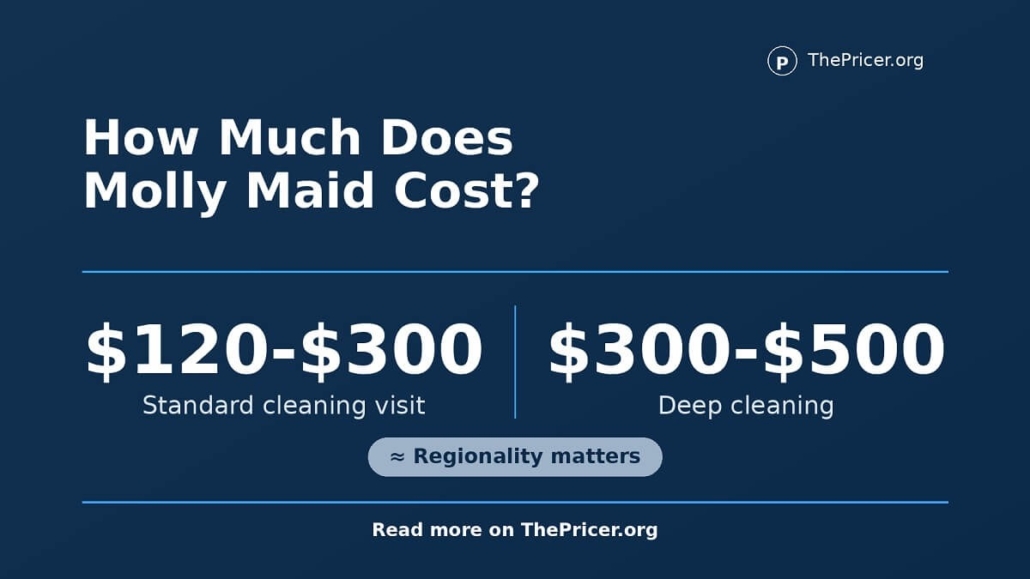
Molly Maid is a U.S. residential cleaning brand in the Neighborly home-services network, with locally operated franchises that handle recurring housekeeping, one-time visits, detailed cleaning, and move-related work. Merry Maids and The Cleaning Authority sit in the same branded-service set, and Taskrabbit plus independent housekeepers use different booking and labor models. HomeGuide, on a page accessed in August 2026, lists the service at $60-$100 per hour for a two- to three-person crew, $120-$300 per standard cleaning, and $300-$500 for deep cleaning.
The bill is mainly labor plus the requested cleaning scope. Bathrooms, bedrooms, home condition, crew time, service depth, requested tasks, and visit frequency can change the local estimate. National figures work as planning benchmarks because a local franchise has to translate the cleaning plan into the work required in that home.
Molly Maid sits between hiring a solo housekeeper and booking a cleaner through a task marketplace. Per-visit and team-hour budgeting changes with weekly or biweekly cadence, detailed-clean scope, regional labor conditions, extra rooms, and add-on tasks.
How Much Does Molly Maid Cost?
Jump to sections
- Base and deep cleaning: HomeGuide publishes a September 2024 range of $120-$300 (at $30 per hour, earning that amount would take about 0.5 to 1.3 full-time workdays, before taxes) for a standard visit, $300-$500 for a deep clean, and $60-$100 per team-hour.
- Quote method and cadence: On its U.S. service page accessed in August 2026, Molly Maid states recurring service starts with a free in-home estimate and can run weekly, biweekly, or at another agreed frequency.
- Labor-unit comparison: Care.com describes hourly and flat-fee billing in its September 2025 cleaning-rate data, making the number of cleaners and the billing unit part of a fair comparison.
What you’re buying
Molly Maid sells residential cleaning labor delivered through locally operated franchises. The cleaning team handles defined rooms and tasks, such as kitchens, bathrooms, bedrooms, living areas, floors, dusting, vacuuming, wiping surfaces, and other work included in the local cleaning plan. Recurring housekeeping is one use. A one-time refresh, detailed clean, or move-related appointment is another.
The service is different from renting cleaning equipment or employing a housekeeper directly. A Rug Doctor rental comparison, as a comparison, concerns a machine the customer operates personally for carpet and upholstery work.
Molly Maid supplies the labor and cleaning process instead. It also differs from junk hauling, repair work, restoration, and household employment. Those distinctions matter because the quoted job is based on cleaning scope. A customer asking for routine bathrooms and floors is buying a different workload from someone asking for extensive buildup removal across an empty house.
Molly Maid vs independent cleaners
 Merry Maids and The Cleaning Authority compete in the same branded residential-cleaning category, and an independent cleaner is another substitute. The comparison should normalize who is doing the work. A team-hour is not the same billing unit as one person’s hourly rate, and a flat visit price may already include supplies, travel time, payroll overhead, scheduling, and administrative work that an individual cleaner prices differently. Total labor delivered is a better comparison point because a crew can finish a larger task list in less clock time than one cleaner working alone.
Historical market data helps show the gap. A deep house cleaning cost reference updated in January 2024 placed cleaning-company labor at roughly $35-$65 (about 1.2 to 2.2 hours of work at $30 per hour) per hour. That figure is now older than 24 months and is better used as historical context than as a current quote. A homeowner comparing Molly Maid with a solo cleaner should ask how many workers arrive, whether supplies are included, which rooms are covered, and whether the first visit has a broader scope. Those details can make a higher crew rate produce a similar final invoice once job duration is taken into account.
Labor, supplies, and cleaning
Labor carries most of the economic weight in residential cleaning because nearly every added task consumes worker time. A larger floor plan adds vacuuming and mopping. More bathrooms add fixtures, showers, tubs, mirrors, counters, and toilets.
Kitchen buildup adds scrubbing time, and extra bedrooms expand dusting and floor work. Angi, in data updated May 2, 2026, reports professional housekeeping at about $200 (about 6.7 hours of work at $30 per hour) per visit and $25-$90 per hour, with home size and service type tied to cleaning time. A flat Molly Maid estimate can still reflect projected crew hours even when the customer receives one visit total. Cleaning products and equipment also enter the operating cost, but another bathroom, another floor, or heavier buildup can add far more hands-on work than a modest change in product use.
The quote is local. The useful comparison is what work the quoted visit contains and what changes when the requested scope expands.
| Quote component | What changes it | What to check |
|---|---|---|
| Crew labor | Time, team size, cleaning depth | Whether the quote is flat or time-based |
| Home size | Rooms, bathrooms, floors | Which spaces are included |
| Condition | Dust, grease, soap buildup, clutter | Whether the first visit has added work |
| Frequency | Weekly, biweekly, occasional service | How repeat visits change scope |
| Special requests | Tasks outside the base plan | Whether they change the estimate |
Frequency, home size, and location
A recurring visit can face less accumulated cleaning work than an occasional visit because the crew returns before the same level of dust, soap film, kitchen grease, and floor debris builds again. Home size then sets another workload layer. Homes with similar floor area can still quote differently when bathrooms, stairs, pet hair, room separation, or heavier surface buildup create different hands-on workloads. The room mix can matter almost as much as the footprint when wet areas and detailed surfaces absorb more crew time.
Geography changes the comparison point as well. Taskrabbit lists July 2026 city figures of $39 per hour and a $157 invoice in Denver, $48 and $194 in New York City, and $55 and $220 in Washington, DC. Those are Taskrabbit market figures, not Molly Maid franchise rates, but they show why one national planning figure cannot represent every city. Building access can add time too. Elevators, walk-up units, limited parking, long supply carries, and multiple floors can affect the time needed to complete the same cleaning checklist.
Three buyer cases
Routine-home case. A smaller, maintained home seeking recurring service can compare its Molly Maid estimate with broad routine-cleaning data rather than a deep-clean figure. Fixr’s January 2025 data lists basic house cleaning at $75-$175 per visit. That is a market benchmark, not a Molly Maid tariff, but it gives the buyer a reference point for a modest routine scope.
Deep-clean case. A home with heavier buildup should use a deeper-service benchmark. Fixr’s January 2025 data lists regular cleaning at $150-$250 and deep cleaning at $200-$400, so using the midpoints, $300 minus $200 equals a $100 increase, or 50%, tied to service depth before home-specific changes enter the quote.
Move-out case. A vacant 1,500-square-foot property has a different primary driver because cabinets, baseboards, appliances, and exposed areas can enter the scope. This Old House, in data updated June 9, 2026, prices a 1,500-square-foot move-out clean at $300-$675. A Molly Maid estimate should still be judged by its own included task list.
Line items
Scope changes are the main place to watch. Appliance interiors, windows, laundry, organization, cabinets, walls, carpet work, heavy buildup, or rooms omitted from the first request can turn a routine visit into a larger job. Ask the franchise to spell out the included rooms and tasks before service begins. Scope comes first. A quoted standard clean should not be compared with a market figure that quietly includes a much broader task list.
Gratuity should also be kept separate from the service quote when comparing providers. The practical check is simple. Ask whether appliance interiors, linen changes, laundry, inside windows, cabinets, and other requested tasks are included, excluded, or separately quoted. A homeowner can also separate recurring tasks from occasional requests on the estimate, keeping the baseline scope visible when a special task is added. This keeps a lower base estimate from looking cheaper only because fewer tasks are attached to it.
Worked total
A recurring-service budget can be modeled from a published visit band without treating it as a local franchise quote. Using HomeGuide’s 2026 maid-service table, which lists weekly or biweekly service at $120-$220 per visit, the midpoint is $170 because $120 plus $220 equals $340, then $340 divided by two equals $170. Two modeled visits make a $340 monthly total.
- Published visit band used for the model is $120-$220.
- Modeled midpoint per visit is $170.
- Two visits produce a modeled monthly bill of $340.
The annual view should follow the actual appointment calendar rather than a flat monthly shortcut. A biweekly plan can place an extra appointment in some calendar months, so a household should budget from scheduled visits and the local per-visit quote. That method also leaves room for skipped appointments, schedule changes, or an occasional deeper scope without presenting the midpoint model as a guaranteed yearly charge.
Who this cost makes sense for
Molly Maid is a stronger fit when the household wants repeat residential cleaning with a defined service plan rather than one isolated chore. The franchise model can also appeal to households that prefer team-based service and a formal process for scheduling and service concerns. Buyers should compare scope, frequency, crew structure, and the local estimate rather than treating a national benchmark as a guaranteed rate.
A different service makes more sense when the work is mainly hauling, estate sorting, furniture removal, or debris disposal. Those jobs fall closer to house clean-out pricing than routine maid service. Keeping that boundary clear prevents a homeowner from comparing jobs that require different labor, vehicles, disposal work, and equipment.
Makes sense if
- You want bathrooms, kitchens, floors, bedrooms, and living areas handled on a repeat schedule.
- You prefer a cleaning team tied to a local branded franchise.
- Your first appointment needs broader cleaning before recurring upkeep begins.
- You want a home-specific estimate tied to a defined cleaning plan.
Doesn’t make sense if
- You need only one narrow chore that an individual cleaner can quote directly.
- You want to perform the labor yourself and only need equipment or cleaning products.
- Your project is mainly junk hauling, restoration, repairs, or estate removal.
- You require a fixed nationwide rate before the home and requested work are reviewed.
Answers to Common Questions
Does Molly Maid charge by the hour?
Third-party pricing references sometimes express Molly Maid service as a team-hour figure, but the customer may receive a home-specific visit estimate. Compare the final quoted scope and crew structure rather than the billing label alone.
Is recurring Molly Maid service cheaper than a deep clean?
Published benchmarks place routine recurring work below deep-cleaning work because the service depth and accumulated cleaning workload differ. A local quote can move outside those planning figures based on the home and requested tasks.
Does Molly Maid bring cleaning supplies?
The service is structured as professional residential cleaning rather than labor-only household employment. Customers with product preferences or special surface requirements should state them when the cleaning plan is prepared.
Can a move-out cleaning cost more than a normal visit?
Yes. Move-related cleaning can involve empty cabinets, baseboards, appliance areas, and surfaces that are not part of a recurring maintenance visit. The requested checklist is the right basis for comparing the two services.
Disclosure: Educational content, not financial advice. Prices reflect public information as of the dates cited and can change. Confirm current rates, fees, taxes, and terms with official sources before purchasing. See our methodology and corrections policy.