
How Much Does Penske Truck Rental Cost?
Published on | Written by Alec Pow
This article was researched using 14 sources. See our methodology and corrections policy.
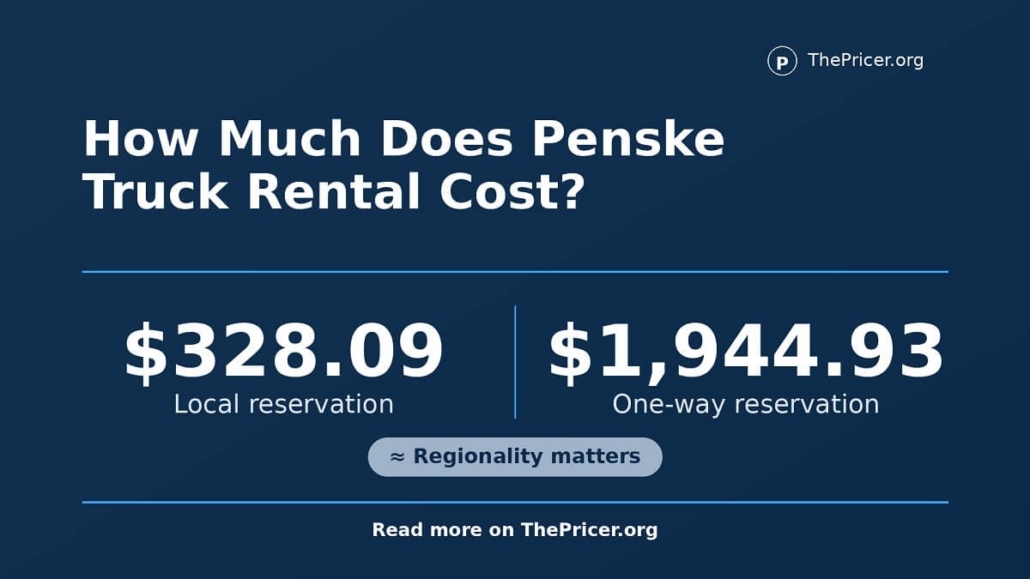
Penske Truck Rental supplies self-drive cargo vans and box trucks for local and one-way household moves. Move.org data current September 4, 2025 placed Penske at $328.09 for a local reservation before mileage and $1,944.93 for a one-way reservation, based on quotes across four home sizes and three distances, with fuel extra.
The quote combines the vehicle reservation with trip-specific inputs such as pickup and return cities, rental dates, truck class, planned distance, and selected extras. Fuel, protection, towing, supplies, and labor should be checked as separate budget lines before comparing Penske with another provider.
The comparison set around Penske Truck Rental includes U-Haul International, Budget Truck Rental, and Enterprise Truck Rental, with Penske Transportation Solutions as the broader Penske transportation business. For a renter, the useful billing unit is the complete move: route, truck class, pickup and return markets, rental days, mileage, fuel, coverage, towing equipment, extra drivers, tolls, and return timing. Those connected items explain why a local apartment move can be driven by days and miles, whereas an interstate household move can be driven by route, vehicle availability, truck size, and the booked return window.
How Much Does Penske Truck Rental Cost?
Jump to sections
- $1,944.92 (at $30 per hour, earning that amount would take about 1.6 full-time workweeks, before taxes) was Penske’s long-distance benchmark in Move.org research published in July 2025 for its 2026 review, based on moves over 100 miles.
- $1.39 to $1.49 per mile was the Penske local per-mile charge reported by Forbes Home in December 2025, with the exact figure tied to location and truck size.
- $10 is Penske’s fee as of August 2026 for each non-family extra driver, with up to three additional drivers allowed under the fee for each non-family driver.
What you’re buying
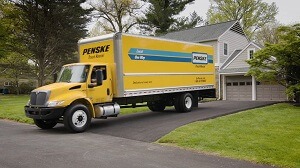
Penske Truck Rental is a self-drive moving service built around cargo vehicles and box trucks. The renter reserves the vehicle, collects it, loads the household goods, drives to the destination, unloads, handles fuel, and returns the truck under the rental agreement. Penske supplies the vehicle and related rental services rather than a crew that packs and transports the household.
That distinction matters when comparing Penske with a full-service mover or another truck-rental company. A competing U-Haul truck rental can follow a different mileage and availability model, so identical routes do not automatically produce matching bills. Penske also separates the truck from choices such as damage protection, cargo protection, towing equipment, moving supplies, and outside loading labor. The renter still carries most of the physical work and driving responsibility. Portable moving containers remove the driving task, whereas hardware-store pickups focus on brief local hauling. Penske stays centered on renter-driven household transport.
Published moving scenarios
Published examples show why a Penske quote needs a route and truck size attached to it. Two renters can both choose Penske yet face very different totals because one needs a local vehicle and another needs a large one-way truck. These are sourced examples rather than invented customer profiles.
| Buyer context | Published Penske amount | What drove it |
|---|---|---|
| Five-day Atlanta to Washington, D.C. one-way move | A 16-foot truck was $826.56 (about 3.4 full-time workdays at $30 per hour), compared with $2,448.08 for a 22-foot truck. The difference is $2,448.08 – $826.56 = $1,621.52 using the five-day Atlanta-to-Washington quotes. | Truck size and vehicle availability created a large spread on the same route. |
| Two-bedroom Georgia to New York move | moveBuddha documented a Penske rental at $2,234.13 in March 2026 for a Georgia-to-New York move. | A longer one-way trip plus the household load and towing needs shaped the bill. |
The spread is large. The Atlanta to Washington example also shows that moving to a larger truck can matter more than simply adding a small fee to a smaller vehicle. A renter who focuses only on the route can miss the effect of inventory and truck class. A quote tied to the actual pickup ZIP code, destination, date, and load is more useful than a national daily-rate estimate.
One-way and local Penske rentals
Penske separates different-location rentals from same-location rentals. As checked in August 2026, its booking information says different-location trips use a per-trip quote and include unlimited mileage, whereas same-location trips charge for the days and mileage used under the different-location and same-location billing rules. The same page shows that the available vehicle mix also changes between the two trip types.
This distinction changes how renters should compare Penske with another company. A lower-looking local base charge can lose ground after mileage is added, yet a one-way quote with unlimited mileage removes the risk of paying for every extra mile driven on the booked route.
The comparison with U-Haul rental costs should use the complete trip rather than one headline rate. Pickup and drop-off locations also matter because a one-way reservation moves a Penske vehicle into another market, whereas a local rental returns that truck to its starting branch. Local miles can rise after a detour or second loading trip, but qualifying one-way mileage is not metered per mile.
Charges besides the Penske base rental
 The truck quote is only one part of the moving budget. Fuel, protection products, towing gear, moving supplies, taxes, and return-related charges can change the cash needed for the move. Penske’s August 2026 return policy states that a truck brought back after the contracted date can trigger a $200 (about 6.7 hours of work at $30 per hour) charge for each late day under its late-return charge. The company also directs renters to return the truck with the required fuel level.
Fuel deserves its own budget line because it is consumed during the trip rather than purchased as part of the truck reservation. Towing equipment can also change the bill when a household must move a car with the truck. Outside loading labor creates another separate expense. The useful comparison is the all-in moving bill, not only the amount displayed beside the vehicle.
A worked Penske rental total from
A local rental makes the mileage math easy to see. Move.org’s 2026 truck-company research listed a Penske local reservation benchmark of $328.09 and a mileage figure of $1.29 per mile, then modeled a 60-mile local trip in its local mileage benchmark. Using those cited inputs, 60 miles at $1.29 equals $77.40, and $328.09 + $77.40 = $405.49 before fuel or optional extras.
- Published local reservation benchmark $328.09
- Published mileage component $77.40
- Calculated truck and mileage subtotal $405.49
That calculation shows why a local Penske booking should be checked against the planned driving distance. A detour, second loading trip, storage stop, or return run increases paid mileage on a same-location rental. One-way moves work differently because the booked trip can include unlimited mileage instead of a per-mile charge. Fuel still remains separate. The same calculation can be rerun with the renter’s expected route before booking.
Truck size, route, dates
Penske pricing is tied to the actual reservation inputs rather than a permanent national menu of household-moving prices. Changing the pickup market can alter the inventory available on the required date, and changing the destination can shift a rental from a same-location structure to a one-way structure. Truck size matters because a cargo van, smaller box truck, and large household truck place different demands on the fleet. Date selection matters too because a vehicle sitting at one branch cannot be rented by two households at once.
When a renter changes the origin ZIP code, destination, pickup date, return plan, or truck class, the booking system is solving a different equipment request, so the new quote can move even when the driving distance changes very little. For a very small local haul, a store-based truck can belong in the comparison set.
A Menards truck rental serves a different short-haul use case and may be easier to compare by time and local mileage rather than by cross-state moving capacity. Penske becomes a different purchase once the move needs household-sized cargo space, one-way drop-off, or towing.
A live reservation should use the exact pickup ZIP code, destination, date, and truck class. A vehicle that fits the load but is unavailable at the chosen branch cannot produce the same transaction.
Coverage, towing, and driver choices
Penske sells protection choices separately from the basic vehicle reservation. Its current coverage page lists Limited Damage Waiver, Supplemental Liability Insurance, Cargo Insurance, Personal Accident Insurance, and Towing Insurance. As of August 2026, Cargo Insurance is capped at $15,000 for the rental with a $100 deductible per occurrence, and Supplemental Liability Insurance can provide excess protection up to $300,000 for bodily injury and $50,000 for property damage under the published coverage limits.
The right coverage choice depends on what a renter’s existing auto policy, credit card benefits, and household coverage protect. Rental trucks can fall outside provisions written for passenger cars, so those contracts need checking before protection is declined. A car carrier or tow dolly adds equipment and changes the driving task, yet it can replace the expense of moving a second vehicle separately. An authorized second driver can also divide highway time, and the reservation should show any driver-related charge before pickup.
Who this cost makes sense for
Penske fits renters who can take responsibility for the driving and loading side of a move and who want direct control over the truck schedule. The strongest fit is a move where the household can use one vehicle, keep labor separate, and compare the complete reservation against competing self-drive options.
Makes sense if
- You can drive the reserved truck and arrange loading help separately when needed.
- Your one-way route benefits from a trip-based rental rather than local mileage billing.
- You need a household-sized box truck instead of a small pickup.
- You want the truck and vehicle-towing equipment on the same moving plan.
Doesn’t make sense if
- You want one company to pack, load, drive, unload, and place furniture.
- You are uncomfortable handling a large box truck on the planned roads.
- Your local mileage makes a smaller rental format more attractive.
- Your load fits a short local store rental such as a Lowe’s truck rental.
The useful comparison combines the truck quote, mileage treatment, fuel, protection, towing, supplies, and labor. Similar vehicle charges can produce different totals once those items are placed beside each other.
Answers to Common Questions
What should be compared with the Penske truck quote?
Compare the vehicle amount with planned mileage, fuel, coverage, towing equipment, moving supplies, outside labor, tolls, and return-related exposure. Those lines give a better view of the trip budget.
What can make a local Penske move more expensive?
Extra driving, a larger vehicle, longer rental time, fuel use, selected protection, towing equipment, and outside labor can all raise the amount set aside for the move.
Why can two Penske quotes be so different?
The reservation reflects the pickup market, destination, date, truck class, trip type, and local vehicle supply. Two renters can request similar driving distances yet receive different offers when those inputs differ.
Disclosure: Educational content, not financial advice. Prices reflect public information as of the dates cited and can change. Confirm current rates, fees, taxes, and terms with official sources before purchasing. See our methodology and corrections policy.