
How Much Does Pest Control Cost Per Month?
Published on | Written by Alec Pow
This article was researched using 14 sources. See our methodology and corrections policy.
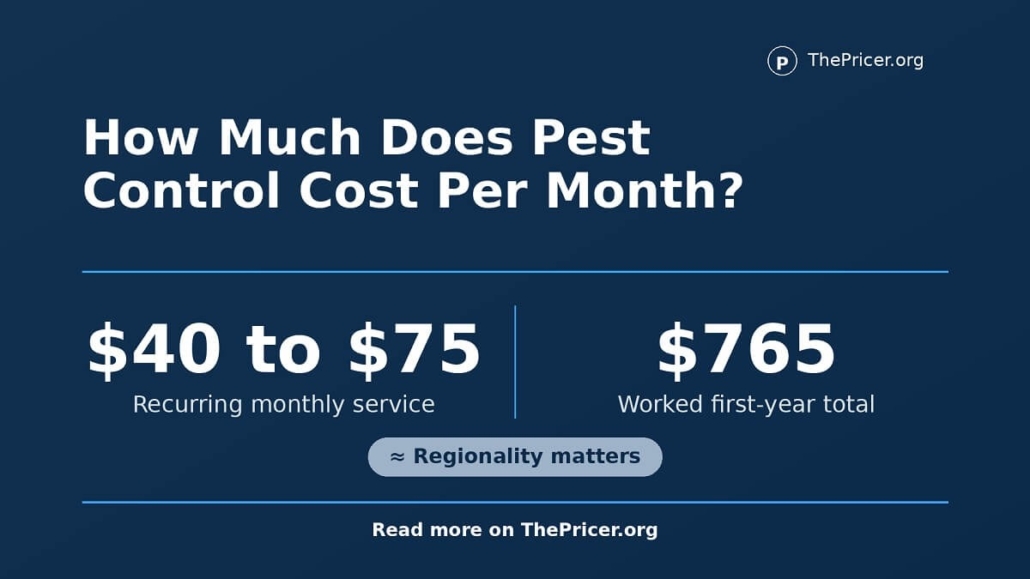
A recurring residential pest-control plan pays for inspection, treatment, monitoring, and return service around a home. As of August 2026, recurring visits run about $40 to $75 per month, with an opening inspection and treatment around $150 to $300, based on January 2026 national cost data published by HomeGuide. Pest species, infestation size, property layout, treatment method, and service frequency can move a household toward either end of those figures.
The first bill and the recurring bill can represent different work. An opening appointment may involve pest identification, a broader property inspection, initial product placement, traps or bait, and treatment of active areas, while later service may focus on monitoring and preventive treatment. Exact provider quotes can remain address-specific until the company has the home’s size, pest problem, access conditions, and treatment scope.
Orkin, Terminix, and Truly Nolen represent national recurring-service models, while Angi, HomeAdvisor, HomeGuide, and This Old House publish U.S. pricing benchmarks that separate initial visits, maintenance appointments, and one-time extermination. Across these entities, the connected cost drivers are technician labor, treatment materials, pest type, infestation severity, property size, service cadence, callback coverage, exclusion work, and specialty treatments for termites, bed bugs, rodents, or mosquitoes.
How Much Does Pest Control Cost Per Month?
Jump to sections
- Monthly recurring visit in 2026, $40 to $70 (at $30 per hour, earning that amount would take about 1.3 to 2.3 hours of work, before taxes), based on August 2026 national pricing published by Angi.
- One professional service in 2026, $108 to $261 across the normal range in June 2026 service data published by HomeAdvisor.
- Broader one-time treatment range in 2026, $50 to $500, based on March 2026 treatment research from This Old House.
What you’re actually buying
Recurring pest control is a scheduled service cycle rather than a bottle of pesticide delivered every month. A technician inspects activity, identifies likely entry points, treats selected areas, checks earlier bait or monitoring locations, and records conditions that may bring pests back.
Exterior perimeter work can be paired with interior treatment when current activity calls for it. Depending on the pest, the technician may use bait, traps, dust, targeted liquid applications, monitoring devices, or physical recommendations for entry points. The service relationship also creates a record of pest activity across multiple visits, which lets later appointments build on earlier findings rather than treating every new sighting as an unrelated event.
That model differs from a single extermination appointment aimed at an isolated event. It also differs from termite, bed bug, mosquito, or wildlife work that may use separate methods and separate service scopes. A recurring pest control plan can spread preventive work across the year, with the provider returning on a schedule or under callback terms rather than treating each sighting as a new job.
What households pay
Case 1, isolated problem. A household with one contained pest issue may buy a single treatment instead of ongoing service. January 2026 research places one-time exterminator visits at $100 to $600 (about 0.4 to 2.5 full-time workdays at $30 per hour) in published one-time service data from HomeGuide. Service frequency is the main driver in this case. The homeowner pays for identification and treatment of a defined problem without adding scheduled maintenance for later months. A contained wasp problem or limited insect activity can fit this structure when the pest and treatment do not require repeated technician visits, monitoring, or a longer control program.
Case 2, recurring household pests. A household considering Orkin has a different payment pattern. Published November 2025 figures put Orkin monthly service at $40 to $80, with an initial visit at $140 to $350, according to November 2025 plan pricing compiled by HomeGuide. Recurrence is the primary driver here. The higher opening charge reflects the starting service, while later appointments are part of the continuing pest-control schedule. The useful comparison is the full first-year amount rather than the smallest recurring debit shown on a proposal.
Monthly, quarterly, and one-time service
A homeowner can receive quarterly treatment and still pay through monthly billing, so visit frequency and billing frequency should be read separately. Using monthly visits of $40 to $70 (about 1.3 to 2.3 hours of work at $30 per hour), quarterly visits of $100 to $300, and an initial ongoing-plan visit of $150 to $300 from published 2026 plan rates, twelve monthly visits equal $480 to $840 and four quarterly visits equal $400 to $1,200 before the initial service is added.
| Service structure | What the customer is buying | Main tradeoff |
|---|---|---|
| One-time visit | Inspection and treatment aimed at a defined current problem | Lower commitment, but later activity may require another paid appointment |
| Quarterly service | Scheduled perimeter work, monitoring, and treatment across the year | Fewer technician visits than a monthly schedule |
| Monthly service | More frequent inspection or treatment for persistent pest pressure | More visits create a larger annual service count |
The first visit is different. It may require more inspection time, pest identification, broader treatment, and initial placement of bait or monitors. A quarterly plan with four technician appointments may also be billed through twelve smaller installments, so homeowners should compare the number of physical visits with the number of payments shown in the agreement. Comparing plans by the recurring debit alone can hide the opening charge and make two contracts with different scopes appear closer in cost than they are.
Technician work versus materials
Labor starts before a product is applied. The technician must identify the pest, inspect the interior or exterior, locate activity, choose a treatment method, reach the treatment area, apply products, and document what was found.
Material use may include sprays, dusts, baits, traps, monitoring devices, or exclusion supplies. Orkin states that residential quotes can change with infestation extent, treatment method, property size, local labor and material costs, and whether mice require traps, baiting systems, exclusion techniques, or monitoring in its current residential pricing factors. The company also distinguishes the more intensive opening treatment from later service and notes that some infestations require multiple treatments.
That workload explains why two homes with similar square footage can receive different proposals. A visible ant trail around a kitchen counter requires a different inspection path, product mix, and technician time than rodents moving through an attic, wall void, or crawlspace. Material quantity is only one part of the bill because locating activity, reaching it, placing treatment, checking devices, and documenting follow-up needs all consume service time.
Access can shift the labor side of a quote sharply. Cabinets and open perimeter areas are easier to inspect than wall voids, crawlspaces, rooflines, or packed attics. Rodent work can add repeated trap checks and entry-point sealing. Treatment materials also change with the target pest, so a quote built around bait stations can look very different from a spray-based general service. Older Orkin and Terminix pricing research offers historical context on how labor, pest type, property size, and treatment intensity connect to the service total.
Line items
A routine recurring plan can stop being routine once the technician finds work outside the quoted scope. Current 2026 research lists separately billed follow-up treatments at about $75 to $150 each and rodent exclusion at $300 to $2,000 in published 2026 add-on data. Exclusion can involve locating and sealing entry gaps rather than only trapping rodents already inside. Specialty pest work may also sit outside a standard household plan, which is why the written pest list matters as much as the recurring payment.
Rodents show why scope matters. Trapping removes animals already inside, but sealing gaps addresses how new animals enter. Those can be separate tasks on the invoice. The same distinction applies to cleanup and damaged insulation. A homeowner comparing bids for mice can use a mice exterminator cost reference to identify which parts of the job belong in the treatment quote and which may be separate property work.
Itemized pest-control quote
A public checkout gives a useful worked example because it separates opening charges from the recurring payment. As viewed in August 2026, Truly Nolen displayed a Four Seasons annual agreement with an initial service, a first regular service, an online discount, an amount due that day, and a recurring monthly payment. The page also states that pricing may be amended after inspection when an infestation is challenging or the home’s stated square footage does not match the property.
Worked total example. Using the amounts shown in the August 2026 checkout display, $185 for initial service plus $126 for the first regular service minus the $50 online discount equals the posted $261 due that day, and twelve payments of $42 would equal $504, making $765 when added to that opening amount.
That distinction matters. The $765 figure is arithmetic from the displayed charges, not a claim that every customer receives the same payment sequence or property quote. Address, square footage, pest conditions, contract language, and service location can alter a live proposal. A homeowner should compare the amount due at signup, the recurring debit, the number of billed periods, any stated discount, and the cancellation language before comparing that plan with another provider.
Regional pricing
 Geography changes pest pressure and the operating conditions behind a quote. Terminix identifies location, regional pest problems, local regulation, infestation severity, property size, sheds, garages, treatment frequency, and specialized methods as pricing inputs in its March 2025 pricing factors. A larger property gives a technician more ground to inspect and treat. Detached structures add possible pest harborages.
An attic, crawlspace, wall void, or difficult roofline can extend inspection and application time. A quote for an easily reached kitchen pest problem should not be read as a proxy for work that requires attic access, repeated rodent checks, exterior sealing, or treatment across several detached structures.
Home construction matters for the same reason. A small open floor plan with exterior access points visible from ground level is a different assignment from an older property with basement penetrations, crawlspace moisture, detached storage, and concealed rodent routes.
Pest species adds another layer. Ant baiting, cockroach treatment, rodent exclusion, termite work, and mosquito treatment use different materials and labor patterns. Buyers should give each company the same property facts so competing quotes cover comparable treatment areas, pests, visit frequency, interior work, exterior work, and callback terms.
Who this cost makes sense for
A recurring plan fits properties where pest activity returns often enough that repeated one-time appointments become inefficient. The case is stronger when the service scope matches the pests present, property layout, expected treatment frequency, and provider return-service terms. Terminix states that its quarterly service includes ongoing exterior treatments and return treatment at no extra charge when covered pests return between scheduled services, so callback language can materially change the value of a recurring contract.
Makes sense if
- Ants, roaches, spiders, or rodents keep appearing after isolated treatments.
- Attics, crawlspaces, wall voids, or exterior entry points make treatment difficult.
- The plan includes return service that matches recurring pest activity.
- The property benefits from scheduled perimeter inspection and monitoring.
Doesn’t make sense if
- The problem is isolated and one treatment addresses the full scope.
- The needed work is a specialty service excluded from the general plan.
- The contract adds visits that do not match the property’s pest activity.
- A limited issue can be handled safely with targeted household measures and monitoring.
What we verified
- Checked Terminix’s preventive service structure against its current recurring-plan coverage, which describes year-round household pest service.
- Confirmed Orkin’s contract language through its current cancellation terms, which state that ending service before the initial term expires may require payment of the remaining balance even though Orkin does not name a separate cancellation fee.
- Cross-referenced Truly Nolen’s service cadence with its quarterly service program description, which describes its Four Seasons program as year-round quarterly pest control.
Answers to Common Questions
How much is pest control each month for a house?
A recurring household plan can be billed per visit or through monthly installments. The opening treatment can carry a higher charge than later maintenance service, so comparing the first-year total gives a clearer picture than looking only at the recurring debit.
Is monthly pest control cheaper than quarterly service?
Not automatically. Monthly service creates more scheduled appointments across a year, but quarterly service can carry a higher amount per visit. The useful comparison is the annual service total plus the opening treatment and any separately billed work.
Why is the first pest-control visit more expensive?
The opening visit can involve a broader inspection, pest identification, heavier initial treatment, placement of traps or bait, and work on existing activity. Later visits may focus on monitoring, perimeter treatment, and problems found since the prior appointment.
Are termites and bed bugs included in monthly pest control?
They may be excluded from a general household plan and priced as specialty work. Contract coverage differs by provider, so the written pest list and treatment scope should control the comparison rather than the plan name alone.
Disclosure: Educational content, not financial advice. Prices reflect public information as of the dates cited and can change. Confirm current rates, fees, taxes, and terms with official sources before purchasing. See our methodology and corrections policy.