
How Much Does PMP Certification Cost?
Updated on | Written by Alec Pow
This article was researched using 16 sources. See our methodology and corrections policy.
PMP certification can cost about $425 to $1,200 for a low-cost self-study path and roughly $1,500 to $3,600+ with live instructor-led training. The biggest fixed charge is the exam, which currently costs $405 for PMI members and $655 for nonmembers.
The 2026 cost picture changed in two important ways. PMI now charges $655 for the nonmember exam, not the older $555 figure, and the PMP exam itself changed in July 2026. Candidates still need 35 hours of qualifying project-management training, while new restrictions on live training take effect December 1, 2026.
Article Highlights
Jump to sections
- The PMP exam costs $405 (at $30 per hour, earning that amount would take about 1.7 full-time workdays, before taxes) for PMI members and $655 for nonmembers.
- PMI individual membership currently costs $164 per year.
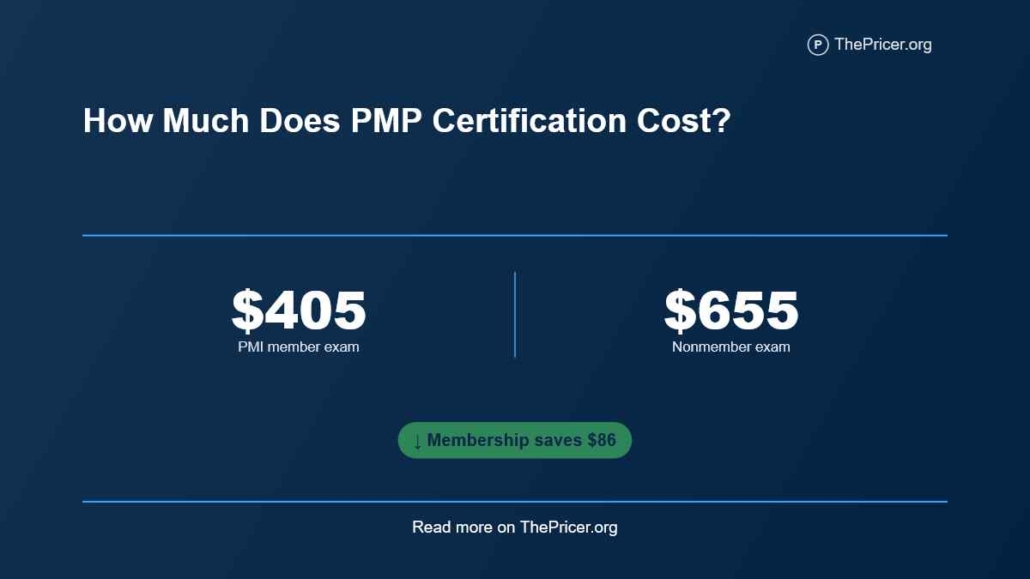
- Membership plus the member exam costs $569, which is $86 less than paying the nonmember exam fee alone.
- Candidates still need 35 hours of qualifying project-management training unless an active CAPM fulfills that requirement.
- Self-paced 35-hour courses can cost under $25 during current marketplace sales, while live authorized courses can cost about $950 to $2,900+.
- PMP holders must earn 60 PDUs every three years and pay a renewal fee of $60 as a member or $150 as a nonmember.
How Much Does PMP Certification Cost?
The Project Management Institute now lists the PMP exam at $405 for members and $655 for nonmembers. The exam fee is paid after PMI accepts the application and the candidate is ready to schedule the test.
That corrects one of the biggest problems in the old article. The former $555 (about 2.3 full-time workdays at $30 per hour) nonmember exam figure is no longer the current PMI price. A candidate planning from that number would underbudget the exam by $100 before adding training or study tools.
PMI’s current individual membership costs $164 per year. Joining first and then paying the $405 member exam fee produces a first-year exam-and-membership total of $569. Paying the nonmember exam price alone costs $655. The membership route is $86 cheaper before counting any member discounts on study products, renewals, or events. If the candidate later uses a member-priced preparation product or renewal fee, the cash advantage can grow beyond that first $86.
That is a useful break-even because the membership pays for itself immediately on the current PMP exam price. Someone who intends to sit the exam soon does not need several years of PMI discounts to recover the annual membership fee. The comparison also avoids a common mistake in older cost guides, which add membership on top of the nonmember exam price instead of using the discounted member exam fee.
Training Requirement
PMI currently requires 35 hours of Project Professional training unless the applicant has an active CAPM certification. The requirement can be met through an online self-paced course or live instructor-led instruction. PMI’s 2026 PMP update also changes which live providers can supply eligible hours beginning December 1, 2026.
From that date, live training must come from a PMI Authorized Training Partner, a China Registered Education Provider, or an eligible accredited academic program. Self-paced training can still come from other organizations when it meets PMI’s requirements. Training completed before December 1, 2026 remains eligible under the prior rules.
The current eligibility structure is also different from the old article’s generic 4,000-hour claim. PMI now lists several education-and-experience paths. A bachelor’s degree holder needs three years of project-management experience. An applicant with an associate degree or vocational diploma needs four years. A high school graduate needs five years. Graduates of a PMI GAC-accredited degree program can qualify with two years of experience.
Those experience requirements are not expenses, but they matter to the buying decision. Paying for a 35-hour course before confirming eligibility can leave a candidate with a valid course certificate but no immediate ability to apply for the PMP exam.
Self-Paced Training
Self-paced preparation creates the lowest-cost route. Udemy’s current U.S. marketplace page lists a 35.5-hour PMP preparation course from TIA Training at a sale price of $18.99, with a regular listed price of $129.99 (about 4.3 hours of work at $30 per hour). Marketplace pricing changes frequently, so the sale number is a snapshot rather than a permanent PMP training rate.
Using that sale price, PMI membership, and the member exam creates a calculated minimum of $587.99 before optional practice tools. Add PMI’s official $69 PMP Practice Exam and the modeled total becomes $656.99.
A candidate who skips membership would pay $655 for the exam plus the same $18.99 training course, or $673.99 before practice materials. In that scenario, buying membership first still produces a lower total even after paying the membership charge.
Low-cost self-paced study suits candidates who can organize their own schedule and do not need live coaching. The cheaper course does not reduce the exam’s difficulty or experience requirements. It simply lowers the price of obtaining the qualifying training hours. Sale pricing can change from day to day, so candidates should budget from the checkout price they actually see rather than treating a promotional listing as a permanent rate.
Live Training
Live instruction can push the PMP budget into several thousand dollars. PMTraining currently advertises 35-hour live PMP boot camps with a standard class price of $1,498, with selected dates discounted below that amount. One current October 2026 class is listed at $1,348 after a promotional discount.
Towson University’s PMP preparation course appears in PMI’s course catalog at $2,899. The live online program supplies 35 contact hours, official PMI study materials, practice questions, and instructor support.
A candidate paying Towson’s $2,899 course price, $164 PMI membership, and the $405 member exam fee would spend $3,468 before extra books or practice products. Taking the nonmember exam instead would raise a course-plus-exam calculation to $3,554.
This explains why published PMP cost guides can range from under $700 to more than $3,500 without either figure being inherently wrong. The difference is mostly the training format rather than the certification fee itself. Live classes can also bundle application help, official materials, instructor access, and practice systems that a bargain self-paced course may not include. Those extras have value only when the candidate plans to use them.
Study Materials
The old article assigns another $300 to $500 to books, flashcards, mock exams, and question banks. That amount is optional rather than a standard cost. PMI supplies several resources directly, and a low-cost 35-hour course can already include hundreds of practice questions.
PMI’s exam preparation resources include official exam content, reference materials, Study Hall, practice products, and access to the PMBOK Guide for members. The current official full-length PMP Practice Exam costs $69 and includes 180 questions with unlimited retakes.
A candidate may still choose to buy books, a simulator, or another question bank. Those purchases should be treated as elective study spending rather than part of a mandatory $300 to $500 materials bill.
The timing of recurring study products matters too. PMI Study Hall is sold as a subscription with three months of access and quarterly renewal. A candidate who finishes preparation within one access period faces a different bill from someone who leaves the subscription active for multiple quarters. The purchase should be tied to the planned exam window rather than started months before serious study begins.
Renewal Costs

PMP certification requires continuing maintenance. PMI states that PMP holders must earn 60 professional development units during each three-year cycle. At least 35 must be Education PDUs, while no more than 25 can come from Giving Back activities.
The current certification renewal fee is $60 for PMI members and $150 for nonmembers. The renewal fee is separate from PMI membership dues.
PDUs do not automatically require hundreds or thousands of dollars in paid courses. PMI membership provides access to webinars and other opportunities that can earn PDUs, and some professional activities can qualify under the Giving Back category. A holder who buys expensive conferences and classes will spend much more than someone using eligible free or employer-funded options.
Over a nine-year period, three renewal payments would total $180 at the member renewal rate or $450 at the nonmember rate, before membership dues and any paid PDU activities. The credential’s lifetime cost is larger than the first exam bill but can remain modest when ongoing development is employer-funded or earned through low-cost activities. A holder who lets membership lapse can still renew as a nonmember, so annual membership dues should not be confused with a mandatory PMP maintenance charge.
Hidden Costs
Exam rescheduling is one overlooked charge. PMI’s current certification handbook states that changing or canceling an exam within 30 days of the appointment costs $70. Inside 48 hours, the candidate can no longer cancel or reschedule and may forfeit the full exam fee.
A failed attempt creates a larger exposure because PMI allows up to three attempts during the one-year eligibility period and charges reexamination fees for later attempts. PMI directs candidates to current certification pricing because exam fees can change by region and membership status. This is a better treatment than hard-coding an older retake fee that may no longer match checkout.
Time is another cost. Thirty-five hours of qualifying education is only the training requirement, not a statement that 35 hours of study will prepare every candidate. Someone who spends 80 hours studying and values that personal time at $30 per hour is committing an illustrative $2,400 of time in addition to cash expenses. That is not a market fee, but it matters when comparing a faster live program with self-paced preparation.
Employer reimbursement can reverse much of the out-of-pocket burden. Candidates should check professional-development budgets before paying personally because the exam, training, membership, or renewal may qualify under an employer certification policy.
Value of the Credential
PMI’s 2025 salary survey reports that U.S. respondents holding the PMP had a $135,000 median salary, compared with $109,157 for non-certified respondents in its U.S. sample. PMI reports a 24% difference in the United States and a 17% median difference across 21 countries.
That survey shows association, not a guaranteed raise caused by certification. PMP holders may differ in experience, responsibility, industry, employer, or seniority. A candidate should not multiply the 24% survey difference by their own salary and treat the result as a promised return.
The Bureau of Labor Statistics gives a separate labor-market benchmark. Project management specialists earned a $102,320 median annual wage in May 2025. The lowest 10% earned below $61,580, while the highest 10% exceeded $167,970.
Makes sense if
- You already satisfy the PMP experience requirement and work in roles where the credential is valued.
- Your employer reimburses certification or training expenses.
- You can use a low-cost training path and do not need an expensive boot camp.
Does not make sense if
- You do not yet meet the experience requirement.
- You are buying a premium course mainly because it promises a salary increase.
- A different credential fits your current experience level or job target better.
Related professional credentials have very different economics. Compare ACLS certification costs, Epic certification training, and CTS certification costs before using a generic certification budget across fields.
Answers to Common Questions
How much does the PMP exam cost?
PMI currently charges $405 for members and $655 for nonmembers.
Is PMI membership worth buying before the PMP exam?
At current U.S. prices, yes on exam cost alone. Membership is $164 and the member exam is $405, giving a combined $569 cost versus the $655 nonmember exam.
How much does PMP training cost?
Self-paced marketplace courses can cost under $25 during promotions, while live authorized instruction can range from roughly $950 to $2,900+.
Does PMP certification expire?
The credential must be maintained in three-year cycles. PMP holders need 60 PDUs and pay a renewal fee of $60 as a PMI member or $150 as a nonmember.
Can an employer pay for PMP certification?
Yes. Employers may reimburse training, exam, or membership expenses under professional-development programs. Coverage depends on the employer’s policy.
Disclosure: Educational content, not financial advice. Prices reflect public information as of the dates cited and can change. Confirm current rates, fees, taxes, and terms with official sources before purchasing. See our methodology and corrections policy.