
How Much Does Travel Softball Cost?
Updated on | Written by Alec Pow
This article was researched using 14 sources. See our methodology and corrections policy.
Travel softball commonly costs about $2,000 to $8,000 per player per year for a competitive U.S. program in 2026, while local low-travel teams can stay below $1,000 and national showcase schedules can reach $10,000 to $15,000+.
The team fee is only part of the family budget. Hotels, fuel or airfare, meals, uniforms, equipment, private lessons, showcase events, and recruiting-related travel may sit outside the club dues.
The biggest pricing mistake is comparing team dues with another family’s all-in spending. Some clubs bundle tournaments, uniforms, training, and insurance. Others bill them separately. Price the season calendar and excluded items before accepting a spot.
Article Highlights
Jump to sections
- Competitive travel softball commonly lands around $2,000 to $8,000 (at $30 per hour, earning that amount would take about 1.7 to 6.7 full-time workweeks, before taxes) per year all-in, with national programs able to exceed $10,000.
- Low-travel 2026 team fees can be about $499 to $550 when tournaments and some training are bundled.
- One current club charges $2,275 for the season and estimates another $1,000 to $1,500 for a travel trip.
- A current 14U program lists team fees of $4,000 to $4,500 before family travel.
- Premium 2026 fastpitch bats can cost about $400 to $500.
- Twenty private one-hour lessons at current published rates can add about $1,200 to $1,700.
How Much Does Travel Softball Cost?
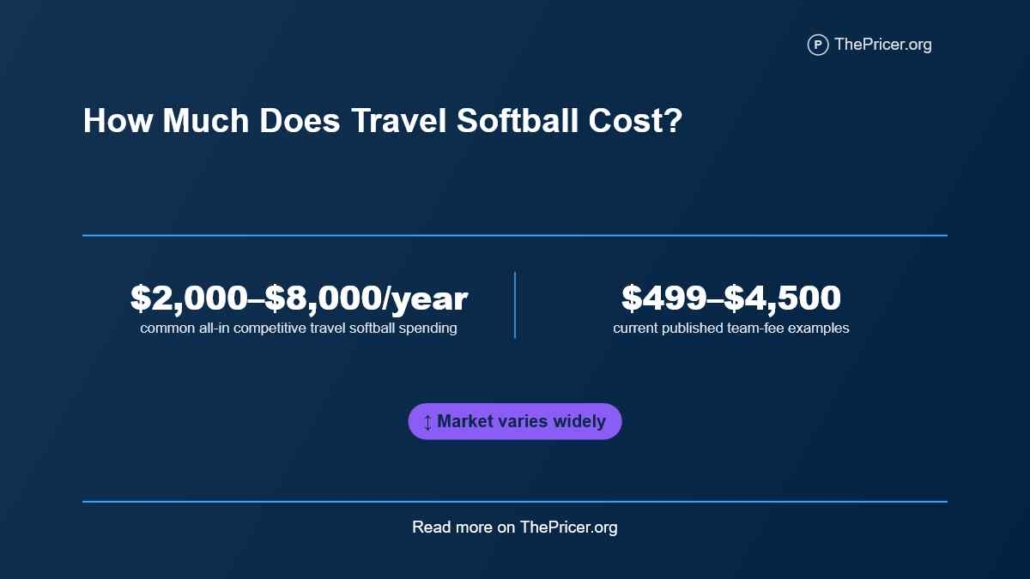
A current travel softball cost guide places common annual spending at $2,000 to $8,000 (about 1.7 to 6.7 full-time workweeks at $30 per hour), with top programs reaching $10,000 to $15,000. A separate competitive softball cost guide uses $3,000 to $8,000 all-in. These are family-spending ranges rather than a single registration charge.
Live club pricing shows why one national team-fee average would be weak. Stateline Fury White lists a low-travel season near $499, while GTS posts a 14U fee as high as $4,500. Firecracker Alaska sits between those examples at $2,275 before travel. The table compares what those current fees actually buy.
| 2026-27 program example | Published player fee | Selected inclusions and exclusions |
|---|---|---|
| Stateline Fury White | $499 | Uniform, 5-6 tournaments within two hours, development sessions, indoor facility |
| Midland Lady Explorers | $550 | Tournament budget, insurance, registrations, winter facility. Uniform about $175 extra and travel extra |
| Firecracker Alaska | $2,275 | Registration, monthly dues, local facilities and events. Travel trip estimated at another $1,000 to $1,500 |
| GTS 14U | $4,000 to $4,500 | 12 tournaments, facility access, position classes, speed and strength training |
The useful question is what remains unpaid after the fee. Nearby tournaments can keep family travel low. National schedules can still require hotels, flights, meals, and showcase spending after dues are paid.
Team Dues vs Family Spend
Low-cost programs prove that travel softball does not require a five-figure budget. Stateline’s 2026 player fee is $499 (about 2.1 full-time workdays at $30 per hour) and includes a full uniform, five to six tournaments within two hours of home, team practices, off-season development, and indoor facility use. That model limits one of the most expensive variables before the season begins: long-distance travel.
Midland Lady Explorers publishes a similar 2026 travel softball fee of $550. Insurance, registrations, tournament entries within the club budget, and winter practice facilities are included. The uniform is about $175 extra, while hotels, added tournaments, and other travel expenses remain outside the fee. A player starting with the listed dues and uniform reaches $725 before the family drives to an event or books a room.
At the other end, GTS 14U pricing is $4,000 for Midwest and $4,500 for Elite. The program lists five fall tournaments, one winter event, six summer tournaments, year-round turf and cage access, position classes, and strength training. A higher club fee can buy far more bundled activity, but parents still need the travel calendar before they know the household total.
Sanctioning membership is a much smaller line. The Alliance Fastpitch lists 2027 athlete fees of $30 to $62 by age and team fees up to $200 under its Alliance membership fees. Those charges help explain club administration, but they are not what makes the sport expensive.
Local, Regional, and National Programs
Travel level changes the family budget because distance changes. A local developmental team can play several tournaments within driving distance and return home after many game days. Stateline Fury White states that its five to six tournaments are all within two hours of home. That structure can hold lodging close to zero even when the player gets a genuine travel-team schedule.
Regional programs add more distant weekends and can combine local events with one or two trips. Firecracker Alaska provides a useful current example. Its current club fee schedule totals $2,275 per season, while travel is separate. The organization says teams travel at least once and that a travel trip runs about $1,000 to $1,500. One trip takes the disclosed subtotal to $3,275 to $3,775 before personal equipment or optional lessons.
National and recruiting-focused schedules can add flights or long drives, stay-to-play hotels, showcases, college camps, and extra nights away. Parents may also use vacation time. Those household costs never appear on the club invoice.
Age matters too. A 10U family may favor strong coaching and nearby competition. A 16U or 18U player pursuing college exposure may accept a larger showcase budget. Compare teams at the player’s actual stage.
Tournament and Travel Costs
Tournament entry is often paid by the team, then funded through player dues, sponsorships, or separate assessments. The family may never see that invoice even though it is part of the roster fee. Older age groups can add showcase events that carry higher entry charges, umpire costs, hotel rules, and optional player camps.
Fastpitch Nation’s September 2026 event lists Fall College Showcase pricing of $1,195 plus $80 per game per team for six games. The event is stay-to-play for teams needing hotels. The team event cost is $1,195 + $480 = $1,675 before lodging. Split evenly across a chosen 12-player roster, that is about $139.58 per player before any family travel spending.
The team entry fee is only one tournament layer. Families may still face hotel blocks, fuel or airfare, restaurant meals, parking, and player-specific camps. Coach travel can be funded by club dues or passed through in another charge. That is why two teams playing the same number of tournaments can produce very different household totals.
Hotel policy deserves attention. Stay-to-play events can require teams to book through an approved lodging system. That can reduce the family’s ability to shop every hotel independently. Ask how many hotel weekends are expected, whether airfare is likely, how coach travel is funded, and whether tournament gate or umpire charges sit inside the player fee.
Equipment and Uniform Budget

Equipment spending can range from modest to expensive because players do not need the same bat, glove, helmet, cleats, bag, or protective gear every season. Teams also differ in what they provide. Midland includes team catcher’s gear and other shared equipment but bills its uniform separately. Stateline bundles the uniform into the season fee. Firecracker Alaska says its registration charge covers jerseys and helmets.
Bat prices show how much one personal item can move the budget. Easton lists the 2026 Ghost Advanced at $499.99. That one premium bat costs almost exactly as much as Stateline’s entire low-travel player fee. The comparison does not mean every player needs a premium bat. It shows why personal equipment belongs outside team dues unless the club says it is included.
That does not mean a family must buy a $500 bat. It means the team fee should never be treated as the complete equipment budget. Ask what is supplied, what must be a matching team item, and which purchases can carry over from the prior season. Gloves and bats that still fit the player and meet the required standards can spread their cost across more than one year.
For a cross-sport comparison, club volleyball costs show the same budgeting problem. Team dues can bundle competition costs while travel and personal gear remain family expenses.
Private Lessons and Training
Private instruction is optional, but it can become one of the largest family-paid extras, especially for pitchers and catchers. Team practices may cover development well for some players. Other families add recurring pitching, hitting, catching, or fielding sessions outside the club schedule.
Current facilities show one-hour private lessons around the mid-double digits. Elevate Sports Training lists current softball lesson pricing at $60 for a private 60-minute session. Core Athletics lists individual instruction prices of $85 for 60 minutes, with discounted multi-lesson packages available.
If a family chooses 20 one-hour lessons during a year, those two current rates produce a modeled training budget of $1,200 to $1,700. Thirty sessions would reach $1,800 to $2,550. These are chosen usage scenarios, not a claim that every travel player takes that many private lessons.
Compare optional instruction with what the club already includes. GTS includes position classes and strength training in its fee. A team with strong pitching instruction may reduce the need for a separate weekly lesson. Remote sports mentorship is another category, and Athlete To Athlete pricing shows how packaged coaching can create a separate annual commitment outside team dues.
A Worked Season Budget
A real club example makes the gap between dues and family spending easier to see. Firecracker Alaska publishes a season total of $2,275 and says a travel trip commonly runs another $1,000 to $1,500. Using those two inputs gives $3,275 to $3,775 before a personal bat, glove, cleats, meals beyond the travel estimate, or private training.
Add one current Easton Ghost Advanced at $499.99 and 20 one-hour lessons at the cited $60 Elevate rate. The modeled season becomes $2,275 + $1,000 + $499.99 + $1,200 = $4,974.99 at the low travel input and $2,275 + $1,500 + $499.99 + $1,200 = $5,474.99 at the high travel input.
This ThePricer scenario uses current published prices from different U.S. providers to show how expenses stack. It is not an Alaska quote for lessons or equipment and it is not a national average. The useful result is the order of magnitude. A club that appears to cost a little over $2,000 can become a roughly $5,000 to $5,500 family season after one trip, one premium-level bat, and a moderate private-lesson schedule.
The reverse can happen too. A $499 local program with a bundled uniform and nearby tournaments may leave far fewer expenses outside dues. That is why the family should request the schedule, inclusions, and likely travel pattern before comparing two roster offers.
Choosing a Team by Cost
Compare price with competition level, coaching, roster size, facility access, tournament schedule, and included development. A higher fee can still reduce outside spending when it bundles training or events the family would otherwise buy separately.
Ask for a written season budget before accepting a roster spot. Check tournament entries, hotel weekends, coach travel, uniforms, indoor training, and showcase charges.
Makes sense if
- The family’s full-season budget covers dues, travel, equipment, and optional training.
- The tournament radius and time commitment match the household schedule.
- The team fee includes services the player would otherwise buy separately.
- The competition level fits the player’s current development goals.
Does not make sense if
- The family can pay the roster fee but not the expected travel calendar.
- The player would need several expensive extras just to match the team’s development plan.
- The club will not explain what dues include and exclude.
- The schedule is built around national exposure that the player does not need yet.
Fundraising can reduce the bill. Midland and Firecracker Alaska publish fundraising options, while GTS accepts business sponsorships. Treat those as possible offsets, not guaranteed discounts.
Answers to Common Questions
How much does travel softball cost per year?
Many competitive families can spend about $2,000 to $8,000 per year. Local low-travel teams can cost less, while elite national and showcase schedules can exceed $10,000.
How much are travel softball team fees?
Current published examples run from about $499 for a local developmental program to $4,500 for a higher-level 14U program. The difference comes from tournament volume, facilities, training, uniforms, and other bundled services.
Are tournaments included in travel softball dues?
Sometimes. Several current clubs include a tournament budget or scheduled entries in dues, while some showcase and added events are billed separately. Ask for the full tournament list and payment rules.
How much can private softball lessons add?
Current one-hour private lesson examples run around $60 to $85. Twenty sessions at those rates would add roughly $1,200 to $1,700.
What is the biggest hidden travel softball expense?
For many families it is travel outside the team fee. Hotels, fuel or airfare, meals, and stay-to-play requirements can turn a moderate club fee into a much larger season total.
Disclosure: Educational content, not financial advice. Prices reflect public information as of the dates cited and can change. Confirm current rates, fees, taxes, and terms with official sources before purchasing. See our methodology and corrections policy.