
How Much Does Tree Removal Cost?
Published on | Written by Alec Pow
This article was researched using 14 sources. See our methodology and corrections policy.
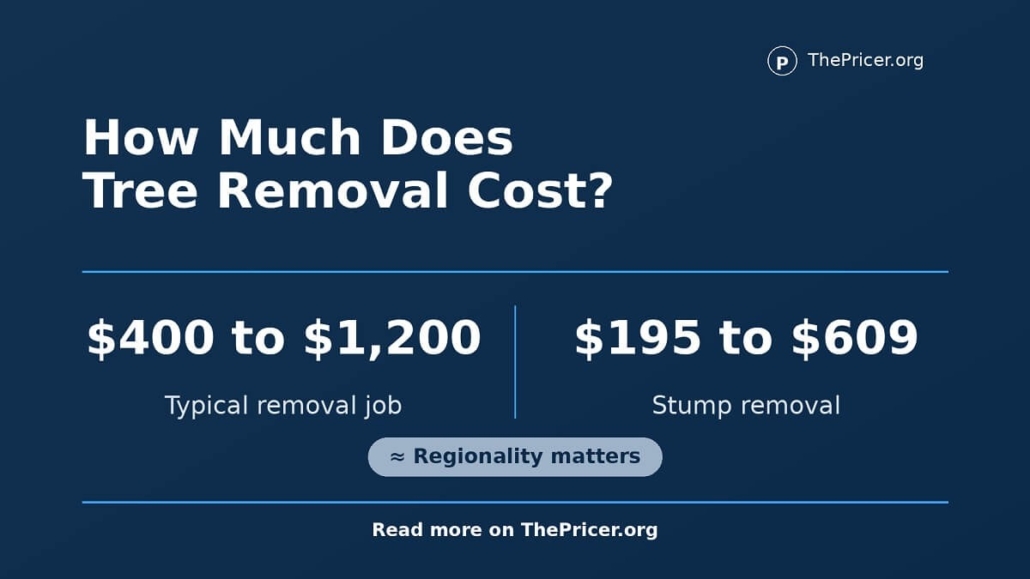
Tree removal is a controlled dismantling service that can involve climbers, a ground crew, chainsaws, rigging ropes, a bucket truck, a chipper, hauling equipment, and sometimes a crane. HomeGuide’s February 2026 national data places many removal jobs at $400 to $1,200, with a national figure of $850. A small accessible tree can sit below that band, and a tall tree beside a house, utility line, fence, or narrow access route can move well above it.
A contractor’s quote can combine crew labor, climbing or lift work, rigging, cutting, chipping, loading, disposal, and site cleanup. Stump grinding or extraction may be quoted separately. Exact bids are often private because the contractor has to see the trunk, canopy, drop zone, equipment access, nearby structures, and condition of the wood before setting a project total.
Tree removal is priced mainly per tree or per project. Height, trunk mass, access, labor versus machinery, debris volume, stump work, and local permit rules shape the final bill. Two trees of similar height can receive different quotes when one can be felled into open ground and the other must be lowered in sections beside a building.
How Much Does Tree Removal Cost?
Jump to sections
- Professional removal benchmark: This Old House’s March 2026 removal research places professional tree removal at $820 to $992 (at $30 per hour, earning that amount would take about 3.4 to 4.1 full-time workdays, before taxes) for its published project range.
- Stump work: Angi’s July 2026 stump data places stump removal at $195 to $609, with size and removal method changing the bill.
- Permit example: Portland’s July 2026 tree fee schedule lists no charge for a non-development removal and replanting application, then $25 per tree when an application covers four or more trees.
What you’re actually buying
Professional removal is controlled dismantling rather than simple cutting. The crew decides whether the trunk can fall into an open drop zone or whether limbs and trunk sections must come down piece by piece. Climbers, ropes, blocks, chainsaws, bucket trucks, chippers, skid steers, and cranes can enter the job according to tree position and access. Ground workers manage ropes, clear cut material, move logs, feed branches into a chipper, and keep the work area organized.
The job also differs from tree trimming service, which keeps the tree standing and removes selected growth. Stump grinding begins after the trunk is gone. OSHA’s tree-removal inspection guidance identifies falls, chainsaws, chippers, cranes, aerial lifts, and electrical contact among hazards tied to professional tree work. Those job-site demands help explain why a removal bid is driven more by labor, machinery, and control of heavy wood than by purchased materials.
HomeGuide, This Old House, and Angi publish U.S. price data, while OSHA, Seattle SDCI, Portland Permitting & Development, and the International Society of Arboriculture address worker safety, local tree rules, permit administration, and arborist credentials.
Full tree-removal quote
Angi’s July 2026 project calculator gives a medium-pine model with $250 to $1,500 (about 0.2 to 1.3 full-time workweeks at $30 per hour) for tree removal, $70 to $95 for cleanup and debris, $60 to $150 for a permit allowance, and $100 to $150 for optional stump removal. Using the low end of those first three lines gives $250 + $70 + $60 = $380. Adding the low-end stump line brings the sample to $480. The stump adds $100 ÷ $380 = 26% to the three-line total.
| Example line item | 2026 published range | Scope |
|---|---|---|
| Tree removal | $250 to $1,500 | Cutting and taking down the tree |
| Cleanup and debris | $70 to $95 | Post-removal cleanup |
| Permit allowance | $60 to $150 | Local permit where one applies |
| Optional stump service | $100 to $150 | Removing the remaining stump |
This model is not a universal contractor quote. A tree beside a house may require repeated rigging cuts and controlled lowering, whereas an open-yard tree may allow a direct fell. Bid comparison works better when each proposal states whether stump work, branch chipping, log removal, rake-up, permit handling, and final haul-away are included.
What you’re paying
Tree removal carries little conventional material expense compared with trades that install pipe, wire, roofing, flooring, fixtures, or lumber. The contractor is selling trained crew time, climbing, machinery use, setup, rigging, cutting, hauling capacity, fuel, insurance, and control of heavy sections as they move from the canopy to the ground.
A climber may need to place ropes and anchor points before the first large limb is cut. Ground workers then operate lowering lines, cut sections into movable pieces, feed brush into a chipper, and stage logs for hauling. A bucket truck can replace some climbing when access permits it. A crane changes the sequence again because large sections can be lifted away from roofs, fences, pools, or restricted yards. This is why a short job can still carry a substantial project charge even when the crew is not on site for a full day.
Unit pricing also changes with the piece being handled. HomeGuide’s February 2026 branch data lists $75 to $250 (about 0.3 to 1 full-time workdays at $30 per hour) for a small or medium branch and $150 to $850 for a large limb. Comparing the upper ends, $850 ÷ $250 = 3.4. That gap reflects how reach, weight, rigging, and access can matter more than a simple per-hour comparison.
Line items
Hauling is one of the easiest add-ons to separate from cutting. Angi’s August 2026 debris data places tree-debris removal at $75 to $250 per dump trip. The same data places extra dump trips, wood chipping, log splitting, or emergency scheduling at another $150 to $500 in covered jobs. A large canopy can fill truck or trailer space quickly, and dense trunk rounds can require separate loading.
Stump work is another boundary to define before cutting starts. Grinding removes the visible stump below grade but leaves much of the root system in place. Full extraction can require digging and heavier machinery. A homeowner comparing contractor work with stump grinder rental also has to account for machine transport, buried utilities, cleanup, fuel, and whether the rented unit can physically reach the stump. Crane mobilization, blocked equipment access, and added debris can also alter the scope after the crew arrives.
Two quote patterns
Lower-cost case, tree already down. Lawn Love’s 2026 fallen-tree pricing places removal of a fallen tree at $90 to $300. The main driver is condition. The crew no longer has to control a standing trunk through climbing or sectional lowering, so the work can focus on cutting, loading, hauling, and stump service if requested. A tree resting on a roof or utility line belongs in a different risk category from clean debris lying in an open yard.
Standing residential case. LawnStarter’s December 2025 pricing guide places professional removal at $385 to $1,070 and ties the quote to size, accessibility, and tree condition. An upright tree needs a planned fall path or a controlled dismantling sequence. Climbing, lift access, rigging, wood volume, and nearby structures can all add crew work before the stump enters the bill.
For a wooded property, per-tree pricing can stop being the useful unit. A contractor may quote clearing by area, machinery time, or project scope once many trunks, stumps, brush piles, and access paths are involved. The pricing structure for clearing wooded land addresses that broader type of job rather than one isolated residential tree.
Tree size, access, and regional pricing
Height changes how much canopy and trunk must be controlled, but access decides how the crew can handle that weight. A tree beside a wide driveway may allow a bucket truck, chipper, or crane to work close to the trunk. The same tree behind a narrow gate can force workers to carry tools and cut material farther by hand. Houses, fences, sheds, pools, overhead wires, neighboring property, slopes, and limited staging space can reduce the usable drop zone and turn a direct felling job into repeated sectional cuts.
Local rules add another layer. Seattle maintains a registered provider directory for companies that have registered with the city to conduct covered tree services. A municipality with different tree protections, notice rules, or permit procedures can create a different administrative scope. Rural properties can add travel and hauling distance, while dense urban sites can restrict machinery placement. Those differences explain why same-height trees in different settings can receive different bids.
An itemized tree-removal quote
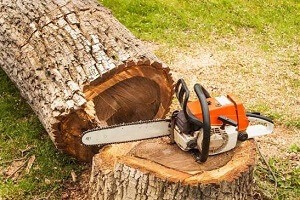 A useful bid identifies the tree, removal method, debris treatment, stump scope, and finish condition. It should state whether branches are chipped, whether trunk rounds stay on the property, whether chips leave with the crew, and whether final rake-up is included.
If stump work is part of the job, the proposal should distinguish grinding from extraction and state what happens to the resulting chips or soil. Leaving that language vague makes two headline totals difficult to compare.
Equipment deserves the same detail. The bid can state whether the job uses climbing, a bucket truck, or crane work and whether machinery is already inside the project total. Hauling language should identify what leaves the property and whether disposal has a volume limit.
The existing stump grinder rental context also shows why stump work has its own equipment and transport requirements. Permit responsibility should be named rather than assumed. A written change-order process can also state how hidden decay, blocked access, utility conflicts, or added debris will be approved before the billed scope grows.
Who this cost makes sense for
Paying a tree-service crew makes the strongest case when the work involves height, heavy wood, controlled lowering, machinery, or exposure to buildings and utility lines. Full removal is also a different purchase from pruning. If the goal is to preserve the tree and remove selected limbs, current tree trimming pricing lists $200 to $1,500 per tree after its March 2026 freshness review. That comparison can keep a homeowner from buying full removal when the actual scope is canopy work.
Makes sense if
- The trunk or major limbs stand beside a house, garage, fence, driveway, or pool.
- The crew must climb, rig sections, use a bucket truck, or bring a crane.
- The tree is dead, split, storm-damaged, leaning, or structurally uncertain.
- Power lines, public property, or municipal tree rules affect the work area.
- The owner wants cutting, hauling, cleanup, and stump work defined in one contract.
Doesn’t make sense if
- The tree is already down in open ground and only manageable debris remains.
- The actual job is pruning selected limbs rather than removing the trunk.
- Only an accessible stump remains and a stump-only service matches the job.
- Local rules block removal of the protected tree under its present condition.
DIY removal becomes a poor trade when a chainsaw operator must climb, control suspended wood, work near energized lines, or predict the movement of a compromised trunk. A small ground-level cleanup job is different. Scope matters. Comparing a professional removal quote with the purchase price of a chainsaw misses the labor, rigging, machinery, hauling, and property exposure built into the service.
Answers to Common Questions
How much is it to remove one tree?
Current U.S. published estimates place many jobs in the hundreds of dollars, with large, restricted-access, or machinery-heavy removals reaching into the thousands. The final bid depends on the tree, access, removal method, and disposal scope.
Is stump removal included with tree removal?
Not automatically. Some companies stop at the remaining stump, and others quote grinding or extraction as a separate service. The written proposal should identify the stump work and cleanup.
Why is a large backyard tree expensive to remove?
A large tree produces heavier sections and more debris. Restricted backyard access can also prevent a bucket truck, crane, chipper, or hauling vehicle from reaching the trunk directly, adding manual handling and rigging work.
Do I need a permit to remove a tree?
Permit rules are local. Tree size, protected status, property type, development activity, and placement in a regulated area can affect whether approval is required. Check the municipal tree code before scheduling the job.
Disclosure: Educational content, not financial advice. Prices reflect public information as of the dates cited and can change. Confirm current rates, fees, taxes, and terms with official sources before purchasing. See our methodology and corrections policy.