
How Much Does Two Men and a Truck Cost?
Updated on | Written by Alec Pow
This article was researched using 14 sources. See our methodology and corrections policy.
TWO MEN AND A TRUCK handles local and long-distance household moves through independently operated U.S. franchises, with crews providing loading, transport, unloading, packing, storage, and junk removal where offered. As of March 2025, a March 2025 review reported about $120 to $200 per hour for a two-person local crew, about $1,200 for a smaller local move, and up to roughly $11,500 for a larger cross-country move.
A customer quote can combine crew labor, truck use, travel time, packing materials, storage, and valuation coverage. There is no single national rate card because each local franchise can set its own rates, minimums, and service availability. Published national figures work as planning benchmarks rather than guaranteed branch quotes.
TWO MEN AND A TRUCK’s local franchises supply the crew and truck. HomeGuide and This Old House provide independent rate benchmarks used below, and the Federal Motor Carrier Safety Administration governs interstate estimate and valuation rules. The official billing description separates local hourly moves from long-distance pricing tied to the belongings being moved and the miles traveled.
How Much Does Two Men and a Truck Cost?
Jump to sections
- Local two-person crew, $120 to $200 (at $30 per hour, earning that amount would take about 4 to 6.7 hours of work, before taxes) per hour.
- Smaller local move benchmark, about $1,200.
- Larger cross-country benchmark, up to about $11,500.
What this is in plain terms
TWO MEN AND A TRUCK sells staffed moving service through independently operated franchises. A household can hire a crew to load furniture and boxes, transport them, and unload them at the destination. Packing, unpacking, storage, junk removal, and other services may also be available through a local franchise. The same brand can connect moving, packing, storage, valuation, and junk-removal services through a single local operation.
The service differs from renting a truck and doing the lifting yourself. It also differs from labor-only help, where the customer supplies the vehicle. With a full-service mover, the crew and transportation are handled under the same moving order. That distinction matters because labor time, driving, inventory, and access can all affect the final bill.

A worked Two Men and a Truck total
A local move is easiest to model with an hourly rate. A May 2026 rate check reported Two Men and a Truck local pricing of about $149 to $209 (about 5 to 7 hours of work at $30 per hour) per hour, with the cited hourly rate including two workers and a truck and branch minimums ranging from one to two hours. Using the two-hour end of that published minimum, two hours multiplied by $149 to $209 produces a labor-and-truck subtotal of $298 to $418.
For this worked example, the itemized bill contains the crew and truck at the cited hourly rate, pad wrapping and stretch wrap included in that rate, and no separately added packing or storage service. The modeled total remains $298 to $418. It is a billing-floor illustration rather than a prediction for a full household move. A larger inventory, longer loading window, travel between homes, furniture disassembly, stairs, or a longer walk from the truck can keep the clock running.
Crew, truck, time, and transport
Local billing ties the invoice closely to how long the crew is working. The company identifies flights of stairs, the walk between the truck and the loading or unloading point, loading and unloading time, and driving time as items that can affect a move price. Those are labor inputs rather than a simple charge for owning a truck. If movers spend longer carrying furniture through a large building, taking beds apart, or moving boxes down several flights, the local hourly meter can keep accumulating.
The truck separates this service from labor-only hiring because transportation and crew work stay on the same job. Packing is separate when ordered, and boxes or protective supplies may create another line item. A quote should identify crew arrangement, expected time, transportation, packing work, and other services instead of presenting one unexplained total.
Two Men and a Truck price ranges
Independent figures published in November 2025 placed Two Men and a Truck local moves at $1,000 to $2,800 (about 0.8 to 2.3 full-time workweeks at $30 per hour), long-distance moves at $5,000 to $23,000, and Value Flex service at $3,000 to $10,000. The same review listed a two-person local crew at $150 to $200 per hour and another mover at an added $75 to $100 per hour.
Its local home-size estimates ran from $1,000 to $1,200 for one bedroom, $1,300 to $1,800 for two bedrooms, $1,700 to $2,200 for three bedrooms, and $1,800 to $2,800 for four or more bedrooms. These figures are independent benchmarks, not a national Two Men and a Truck tariff. A franchise quote can land outside them because each location controls its rates and a home with difficult access can require more crew time than another property with a similar bedroom count.
Home size works mainly as a proxy for inventory and labor. Two homes with the same bedroom count can produce different quotes when one contains fewer furnishings or has easier truck access.
| Move profile | Published planning figure | Main billing driver |
|---|---|---|
| One-bedroom local | $1,000 to $1,200 | Crew time and local rate |
| Three-bedroom local | $1,700 to $2,200 | Inventory and labor duration |
| Long-distance | $5,000 to $23,000 | Shipment size and distance |
| Value Flex | $3,000 to $10,000 | Container needs and route |
Quote line items and optional services
Extra labor is one source of budget pressure, but packing can create a separate increase. A broader market update published in July 2026 put professional packing at about $280 to $2,200 and individual mover labor at roughly $30 to $100 per hour. Those figures are not Two Men and a Truck franchise quotes. They show why a customer who asks the mover to box an entire home can face a different total from a customer who has every carton sealed before the crew arrives.
Valuation is another line to read closely. For interstate shipments, federal rules require movers to offer Full Value Protection and Released Value Protection, with Released Value providing liability of up to $0.60 per pound per item at no added charge. Full Value Protection can carry a charge set through the mover’s tariff.
Local hourly moves vs long-distance pricing
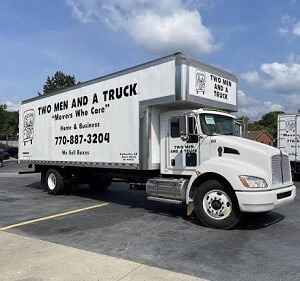 Time drives local billing. Distance changes the formula. The company states that long-distance work is priced from the belongings being moved and the miles involved, rather than treating the trip like a local hourly job. Interstate estimates also carry federal rules. Under federal binding-estimate rules, a binding estimate limits the amount due at delivery to the agreed estimate unless added items, added services, or certain unforeseen conditions require a new binding estimate. With a nonbinding estimate, the mover cannot demand more than 110 percent of that estimate at delivery.
That cap creates useful arithmetic when reading a nonbinding quote. A January 2026 cost study listed $1,500 as the low end of its broad-market long-distance band. Applying the federal 110 percent delivery limit to a nonbinding estimate of $1,500 gives $1,650 due at delivery under that rule, before later settlement of any lawful balance. The same arithmetic can be applied to the written nonbinding estimate actually issued for an interstate move.
What people pay in three move scenarios
These are modeled buyer profiles built from published figures, not customer anecdotes. A February 2025 pricing review listed a studio-style two-person moving setup at about $278 to $599 and cited moves over its distance threshold at about $2,000 to $5,000. A May 2026 moving-cost update placed packing and unpacking at an added $350 to $600 in its broader market figures.
Small local case. A lightly furnished studio can sit near the lower published local band when loading is brief and truck access is easy. Labor duration is the main driver.
Packing-heavy case. A customer who wants the crew to handle boxing and unpacking should separate that work from transportation. The added packing service becomes the main driver rather than mileage.
Long-distance case. A household crossing a longer route moves away from simple hourly math. Shipment size and distance control the estimate, making the published long-distance band more relevant than a local crew rate.
Regional rates and access complexity
A quote from one Two Men and a Truck franchise should not be treated as the price for another city. The company described its quote process in 2025 as using move details and inventory, with company staff following up to develop the estimate. That local quoting process fits the franchise structure, where branches control their own rates and service availability.
Access can alter the amount of labor sold even before the regional rate itself changes. A truck that can park close to a ground-floor door gives movers a shorter carry than a building with restricted loading space, elevators, or several flights of stairs. Furniture that must be disassembled can also add time. Those conditions matter most on an hourly local move because each extra block of crew time feeds directly into labor billing. A useful quote should identify both addresses, parking conditions, stairs, elevator access, large furniture, inventory, and packing needs before move day rather than relying on bedroom count alone.
Who this cost makes sense for
A staffed move fits households that want one provider handling both lifting and transportation. A DIY rental can carry a much lower vehicle charge, but the renter supplies the driving and physical work. A May 2026 review of Home Depot truck pricing found short Load ’N Go rentals starting around $17.99 to $19.00 for the initial rental window, before fuel and other exposure. That comparison explains why a full moving crew can cost far more than the truck itself.
The tradeoff is labor and responsibility. Paying movers is easier to justify when the home contains heavy furniture, the customer cannot safely load it, the route involves difficult building access, or packing and transport need to stay under one moving order. A DIY truck can fit a small shipment when the renter has enough help, can drive the vehicle, and can finish the loading and unloading without paid moving labor.
Makes sense if
- You want the mover to supply both the crew and truck.
- You have furniture that requires several people to carry safely.
- Your building has stairs, elevators, or long carries.
- You want packing or storage attached to the same move order.
Doesn’t make sense if
- You can load and unload the shipment yourself.
- Your belongings fit in a small rental vehicle.
- You already have labor available at both addresses.
- You are comfortable driving and fueling a rented moving vehicle.
What we verified
- Checked the valuation and moving coverage terms, which confirm that valuation options are offered for moving coverage.
- Confirmed reporting on booking deposits showing that an upfront deposit may be required, with terms tied to the move.
- Cross-referenced U-Haul rental pricing for the DIY alternative and its separate vehicle, mileage, fuel, protection, and labor components.
Answers to Common Questions
How much is Two Men and a Truck per hour?
Published independent figures cited above place a two-person local crew around $120 to $209 per hour, depending on the source and market. Your local franchise sets the actual rate.
Does Two Men and a Truck charge by the hour?
Local moves are commonly hourly. Long-distance moves use a different method tied to the shipment and travel distance.
Does Two Men and a Truck include the truck?
The cited local hourly review includes two movers and a truck in its reported rate. Franchise quote structure can differ, so the written estimate should identify what is included.
Can packing raise the final bill?
Yes. Packing adds labor and may add boxes, tape, padding, and other materials. Full-home packing can add hundreds or thousands of dollars based on the cited market data.
Disclosure: Educational content, not financial advice. Prices reflect public information as of the dates cited and can change. Confirm current rates, fees, taxes, and terms with official sources before purchasing. See our methodology and corrections policy.