
How Much Does Verizon Fios Cost?
Updated on | Written by Alec Pow
This article was researched using 10 sources. See our methodology and corrections policy.
Verizon Fios internet currently costs $30 to $100 per month with Auto Pay and paper-free billing, depending on speed. The September 2026 lineup runs from 300 Mbps at $30 per month to 5 Gig at $100 per month. An updated September 3 plan check lists the discounted tiers at $30, $65, $80, $90, and $100 per month.
The current internet tiers include the Verizon router, but the number on the plan card is not always the whole household bill. Professional setup can add $99, Fios TV is separate, optional perks recur, and promotional gift cards can be charged back after an early cancellation.
Verizon Fios is fiber-to-the-premises home internet sold in 300 Mbps, 500 Mbps, 1 Gig, 2 Gig, and 5 Gig tiers. The bill turns on speed, Auto Pay, Fios TV, setup, add-ons, and grandfathered Mobile + Home status.
Article Highlights
Jump to sections
- Current Fios internet runs from $30 to $100 (at $30 per hour, earning that amount would take about 1 to 3.3 hours of work, before taxes) per month with Auto Pay and paper-free billing.
- The listed internet rates require Auto Pay and paper-free billing, and a $99 setup charge can apply.
- The 300 Mbps and 500 Mbps plans carry three-year price guarantees, while 1 Gig, 2 Gig, and 5 Gig carry five-year guarantees.
- The router is included with current internet plans. Whole-Home Wi-Fi is included with 1 Gig, 2 Gig, and 5 Gig.
- Current Fios TV plans run from $70 to $149 per month, so television can cost more than the internet connection itself.
- Current online promotions can include $100 or $200 gift cards, but cancellation timing can turn that perk into a reversal cost.
For a household comparing Fios offers, the useful number is the monthly service total plus setup and add-ons, not the largest discount or gift card shown in the checkout banner.

How Much Does Verizon Fios Cost?
Current Fios pricing starts at $30 (about 1 hour of work at $30 per hour) per month with Auto Pay and paper-free billing. The five consumer fiber tiers are 300 Mbps, 500 Mbps, 1 Gig, 2 Gig, and 5 Gig, with price guarantees running from three to five years. The router is included across the current internet lineup.
| Fios internet plan | With Auto Pay | ThePricer annual service total | Advertised wired speed | Price guarantee |
|---|---|---|---|---|
| 300 Mbps | $30/month | $360/year | Up to 300/300 Mbps | 3 years |
| 500 Mbps | $65/month | $780/year | Up to 500/500 Mbps | 3 years |
| 1 Gig | $80/month | $960/year | Up to 940/880 Mbps | 5 years |
| 2 Gig | $90/month | $1,080/year | About 1.5 to 2.3 Gbps wired | 5 years |
| 5 Gig | $100/month | $1,200/year | About 4.5 to 5.3 Gbps wired | 5 years |
The most unusual price step is between the middle tiers. Moving from 300 Mbps to 500 Mbps costs another $420 per year, while moving from 500 Mbps to 1 Gig costs only another $180 per year. That second jump buys up to 440 Mbps more advertised download capacity and adds Whole-Home Wi-Fi to the plan.
What you’re actually buying
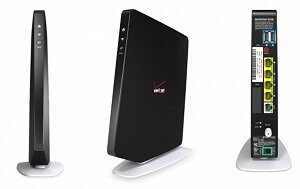
Fios is Verizon’s fiber-to-the-premises network. Fiber runs to an optical network terminal at the property, then the home network connects through Ethernet and a router.
That differs from Verizon 5G Home Internet, which reaches the home through a cellular wireless connection. Fios also differs from cable internet because its fiber connection supports much closer upload and download speeds, which matters for cloud backups, large file transfers, video calls, and livestreaming.
The speed tier controls the amount of shared bandwidth available to connected devices. It does not promise that every phone, laptop, game console, or Wi-Fi device will hit the plan’s maximum wired rate. Wi-Fi interference, device hardware, and simultaneous usage still affect measured speed. Fios availability is also address-specific, so a plan advertised in one part of a city may not be orderable at another property.
The old Mobile + Home discount trap
The September 3 reset creates a billing trap for anyone remembering the previous mobile bundle. Verizon’s new Mobile + Home rules say Fios purchased or changed on or after September 3, 2026 no longer receives the former $15 (about 30 minutes at $30 per hour) per month Fios bill credit. That old credit was worth $180 per year, equal to six months of today’s $30 300 Mbps service.
The replacement benefits work differently. Eligible 1 Gig, 2 Gig, and 5 Gig accounts can receive up to $10 per month toward an eligible perk, worth at most $120 per year, and Mobile + Home can provide a $99 setup-fee waiver when enrollment is completed within 30 days of installation. A perk credit should not be treated as an internet-rate discount when comparing the old and new bills.
That date matters for existing customers. A September 4 Fios discussion contains user reports of existing accounts being offered lower rates after changing plans, including an anecdotal 1 Gig quote of $65 per month. Treat those reports as account-level market signals, not a universal rate. Changing a grandfathered account can also end an old bill credit, so compare the full old bill with the full proposed bill before changing service.
Fios TV
Television is no longer a small add-on beside a cheap internet bundle. Verizon’s current Fios TV menu lists Local TV at $70 per month, Fios TV Essentials at $75, Fios TV Test Drive at $105, Your Fios TV at $105, More Fios TV at $129, and The Most Fios TV at $149 per month. The listed TV pricing requires Auto Pay and paper-free billing, and TV-specific taxes and setup terms can apply.
This flips the old bundle logic. Pair 300 Mbps internet at $30 with Fios TV Essentials at $75 and the service total becomes $105 per month, or $1,260 per year. Pair 1 Gig at $80 with Your Fios TV at $105 and the total becomes $185 per month, or $2,220 per year. A 5 Gig plus The Most Fios TV combination reaches $249 per month, or $2,988 per year, before any TV-specific taxes or optional extras.
The useful comparison is not Fios TV against internet. It is Fios TV against the live-TV service or streaming stack it would replace. A household watching only a few on-demand platforms can spend far less by keeping internet-only service.
Three Fios bills
Scenario 1: Budget internet-only household. A 300 Mbps plan with Auto Pay is $30 per month. Twelve months cost $360. If the $99 professional setup charge applies, first-year cash outlay becomes $459. That is the worked total: $360 of service plus $99 of setup equals $459. A promotional gift card should not be subtracted from the bill because it is a separate benefit with retention rules.
Scenario 2: Upload-heavy household choosing 1 Gig. Service costs $80 per month, or $960 per year. With a charged $99 setup, the first year reaches $1,059. Compared with 500 Mbps at $780 per year, the 1 Gig tier costs only $180 more per year, or $15 more per month, while also including Whole-Home Wi-Fi. That is a much smaller upgrade gap than the $35 per month jump from 300 Mbps to 500 Mbps.
Scenario 3: Traditional TV household. A 500 Mbps connection at $65 plus More Fios TV at $129 creates a $194 monthly service total. Twelve months equal $2,328. Add a charged $99 setup and first-year cash outlay becomes $2,427 before TV-specific taxes, premium channels, or other optional services.
The gift-card bargain
Current online Fios promotions advertise a $100 Amazon gift card with 300 Mbps or 500 Mbps and a $200 card with 1 Gig, 2 Gig, or 5 Gig. The promotion terms behind the offer require eligible service to remain in good standing for 65 days and allow Verizon to charge back the gift-card value if eligible service is canceled within 180 days.
That creates a useful piece of buyer math. Six months of 300 Mbps at $30 per month cost $180, so a $100 gift card equals 55.6% of six months of service value. Six months of 1 Gig at $80 per month cost $480, so its $200 card equals 41.7% of that six-month service value. Those percentages look large, but the card is not a monthly rate reduction and can reverse if the retention condition is missed.
Equipment can create a second exit cost. A 2026 New York utility filing lists unreturned or damaged equipment charges of $200 for a Verizon Router, $175 for a Fios Router, and $375 for a Fios TV One or video media server. Those are not normal monthly charges. They show why returning provider-owned equipment and keeping the receipt matters when service ends.
Who this cost makes sense for
Makes sense if:
- You can get true Fios fiber at the address and upload speed matters for work, backup, content creation, or frequent large transfers.
- The 300 Mbps tier already covers the household and you prefer a low fixed internet bill over buying unused speed.
- You need 1 Gig or more and can use the included Whole-Home Wi-Fi coverage rather than paying separately for extra network hardware.
- You want traditional Fios TV channels, DVR features, or regional sports access and have compared that package with the streaming services it would replace.
Does not make sense if:
- Your main use is browsing and a few simultaneous streams, but you are paying for 2 Gig or 5 Gig only because the larger number sounds safer.
- A cheaper cable or fixed-wireless plan meets your upload, latency, and reliability needs at the address.
- You cannot keep the payment method needed for the Auto Pay rate and the higher checkout price changes the value comparison.
- You expect to move or cancel quickly and are choosing the plan mainly for a promotional gift card that has retention terms.
A recent fiber versus 5G comparison makes a related point: fiber households can often start with the lowest suitable speed tier because the connection itself already provides strong upload performance and unlimited data. Paying for multi-gigabit capacity should solve a real bandwidth problem, not act as insurance against ordinary streaming.
What we checked
- Checked older non-discounted reference rates against a current Verizon offers listing, which still shows 300 Mbps at $40 and 500 Mbps at $75 on its public rate display.
- Confirmed the major television tiers with CableTV’s Fios plan data, including Your Fios TV at $105, More Fios TV at $129, and The Most Fios TV at $149 per month.
- Cross-referenced the service footprint with BroadbandNow’s Fios coverage data, which lists Verizon Fios availability across nine states plus the District of Columbia in its current provider data.
- Verified that availability should be checked by exact property through the FCC broadband map process, which can show providers, connection technology, and maximum advertised speeds at a searched address.
The strongest checkout check is simple: compare the plan’s monthly internet line, Auto Pay status, setup charge, TV or perk lines, and any one-time promotion before placing the order. Existing customers should also compare the old account total with the proposed new account total because changing plans can alter grandfathered discounts.
Related internet and streaming costs
Fios is easiest to judge against other services using the same all-in frame. Compare the current monthly rate, equipment, setup, upload speed, and the length of any price guarantee against Xfinity internet pricing and Spectrum service costs, rather than comparing only the largest advertised download number.
For households debating Fios TV, separate the internet decision from the entertainment decision. Premium channels and streaming subscriptions can turn a modest internet bill into a much larger media budget, so compare any bundled offer with the standalone HBO Max subscription cost and the other services the household would actually keep.
Answers to Common Questions
How much is Verizon Fios 300 Mbps per month?
The current 300 Mbps rate is $30 per month with Auto Pay and paper-free billing. The base rate before that discount is about $40 per month.
Does Verizon Fios charge for the router?
The current Fios internet plans include the Verizon router at no added monthly charge. Provider-owned equipment still has to be returned when required after service ends.
Does Verizon Fios have a cancellation fee?
Current Fios home internet is sold without an annual contract, but cancellation can still create costs through promotional chargebacks or unreturned equipment. Older minimum-term accounts can have different terms, so the account agreement should be checked before cancellation.
Is Fios TV included with Fios internet?
No. Fios TV is a separate service. Current listed TV packages run from $70 to $149 per month, depending on the channel package.
How much does a year of Verizon Fios internet cost?
With Auto Pay, internet-only service runs from $360 per year for 300 Mbps to $1,200 per year for 5 Gig before setup or optional add-ons.
Disclosure: Educational content, not financial advice. Prices reflect public information as of the dates cited and can change. Confirm current rates, fees, taxes, and terms with official sources before purchasing. See our methodology and corrections policy.