
How Much Do Lamaze Classes Cost?
Updated on | Written by Alec Pow
This article was researched using 16 sources. See our methodology and corrections policy.
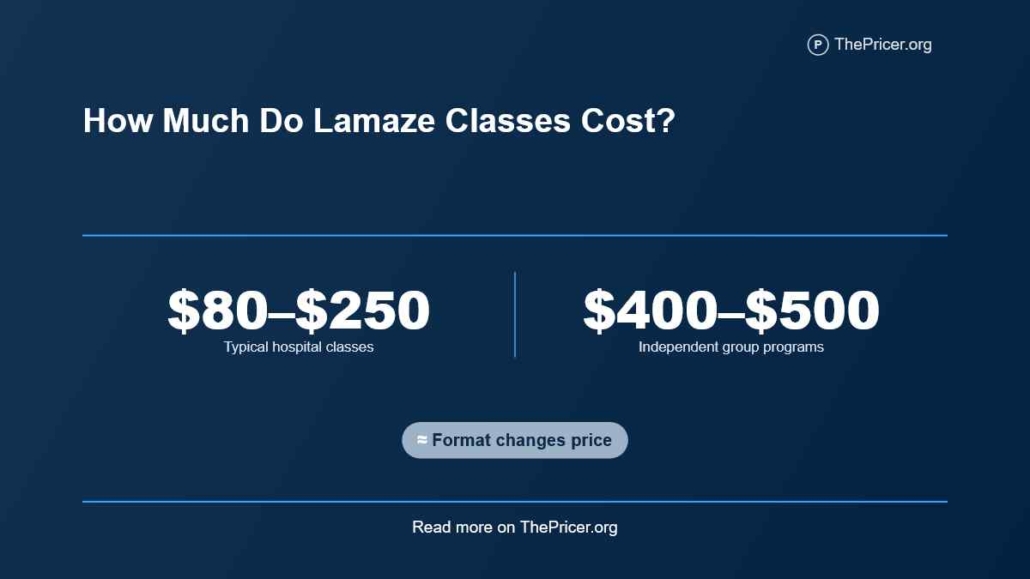
Lamaze and childbirth-preparation classes can cost anywhere from $0 to about $500 for a group program, while private childbirth education can reach roughly $775 for a two-session package. Hospital classes commonly fall around $80 to $250, while independent educators offering longer, Lamaze-informed courses can charge $400 to $500.
The word Lamaze is often used loosely. A hospital childbirth class may teach breathing, movement, labor positions, pain-management options, partner support, Cesarean birth, and postpartum care without being an official Lamaze course. Lamaze International directs parents seeking authentic Lamaze instruction to classes taught by Lamaze Certified Childbirth Educators.
Article Highlights
Jump to sections
- Hospital childbirth-preparation classes researched for 2026 range from $0 to $249 (at $30 per hour, earning that amount would take about 0 to 1 full-time workdays, before taxes).
- UCSF charges $190 for a four-class childbirth preparation series.
- Inova charges $179 for an accelerated class and $229 to $249 for its longer preparation course.
- Birth Matters NYC charges $489 to $495 for in-person group programs and $419 for its live virtual course.
- Private childbirth education at Birth Matters NYC costs $400 for one session or $775 for a two-session package.
- Some hospitals offer classes at no charge, while others submit childbirth-education charges to insurance.
- Childbirth classes can qualify for Health Care FSA reimbursement under specific rules.
How Much Do Lamaze Classes Cost?
Hospital-based childbirth education sits at the lower and middle part of the market. Queens Hospital Center in New York currently offers its five-class Lamaze childbirth series at $0. The program covers breathing and relaxation, coping strategies, birth planning, newborn adjustment, partner involvement, and parenting guidance.
UCSF charges $190 for its four-class childbirth preparation series. Its condensed intensive option costs $200 (about 6.7 hours of work at $30 per hour). Redlands Community Hospital charges $100, Capital Health charges $120 for a four-class series, and Johns Hopkins charges $175 per family for a three-hour childbirth education class.
Inova sits slightly higher. Its Childbirth Express costs $179, while its longer Childbirth Preparation course is $249 in person or $229 virtually. The fee covers the pregnant participant and one support person.
| 2026 class example | Price | Format |
|---|---|---|
| Queens Hospital Center | Free | Five-class Lamaze series |
| Genesis HealthCare System | $84.36 | Three-hour childbirth class |
| Redlands Community Hospital | $100 | Hospital childbirth preparation |
| Capital Health | $120 | Four-class series |
| Johns Hopkins Hospital | $175 per family | Three-hour small-group class |
| Inova | $179-$249 | Express or extended preparation |
| Birth Matters NYC | $419-$495 | Virtual or in-person group program |
What Counts as Lamaze
Not every childbirth class is a Lamaze class. Lamaze International maintains a directory for parents looking for instruction from a Lamaze Certified Childbirth Educator. Its childbirth framework centers on evidence-based birth education, movement during labor, continuous support, reducing unnecessary intervention, flexible birth positions, and keeping parent and baby together after birth.
A hospital course can cover many of the same practical topics without carrying the Lamaze name. ACOG describes childbirth classes more broadly as education about pregnancy, giving birth, breastfeeding, parenting, and newborn care. Parents comparing prices should look at the curriculum and educator credentials instead of assuming every prenatal class labeled “childbirth preparation” delivers the same material.
Birth Matters NYC illustrates the overlap. Its educator has training through Lamaze International and other childbirth-education organizations, while its curriculum also incorporates methods associated with Bradley, Hypnobirthing, doulas, breastfeeding education, postpartum preparation, and newborn care.
This distinction matters for price. A three-hour hospital overview and a 15-hour independent course may both prepare families for labor, yet one may cost $100 to $175 (about 3.3 to 5.8 hours of work at $30 per hour) while the other approaches $500. The difference partly reflects teaching time and curriculum breadth rather than a simple premium for the Lamaze name.
Hospital vs Independent
Hospital programs can be inexpensive because childbirth education supports the facility’s maternity services. Tampa General Hospital charges $100 per couple for a four-week labor and birth preparation course. Genesis HealthCare System currently charges $84.36 for a three-hour class and says the fee is submitted to the patient’s insurance before any remaining balance is billed.
Independent educators can provide substantially more classroom time. Birth Matters NYC’s six-class in-person series costs $489 for the pregnant parent and one support person. The 15-hour program includes birth preparation, postpartum wellness, lactation, newborn care, recorded material, class handouts, and other resources. Its shorter 12.5-hour weekend version costs $495.
The price-per-hour comparison is useful. The $489 six-class program works out to about $32.60 per family per teaching hour. Its $495 intensive works out to about $39.60 per hour. UCSF’s $190 four-class series runs 10 hours in total, putting its scheduled teaching cost at about $19 per hour.
Johns Hopkins charges $175 for three hours, or about $58.33 per family per hour. A shorter class can therefore cost less in total while carrying a higher hourly price. Total fee, hours, group size, and included subjects should be compared together.
Private and Virtual
Private instruction sits above group pricing because the educator’s time is reserved for one family. Birth Matters NYC charges $400 for a private 3.5-hour birth-preparation session. Its two-session package costs $775 and combines birth preparation with breastfeeding and newborn-care education.
The two private sessions total about seven hours. Dividing the $775 package by seven produces an effective scheduled rate of about $110.71 per family per hour. Buying the two sessions separately at $400 each would cost $800, so the package saves $25.
Virtual instruction is not always dramatically cheaper. Birth Matters NYC charges $419 for its live virtual group program versus $489 to $495 for the in-person options. The saving is only $70 to $76, roughly 14% to 15% of the in-person fee.
Hospital pricing can behave differently. Inova charges $249 for its in-person four-session childbirth preparation course and $229 for the virtual version, a difference of $20. Its faster Childbirth Express program costs $179 whether taken through the available in-person or virtual structure.
Insurance and FSA
Insurance coverage is inconsistent. A childbirth class should not be described as universally covered merely because maternity care is an essential health benefit. Individual plans can treat education services differently from prenatal visits, hospital care, laboratory work, and delivery charges.
Genesis provides a real billing example. Its $84.36 childbirth class is submitted to the patient’s health insurer, and any unpaid balance is billed afterward. Birth Matters NYC likewise states that some insurers reimburse childbirth classes and advises clients to check whether their plan covers education delivered outside a hospital or other facility.
Health Care FSA rules provide another route. FSAFEDS lists Lamaze classes as eligible with a detailed receipt, but specifies that eligibility applies to the mother’s portion of the charge. Its broader expense list also identifies childbirth classes as eligible for the mother’s charge while newborn-care instruction is not eligible on the same basis.
A couple paying $249 for one combined registration should not assume the entire $249 is automatically FSA-reimbursable. The administrator may require the eligible childbirth portion to be separated from a partner’s attendance or newborn-care component. Keep the itemized receipt and check the plan administrator’s documentation rules before relying on reimbursement.
Extra Class Costs
The old article assigns another $50 to $150 to books, props, and transportation as though these expenses accompany most Lamaze courses. The current programs researched do not support a universal add-on of that size. Many providers include handouts, digital materials, partner attendance, and practice instruction in the registration fee.
Birth Matters NYC includes a customized digital textbook, online selections, shared files, and video resources in its group price. USC Arcadia Hospital’s $80 two-session childbirth series includes the course guide and mobile-app access and covers the pregnant participant plus a support person.
The more realistic extras are transportation, parking, childcare for older children, and lost work time for weekday classes. Those costs depend on the family rather than the course. A four-evening program can create four separate trips, while a one-day intensive may require only one.
Bundled courses can also change the comparison. A class covering childbirth alone should not be compared directly with one combining birth, breastfeeding, postpartum recovery, and newborn care. The latter may cost more while replacing two or three separate classes.
Free and Low-Cost Options
Free childbirth education still exists. Queens Hospital Center’s five-class Lamaze program charges $0. Hospital-funded programs can make formal education available without requiring parents to buy a commercial course.
Capital Health charges $120 for its four-class series, but specifically asks families facing a financial barrier to contact its childbirth education coordinator. That gives families a supported route to ask about access rather than relying on an assumed nationwide scholarship policy.
Format can lower the fee too. Hartford HealthCare currently lists an Understanding Birth eClass at $100 and several related eClasses at $40. Some hospital systems also make maternity tours, pain-relief sessions, breastfeeding support groups, and newborn-care resources free even when the main childbirth course has a fee.
Parents trying to limit the bill can start with the hospital where they plan to deliver. Ask what is included in prenatal care, what classes are free, whether childbirth education is billed to insurance, and whether one registration includes a support person. Then compare any missing content with independent Lamaze instruction.
Choosing the Class

Class length, instructor credential, curriculum, group size, and birth setting should guide the decision. Lamaze International’s six healthy birth practices provide a useful reference for parents who specifically want Lamaze-based education rather than a generic hospital orientation.
Makes sense if
- You want structured preparation for labor, comfort measures, support-person roles, and common birth interventions.
- You prefer live questions and guided practice rather than relying only on books or videos.
- A hospital, insurer, FSA, or community program can reduce the out-of-pocket price.
Does not make sense if
- You are paying a premium for a course that duplicates education already included with your hospital or care team.
- The program spends much of its schedule on newborn or breastfeeding topics you have already covered elsewhere.
- You want a Lamaze-certified educator but have not checked whether the instructor actually holds the LCCE credential.
Related pregnancy costs can be compared with midwife costs, placenta encapsulation, and birth certificate fees.
Answers to Common Questions
How much do Lamaze classes cost?
Hospital childbirth-preparation classes commonly cost about $80 to $250, though some are free. Longer independent Lamaze-informed group programs can cost roughly $400 to $500.
How much does private Lamaze instruction cost?
Private childbirth education can cost several hundred dollars. One current provider charges $400 for a 3.5-hour private session or $775 for two sessions.
Does insurance cover Lamaze classes?
Some plans reimburse childbirth education, but coverage is not universal. Ask whether the plan covers hospital-based classes, independent educators, or both before registering.
Can an FSA pay for Lamaze classes?
FSAFEDS currently lists Lamaze and childbirth classes as eligible with a detailed receipt for the mother’s portion of the charge. Partner and newborn-care portions can be treated differently.
Do Lamaze classes still exist?
Yes. Lamaze International maintains a directory of live and virtual classes taught by Lamaze Certified Childbirth Educators, while hospitals and independent educators also offer broader childbirth-preparation programs.
Disclosure: Educational content, not financial advice. Prices reflect public information as of the dates cited and can change. Confirm current rates, fees, taxes, and terms with official sources before purchasing. See our methodology and corrections policy.