
How Much Does Mahi Mahi Cost?
Updated on | Written by Alec Pow
This article was researched using 3 sources. See our methodology and corrections policy.
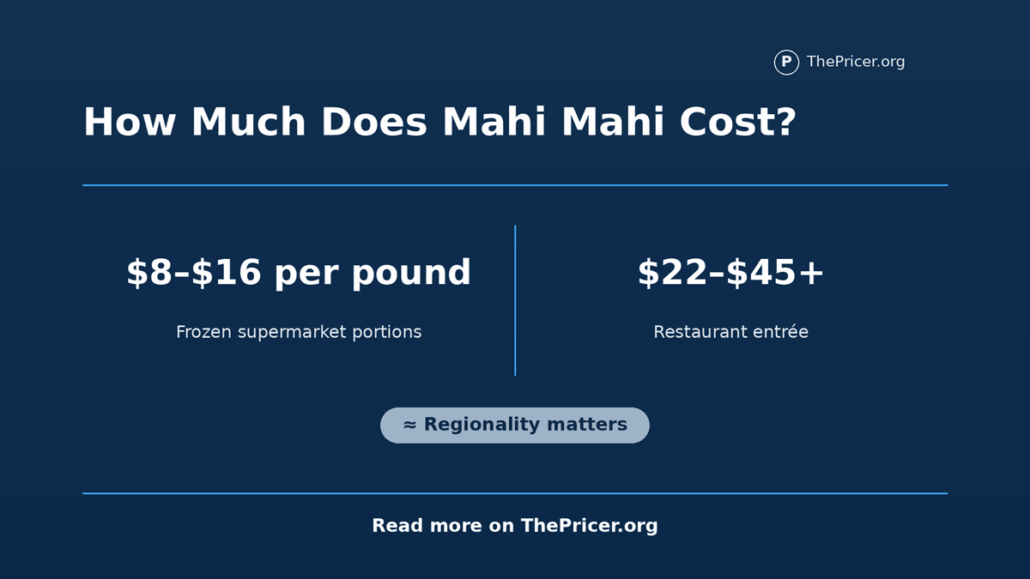
Mahi mahi costs approximately $8 to $16 per pound for frozen supermarket portions and $15 to $30 per pound for fresh or previously frozen retail fillets. Premium seafood companies may charge $20 to $35+ per pound before shipping, while whole mahi mahi generally costs about $5 to $12 per pound.
A restaurant mahi mahi entrée usually costs $22 to $45+. Tacos, sandwiches, and lunch portions commonly cost $14 to $25, while resort restaurants and upscale seafood establishments can charge more than $50.
The cheapest sticker price is not always the best value. A whole fish may produce only 30% to 45% of its weight as trimmed fillets. A whole mahi mahi costing $8 per pound with a 35% yield has an effective edible cost of $22.86 per pound, which can be more expensive than ready-cut frozen portions.
Article Highlights
Jump to sections
- Frozen mahi mahi costs approximately $8 to $16 (at $30 per hour, earning that amount would take about 16 to 32 minutes, before taxes) per pound.
- Fresh retail fillets generally cost $15 to $30 per pound.
- Premium shipped fillets can cost $20 to $35+ per pound.
- Whole mahi mahi costs about $5 to $12 per pound.
- Restaurant entrées commonly cost $22 to $45+.
- A whole fish may yield only 30% to 45% as trimmed fillets.
- Raw mahi mahi should generally be used within one to two days.
- Cook mahi mahi to an internal temperature of 145°F.
How Much Does Mahi Mahi Cost?
Mahi mahi is also called dolphinfish or dorado. It is unrelated to marine mammals commonly called dolphins.
| Product or serving | Typical price | What affects the total |
|---|---|---|
| Frozen supermarket fillets | $8 to $16 (about 16 to 32 minutes at $30 per hour) per pound | Store, package size, sale pricing |
| Fresh seafood-counter fillets | $15 to $30 per pound | Origin, season, freight, trimming |
| Premium shipped fillets | $20 to $35+ per pound | Packaging, overnight delivery, minimum order |
| Whole mahi mahi | $5 to $12 per pound | Dressed condition, size, fillet yield |
| Wholesale fillet case | $10 to $20+ per pound | Case volume, cut, origin, freight |
| Restaurant tacos or sandwich | $14 to $25 | Portion size, location, side dishes |
| Restaurant dinner entrée | $22 to $45+ | Restaurant type, preparation, local market |
Seafood prices are local and can change weekly. Imported supply, weather, fuel expenses, fishing conditions, freight, promotions, and restaurant location all affect the final amount.
Current Retail Price Examples
Costco Same-Day currently lists a 3-pound package of Kirkland Signature frozen mahi mahi for $42.55 (about 1.4 hours of work at $30 per hour). That works out to:
$42.55 ÷ 3 pounds = $14.18 per pound.
Same-day delivery prices can include an Instacart markup and may be higher than the price inside a Costco warehouse. Recent in-store tracking has shown the same three-pound package at approximately $19.97 to $37.99, or roughly $6.66 to $12.66 per pound, depending on location and clearance activity.
Premium direct-shipping sellers commonly charge more because the customer is buying smaller quantities and paying for insulated packaging, cold packs, and expedited delivery. Always divide the total product price by the net seafood weight and then add shipping.
Fresh Versus Frozen
Fresh mahi mahi commonly costs more than frozen fish, but “fresh” does not necessarily mean that the fish has never been frozen. A seafood counter may display mahi mahi that was previously frozen and thawed.
Ask the seller:
- Was the fish previously frozen?
- When was it thawed or delivered?
- Where was it caught?
- What fishing gear was used?
- Is the price based on skin-on or skinless weight?
- Does the package contain added water or glaze?
Properly frozen mahi mahi can be a better purchase than fish that has spent several days being transported and displayed as fresh. Individually vacuum-packed portions also allow buyers to thaw only what they plan to cook.

The True Cost of a Whole Fish
A whole fish can look inexpensive because its price includes the head, bones, skin, fins, viscera, bloodline, and other material that may not become a finished fillet.
Whole round mahi mahi commonly produces approximately 30% to 45% of its original weight as trimmed fillets. The precise result depends on fish size, whether it has already been gutted, whether the skin is retained, and the skill of the person cutting it.
Consider a 10-pound whole mahi mahi costing $8 per pound:
- Whole-fish price: 10 × $8 = $80
- Fillet yield at 35%: 10 × 0.35 = 3.5 pounds
- Effective fillet cost: $80 ÷ 3.5 = $22.86 per pound
A frozen three-pound bag priced at $14.18 per pound is cheaper in this comparison, even though the whole fish has the lower advertised price per pound.
Dressed Fish vs Round Fish
A round fish is sold with the head and internal organs intact. A dressed or headed-and-gutted fish has already had some waste removed and should produce a higher percentage of edible meat.
Before comparing two whole-fish prices, ask whether each fish is:
- Completely whole
- Gutted
- Headed and gutted
- Skin-on fillets
- Skinless fillets
- Trimmed into boneless portions
A $10-per-pound dressed fish may be a better value than a $7-per-pound round fish when its usable yield is substantially higher.
Restaurant Mahi Mahi Prices
Restaurant pricing reflects much more than the raw fish. The menu price includes trimming loss, cooking loss, side dishes, sauces, labor, rent, insurance, utilities, spoilage, and service.
Common menu ranges include:
- Mahi mahi tacos: $14 to $22
- Fish sandwich: $16 to $24
- Lunch plate: $18 to $30
- Dinner entrée: $25 to $45
- Resort or fine-dining plate: $35 to $55+
A restaurant may use a 5-to-8-ounce portion. Larger portions, coastal resort locations, elaborate sauces, and premium side dishes increase the price.
Restaurant Markup Example
Assume a restaurant buys trimmed mahi mahi fillets for $18 per pound and serves a 6-ounce portion.
Six ounces is 0.375 pounds, so the raw fish cost is:
$18 × 0.375 = $6.75.
If the finished plate costs $30, its menu price is:
$30 ÷ $6.75 = 4.44 times the raw fish cost.
This is not equivalent to restaurant profit. The remaining $23.25 must cover cooking loss, vegetables, sauce, labor, rent, equipment, card-processing fees, taxes, waste, and other overhead.
Factors That Change the Price
Product form: Whole fish generally has the lowest advertised price, but fillets provide more usable food per purchased pound.
Freshness claim: Never-frozen fish may command a premium. Previously frozen seafood should be labeled or identified by the seller.
Origin: U.S. landings and imports from Central America, South America, the Caribbean, and the Pacific can carry different freight and market costs.
Fishing method: Pole-and-line, handline, and longline fisheries differ in labor, catch volume, bycatch, and sustainability ratings.
Package size: Larger frozen bags and wholesale cases commonly have a lower unit price than individual shipped portions.
Season and weather: Supply varies by fishing region, ocean conditions, storms, imports, and local landings. There is no single worldwide mahi mahi season.
How to Check Freshness
Fresh mahi mahi should have firm, moist flesh and a mild, clean aroma. It should not smell sour, rancid, strongly fishy, or like ammonia.
Avoid fillets with:
- Dry or curling edges
- Excessively soft flesh
- Strong discoloration
- Milky liquid in the package
- Broken vacuum packaging
- Heavy freezer burn
- A sour or ammonia-like odor
Raw flesh can range from pinkish to grayish white, with darker meat near the lateral line. The appearance alone does not establish freshness, so package date, smell, texture, and handling conditions should be considered together.
Storage and Food Safety
Keep fresh or thawed raw mahi mahi refrigerated at 40°F or below. Plan to cook it within one to two days or freeze it.
Do not leave raw or cooked seafood at room temperature for more than two hours. Reduce that limit to one hour when the surrounding temperature exceeds 90°F.
Cooked mahi mahi can generally be refrigerated for three to four days in a covered container.
Thaw frozen fish:
- Overnight in the refrigerator
- In a sealed bag submerged in cold water
- In a microwave when it will be cooked immediately
Do not thaw seafood for several hours on a kitchen counter.
Safe Cooking Temperature
FoodSafety.gov recommends cooking fish to an internal temperature of 145°F. Measure the thickest portion with a food thermometer.
Without a thermometer, the flesh should be opaque and separate readily with a fork, although temperature measurement provides greater certainty.
Mahi mahi can be:
- Grilled
- Baked
- Broiled
- Pan-seared
- Poached
- Air-fried
Using citrus juice to prepare ceviche does not reliably destroy every pathogen or parasite. Pregnant people, children, older adults, and anyone with a weakened immune system should avoid raw or undercooked seafood.
Nutrition and Mercury
NOAA reports that 100 grams of raw Pacific mahi mahi provides approximately 85 calories, 18.5 grams of protein, and 0.7 grams of fat. It is also a source of selenium, vitamin B12, phosphorus, potassium, niacin, and vitamin B6.
The fish is leaner than salmon and contains less omega-3 fat than oily species such as salmon, sardines, and mackerel.
The FDA includes mahi mahi in its fish-consumption guidance. Pregnant or breastfeeding people and children should follow the current FDA advice about eating fish, choose a variety of seafood, and use age-appropriate portions.
Is Mahi Mahi Sustainable?
Mahi mahi grows quickly and reproduces relatively early, but those traits do not make every fishery sustainable. Origin, fishing gear, bycatch, stock assessment, and management all matter.
The Monterey Bay Aquarium’s mahi mahi buying guide currently identifies U.S. North Atlantic pole-and-line mahi mahi as its green-rated option.
Some drifting-longline and tropical-longline fisheries receive red Avoid ratings because of uncertain stock information, weak management, and bycatch involving sharks, rays, marine mammals, and sea turtles.
Do not assume that “wild-caught” automatically means sustainable. Ask for:
- Country or ocean of origin
- Fishing method
- Fishery certification
- Seafood Watch rating
- Chain-of-custody information
Buying Frozen Mahi Mahi
Frozen portions are often the most practical choice for home cooking. They are available year-round, create less waste, and allow the buyer to cook one serving at a time.
Compare frozen products by:
- Net fish weight
- Price per pound
- Added water or glaze
- Skin-on versus skinless preparation
- Individual vacuum packaging
- Country and fishing method
- Freezer burn and package condition
A large ice glaze can make the package appear cheaper by weight while reducing the amount of actual fish.
How to Save Money
Compare unit prices rather than package totals. A $30 package is not cheaper than a $42 package when the first contains half as much fish.
Other ways to reduce the cost include:
- Buy frozen portions during warehouse promotions.
- Compare the effective yield before purchasing a whole fish.
- Choose larger bags only when freezer space prevents waste.
- Ask the seafood counter when discounted deliveries arrive.
- Use tacos, bowls, and sandwiches to stretch smaller portions.
- Freeze fresh fish immediately when it will not be cooked within two days.
Buy only the amount the household will use. Throwing away one spoiled $20-per-pound fillet eliminates the saving from choosing a discounted package.
Other Seafood Prices
Mahi mahi is usually more expensive than tilapia, pollock, and some farmed salmon products but less expensive than premium halibut, sea bass, and many fresh shellfish products.
Families planning a seafood dinner can compare it with current crab leg prices. Crab can have an even lower edible yield because the advertised weight includes shell.
For a less conventional restaurant comparison, ThePricer’s guide to escargot costs explains how restaurant preparation and presentation can make the menu price substantially higher than the raw ingredient cost.
Three Buying Scenarios
Frozen family bag: A three-pound package costs $42.55, or $14.18 per pound. Eight 6-ounce portions cost about $5.32 each before seasonings and side dishes.
Fresh seafood-counter meal: Two pounds of fillets at $22 per pound cost $44. After 10% trimming and cooking loss, the effective finished-fish cost becomes approximately $24.44 per pound.
Whole-fish purchase: A 10-pound mahi mahi at $8 per pound costs $80. At a 35% yield, it produces 3.5 pounds of fillets with an effective price of $22.86 per pound.
When Whole Mahi Mahi Makes Sense
A whole fish can make sense if:
- The fish is very fresh and properly chilled.
- You know how to fillet it efficiently.
- You can use the bones and trimmings.
- The effective fillet price beats prepared portions.
- You need a large amount for an event.
Ready-cut portions make more sense if:
- You need only one or two servings.
- You want predictable portion sizes.
- You lack filleting tools or experience.
- You want minimal food waste.
- The whole-fish yield makes its true price higher.
What We Verified
- Checked a current $42.55 three-pound Costco Same-Day listing.
- Confirmed NOAA nutrition data for raw mahi mahi.
- Cross-referenced sustainability recommendations with Seafood Watch.
- Verified the 145°F cooking temperature through FoodSafety.gov.
- Confirmed federal guidance for seafood storage and fish consumption.
Answers to Common Questions
How much does mahi mahi cost per pound?
Frozen portions generally cost $8 to $16 per pound, while fresh or previously frozen retail fillets cost approximately $15 to $30 per pound.
How long does raw mahi mahi last in the refrigerator?
Use fresh or thawed raw mahi mahi within one to two days when stored at 40°F or below.
How long does cooked mahi mahi last?
Properly refrigerated cooked mahi mahi can generally be kept for three to four days.
What temperature should mahi mahi reach?
Cook it to an internal temperature of 145°F.
Is whole mahi mahi cheaper than fillets?
Not always. A whole fish costing $8 per pound with a 35% yield has an effective fillet price of $22.86 per pound.
Disclosure: Educational content, not financial advice. Prices reflect public information as of the dates cited and can change. Confirm current rates, fees, taxes, and terms with official sources before purchasing. See our methodology and corrections policy.