
How Much Does a Muffler Delete Cost?
Last Updated on December 27, 2023
Written by CPA Alec Pow | Content Reviewed by  CFA Alexander Popinker
If you’re looking to amp up the sound of your car’s exhaust, a muffler delete might be on your mind. But how much does a muffler delete cost? What about installing a new exhaust pipe? What other factors come into play?
This guide will break down average muffler delete pricing, results, legal issues, and more so you know what to expect.
How Much Does a Muffler Delete Cost?
The average cost to remove a muffler and install a delete pipe is around $140 to $300, depending on several important factors, including the make and model of your car, your location, and so on. But more about what factors influence the price and to what extent, below. First, here’s a full breakdown of the price:
- Parts like pipes, clamps, hangers: $50 to $250
- Labor for installation: $100 to $150
- Total for parts + labor: $150 to $400
Prices tend to be on the lower end for simpler jobs. More complex muffler delete installations on higher-end imports or sports cars may cost more.
Labor rates vary based on location and the mechanic’s skill level. And part costs range depending on the specific car’s exhaust size and configuration.
Overall, plan to budget around $250 for a simple do-it-yourself muffler delete on a common vehicle. Taking it to a professional mechanic will cost closer to $300 to $400.
A user on Reddit for example, on r/MechanicAdvice mentions that a local muffler shop should be able to perform a muffler delete for around $100.
What is a Muffler Delete?
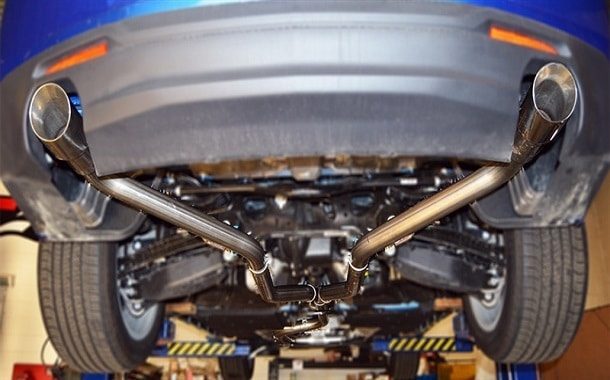
A muffler delete involves removing the muffler from a car’s exhaust system. The muffler is then replaced with a straight section of wider-diameter piping known as a muffler delete pipe.
The goal is to reduce restrictions in the exhaust and increase airflow. This can boost horsepower slightly while also making the exhaust louder when revving the engine or accelerating.
Some drivers enjoy the aggressive rumble and “popping” sounds that occur without a muffler. But it comes with tradeoffs.
Factors that Influence The Cost of a Muffler Delete
Several factors affect how much you’ll pay for parts and labor on a muffler delete:
- Vehicle make and model – More complex systems cost more
- Location and local labor rates – Big cities charge more
- Shop’s reputation and skill – Experts cost more
- Used vs new parts – Used pipes are cheaper
- DIY vs professional install – DIY saves on labor
- Exhaust pipe diameter – Larger pipes cost more
- Taxes – Parts and labor subject to sales tax
The more complex the system and work involved, the more you can expect to pay for parts and installation.
Additional Costs to Factor In
Beyond just the muffler delete itself, you may need to budget for:
- Exhaust repairs if poor welds cause leaks over time – $100+
- Fixes for failed inspections when illegal – $50+
- Tickets for excessive noise violations – $50 to $500+
- Replacing aging exhaust components sooner due to increased wear from a delete
- Buying a new exhaust system if you don’t like the sound
Don’t just think about the one-time installation cost. Long-term ownership costs may be higher with a delete.
Cost to Delete the Muffler on Popular Car Models
Muffler delete pricing can vary quite a bit depending on the make and model. Here are rough estimates for some popular cars:
| Car Model | Cost Range |
|---|---|
| Honda Civic | $130 – $170 |
| BMW 3-Series | $140 – $220 |
| Ford Mustang GT | $180 – $260 |
| Dodge Charger | $140 – $220 |
| Chevy Camaro | $200 – $300 |
| Dodge Challenger | $250 – $400 |
Performance models like the Mustang or Challenger often have larger exhausts and more complex systems, leading to higher delete costs.
What Results and Effects Does a Muffler Delete Have?
Removing the muffler affects a car’s sound as well as performance. Here are some of the notable differences you may notice:
- Louder exhaust tone, more “crackles” and “pops”
- Minimal horsepower gain, around 5 to 15 HP
- Potentially annoying droning while cruising
- Stronger exhaust smell in the cabin
- Failed emissions testing in some cases
Overall, a muffler delete is mostly done for the sound rather than performance gains. Make sure you like the style before deleting your muffler.
Does a Muffler Delete Sound Good?
Opinions vary on how good a muffler delete sounds. Many drivers enjoy the louder, sharper tone when accelerating. But others find it annoying, especially the resonating drone at cruising speeds.
Also read about the cost of window tinting, car alarm, and wheel balancing.
Some tips to get the best sound:
- Certain cars sound better than others with deletes
- Pair it with other mods like intake and headers
- Add resonators to reduce drone
- Adjust driving style to minimize loudness
Take time to listen to examples of your car with a delete before assuming you’ll like the sound. And remember it will be louder to others outside the car.
Will a Muffler Delete Damage the Engine?
Generally, a properly performed muffler delete will not directly damage or ruin the engine. It does not affect the core engine components.
However, there are some potential concerns to note:
- Poor welding could lead to leaks and rust over time
- Removing too much piping can reduce exhaust scavenging
- More debris and dirt may enter the exhaust valves
- Higher exhaust temps may accelerate wear on valves
The minimal power gains also won’t add significantly more stress or load to the engine. But a sloppy install job could result in issues down the road.
Is a Muffler Delete Legal?
Here is the important legal information to know:
- Muffler deletes are illegal in all 50 states
- They violate federal Clear Air Act regulations
- You likely won’t pass vehicle inspections
- Fines for “excessive noise” and mods can be $100+
It’s unlikely you’ll get pulled over or ticketed just for a delete alone. But if you get stopped for another reason and the officer notices, you could face a fine.
The exhaust must meet local noise limits, usually around 95 decibels. Anything louder is subject to penalties. Know your local laws.
Will a Muffler Delete Use More Gas?
 Contrary to popular belief, a muffler delete does not reduce fuel efficiency or gas mileage. The effect on consumption is negligible in most cases.
There are a few reasons why:
- The engine isn’t working much harder after the delete
- The airflow improvements are very minor
- Fuel mapping and injectors remain unchanged
You may notice a small drop in MPG (1 or 2 combined MPG) if you are constantly flooring it to hear the exhaust. But during normal driving, gas usage remains about the same.
What About a Cat-Back Exhaust?
For many drivers, a cat-back exhaust system is preferred over just a muffler delete. This involves replacing everything from the rear catalytic converter back with new larger pipes and a less restrictive muffler.
Benefits of a cat-back include:
- Usually louder than just a delete
- Deeper tone without drone
- More power gains with full system swap
- Easy to pass inspection if legal
A cat-back system typically costs $500 to $1,500 installed depending on the car. The tradeoff is a higher price but a better engineered system.
Muffler Delete Ticket Costs and Fines
If you do get cited for an illegal muffler delete, here are some typical fines to expect:
- $50 to $250 for first offense
- $250 to $500 for repeat offense
- Up to $1,000 in some states for excessive noise
Fines vary widely depending on location. The penalty is usually just a monetary ticket, not jail time or points on a license.
Some states may dismiss the fine if you immediately fix the issue. But ignoring tickets leads to higher penalties. Know your local noise laws.
Is a Muffler Delete Worth It? Pros and Cons of Muffler Deleting
Before you go through this process, weigh the pros and cons of muffler delete:
Potential benefits:
- Aggressive exhaust tone
- A little more power
- Inexpensive way to modify sound
Drawbacks to note:
Drone and noise may be annoying
Higher risk of tickets and failed inspection
Minimal performance improvement
Possible reliability issues long-term
Make sure the sound is exactly what you want before committing. And consider upgrades like a full exhaust system to get increased performance too.
Ways to Save Money on a Muffler Delete
If you want to keep your muffler delete costs down, here are some tips:
- Buy discount parts or aftermarket parts online instead of paying shop markup
- Do it yourself instead of paying shop labor rates
- Ask around for quotes to find the best local rate
- Only delete the muffler, not the whole system
- Have an experienced friend help you install it
- Buy a used muffler delete kit at a fair price instead of new
- Use clamps instead of welding if possible
Getting quotes from several shops and checking online parts pricing lets you find the best deal. Doing the work yourself or with friends saves significantly on labor too.
Bottom Line on Muffler Delete Costs
A muffler delete will typically run $150 to $400 depending on the vehicle and who does the work. Parts, labor rates, related repairs, and legal fines all impact the overall costs over time.
Understanding all the pricing, results, and legal aspects allows you to make an informed choice on whether a muffler delete is beneficial for your needs.

Leave a Reply
Want to join the discussion?Feel free to contribute!