
How Much Does Shower Valve Replacement Cost?
Updated on | Written by Alec Pow
This article was researched using 10 sources. See our methodology and corrections policy.
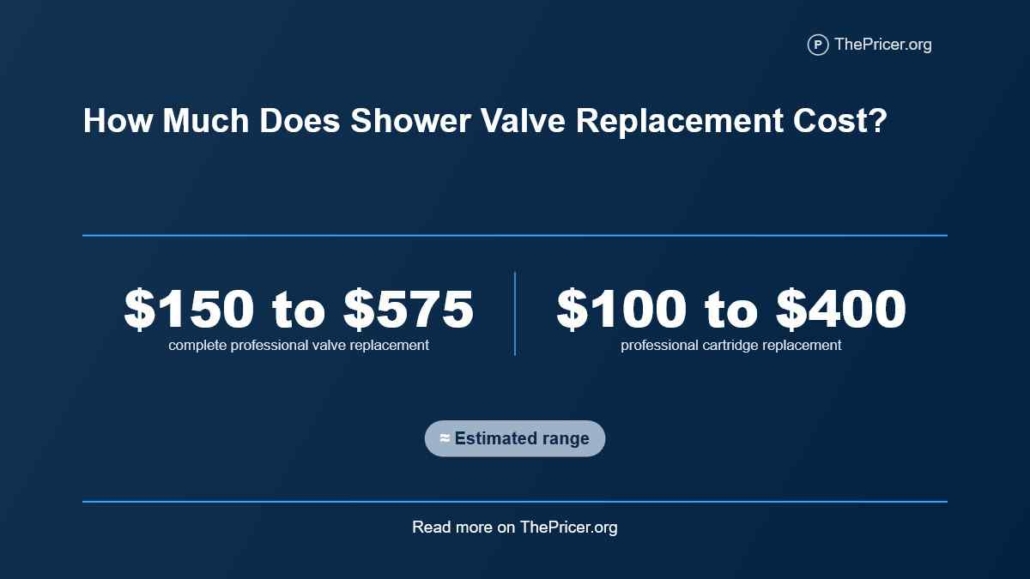
Replacing a complete shower valve currently costs about $150 to $575 for many professional jobs, with national averages around $350 to $400. If the problem is only the cartridge inside the existing valve, professional replacement is usually cheaper at about $100 to $400. Difficult access, damaged plumbing, tile or drywall repair, thermostatic hardware, or a complex diverter system can push a full valve replacement toward $900 or more.
The most important pricing distinction is between replacing a cartridge or other internal part and replacing the entire valve body inside the wall. A cartridge may be accessible after removing the shower handle and trim plate. Replacing the valve body can require opening the wall, cutting and reconnecting plumbing, testing the new connections, and sometimes repairing drywall, tile, or waterproofing afterward.
That difference explains why a relatively inexpensive valve can produce a several-hundred-dollar plumbing bill. Current retail pricing provides a striking example: a Delta RP46074 replacement cartridge costs about $71, while the compatible Delta R10000-UNBX rough-in valve body is currently only $52.90. The complete valve job costs more even though the bare valve body itself costs less.
Article Highlights
Jump to sections
- Professional shower cartridge replacement generally costs about $100 to $400 (at $30 per hour, earning that amount would take about 0.4 to 1.7 full-time workdays, before taxes).
- Complete shower valve replacement commonly costs about $150 to $575, with difficult jobs reaching roughly $900+.
- A current Delta RP46074 cartridge costs $71, while a Delta R10000-UNBX rough-in body costs $52.90.
- The cartridge is therefore about 34.2% more expensive than the bare valve body in that current retail comparison.
- A $52.90 rough-in body represents only about 15.1% of a $350 average professional valve-replacement bill.
- Current cartridge replacement commonly takes about 30 to 60 minutes, but minimum plumber service charges can keep even a quick repair above $100.
- Front-side replacement may be possible in some remodels using a renovation cover plate, so rear-wall access is not universally required.
How Much Does Shower Valve Replacement Cost?
| Repair or replacement | Typical current cost | What is replaced |
|---|---|---|
| DIY cartridge replacement | $40 to $120 (about 1.3 to 4 hours of work at $30 per hour) | Cartridge plus basic tools and supplies |
| Professional cartridge replacement | $100 to $400 | Internal cartridge while existing valve body remains |
| Complete shower valve replacement | $150 to $575 | In-wall mixing or diverter valve assembly |
| Difficult valve replacement | Up to about $900+ | Complex access, premium valve, plumbing modification, or wall work |
| General plumber labor | About $45 to $150 per hour | Before materials and possible minimum service charges |
Current 2026 Angi shower-valve data puts complete replacement at $150 to $550, with an average around $350. Current HomeGuide estimates place the typical range at $225 to $575 and report projects reaching approximately $900.
For a cartridge alone, Angi’s current cartridge data gives a national average around $275 and a usual professional range of $100 to $400.
Cartridge vs Complete Valve Replacement

A shower cartridge sits inside the valve body. Depending on the design, it controls or helps regulate water temperature, flow, or pressure balance. When the cartridge wears out, a plumber may be able to remove the handle and trim, pull the old cartridge, install the correct replacement, and reassemble the shower without disturbing the plumbing in the wall.
The valve body is different. It is the permanent plumbing assembly connected to the hot and cold supply pipes behind the shower wall. Replacing it can require cutting the existing connections and installing a new rough-in valve.
This distinction matters because symptoms such as dripping, difficult temperature control, a stiff handle, or inconsistent flow do not automatically mean the entire valve body is bad. A cartridge repair may solve the problem for hundreds of dollars less and with much less disruption.
Current cartridge repair pricing puts the part alone at roughly $10 to $80 (about 0.3 to 2.7 hours of work at $30 per hour) for many common cartridges, with professional labor bringing the total to about $100 to $350.
$53 Valve Can Cost $350 to Replace
Current retail pricing exposes something that generic plumbing price guides rarely make obvious.
Home Depot currently lists the Delta RP46074 shower cartridge at $71.
The compatible Delta R10000-UNBX rough-in valve body currently costs only $52.90.
The cartridge therefore costs:
($71 – $52.90) ÷ $52.90 = 34.2% more than the bare valve body
Yet the current average professional cartridge job is around $275, while a complete valve replacement averages roughly $350 in Angi’s national data.
Now compare the hardware with those project totals.
$71 ÷ $275 = 25.8%
In this illustrative comparison, the cartridge represents about 25.8% of the average cartridge-replacement bill.
For the complete valve:
$52.90 ÷ $350 = 15.1%
The bare rough-in body represents only about 15.1% of the average complete-replacement bill.
That does not mean the remaining 84.9% is pure labor. A real replacement may include fittings, pipe, soldering or connection supplies, trim-related parts, service charges, disposal, and other materials. But it demonstrates why shopping for a cheap $50 valve does not turn the project into a $100 repair. The expensive part is often gaining access, disconnecting the plumbing, installing the new valve correctly, testing it, and closing the wall.
Shower Cartridge and Valve Prices
Exact parts are highly brand and model specific. A cartridge that looks similar may not fit your valve.
Current retail examples include:
- Moen 1222 Posi-Temp pressure-balancing cartridge: $71.68
- Delta RP46074 cartridge: $71.00
- Delta RP19804 cartridge: $74.60
- Kohler GP876851 Rite-Temp kit: $59.67
- Kohler RGP800820 pressure-balancing cartridge: $66.88
- Kohler GP800881 pressure-balance cartridge: $47.35
- Kohler 28305-NA thermostatic cartridge: $164.47
The $164.47 Kohler thermostatic cartridge is a useful reminder that advanced temperature-control systems can cost considerably more than basic pressure-balancing cartridges.
Complete rough-in hardware also varies. The standard Delta R10000-UNBX is currently $52.90, the version with screwdriver stops is about $72.90, and more complex integrated-diverter rough-ins can cost substantially more. Trim, handles, showerheads, and diverter controls may be sold separately.
Wall Access Can Change the Bill
Access is one of the biggest cost variables in complete valve replacement. If there is already a service panel behind the shower, the plumber may be able to reach the valve without damaging a finished wall.
Opening ordinary drywall in an adjacent room can also be relatively straightforward. It is often less expensive and less risky than removing tile and disturbing the shower’s waterproofing system.
Rear access is not the only possibility. Some shower conversions can be performed from the shower side by enlarging the existing opening and covering it with a compatible remodel plate. Delta’s RP29827 renovation cover plate, for example, is designed for conversions from older two- or three-handle configurations and measures roughly 8-1/8 inches by 13 inches.
Home Depot currently lists the chrome version of that renovation plate at about $41.32, while stainless is around $104.99. Those parts can be cheaper than reconstructing a larger finished opening when the specific valve and trim combination allows their use.
If your project also involves major wall restoration, compare the broader cost to tape and mud drywall. A bathroom renovation involving more extensive enclosure work may also overlap with the cost of a Bath Fitter project.
Labor, Service Calls, and Installation
A normal cartridge replacement often takes roughly 30 minutes to one hour. That does not mean the bill will equal half an hour of a plumber’s advertised hourly rate.
Current plumber pricing runs about $45 to $150 per hour, with many companies charging a minimum service or call-out fee of roughly $50 to $200. That minimum is why a quick cartridge replacement can still cost $150, $200, or more.
A complete valve replacement can take several hours once setup, access, pipe cutting, installation, leak testing, and reassembly are included. Corroded fittings, cramped access, old galvanized plumbing, or incompatible pipe connections can extend the job considerably.
Homes with aging metal supply lines may discover that the valve repair exposes a larger plumbing problem. If that happens, see the broader cost of replacing galvanized pipes before assuming the valve quote covers all necessary plumbing work.
Three Shower Valve Cost Scenarios
Case 1: Straightforward cartridge failure
The existing valve body is sound and accessible from the shower side. A plumber replaces a standard cartridge. Using the current national average, the homeowner spends about $275. No wall repair is required.
Case 2: Complete valve with easy rear access
The cartridge is not the problem and the entire valve body needs replacement. An existing access panel exposes the plumbing. A standard rough-in body costs around $50 to $75, and the total professional job lands near the current $350 average.
Case 3: Valve behind finished tile with plumbing changes
There is no useful rear access, the existing opening is inadequate, and the replacement requires plumbing modification plus wall or tile restoration. The plumbing portion can move toward the upper end of the $575 normal range or the roughly $900+ territory reported for more difficult jobs, with finish repairs potentially billed separately.
Repair or Replace the Shower Valve?
Replacement of the entire valve body is more likely when the body itself is cracked, badly corroded, leaking at an inaccessible connection, incompatible with the desired trim, or no longer supports available repair components.
A cartridge or internal repair is more likely when the valve body and plumbing connections remain intact but the shower drips, the handle becomes difficult to operate, temperature control becomes erratic, or pressure-balancing performance deteriorates.
Do not buy a cartridge based only on appearance. Cartridges are usually specific to the manufacturer and valve generation. Removing the handle and trim can reveal identifying marks, but an older valve may require model research or help from a plumbing supplier.
Before purchasing a part, also check the manufacturer’s warranty. Some faucet manufacturers provide long parts warranties to qualifying original residential owners, which can reduce the hardware cost substantially even though professional labor remains chargeable.
Permits and Other Hidden Costs
A cartridge replacement or ordinary repair generally does not require the same permitting process as plumbing alterations. Complete in-wall valve replacement may trigger local requirements depending on the jurisdiction and whether supply piping is changed.
There is no useful national $260 permit fee. Current general plumbing permit estimates span roughly $30 to $500, and requirements vary locally. Ask the plumber or local building department whether a permit applies before assuming one is required.
Other possible hidden costs include drywall patching, tile work, waterproofing repair, a renovation cover plate, upgraded trim, new shutoff fittings, pipe adapters, disposal, or an after-hours service surcharge.
A home warranty may cover some plumbing failures under certain contracts, but coverage depends on the agreement, service fee, exclusions, and cause of failure. It should be checked before authorizing work rather than assumed as a standard discount.
Answers to Common Questions
How much does it cost to replace a shower valve?
A complete professional shower valve replacement commonly costs about $150 to $575. Straightforward national averages are around $350 to $400, while difficult access and complex plumbing can push the job toward $900 or more.
How much does it cost to replace only the shower cartridge?
Professional cartridge replacement generally costs about $100 to $400, with a current national average around $275. DIY parts and basic tools may cost roughly $40 to $120.
Does a dripping shower mean I need a whole new valve?
No. A worn cartridge, seals, springs, or other internal components may cause a drip while the valve body remains usable. Diagnose the internal components before replacing the entire in-wall assembly.
Can a shower valve be replaced without opening the back wall?
Sometimes. Some installations can be accessed through an existing panel, while certain remodels can use a larger front opening and compatible renovation plate. Other installations require access through drywall or removal of finished shower material.
Why does replacing a shower valve cost so much if the part is cheap?
The valve itself may represent a small portion of the project total. In our current Delta example, a $52.90 rough-in body equals only about 15.1% of a $350 average professional replacement. Access, plumbing labor, fittings, testing, and wall-related work make up much of the remaining project cost.
How long does a shower cartridge replacement take?
A straightforward cartridge replacement commonly takes about 30 to 60 minutes. A stuck cartridge, corrosion, unusual valve design, or trouble identifying the correct part can extend the job.
Disclosure: Educational content, not financial advice. Prices reflect public information as of the dates cited and can change. Confirm current rates, fees, taxes, and terms with official sources before purchasing. See our methodology and corrections policy.