ThePricer Media
  • Latest: The Cost to Cool an AI Data Center
    • New: How Much Will Gas Prices Rise After the Iran Strikes?
  • Daily Price Puzzle (60s)
  • Talk to Alec
  • Blog
  • Podcast
  • eBook
  • Click to open the search input field Click to open the search input field Search
  • Menu Menu
Medical Topics, Health & Beauty

How Much Does Shoulder SLAP Tear Surgery Cost?

Updated on June 28, 2026 | Written by Alec Pow
This article was researched using 7 sources. See our methodology and corrections policy.

Shoulder SLAP tear surgery usually costs about $12,000 to $40,000+ without insurance when billed as arthroscopic shoulder surgery with labral repair. A lower-priced outpatient surgery center may quote closer to $12,000 to $25,000, while a hospital outpatient department can reach $25,000 to $40,000+ once facility, surgeon, anesthesia, implants, and recovery charges are included.

With insurance, the patient cost is often much lower, but it can still be $500 to $6,000+ depending on deductible, copay, coinsurance, out-of-pocket maximum, network status, prior authorization, and whether the plan approves the repair as medically necessary. A patient who has not met a high deductible may pay several thousand dollars even when the surgery is covered.

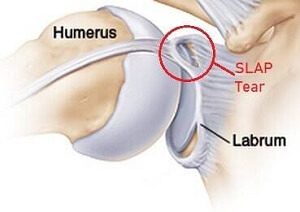
A SLAP tear is a tear of the superior labrum anterior and posterior, the upper part of the shoulder labrum where the long head of the biceps tendon attaches. The surgery is usually done with shoulder arthroscopy, small incisions, an arthroscope, suture anchors, and miniature instruments. Some patients need SLAP repair, while others need debridement, biceps tenodesis, or biceps tenotomy depending on age, activity level, tear pattern, and biceps tendon involvement.

Article Highlights

Jump to sections
  • SLAP Tear Surgery Cost With And Without I…
  • What A SLAP Tear Is In Plain Terms
  • Procedure Type Changes The Bill
  • Imaging, Diagnosis, And Pre-Surgery
  • Insurance, Prior Authorization
  • Good Faith Estimates
  • Recovery, Physical Therapy
  • Without insurance: SLAP tear surgery usually costs $12,000 to $40,000+ (at $30 per hour, earning that amount would take about 2.3 to 7.7 months of full-time work, before taxes), depending on the facility and repair type.
  • With insurance: Out-of-pocket costs can be $500 to $6,000+, depending on deductible, coinsurance, copay, network status, and authorization.
  • Common billing pieces: Facility fee, surgeon fee, anesthesia, arthroscopy supplies, suture anchors, sling, medications, follow-up visits, and physical therapy.
  • Before surgery: Many patients pay for X-rays, MRI or MR arthrogram, orthopedic visits, injections, and physical therapy before a repair is approved.
  • After surgery: A sling is often used for 2 to 6 weeks, and rehab can continue for months before full return to sport or overhead work.
Slap Tear Surgery Cost

SLAP Tear Surgery Cost With And Without Insurance

The largest cost difference is the facility. An ambulatory surgery center can be cheaper than a hospital outpatient department because the overhead is lower. A hospital may cost more if the case needs extra resources, if the patient has medical risk factors, or if the hospital has higher negotiated rates with insurers.

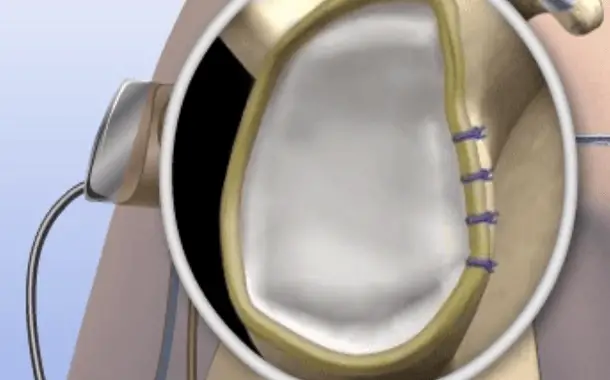
AAOS says shoulder arthroscopy uses a small camera called an arthroscope and miniature instruments to see and treat problems inside the joint through small incisions. For a SLAP injury, AAOS says the surgeon may remove a torn piece of labrum, reattach the labrum with sutures, or release the biceps tendon attachment in some cases through its SLAP tear treatment guide.

Cost item Common price range What it covers
Orthopedic consultation $150 to $500+ (about 0.6 to 2.1 full-time workdays at $30 per hour) Exam, history, range of motion, strength, stability review
X-ray before MRI $100 to $1,000+ Rules out fracture, arthritis, dislocation, or bone changes
MRI or MR arthrogram $700 to $3,500+ Soft-tissue imaging, contrast injection when ordered
Physical therapy before surgery $65 to $200+ per session Range of motion, rotator cuff strengthening, scapular control
Outpatient SLAP repair surgery $12,000 to $25,000 Lower-cost ASC setting, facility, surgeon, anesthesia, supplies
Hospital outpatient SLAP repair $25,000 to $40,000+ Hospital facility fee, surgeon, anesthesia, implants, recovery
Post-op physical therapy $1,500 to $6,000+ Often many visits over several months

A realistic self-pay example looks like this: $1,200 for imaging and orthopedic visits, $18,000 for arthroscopic labral repair at an outpatient surgery center, $900 for anesthesia, $250 for sling and medications, and $3,000 for physical therapy. The total is about $23,350. A hospital outpatient version of the same case may cost much more because the facility fee can be higher.

Related guides

  • How Much Does Meniscus Tear Surgery Cost?
  • How Much Does a Vitrectomy Cost?
  • How Much Does Achilles Tendon Surgery Cost?

What A SLAP Tear Is In Plain Terms

The shoulder is a ball-and-socket joint. The humerus is the upper arm bone, the glenoid is the shoulder socket, and the labrum is a rim of cartilage that deepens the socket and helps stabilize the joint. AAOS explains that the labrum also serves as an attachment point for shoulder ligaments and for one of the biceps tendons.

SLAP stands for superior labrum anterior and posterior. The tear happens at the top of the labrum and can extend from the front to the back around the biceps anchor. The biceps tendon may be stable, frayed, pulled, or partly involved in the injury. That detail changes both treatment and cost.

Cleveland Clinic says SLAP tears can happen from injury, overuse, or aging, and that some are treated with rest and physical therapy while others may need surgery. Its SLAP tear overview also notes that recovery can take up to six months to a year. That recovery window is why the full cost should include rehab and time away from work, not only the operating room bill.

Procedure Type Changes The Bill

A SLAP repair is not always the same operation. During arthroscopy, the surgeon may find fraying, a detached biceps anchor, a bucket-handle tear, rotator cuff damage, shoulder instability, a Bankart lesion, cartilage wear, or biceps tendon disease. The final procedure can change after the surgeon sees the joint clearly.

A simple debridement removes frayed or unstable tissue and may cost less than a repair with anchors. A SLAP repair uses sutures and anchors to reattach the labrum to the glenoid. Biceps tenodesis moves the biceps tendon attachment away from the torn labrum and fixes it to the humerus. Biceps tenotomy releases the tendon without the same fixation step. Older patients or patients with biceps tendon pain may be steered away from classic SLAP repair and toward a biceps procedure.

HSS describes SLAP tears as one of the common shoulder labral tear types and says surgery may be needed when symptoms worsen or do not improve after physical therapy. Its shoulder labrum tear guide also notes that athletes may need six months to one year for full recovery, especially overhead athletes.

Imaging, Diagnosis, And Pre-Surgery

Before surgery, the patient may pay for an orthopedic exam, X-rays, MRI, MR arthrogram, medication, injection, and physical therapy. X-rays do not show the labrum well, but they can rule out fractures, arthritis, and other shoulder problems. MRI can show soft tissue better, and AAOS says an MRI arthrogram may be needed for a SLAP tear because dye is injected into the shoulder before the scan.

RadiologyInfo explains that direct arthrography injects contrast material into the joint, and MR arthrography uses contrast to outline structures such as cartilage, labrum, ligaments, and bones for evaluation through its direct arthrography guide. That is why an MR arthrogram can cost more than a plain shoulder MRI.

Pre-surgery physical therapy is not just a cost hurdle. AAOS says nonsurgical treatment is the first treatment in most SLAP injuries and may include NSAIDs, corticosteroid injections, and physical therapy for 3 to 6 months. Insurance plans may require proof of failed conservative care before approving surgery.

Insurance, Prior Authorization

Insurance coverage depends on medical necessity, network status, diagnosis, procedure code, facility, and prior authorization. A covered SLAP repair can still be expensive if the deductible has not been met. A patient with 20% coinsurance on a $25,000 (about 4.8 months of full-time work at $30 per hour) allowed amount could owe $5,000 unless the out-of-pocket maximum limits the bill.

HealthCare.gov defines the out-of-pocket maximum as the most a patient pays in a plan year for covered in-network services after deductibles, copayments, and coinsurance. For 2026 Marketplace plans, the individual out-of-pocket limit cannot be more than $10,600, though many employer plans have different designs.

Ask the insurer for the allowed amount, not only whether the surgery is covered. The useful questions are whether the surgeon is in network, whether the surgery center or hospital is in network, whether anesthesia is in network, whether prior authorization is approved, whether physical therapy is limited by visit count, and whether the diagnosis supports surgery.

Good Faith Estimates

Self-pay patients should ask for written estimates from every billing party. CMS says patients who do not have insurance or choose not to use it usually must receive a good faith estimate when care is scheduled at least three business days in advance, or when they ask for one. CMS also says a patient may be able to dispute a bill if it is at least $400 more than the estimate from that provider.

The good faith estimate should include expected charges for the surgery, facility fee, hospital fee, surgeon fee, anesthesia, supplies, implants, and supporting care when available through the CMS medical bill rights page. CMS notes that estimates may come from more than one provider or facility, so a shoulder surgery patient may need separate estimates from the surgeon, surgery center or hospital, anesthesiologist, imaging center, and physical therapy clinic.

Medicare also has a public procedure price lookup for outpatient services. A patient can use it as a reference after getting the exact procedure name or billing code from the surgeon’s office, but private insurance and cash prices can be far higher or lower than Medicare amounts.

Recovery, Physical Therapy

The post-op cost can be large because rehab is long. AAOS says a sling is often used for 2 to 6 weeks after surgery, depending on the injury and procedure. It also says therapy first focuses on flexibility, then adds strengthening of the shoulder muscles and rotator cuff around 6 to 10 weeks after surgery, with throwing athletes often starting early interval throwing around 3 to 4 months.

A patient who attends physical therapy twice a week for 12 weeks has 24 visits. At $100 per visit, that is $2,400. At $175 per visit, it is $4,200. Some patients need fewer visits, and some athletes or workers with overhead demands need more.

Time away from work depends on job demands. A desk worker may return sooner with the arm protected. A mechanic, nurse, warehouse worker, painter, police officer, athlete, or construction worker may need more time because lifting, pushing, pulling, reaching, and overhead work can stress the repair.

When Surgery Makes Sense

Surgery is usually considered after pain, weakness, catching, instability, or sport limits remain after nonsurgical care. It may make more sense for a younger overhead athlete with a clear traumatic tear, a detached biceps anchor, or persistent loss of throwing performance. It may be less appealing for an older patient with degenerative fraying, rotator cuff disease, arthritis, or pain that improves with therapy.

The surgeon should explain whether the plan is SLAP repair, biceps tenodesis, tenotomy, debridement, or a combined repair. Ask what would happen if the arthroscopy shows a rotator cuff tear, Bankart tear, frozen shoulder, arthritis, or biceps tendon damage. Those findings can change the operation and the bill.

This article is for cost planning, not medical advice. A patient should use the orthopedic surgeon, physical therapist, insurer, and facility estimate to decide whether surgery is the right next step.

SLAP tear Explained

Related Costs To Compare

Shoulder SLAP repair sits inside a larger group of orthopedic surgery costs. A patient comparing outpatient surgery bills may also look at hand surgery costs and finger surgery costs because those bills also split into surgeon, facility, anesthesia, imaging, and therapy charges.

Imaging can be a separate pain point before surgery. If the surgeon orders a standard MRI or an MR arthrogram, compare that estimate with the broader guide to MRI scan costs. The imaging center, radiologist, contrast injection, and insurance network can all change the amount paid.

Answers to Common Questions

How much does SLAP tear surgery cost without insurance?

SLAP tear surgery usually costs about $12,000 to $40,000+ without insurance. An outpatient surgery center may be closer to $12,000 to $25,000, while a hospital outpatient department can cost more.

How much does SLAP tear surgery cost with insurance?

Insured patients may pay $500 to $6,000+, depending on deductible, copay, coinsurance, out-of-pocket maximum, network status, and whether the surgery is approved as medically necessary.

Is SLAP tear surgery outpatient?

Many SLAP repairs are done as outpatient shoulder arthroscopy. A routine multi-day hospital stay is not the normal expectation for many arthroscopic cases, though medical issues or added procedures can change the plan.

Does every SLAP tear need surgery?

No. AAOS says initial treatment is nonsurgical in most cases. Rest, anti-inflammatory medicine, corticosteroid injection, and physical therapy may be tried before surgery.

What extra costs come after surgery?

Common post-op costs include a sling, medications, follow-up visits, physical therapy, missed work, and sometimes extra imaging or injections if recovery is slow.

What is the difference between SLAP repair and biceps tenodesis?

SLAP repair reattaches the torn labrum. Biceps tenodesis moves the biceps tendon attachment away from the torn labrum and fixes it to the upper arm bone. The surgeon chooses based on age, activity level, tear type, and biceps tendon condition.

How long is recovery after SLAP tear surgery?

Recovery varies, but many patients use a sling for 2 to 6 weeks and continue physical therapy for months. Overhead athletes may need 6 months to 1 year to return fully.

Disclosure: Educational content, not medical advice. Pricing varies by provider, location, and insurance. Confirm eligibility, coverage, and out-of-pocket costs with a licensed clinician and your insurer. See our methodology and corrections policy.

by Alec Pow
ThePricer cost research Independent price research used by media, universities and public institutions.

We research provider pricing, market examples, buyer reports, hidden fees and public records.

Methodology · Citations · Newsroom
© 2014 - 2026 - ThePricer Media, LLC, 4 Grove Street, New York, NY, 10014, Phone: (212) 431-2441
We don’t use affiliate links or paid placements. All sources are cited only for verification.
  • Link to X
  • Link to LinkedIn
  • Link to Facebook
  • Link to Instagram
  • Link to Pinterest
  • Link to Youtube
  • Contact Us
  • About Us
  • Press & Mentions
  • Careers
  • Meet the Founder
  • Privacy Policy
  • Editorial Ethics
  • Methodology
  • Corrections
  • Disclosure
  • Terms and Conditions
Scroll to top Scroll to top Scroll to top