ThePricer Media
  • Latest: The Cost to Cool an AI Data Center
    • New: How Much Will Gas Prices Rise After the Iran Strikes?
  • Daily Price Puzzle (60s)
  • Talk to Alec
  • Blog
  • Podcast
  • eBook
  • Click to open the search input field Click to open the search input field Search
  • Menu Menu
Building and Construction, Family & Lifestyle, Home and Garden

How Much Does Temporary Fence Rental Cost?

Updated on June 30, 2026 | Written by Alec Pow
This article was researched using publicly available sources. See our methodology and corrections policy.

Temporary fence rental usually costs about $1 to $3.50 per linear foot per month for basic temporary chain-link panels, before delivery, pickup, installation, gates, privacy screen, sandbags, and other add-ons. Most small construction or event rentals cost $500 to $2,500+ total once minimum rental charges, labor, delivery, setup, and accessories are included.

Crowd-control barricades for a short event are usually priced differently. Metal pedestrian barricades, also called bike-rack barricades, often cost about $5 to $20 per barricade per day, with delivery, pickup, labor, and minimum-order fees added. A one-day barricade rental for a small event can still cost $300 to $1,500+ if the company has to deliver, set up, remove, and pick up the barriers.

The final price depends on the length of fence, rental period, fence type, height, delivery distance, setup labor, site access, terrain, wind exposure, number of gates, privacy screen, sandbags, braces, locks, damage waiver, permits, and whether the fence is used for construction, demolition, crowd control, parking, storage, emergency response, or an outdoor event.

Article Highlights

Jump to sections
  • Does Temporary Fence Rental Cost?
  • Cost Per Linear Foot
  • Chain-Link Panels vs Barricades
  • Cost By Fence Type
  • Delivery, Pickup, Setup
  • Accessories That Raise The Price
  • Construction Site Temporary Fence
  • Monthly chain-link rental: Basic temporary fence panels usually cost $1 to $3.50 per linear foot per month.
  • Small project total: A 100-foot rental often costs about $500 to $1,200+ (at $30 per hour, earning that amount would take about 0.4 to 1 full-time workweeks, before taxes) after delivery, setup, and pickup.
  • Medium project total: A 250-foot temporary fence job often costs about $900 to $2,500+.
  • Large construction site: A 500- to 1,000-foot site can cost $1,500 to $6,000+ per month, depending on setup and accessories.
  • Event barricades: Crowd-control barricades often cost $5 to $20 per barricade per day, plus delivery and labor.
Temporary Fence Rental Cost

How Much Does Temporary Fence Rental Cost?

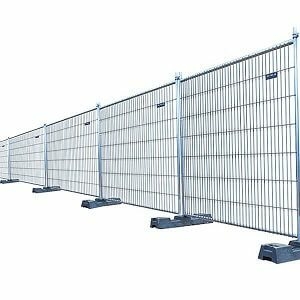
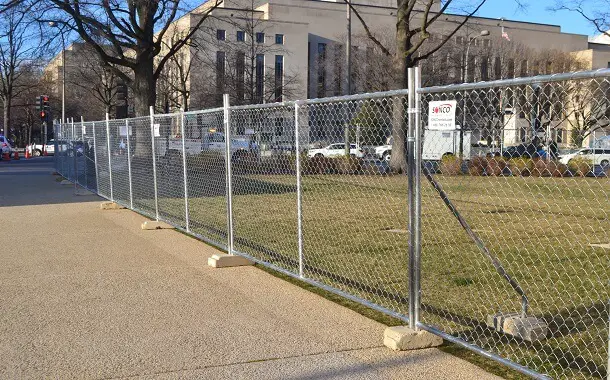
Temporary fencing is usually quoted by linear foot, panel count, rental period, and service scope. A standard temporary chain-link panel is commonly around 6 feet high and 10 to 12 feet long, so a 120-foot run may need about 10 to 12 panels, plus bases, clamps, and possibly sandbags or braces.

The table below gives practical planning ranges. A local quote may be higher if the company has a minimum rental charge, the site is far away, the fence needs privacy screen, the ground is sloped, or the job requires gates and extra bracing.

Temporary fence project Typical rental cost What it usually includes
Small 50-foot rental $300 to $800+ (about 1.3 to 3.3 full-time workdays at $30 per hour) Short event area, small repair zone, dumpster enclosure, or restricted walkway
100-foot rental $500 to $1,200+ Small construction site, backyard work area, temporary pool barrier, or event queue
250-foot rental $900 to $2,500+ Small commercial site, demolition zone, parking lot section, or event perimeter
500-foot rental $1,500 to $4,000+ Larger construction site, storage yard, festival boundary, or worksite security
1,000-foot rental $3,000 to $6,000+ Large construction site, industrial project, large event perimeter, or staging area
Short event barricades $300 to $1,500+ Pedestrian barriers, crowd-control barricades, delivery, setup, and pickup

A simple example: renting 120 linear feet of temporary chain-link fencing at $2 per foot for one month costs $240 for the fence itself. Add $250 for delivery and pickup, $250 for setup and removal, and $150 for bases, clamps, and sandbags. The total is about $890.

Related guides

  • How Much Does An Electric Fence Cost?
  • How Much Does It Cost to Install a Manual Transfer Switch?
  • How Much Does It Cost to Build a Detached Garage?

Cost Per Linear Foot

The cleanest way to compare quotes is by linear foot. Basic above-ground temporary chain-link panels usually cost about $1 to $3.50 per linear foot per month. Short rentals, rush jobs, downtown deliveries, difficult sites, and small orders often cost more per foot because the company still has to send a truck and crew.

In-ground temporary fencing, where posts are driven into the ground, can cost more upfront because installation takes longer and may require utility marking. It can be more stable than panel fencing for longer construction projects, but it is not always allowed on paved surfaces, parking lots, sidewalks, or event sites.

Privacy screen, windscreen, gates, braces, and sandbags are usually extra. A quote that looks cheaper per foot can become more expensive if the accessories are priced separately.

Chain-Link Panels vs Barricades

Temporary chain-link fence panels are used when the goal is to enclose a site, keep the public out, protect materials, control access, or create a security perimeter. They are common around construction sites, demolition projects, vacant lots, outdoor storage, utility work, festivals, and disaster-response areas.

Crowd-control barricades are lower metal barriers used to guide people, protect lines, separate queues, block streets, or create pedestrian lanes. They are common at concerts, parades, races, fairs, stadium events, political rallies, school events, and parking lots.

Orange safety fence is a lighter visual barrier used around landscaping, hazards, excavations, and low-security areas. It is cheaper than chain-link panels, but it does not provide the same security, privacy, or crowd-control strength.

Cost By Fence Type

Not all temporary fencing does the same job. A demolition site needs a stronger barrier than a small backyard project. A music festival may need barricades, vehicle gates, privacy screen, and pedestrian-control lanes. A construction site near a sidewalk may need bracing and public-safety routing.

Fence or barrier type Typical cost Best use
Temporary chain-link panels $1 to $3.50 per linear foot per month Construction, demolition, storage, site security, general perimeter
In-ground temporary chain-link fence $2 to $5+ per linear foot per month Longer projects, better stability, dirt or soft ground sites
Crowd-control barricades $5 to $20 (about 10 to 40 minutes at $30 per hour) per barricade per day Events, queues, pedestrian lanes, parades, festivals, races
Orange safety fence $0.25 to $1.50 per linear foot Light hazard marking, landscaping, low-security temporary boundaries
Privacy screen or windscreen $0.50 to $2.50+ per linear foot Privacy, dust control, visual screening, construction-site appearance
Vehicle gate $100 to $500+ Truck access, delivery access, equipment entry, jobsite control
Pedestrian gate $50 to $250+ Worker entrance, event check-in, controlled foot traffic

A basic chain-link rental is usually the best value for construction and storage. Barricades are better for crowds. Privacy screen is useful when the public can see the work area, but it increases wind load, so the fence may need sandbags, braces, or a different layout.

Delivery, Pickup, Setup

Delivery and pickup can cost about $150 to $600+, depending on distance, truck access, fuel, tolls, city traffic, loading time, and minimum charges. A rural site far from the rental yard can cost more than a city site near the company’s route.

Setup and removal can cost about $200 to $1,000+, depending on fence length, gates, ground conditions, slope, obstacles, braces, privacy screen, and how much hand-carrying is needed. A flat parking lot is easier than a muddy jobsite with debris and uneven ground.

Some companies bundle delivery, setup, removal, and pickup into one quote. Others show them as separate line items. Ask whether the price includes both installation and removal, not only delivery.

Accessories That Raise The Price

Temporary fencing often needs accessories. Panel bases, fence feet, clamps, couplers, sandbags, braces, locks, hinges, gates, privacy screen, windscreen, debris netting, signage, handrails, and anti-climb panels can all change the quote.

Sandbags and braces matter most when the fence has privacy screen, sits in a windy area, or protects a public walkway. Privacy screen catches wind like a sail, so it should not be added without thinking about stability.

Locks and gates are important for construction sites, storage yards, and equipment areas. A cheap fence line without a proper gate may save money upfront but create daily access problems for workers, deliveries, inspectors, and emergency responders.

Construction Site Temporary Fence

Construction sites often use temporary chain-link fencing to control access, separate the public from hazards, protect materials, and reduce theft. Common uses include home builds, remodels, commercial construction, demolition, excavation, utility work, roadwork, and vacant-property security.

A small residential remodel may need 100 to 200 feet of fence and cost about $500 to $1,800+ for the first month. A commercial project may need 500 to 1,000 feet and cost about $1,500 to $6,000+ per month, depending on the site.

Construction jobs may also need pedestrian gates, vehicle gates, privacy screen, warning signs, locks, braces, and relocation during the project. If the fence has to be moved several times as work progresses, ask whether relocation is included or billed separately.

Event Fence And Barricade Rental

Events use temporary fencing for ticket lines, VIP areas, beer gardens, backstage areas, parking lots, vendor zones, race routes, parade routes, crowd separation, and restricted areas. The right product may be bike-rack barricades, temporary chain-link panels, privacy screen, or a mix of all three.

A small event may spend $300 to $1,500+ on barricades, while a larger festival, concert, race, or outdoor event can spend $2,000 to $15,000+ on fencing and crowd-control equipment. Security staffing, police details, traffic control, porta potties, lighting, generators, and signage are separate event costs.

Event pricing is often daily or weekend-based rather than monthly. The company may charge for delivery, setup, strike, late-night pickup, weekend pickup, rush delivery, and damaged barriers.

Permit, Insurance, And Safety

Some cities require permits when temporary fencing blocks a sidewalk, street, alley, public right-of-way, parking lane, or pedestrian route. A permit may also be needed for construction fencing, street closures, events, and demolition projects. Permit fees can range from $25 to $500+, depending on location and scope.

Insurance may be required for events, construction sites, and public-space use. A venue, city, landlord, or rental company may ask for a certificate of insurance. The rental company may also offer or require a damage waiver.

Safety planning matters. A fence that tips over can injure people, damage cars, block exits, or create liability. Temporary fencing should not block emergency access, fire lanes, accessible routes, exits, hydrants, traffic sightlines, or required pedestrian paths.

Temporary Fence vs Permanent Fence

Temporary fencing is cheaper when the need is short-term. It works well for events, construction, demolition, storage, crowd control, and temporary security. It can be delivered, moved, and removed after the job.

Permanent fencing is better when the property needs long-term privacy, security, pets, children, pool safety, or property-line control. Permanent chain-link, wood, vinyl, aluminum, corrugated metal, or barbed-wire fencing costs more to install but stays in place.

If the project might last more than a year, compare rental cost with permanent fence installation. A long rental can eventually cost as much as installing a basic permanent fence, especially if the site needs privacy screen, gates, and repeated relocations.

How To Measure For A Quote

Start by measuring the perimeter in linear feet. A rough sketch helps. Mark gate locations, vehicle access, pedestrian access, sidewalks, slopes, trees, hydrants, utility boxes, dumpsters, material storage, portable toilets, and areas that need privacy screen.

Count access points carefully. A construction site may need one vehicle gate and one pedestrian gate. An event may need separate entrances, exits, emergency lanes, vendor access, VIP access, and staff-only areas.

Send photos to the rental company. Photos of the ground, access roads, parking, slopes, curbs, tight corners, and obstructions can make the quote more accurate and reduce surprise labor charges.

How To Save Money

Rent only the length you need. A clean layout with fewer corners, fewer gates, and a simple perimeter is cheaper than a complicated layout with many turns and access points.

Choose monthly pricing for longer jobs. Daily event pricing can be expensive if a project unexpectedly stretches into weeks. Ask the company when monthly pricing becomes cheaper than daily or weekly pricing.

Skip privacy screen unless it is needed. It adds material cost and can require more sandbags or bracing. Use it only where public visibility, dust, aesthetics, or security justify the extra cost.

Group delivery with other rentals when possible. Some companies rent temporary fencing, barricades, portable toilets, storage containers, temporary power, and restroom trailers. Bundling can reduce delivery and coordination costs.

Temporary Fencing

Related Fence Costs

If the old fence must come down before temporary fencing is installed, compare the job with fence removal costs. Removal, hauling, and disposal can be separate from the rental quote.

If the property needs a long-term barrier instead of a rental, compare temporary fencing with permanent options such as a chain-link fence, corrugated metal fence, or barbed-wire fence.

Answers to Common Questions

How much does temporary fence rental cost?

Temporary fence rental usually costs about $1 to $3.50 per linear foot per month for basic chain-link panels. Most small projects cost $500 to $2,500+ after delivery, pickup, setup, gates, and accessories.

How much does 100 feet of temporary fence cost?

A 100-foot temporary fence rental often costs about $500 to $1,200+ for the first month after minimum charges, delivery, setup, pickup, and basic accessories are included.

How much does 500 feet of temporary fence cost?

A 500-foot temporary fence rental often costs about $1,500 to $4,000+ per month, depending on delivery, setup, gates, privacy screen, sandbags, bracing, and site access.

How much do crowd-control barricades cost to rent?

Crowd-control barricades often cost about $5 to $20 per barricade per day, plus delivery, pickup, setup, removal, and minimum-order fees.

Are delivery and installation included?

Sometimes. Some companies bundle delivery, setup, removal, and pickup into the quote, while others list those charges separately. Always ask whether the price includes installation and removal, not just delivery.

What accessories cost extra?

Common extras include gates, locks, clamps, couplers, panel feet, sandbags, braces, privacy screen, windscreen, debris netting, warning signs, and handrails.

Is temporary fence cheaper than permanent fence?

Temporary fencing is usually cheaper for short-term use. Permanent fencing can be cheaper over time if the fence will be needed for many months or years.

Do I need a permit for temporary fencing?

You may need a permit if the fence blocks or affects a sidewalk, street, public right-of-way, parking lane, event route, construction site, or pedestrian access. Requirements vary by city and project.

Disclosure: Educational content, not financial advice. Prices reflect public information as of the dates cited and can change. Confirm current rates, fees, taxes, and terms with official sources before purchasing. See our methodology and corrections policy.

by Alec Pow
ThePricer cost research Independent price research used by media, universities and public institutions.

We research provider pricing, market examples, buyer reports, hidden fees and public records.

Methodology · Citations · Newsroom
© 2014 - 2026 - ThePricer Media, LLC, 4 Grove Street, New York, NY, 10014, Phone: (212) 431-2441
We don’t use affiliate links or paid placements. All sources are cited only for verification.
  • Link to X
  • Link to LinkedIn
  • Link to Facebook
  • Link to Instagram
  • Link to Pinterest
  • Link to Youtube
  • Contact Us
  • About Us
  • Press & Mentions
  • Careers
  • Meet the Founder
  • Privacy Policy
  • Editorial Ethics
  • Methodology
  • Corrections
  • Disclosure
  • Terms and Conditions
Scroll to top Scroll to top Scroll to top