,

How Much Does It Cost to Clean Pool Tiles?

Last Updated on October 18, 2025 | Prices Last Reviewed for Freshness: December 2025
Written by Alec Pow – Economic & Pricing Investigator | Content Reviewed by CFA Alexander Popinker

Educational content; not financial advice. Prices are estimates; confirm current rates, fees, taxes, and terms with providers or official sources.

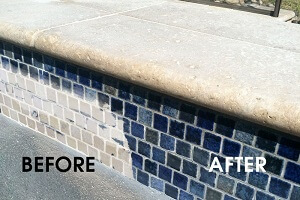
Pool tile cleaning means removing calcium scale and mineral stains from the waterline tile, coping, and adjacent surfaces so the finish looks smooth and the grout stays intact.

Light scale often responds to chemical descaling and pumice work, while moderate to heavy scale usually needs media blasting using glass beads, soda, or kieserite salt at low pressure. KC Power Clean lists prices that start at $10 per linear foot with a $1,000 minimum, which illustrates how firms package labor and mobilization as of 2025.

What is typically included: site protection, lowering the water line, media or chemical application, scraping or blasting, vacuuming media, and basic chemistry reset. Common add ons include grout sealing, minor grout touch ups, filter cleaning, and in rare cases a drain and refill. Trade and contractor sources describe multiple media options—see this media comparison—with glass bead on Pebble Tec, soda on ceramic or stone, and salt blasting promoted as pH neutral, while reputable operators follow OSHA controls for silica.

Companies quote by linear foot, by square foot in special situations, or by a flat minimum for small jobs. A few national pricing aggregators cite one time cleaning visit totals for general pool service, which helps set expectations for travel and mobilization on standalone jobs. As of October 2025 the spread is wide, so homeowners should compare method, minimums, and whether sealing or filter service is bundled (see also Fixr’s pool maintenance guide).

Article Highlights

  • Typical U.S. pricing lands between $6 and $10 per linear foot, with $400 to $1,000 minimums.
  • Light chemical or pumice work is cheapest, glass bead and salt media handle moderate to heavy scale.
  • Plan for optional grout sealing at $2 to $3 per foot and a filter clean near $75.
  • Illegal storm drain discharge can trigger fines, always route to approved locations.
  • Preventive water balance delays the next heavy clean and reduces total spend over 12 to 24 months.

How Much Does It Cost to Clean Pool Tiles?

For waterline scale removal in the United States, light cleaning using chemicals and hand tools can land under $6 per linear foot, while media blasting for moderate deposits often sits around $6 to $8 per linear foot, and heavy scale can reach $8 to $12 per linear foot, with job minimums from $400 to $1,000 depending on market. Several contractor pages and trade articles report bead or salt blasting in the $5 to $10 per foot range as of 2024 to 2025 (examples: Northside Pool Management and Above All Pool Care).

Table 1 summarizes common tiers that show up in bids. Note that lowering water a few inches is usually included, while a full drain and refill changes the bill and may invoke local discharge rules and time on site. Regional labor makes a difference, with higher minimums in major metros such as Los Angeles or Phoenix (see local discharge guidance).

Table 1. Typical U.S. pool tile cleaning pricing tiers, as of October 2025
Severity / Method Indicative rate Typical minimum Notes
Light scale, chemical or pumice $3–$6 per linear foot $250–$500 Often bundled with service call
Moderate scale, glass bead or soda $6–$8 per linear foot $400–$850 Most common tier
Heavy scale, salt or multi pass media $8–$12 per linear foot $750–$1,000+ May require partial drain

Professional pool tile cleaning services involve removing calcium deposits, rust stains, algae, and other build-ups to restore the tile’s original appearance. The total cost varies based on labor intensity, site conditions, and any additional treatments required. Basic cleaning jobs generally start at about $475 for a standard pool (Pool Tile Cleaning Vegas; Homewyse estimate).

For pool tile replacement, the average cost is about $17.50 per square foot for standard tiles, while premium tile options can range up to $35 to $100 per square foot. Retiling an entire pool can cost between $2,000 and $70,000 depending on the pool’s size and tile selections. Installation labor can add about $5,000 on average. Popular tile materials include porcelain, ceramic, glass, and stone, with mosaic tiles being among the highest priced (see replacement cost breakdown and a Lunada Bay Tile care guide).

Location impacts cleaning and replacement costs, with metropolitan areas usually charging higher labor rates. Services may also include acid washing, which starts around $350 and helps remove tough deposits from pool surfaces. Regular cleaning preserves the pool’s aesthetics and prevents costly tile replacements (Home Gnome pricing; Yelp cost data).

Real Life Cost Examples

Light deposits, 30 feet of waterline tile on a small backyard pool: labor at $6 per foot is $180, mobilization minimum lifts the total to $400, optional penetrating sealant at $2 per foot adds $60, and a quick filter clean at $75 brings the project to $535 before tax as a plausible package in a suburban market.

Moderate scale on glass tile, 60 feet, media blast at $7 per foot totals $420, plus a standard trip or travel fee of $50 to $100 and chemistry reset at $40, for a $510 to $560 job where the operator vacuums media and confirms pH and alkalinity balance. Dustless Blasting Direct shows an example at $7 per foot that aligns with this math.

Heavy scale with stone coping and tile, 80 feet, multi pass salt media at $10 per foot is $800, containment and cleanup at $125, partial drain and refill at $150 where allowed, plus grout touch ups at $3 per foot or $240, resulting in a typical invoice around $1,315 in a large metro. Los Angeles (LASAN guidance) and Phoenix guidance highlight routing discharge to the sanitary system or approved alternatives.

Annual maintenance bundle for rental properties, example for a 40 foot perimeter: spring clean at $6 per foot is $240, grout seal at $2 per foot is $80, filter clean $75, one mid season touch up $200, total annual spend $595, which is modest compared with replacement of waterline tile quoted at $25 to $30 per foot (about $1,500 to $3,000 total on typical pools).

You might also like our articles about the cost of acid washing a pool, pool closing services, or pool water delivery.

Cost Breakdown

Mobilization and protection often start the meter, covering travel, deck masking, plant protection, and water level adjustment, then materials and media drive the method choice. Glass bead and salt media suppliers and contractors report operating rates that land bead work in the mid range and salt slightly higher per foot, while soda can raise pH that must be rebalanced.

Labor hours scale with severity and access. Hand scraping and pumice time goes up when media cannot be used near soft stone or fragile grout. Disposal and cleanup include vacuuming media and sweeping decks, and soft costs include filter clean, chemistry reset, and optional grout sealing. On published examples, a simple one time visit is $200 to $400, while tile specific blasting is bid by the linear foot.

Factors Influencing the Cost

Surface type matters, since glass tile tolerates bead blasting, porcelain and ceramic often handle soda or salt, and soft stone needs gentler work with more masking. Water hardness history drives recurrence, because carbonate scale builds faster at high pH, alkalinity, calcium, and high evaporation.

Access is key. Tight decks, raised walls, spas, and water features add time. If a drain is required, the operator must follow local discharge rules that usually prohibit sending chlorinated or saline pool water to storm drains, and allow routing dechlorinated water to the sanitary system or the landscape when permitted (see the EPA general permit and NB Utilities guidelines).

Alternative Products or Services

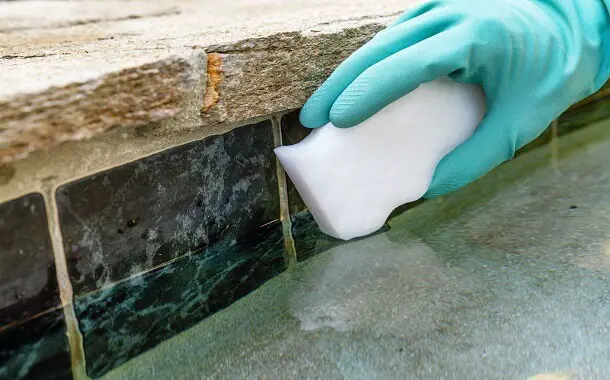
Pool Tile Cleaning ExplainedDIY descalers and pumice are inexpensive, yet the risk of scratching glass tile or etching stone is real, and pressure washing near grout lines can chip edges and eject grout. Many homeowners try chemical soaks first, then call a pro if deposits are rough or if glass tile is involved.

Full acid washing treats plaster, not just tile, and the acid can shorten plaster life and introduces handling hazards, so it is reserved for specific stain problems under a professional plan. Replacement is the last resort and is far costlier than cleaning at $25 to $30 per linear foot as of 2025.

Ways to Spend Less

Bundle work. Ask for a discount if you add filter cleaning, opening or closing, or grout sealing during the same visit. Off season booking reduces scheduling pressure, and multi property owners often receive better minimums when the crew stays on a route for the day.

Balance water, keep pH and alkalinity in range, and wipe the waterline monthly to slow mineral crusts. Light scale cleans up fast. Contractors emphasize prevention because media blasting that is not needed this year is money left in your budget.

Expert Insights and Tips

Select media to match the substrate and the scale hardness, protect stone edges with masking, and confirm silica and dust controls that follow OSHA limits with appropriate respirators and containment where cutting or blasting could release respirable dust.

If a partial drain is needed, route to a sanitary connection or to approved landscape areas only after dechlorination to protect waterways, then re test pH, alkalinity, calcium, and cyanuric acid so deposits do not reform quickly after a clean surface is revealed (see Fayetteville PWC guidance and the City of Phoenix page).

Total Cost of Ownership

Across 12 to 24 months, a cycle of one pro clean plus light wipe downs and a grout seal every two years keeps annual spend modest compared with repeated heavy blasting. In many markets, a simple yearly touch up and filter service sits near $300 to $600 as of October 2025.

Balanced water reduces shock, algaecide, and clarifier purchases and slows the return of crusts. The payoff is visible in photos, swim comfort, and the calendar time between blasting visits. That is the compounding return on disciplined maintenance.

Hidden and Unexpected Costs

Fragile tiles, hollow sounds behind waterline runs, or hairline cracks can appear after scale comes off. Latent stains may show once the white crust is gone, and surprise grout voids can require time and materials beyond the original scope.

Extra fees appear when access is blocked or when containment and disposal standards are stricter in sensitive areas. Some cities fine for illegal discharge to storm drains, which turns a cheap clean into an expensive day—see Phoenix code for an example.

Warranty, Support and Insurance Costs

Ask for proof of general liability and workers comp coverage and a written scope for what is included and excluded. Many firms warrant workmanship for a short window and exclude pre existing cracks or the reappearance of efflorescence (sample terms: R Pools tile cleaning).

Before and after photos protect both sides. Documentation makes it easier to spot any future issues that are unrelated to method or media choice and to show scale progression if warranty conversations arise.

Financing and Payment Options

Large jobs sometimes require a deposit, small jobs are often paid on completion, and many operators accept cards with a small convenience fee or provide a cash discount. Reschedule or late cancel fees appear during peak weeks in spring and holiday periods (see average home maintenance cost context).

Maintenance plans spread cost over the season and keep the waterline presentable for showings or busy rental calendars. For big projects that pair tile replacement with cleaning elsewhere, milestone payments are common.

Resale Value and Depreciation

Clean tile lines lift listing photos and guest reviews, and lenders and appraisers react to visible care, especially around water features. Scale stains read as deferred maintenance that can overshadow otherwise strong outdoor spaces.

Repeated acid or harsh washing can wear finishes faster, so smart method selection preserves long term value. Choose media and pressures to protect delicate surfaces and respect grout.

Opportunity Cost and ROI

DIY hours, risk of damage, and chemistry swings all count against the small savings from doing it yourself. A $500 to $900 pro visit that prevents a $1,500 to $3,000 replacement is a clear win for most owners.

For short term rentals and HOAs, clarity at the waterline is part of the guest experience, reduces complaints, and can lower algae pressure along the edge, which trims chemical use and time. That compounds into better budgets.

Seasonal and Market Timing Factors

Spring openings and pre holiday weeks fill fast, which pushes minimums up and pushes schedules out. Book in winter for lower pressure and more flexibility, and confirm drought or restriction rules before any plan to drain.

Local code varies on stormwater discharge and sanitary routing. Many cities require dechlorination and low residual chlorine under 0.1 mg per liter, and they prohibit salt water to storm drains. Check rules first, then schedule.

Answers to Common Questions

What is the average price per linear foot in the U.S.? Most published contractor rates fall between $5 and $10 per linear foot as of 2024 to 2025, with some light chemical jobs lower and heavy salt media jobs higher.

When do travel fees or minimums apply? Small jobs often trigger a $400 to $1,000 minimum that covers mobilization and cleanup time, especially in large metros.

Is bead blasting safer for glass tile than acid? Reputable operators favor low pressure glass bead on glass tile and avoid acid on glass, then vacuum media and reset chemistry.

Do I need to drain the pool for heavy scale? Often the water is lowered several inches, not fully drained. Full drains are reserved for specific cases and must follow local discharge rules.

How often should I reseal grout or coping? Many pros suggest every two to three years in sunny, hard water markets, coordinated with periodic cleaning so the surface stays easier to maintain.

0 replies

Leave a Reply

Want to join the discussion?
Feel free to contribute!

People's Price

No prices given by community members Share your price estimate

How we calculate

We include approved comments that share a price. Extremely low/high outliers may be trimmed automatically to provide more accurate averages.

Leave a Reply

Your email address will not be published. Either add a comment or just provide a price estimate below.

$
Optional. Adds your price to the community average.