How Much Does Pyrite Cost?
Updated on | Written by Alec Pow
This article was researched using 5 sources. See our methodology and corrections policy.
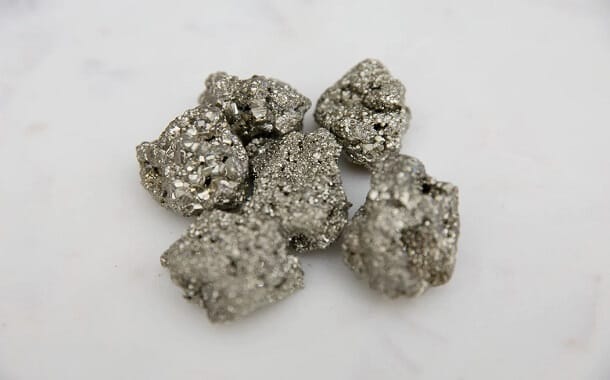
Common rough pyrite generally costs $5 to $30 per pound, while small individual crystals, cubes, and clusters usually sell for $10 to $75. Attractive collector specimens commonly cost $75 to $400, and large, sharply formed, well-documented, or museum-quality pyrite can reach $500 to $1,500+.
Pyrite is rarely valued by carat unless it has been cut for jewelry. Mineral collectors price most specimens by crystal quality, size, locality, luster, condition, matrix, symmetry, rarity, and overall display appeal. Two specimens of the same weight can therefore have completely different values.
Pyrite is an iron sulfide mineral with the chemical formula FeS2. Its pale brass-yellow color and metallic luster resemble gold, which explains the nickname “fool’s gold.” The name comes from a Greek expression referring to a stone that produces sparks when struck against steel.
Article Highlights
Jump to sections
- Bulk rough pyrite commonly costs $5 to $30 (at $30 per hour, earning that amount would take about 0.2 to 1 hours of work, before taxes) per pound.
- Small cubes and clusters usually cost $10 to $75 each.
- Collector specimens commonly sell for $75 to $400.
- Premium pyrite can cost $500 to $1,500+.
- Pyrite is normally priced per piece or specimen, not per carat.
- Containing microscopic gold does not automatically make a pyrite specimen valuable as ore.
- Humidity can cause pyrite oxidation and permanently damage a collection.

How Much Does Pyrite Cost?
| Pyrite form | Expected price | Main value factors |
|---|---|---|
| Bulk rough pyrite | $5 to $30 (about 0.2 to 1 hours of work at $30 per hour) per pound | Quantity, cleanliness, particle size, and shipping |
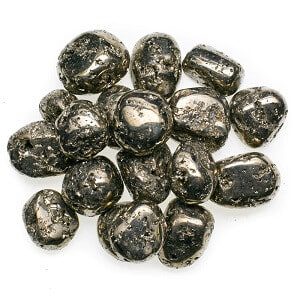
| Tumbled pyrite stones | $2 to $15 each | Size, polish, packaging, and retail markup |
| Small natural crystal | $10 to $40 | Crystal form, luster, damage, and origin |
| Navajún pyrite cube | $20 to $150 | Cube size, sharpness, matrix, contacts, and provenance |
| Peruvian crystal cluster | $25 to $300 | Crystal coverage, brightness, symmetry, and mine locality |
| Large display specimen | $250 to $750 | Visual impact, size, damage, balance, and preparation |
| Museum-quality pyrite | $500 to $1,500+ | Exceptional crystal form, rarity, provenance, and condition |
| Pyrite cabochon | $5 to $40 | Cutting, stability, backing, polish, and setting suitability |
| Faceted pyrite | $10 to $100+ | Unusual cut, size, finish, and collector demand |
Current listings illustrate the spread. Piritas de Navajún lists a natural Spanish cube specimen measuring approximately 5 centimeters at €25. Another mineral dealer lists a 483-gram group of large Navajún cubes at €40. These are real natural crystals rather than cubes carved or polished into shape.
At the higher end, Mineral Mike currently lists large pyrite specimens for several hundred dollars, including an 844-gram cubic specimen at $499. Marketplace listings for Peruvian pyrite range from under $50 for modest clusters to several hundred dollars for bright, well-formed specimens.
Online asking prices are not guaranteed sale prices. Seller reputation, photography, shipping, returns, mineral preparation, and provenance can all be included in the advertised amount.
Why Weight Is Not Enough
Low-grade pyrite is abundant enough that bulk material may be sold by the pound or kilogram. Once a specimen has well-formed crystals, weight becomes only one part of the price. Collectors care about what the specimen looks like and how difficult it is to replace.
A heavy piece of massive pyrite with no recognizable crystals may be worth less than a small group of sharp cubes. A large specimen can also lose most of its premium if the main crystal is chipped, repaired, dull, unstable, or poorly positioned on the matrix.
Consider two 500-gram specimens. The first is massive broken pyrite priced at $20 (about 40 minutes at $30 per hour) per kilogram, giving it a raw-material value of only $10. The second is a lustrous group of undamaged cubes from a documented Spanish mine priced at $250. Both weigh the same, but the collector-grade piece costs 25 times more because of form, condition, and locality.
Locality Creates Value
Collectors often pay premiums for pyrite from mines known for distinctive crystal habits. Navajún in La Rioja, Spain, is famous for exceptionally sharp natural cubes, frequently embedded in pale marl. Huanzala and other Peruvian localities produce bright clusters, cubes, octahedral forms, and complex crystal combinations.
A locality label adds value only when it is credible. A seller should identify the country and mine or district when known. An old collection label, dealer record, mine tag, or documented acquisition history can support provenance. A vague description such as “natural South American pyrite” carries less collector information.
Locality value is not simply a matter of rarity. Some famous localities produced large quantities, but collectors still want them because the specimens are recognizable, attractive, and historically important.
Crystal Quality Sets the Price
Pyrite belongs to the isometric crystal system and commonly forms cubes, octahedrons, pyritohedrons, and combinations of those forms. Cube faces may show parallel striations. The Mindat pyrite reference identifies its pale brass-yellow color, metallic luster, hardness of 6 to 6.5, and specific gravity near 5.
The strongest price signals include sharp crystal edges, bright metallic luster, balanced placement, minimal contact damage, interesting matrix contrast, and a form that can be seen easily when displayed. A cluster covered with dozens of small crystals may be valuable, but a single unusually large and perfect cube can command more.
Natural contact points are common. A crystal that grew against another mineral may have an incomplete face without being recently damaged. Sellers should disclose whether an imperfection is a natural contact, fresh break, repair, or restoration.
Rough Pyrite vs Collector Pyrite
Bulk rough pyrite is sold for decoration, education, crafts, rock tumbling experiments, novelty bags, and mineral kits. Pieces may be dull, irregular, small, or mixed with host rock. This material can sell for $10 to $20 per pound at retail even when its wholesale value is much lower.
Collector pyrite is sold individually. The buyer receives the exact photographed piece rather than a random scoop from a bin. The price may include cleaning, preparation, labeling, professional photography, insured shipping, and the dealer’s evaluation of condition and locality.
Retail packaging can make bulk material appear more valuable than it is. Twenty small pieces in a gift box may cost $25, even though the mineral itself would sell for less in a larger wholesale lot. The difference pays for sorting, packaging, fulfillment, and convenience.
Pyrite Jewelry Prices

Pyrite is used in pendants, beads, cabochons, rings, earrings, and decorative inlays. Small loose cabochons may cost $5 to $25, while unusual cuts or larger pieces can cost $30 to $100+. The final jewelry price depends more on metal, workmanship, design, and brand than on the raw pyrite.
A $12 pyrite cabochon placed in a handcrafted sterling-silver pendant may become a $75 to $200 finished item. A gold setting can raise the price much further. Readers comparing setting expenses can review current gemstone mounting costs, though pyrite requires a jeweler willing to work with a brittle sulfide mineral.
Pyrite has a Mohs hardness near 6 to 6.5, but hardness does not mean toughness. The mineral is brittle and can chip, fracture, tarnish, or oxidize. Rings and bracelets expose it to impacts, water, perspiration, cosmetics, and household chemicals, so pendants and protected designs are usually safer.
Is Gold-Bearing Pyrite Valuable?
Pyrite can contain microscopic or chemically bound gold, sometimes called invisible gold. That scientific fact does not mean an ordinary piece of fool’s gold can be sold for the theoretical value of the gold inside it.
The sample must first be assayed. A laboratory may use fire assay, atomic absorption, inductively coupled plasma testing, or another suitable method. The assay result must then be evaluated against tonnage, recovery rate, processing cost, sulfur content, arsenic, permitting, transport, and the buyer’s minimum lot.
The original article used a sample containing 0.25% gold. Mathematically, 0.25% of a 2,000-pound short ton equals 5 pounds of gold. Since one avoirdupois pound equals about 14.583 troy ounces, the ton would theoretically contain about 72.9 troy ounces.
At a hypothetical gold price of $4,000 per troy ounce, the contained metal would have a gross theoretical value of $291,600. That is not the value of the ore. If only 80% were recoverable, the recovered quantity would fall to about 58.3 ounces. Mining, crushing, milling, chemical treatment, refining, waste handling, royalties, and capital costs would still have to be paid.
A grade of 0.25% equals approximately 2,500 grams of gold per metric tonne, which would be extraordinarily rich compared with most operating gold mines. A random retail pyrite specimen should never be assumed to contain that concentration.
Testing Pyrite for Gold
Visual tests can help distinguish common pyrite from visible native gold, but they cannot measure trace gold inside the mineral. The U.S. Geological Survey explains that gold dents or gouges when pressed with a metal point, while pyrite tends to flake, powder, or crumble.
Useful field observations include:
- Streak: Gold leaves a golden-yellow streak on unglazed porcelain. Pyrite leaves a dark greenish-black to brownish-black streak.
- Hardness: Pyrite can scratch glass and copper. Gold is much softer.
- Tenacity: Gold is malleable and bends or flattens. Pyrite is brittle and breaks.
- Shape: Pyrite commonly forms sharp geometric crystals. Natural gold is more often irregular, flattened, wiry, or rounded.
- Color: Gold has a richer yellow color. Pyrite is usually paler and more brass-like.
A streak plate can damage a collectible specimen, and a scratch test can reduce its value. Test an inconspicuous broken fragment when possible. A person searching in the field may also use the identification methods discussed in the guide to metal detector prices, but a detector response alone does not distinguish gold from every sulfide or metal-bearing rock.
Assay Costs and Sale Value
A gold assay commonly costs from tens to a few hundred dollars per sample depending on preparation, method, detection limit, rush service, and whether a complete multi-element analysis is requested. Shipping a dense rock sample and paying for crushing or pulverizing can add to the bill.
Assaying one attractive collector specimen can destroy part of it without creating a practical ore sale. A laboratory may require a representative crushed portion, and the result describes the tested material rather than every piece from the location.
Even a positive gold result does not create an easy retail market. Refineries and ore buyers commonly require minimum quantities, verified assays, known origin, legal ownership, and material that can be processed economically. A few grams of gold-bearing pyrite may remain more valuable as a labeled mineral specimen than as feedstock.
Pyrite Decay Lowers Value
Some pyrite specimens oxidize when exposed to moisture and oxygen. Warning signs include sulfur odor, white or yellow powder, brown staining, cracking, crumbling, crystal separation, and damage to labels or storage materials. This deterioration is commonly called pyrite decay.
The National Park Service geological-collection guidance notes that decay can be triggered at relative humidity above 60% and recommends keeping geological storage below that level. Once decay starts, the specimen may need isolation and a much drier environment.
A specimen with active decay may have little resale value even if it was originally attractive. Sellers should disclose oxidation, stabilization attempts, sealants, repairs, and storage history. Buyers purchasing fossils replaced by pyrite should be especially careful because oxidation can destroy both the mineral and the fossil structure.
How to Store Pyrite
Keep collectible pyrite dry, stable, and away from sudden temperature changes. A display cabinet in a climate-controlled room is safer than a damp basement, bathroom, garage, or unconditioned attic. Handle the piece by its matrix rather than by projecting crystals.
Small silica-gel packets can help in a sealed display box, but they must be monitored and replaced or reconditioned. A hygrometer provides better information than guessing from how the room feels. Specimens with visible decay should be separated from unaffected minerals because acidic deterioration products can damage labels, boxes, and nearby objects.
Do not routinely soak pyrite in water, vinegar, bleach, or household cleaner. Cleaning methods depend on the matrix, surface condition, oxidation, and associated minerals. An aggressive acid or brush can remove luster, loosen crystals, and reduce the specimen’s value.
Metaphysical Claims
Pyrite is widely marketed as a stone for confidence, prosperity, creativity, willpower, protection, or positive energy. These descriptions are spiritual or cultural beliefs, not scientifically demonstrated medical, psychological, financial, or cognitive effects.
A seller may use metaphysical language as part of the product’s theme, but it should not justify a major price premium or substitute for health care, financial planning, or professional advice. The measurable qualities of pyrite are its chemistry, crystal system, hardness, density, luster, streak, locality, and condition.
Three Buying Examples
Bulk decorative purchase: A buyer orders two pounds of mixed rough pyrite at $14 per pound. The mineral costs $28, and shipping costs $12. The delivered price is $40, or $20 per pound. Shipping represents 30% of the final bill.
Spanish cube specimen: A natural Navajún cube costs $45. Insured international shipping adds $24, and payment conversion adds $2. The landed cost is $71. The buyer is paying for locality, crystal form, and the exact display piece rather than raw pyrite weight.
Premium cabinet specimen: A large Peruvian cluster is priced at $550. A custom acrylic stand costs $55, insured shipping costs $48, and a humidity-controlled display case costs $120. The complete display investment reaches $773.
When Pyrite Is Worth Buying
Makes sense if:
- The specimen has strong luster, recognizable crystal form, and minimal damage.
- The locality and dimensions are documented accurately.
- The buyer enjoys the piece as a mineral specimen rather than expecting gold recovery.
- The display environment can remain dry and stable.
- The seller provides clear photographs and a reasonable return policy.
Does not make sense if:
- The seller claims ordinary pyrite is worth the same as gold.
- The price is justified by an unverified precious-metal percentage.
- The specimen has powder, sulfur odor, cracking, or active oxidation.
- A common bulk piece is being priced like a rare collector crystal.
- The buyer expects scientifically proven healing, luck, or financial effects.
What We Verified
- Checked current cube and specimen prices against named Spanish, Peruvian, and specialist mineral listings.
- Confirmed pyrite’s hardness, crystal system, luster, and physical properties through Mindat and university mineral references.
- Cross-referenced gold-versus-pyrite identification methods through the U.S. Geological Survey.
- Verified pyrite-decay risks and humidity guidance through National Park Service collection-care material.
- Separated theoretical contained-gold value from assay, recovery, and commercially realizable ore value.
Answers to Common Questions
How much is pyrite worth per pound?
Common rough pyrite typically costs $5 to $30 per pound. Attractive crystals and documented collector specimens are usually priced individually rather than by weight.
Is pyrite worth money?
Yes. Pyrite has decorative, educational, jewelry, and mineral-collecting value. Most common pieces are inexpensive, while exceptional crystals can sell for hundreds or thousands of dollars.
Does pyrite contain real gold?
Some pyrite contains microscopic or chemically bound gold. The amount cannot be determined visually and must be measured by a suitable assay. Most retail specimens are not valuable gold ore.
How can you tell pyrite from gold?
Pyrite is harder and brittle, often has sharp crystal faces, and leaves a dark streak. Gold is soft, malleable, usually irregular, and leaves a yellow streak.
Why is my pyrite turning white or crumbling?
The specimen may be oxidizing through pyrite decay. Isolate it from the collection and store it in a stable, dry environment with controlled humidity.
Disclosure: Educational content, not financial advice. Prices reflect public information as of the dates cited and can change. Confirm current rates, fees, taxes, and terms with official sources before purchasing. See our methodology and corrections policy.

I have a 64.4 lb single stone of Peruvian iron pyrite. 5″ cubes. Un toasted. The Smithsonian gallery wants it…. I want to sell.
Any takers or comments are welcome
i have pyrite fools gold where can i sell it im from the Philippines thanks for your reply
Where can I get my pyrite valued in rochester ny? or online?