, ,

How Much Does a Trane Air Conditioner Cost?

Last updated on | Written by Alec Pow
This article was researched using 8 sources. See our methodology and corrections policy.

Trane sits in a premium mainstream lane for U.S. home cooling. People consider it for warranty coverage, a large dealer network, and a reputation for durability, but they still want a clear view of installed pricing and the fees that raise the bill.

This guide focuses on the numbers that shape your budget: installed price bands, quote line items, ownership costs, and ways to keep the expense under control.

Article Highlights

Jump to sections
  • Trane installed central AC totals commonly span $5,400–$20,400 in Trane’s national-average pricing guide, depending on model tier and scope.
  • Mid-range replacements often land near $6,800–$9,600 when the home is swap-ready.
  • New ductwork can add roughly $3,000–$10,000, and it is a major driver of surprise costs.
  • Permits, electrical updates, and controls can add $500–$2,000 in aggregate on many jobs.
  • Budget $150–$350 per year for maintenance, and keep a repair reserve for major parts.
  • Off-season replacements can improve quote competition and reduce peak-demand pricing.

How Much Does a Trane Air Conditioner Cost?

Trane’s pricing guide publishes national-average installed cost ranges by model (and it explicitly notes prices are estimates and dealer quotes can differ). Using those published ranges as an anchor, a basic installed band can run about $5,400–$8,200, a common “middle” band often lands around $6,800–$9,600, and higher-end installs can reach $13,200–$20,400 when you move into premium equipment, larger capacity, and more labor-heavy scope.

One budgeting trick that improves readability is to convert those bands into midpoints. Using the same Trane ranges, a “swap-ready” mental anchor is about $6,800 (budget midpoint), about $8,200 (mid-range midpoint), and about $16,800 (premium midpoint). Your quote can still land outside those numbers once ductwork, access, or electrical scope expands, but the midpoints help you sanity-check a bid before you chase details.

A national overview from This Old House helps explain why installed totals spread out. Their guide separates equipment-only pricing from installation labor and highlights upgrades that push a job upward, such as duct changes, electrical work, and higher-efficiency systems. A low online price can be real, but it rarely represents the all-in total for a safe, code-compliant installation.

Here is the key idea. Compare quotes using the installed total first, then check what is inside that number. Scope matters.

Tier Typical installed total What tends to be included Best fit
Budget $5,400–$8,200 Basic condenser and coil swap, standard controls, minimal duct changes Smaller homes, mild climates, simple replacements
Mid-range $6,800–$9,600 Better efficiency options, improved filtration, more line-set work, more labor time Most replacements where comfort and energy use both matter
Premium $13,200–$20,400 Top efficiency systems, variable-speed components, advanced controls, larger capacity Large homes, harsh summers, comfort upgrades, long-term ownership

Prices vary by location and season. Labor and permitting are often higher in big coastal metros, and emergency replacements during a heat wave tend to erase any bargain. Internationally, many homes rely on ductless split systems rather than U.S.-style central air, so “typical” pricing is often quoted per room, not as a whole-home system.

Real-life cost examples

Example 1 (illustrative quote math, swap-ready home). A 2,000 square foot home replaces a 3-ton central AC with a Trane-class mid-range setup. The quote includes an outdoor unit and matching coil, a new pad, a line-set flush, a basic programmable thermostat, and permit handling. Equipment and materials are $4,900, labor and start-up are $3,200, line-set work is $350, permit fees are $200, and disposal is $150. The installed total comes to $8,800, and the homeowner budgets $180 for the first set of filters and a coil-safe cleaner kit.

Example 2 (illustrative quote math, efficiency upgrade). A homeowner upgrades to a higher-efficiency model to reduce summer electric use. The quote includes a new condenser, matching indoor coil, upgraded return filtration, and a smart thermostat. Installed total lands at $14,900 due to added electrical work, a new disconnect, and peak-season scheduling. A first-year maintenance plan adds $250, bringing first-year spend to $15,150.

You might also like our articles on the cost of HVAC duct replacement, wall air conditioner installation, or air conditioner coil cleaning.

Example 3 (illustrative quote math, house-driven scope). A replacement starts at $9,200 for equipment and a standard installation, then climbs to $15,700 after duct modifications and access work are added. In homes like this, the house sets the price ceiling more than the brand does, especially when inspection issues force duct or electrical changes.

Timing changes quotes. When a system fails during the first major heat wave, contractors often quote around available slots and available inventory. When you can schedule in spring or early fall, you usually see more model options, tighter pricing, and fewer rush costs in the labor portion.

These examples are illustrative, but the pattern is consistent. When the home is swap-ready, the total tracks equipment plus labor. When ductwork, access, or electrical work expands the scope, add-ons dominate the final bill.

Cost breakdown

The installed total is a stack of charges that rarely shows up in online price lists. You pay for the equipment package, the labor to remove and install, the time and tools needed to evacuate and charge the refrigerant circuit, and the commissioning steps that confirm airflow and performance. Then you pay for permits, inspections, and safety items such as electrical updates, condensate drainage, and disposal. If the installer has to cut drywall to reach the coil, reroute a line set through finished spaces, rebuild a plenum, or correct an undersized return, labor hours increase fast, and that is why two quotes can differ even when the outdoor unit model looks similar on paper.

Trane’s pricing guide flags one of the biggest swing factors, ductwork, with a rough range of $3,000–$10,000 when new ducts are needed. On the same Trane ranges, that means a full duct replacement can be roughly “half a basic install” at the low end or it can rival the entire cost of a budget swap at the high end, depending on house layout and access.

  • Permits and inspections: often $50–$400 depending on the building department.
  • Electrical work: a disconnect, whip, or breaker update can add $150–$800.
  • Thermostat and controls: many upgrades land around $200–$600 installed.
  • Drainage fixes: a condensate pump or drain reroute can add $150–$600.
  • Duct sealing and airflow fixes: often a few hundred dollars, sometimes more if returns are undersized.

Ownership costs should be part of the budget. Many households plan on $150–$350 per year for maintenance and filters, then keep a repair reserve for unexpected failures. Small electrical parts are often manageable. Compressor or coil failures can be a large check. Prices move fast.

Factors influencing the cost

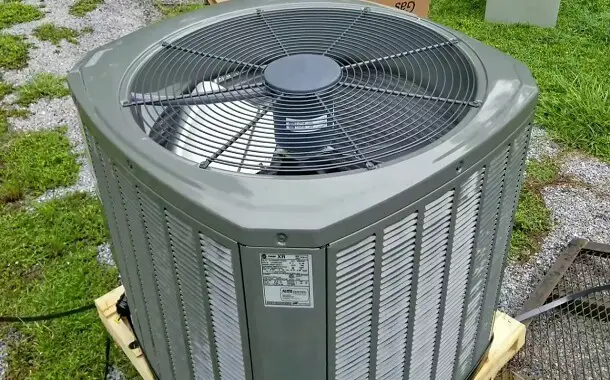
Trane Air ConditionerCapacity and efficiency drive the starting point. Larger tonnage typically costs more, and higher SEER2 options usually add to equipment pricing because coils, compressors, and controls become more complex. Correct sizing also affects operating expense, since oversizing can short-cycle and waste energy.

Installation complexity is the second driver. A clean condenser swap on an accessible pad is straightforward. A replacement that needs attic access, long refrigerant runs, duct redesign, or a hard-to-reach coil eats labor hours, and labor is a large share of the final charge. In metros like Los Angeles, San Francisco, New York, and Boston, labor and permitting can push totals higher than the same equipment choice would cost in a smaller market.

Refrigerant policy shifts can affect timing and availability. The U.S. Environmental Protection Agency summarizes Technology Transitions rules under the AIM Act, including inventory allowances and compliance dates that shaped what equipment could be installed through January 1, 2026, in its Technology Transitions regulatory actions overview. A practical buyer takeaway is that model families and refrigerant types can change across 2025–2026, and that can affect lead times, pricing, and what a dealer recommends.

Dealer quality and scope detail matter as much as brand choice. A mid-tier Trane installed poorly can underperform a cheaper unit installed well. When you evaluate price, you are also evaluating workmanship, commissioning, and how clearly the installer explains what is included.

Alternative products or services

Trane competes in the same space as premium lines from Carrier and Lennox. Once you control for job scope, installed totals can overlap, because duct issues, access, and code items often drive more of the total than the logo on the condenser.

If you are shopping for value, brands like Goodman and some Rheem lines can price lower, which can matter when you are trying to stay under a hard budget cap. The trade-off is usually in feature sets, sound levels, and sometimes dealer coverage in a given region, so the value play works best when you have a strong installer and a simple replacement. If you want a quick explainer on why refrigerant changes can affect pricing and product lineups, Rheem’s overview of HVAC refrigerant changes in 2025 gives useful context.

System type is another alternative. If your home does not have ducts, ductless mini-splits can be a better fit than paying for a new duct system, and they offer room-by-room control. Heat pumps can also compete with central AC if you want combined heating and cooling, but installed pricing depends heavily on climate and electrical scope. For small spaces, a high-quality window unit can still make sense when the goal is the lowest upfront cost, not whole-home comfort.

Ways to spend less

Control the scope you can control. If your ducts are in good shape, keep them, and spend on sealing or minor fixes rather than full replacement. If ductwork is questionable, request a separate duct quote so you can see the split between equipment and distribution work. Ask for a sizing explanation, because proper sizing is typically based on an ACCA Manual J load calculation, and oversizing can raise both the upfront bill and the running cost.

Timing helps. Replacing in spring or early fall often improves installer availability and quote competition. It does not guarantee a discount, but it reduces the chance you pay for urgency. It also gives you time to compare model options and warranty coverage instead of grabbing whatever is in stock.

Request a quote that is specific enough to audit. Model numbers, a clear list of included work, permit handling, disposal, and start-up steps should be written down. It is also reasonable to ask how long the price is valid and what triggers a change order, since hidden electrical or duct issues are common in older homes. Get at least two bids if scheduling allows.

Expert insights and tips

Trane’s consumer materials emphasize that efficiency ratings depend on a matched system, not only the outdoor unit, and they encourage buyers to focus on correct sizing and proper commissioning. Buyer guides like This Old House echo the same theme, installation quality and airflow setup often matter as much as brand choice.

Two practical checks help when you compare prices. First, confirm that the quote includes a matched indoor coil and ask for the system’s AHRI reference so you can verify the rated efficiency of that specific combination in the AHRI Certification Directory. Second, ask what happens if the existing duct system fails inspection once work begins. Those two items are common sources of surprise charges, and they are easier to discuss before you sign.

One more cost-saving detail most homeowners miss is warranty timing. Trane explains that registered warranties can run longer than base coverage if you register within the required window after installation, in its warranty and registration overview. If you are paying a premium brand price, do not leave warranty value on the table due to a paperwork miss.

Answers to Common Questions

Is the Trane unit price the same as the installed price?

No. Unit pricing is only a slice of the total. Installed totals include labor, permits, refrigerant handling, start-up checks, disposal, and other code and safety items.

How much does ductwork change the total?

Ductwork can be the biggest swing factor. Trane lists new ductwork at roughly $3,000–$10,000, and even partial duct repairs can add meaningful labor and materials.

Do higher-efficiency models always save money?

Higher efficiency can reduce energy use, but savings depend on climate, electricity rates, and how long you plan to stay in the home. Payback is often faster in long, hot cooling seasons.

Can I save money by repairing instead of replacing?

Sometimes. Small electrical parts can be cost-effective repairs, but major failures like compressors and coils can push repair bills toward replacement territory.

What should I ask for in a quote?

Ask for model numbers, scope details, permit handling, warranty terms, and a clear list of what is included and excluded. It also helps to request the AHRI reference for the matched system so you can confirm the rated efficiency of the specific condenser-and-coil combination.

Disclosure: Educational content, not financial advice. Prices reflect public information as of the dates cited and can change. Confirm current rates, fees, taxes, and terms with official sources before purchasing.