ThePricer Media
  • Latest: How Much Will Gas Prices Rise After the Iran Strikes?
  • Daily Price Puzzle (60s)
  • Talk to Alec
  • Blog
  • Podcast
  • eBook
  • Click to open the search input field Click to open the search input field Search
  • Menu Menu
Auto

How Much Does a Car Diagnostic Test Cost?

Last updated on February 21, 2026 | Written by Alec Pow
This article was researched using 10 sources. See our methodology and corrections policy.

A car diagnostic test is the paid step between a warning light and a repair plan. For a check engine light visit, published national estimates land between $122 (that's 4.1 hours of your life at a $30/hr wage, or $49 in 1990 money) and $233 for diagnosis and testing (as of January 2026) using RepairPal’s estimator data on check engine diagnosis.

What you pay for is time, not a part. Shops bill for the technician’s troubleshooting hours and the tool access that lets them confirm the root cause instead of guessing.

A diagnostic visit is priced per visit or per labor hour, and the total moves with shop labor rates, access time, and any extra tests added after the first scan. A quick code read at a parts store can be free, while an intermittent electrical issue can stretch into multiple paid labor blocks.

TL;DR: A code read can be free, but a test-backed diagnosis is commonly a paid labor ticket.

Important numbers

Jump to sections
  • Does a Car Diagnostic Test Cost?
  • What you’re actually buying
  • Free code scans vs paid diagnosis
  • Line items that push totals
  • What a real quote looks like
  • Mini cases
  • Hidden costs
  • Entry: $0 for many parts-store code scans and reports, depending on location and vehicle, as listed by Fix Finder.
  • Mid: $122 (about $49 in 1990 money) to $233 for check engine light diagnosis and testing (as of January 2026) per RepairPal’s estimator.
  • All-in: labor-rate spread that can push diagnostic tickets higher in some markets, with AAA noting shop rates from $47 (about $19 in 1990 money) to $215 per hour (article context, not a diagnostic-only price) on labor rates explained.
  • DIY tool: handheld code readers sold at parts retailers can run from $45.99 up to several hundred dollars, based on AutoZone listings for Innova scan tools.
Car Diagnostic Test Cost

How Much Does a Car Diagnostic Test Cost?

For a straightforward “check engine light is on” visit, RepairPal’s national estimator puts diagnosis and testing between $122 and $233 (as of January 2026) on its check engine estimate page. RepairPal also shows smaller diagnosis categories with lower published ranges, such as emission system diagnosis and testing at $62 to $90 (as of January 2026) on its emission diagnosis estimate.

Those figures are useful anchors because they are specific and dated, but they are not a binding quote. The real invoice can move if the shop’s labor rate is higher, if the symptom is intermittent, or if the tech needs time to access a buried connector or remove covers to verify a leak or a short. AAA’s labor-rate spread from $47 to $215 per hour shows why the same 1.0-hour diagnostic block can look very different between markets on AAA’s labor rate explainer.

A practical way to interpret the range is as “one paid block” versus “multiple blocks plus add-on tests.” A single code with a simple verification may stay close to one hour of billed time. An electrical drain, a no-start, or an EVAP leak hunt can take longer because the tech has to isolate the condition step by step.

Option What you get What it can miss Typical out-of-pocket
Parts-store code scan Stored codes and a printout or explanation Root cause verification, wiring faults, intermittent issues $0 at many chains
Shop diagnostic appointment Scan plus hands-on tests and repair path Can still require added time if symptom is hard to reproduce $122 to $233 (check engine, Jan 2026)
Buy your own scanner Codes at home, sometimes live data Test procedures, access to service data, professional experience $45.99 and up (example listings)

Related guides

  • How Much Does a New York State Inspection Cost?
  • How Much Does a Rolling Tarp System Cost?
  • How Much Does Sway Bar Link Replacement Cost?

What you’re actually buying

A “diagnostic test” is a troubleshooting session, not a single button press. The tech pulls data from the vehicle (codes, freeze-frame information, live sensor readings) and then verifies the fault with real checks. That can mean a road test to reproduce the symptom, a visual inspection of connectors and hoses, and targeted tests like fuel pressure checks, smoke testing for leaks, or pin-voltage measurements at a suspect connector.

It is also what a free code scan is not. A code points to a system that noticed something out of range. It does not confirm which component failed, whether wiring caused a false reading, or whether a maintenance issue triggered the light. A paid diagnostic aims to leave you with a fault path you can act on, even if you do not buy the repair at that shop.

One more distinction matters at the counter: “diagnosis” vs “estimate.” An estimate can be a quote for a known job (brake pads, a battery) once the shop has enough certainty. Diagnosis is the work needed to reach that certainty. That is why many service writers ask for authorization for a time block before they promise a firm repair price.

Free code scans vs paid diagnosis

Parts stores and quick-service chains market “free” code scanning because it gets you a starting point. AutoZone’s Fix Finder describes reading information tied to check engine, ABS, and maintenance lights and presenting information quickly, often in under a minute once connected, on its free diagnostic tool page. Pep Boys also advertises a free code retrieval service in its free services listing.

Those services can be useful when you want a code number and a plain-language description to triage next steps. Some stores also position the scan as a bridge to a repair referral. Advance Auto Parts explicitly frames free engine code scanning as a store service and notes it can refer customers to a professional technician if more diagnosis is needed on its store services page. O’Reilly similarly describes free testing with a store tool for 1996-and-newer vehicles via its VeriScan service page.

Paid diagnosis starts when the shop goes beyond the code list. A shop may need to test a component under load, check wiring continuity, confirm an EVAP leak size, or verify whether a sensor is lying because of an air leak upstream. That extra work is what you are paying for, and it is why the same code can lead to very different invoices.

Line items that push totals

Diagnostics get expensive when the job stops being “read the code and confirm a bad part.” The big multipliers are access time and uncertainty. If the tech cannot reproduce the symptom on demand, the first paid block may only gather evidence: scan data, freeze-frame context, visual checks, and a basic road test. A second block may be needed when the vehicle acts up later, or when the shop has to keep the car to catch an intermittent fault.

Another cost driver is “add-on testing.” EVAP leak checks, electrical tracing, and module communication problems can require dedicated procedures. If you want a smoke test for an EVAP leak because the car will not set readiness monitors for inspection, the shop may quote that test separately. The bill can also rise when the first scan points to a system that requires teardown to verify, such as intake plumbing leaks, hidden vacuum lines, or harness routing under covers.

One more line item is post-repair verification. Many shops will re-scan and test-drive after a repair to confirm the light stays off and readiness monitors set correctly. Sometimes that is included in the repair labor. Sometimes it is billed as a recheck, especially if you bring parts or if the original problem changes.

What a real quote looks like

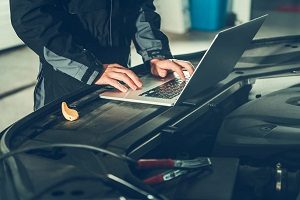
Car Diagnostic Test DetailsOn the phone, you will hear quotes that sound like a single number. At the counter, it is usually a diagnostic authorization plus any extra tests the shop needs to confirm the cause. A clean way to ask is “What is your diagnostic time block, and what would trigger a second block?” That question gets you a policy answer, not a vague range.

Many shops also have a “credit” policy where the diagnostic fee is applied to the repair if you approve the job. That is not universal, and it can depend on how much time was spent diagnosing. Motor1’s discussion of diagnostic fees describes a scenario where a shop might charge a diagnostic fee (example given as $95) and then charge parts and time for the actual fix, which is why customers sometimes feel whiplash between “you found it fast” and “you still billed a diagnostic” on Motor1’s diagnosis piece.

Also watch for shop fees and taxes, which are not always embedded in the quoted diagnostic number. If your market has higher hourly labor, one hour of authorized diagnostic time can be a larger ticket even before any parts are installed. If you want the most comparable quotes, ask each shop to state the diagnostic block length in hours and the out-the-door total for that block.

Mini cases

Budget triage (code only): A driver sees a steady check engine light and wants a code number before scheduling anything. They go to a parts retailer offering free scanning. The out-of-pocket can be $0 using services promoted by chains like AutoZone on its Fix Finder page, but they leave with a direction, not a confirmed failed component.

Typical paid diagnosis (one visit): A driver wants a real answer because the light returns after a reset. They book an independent shop diagnostic appointment. Using RepairPal’s published range for check engine diagnosis and testing, the ticket is often modeled in the $122 to $233 band (as of January 2026) from the RepairPal estimate. The shop may credit some or all of that if the repair is approved, but the policy varies by shop.

Higher-complexity visit (more time): A driver has an intermittent stall and no consistent code history. The first hour gathers data, but the shop needs more time to reproduce the stall, check wiring, and verify fuel delivery or ignition. In a high-rate market, AAA’s published hourly spread up to $215 per hour helps explain why a multi-hour diagnostic can climb quickly on the AAA rate overview, even before any part is replaced.

Hidden costs

Diagnostics can be the first domino. The next charges are often tied to confirming, fixing, then proving the fix “sticks.” The most common follow-on is a recheck or retest if you decline the repair, install parts elsewhere, or return weeks later with a related issue. A shop that has to start from scratch may bill another diagnostic block because the conditions changed.

Programming and calibration is another trap line item for modern cars. If the fix involves a module, throttle body, or other electronically controlled component, the car may need relearn steps or programming after installation. That work can be billed as a separate labor operation at a shop or dealership, and it is why a “simple part swap” sometimes turns into a two-step appointment. If you want context on that cost driver, see the separate coverage on car computer reprogramming.

Emissions readiness can also add expense. A car can pass a scan, get a repair, and still need a drive cycle to set monitors before an inspection. If you are chasing an EVAP-related light, a dedicated smoke test can become part of the process. For context on that specific add-on, see the pricing breakdown for an EVAP smoke test.

Two quick math checks using sourced numbers: RepairPal’s check engine diagnosis range spans $233 minus $122 equals $111 in spread (inputs from RepairPal’s Jan 2026 range). If you buy a basic scanner listed at $45.99 and use it to avoid one paid diagnostic modeled at $122, the gap is $122 minus $45.99 equals $76.01 (inputs from AutoZone’s Innova pricing list and RepairPal’s Jan 2026 estimate).

Worked example

Say your car shows a steady check engine light and drives fine, but it fails emissions readiness. You authorize a shop’s check engine diagnostic and the shop decides it needs an EVAP smoke test to confirm the leak source. Here is what an all-in ticket can look like, using only published price anchors where available.

  • Base diagnostic appointment modeled using RepairPal’s check engine diagnosis range: $122 to $233 (as of January 2026) from RepairPal’s estimate page.
  • EVAP smoke testing as a separate paid step, which is often priced as its own line item by shops; see the cost context for an EVAP smoke test.
  • Optional: post-repair programming or relearn steps if a component requires it; see the context for computer reprogramming.

If you treat the diagnostic as the base and add one paid add-on test, the total is rarely “just the code.” Using the RepairPal range alone, you can sanity-check the first line: at the low end the diagnostic is $122, at the high end it is $233 (from RepairPal). If your invoice is far outside that band for a simple light-on complaint, ask what extra labor blocks or special tests were added and why.

When it’s worth paying for

  • Makes sense if
    • The light returns after you clear it and you want confirmation testing, not a guess based on a code.
    • The car has a no-start, stall, misfire, or drivability issue that comes and goes and needs reproduction and tracing.
    • You are solving an emissions readiness problem and may need EVAP leak verification, not just code descriptions.
    • You suspect wiring, connector corrosion, or module communication issues that a basic scan will not isolate.
  • Doesn’t make sense if
    • You only want a code number and a short description as a starting point, and you can safely drive to a free scan service.
    • The issue is obvious and easy to verify quickly (dead battery, loose cap) and you can confirm the symptom is resolved.
    • You plan to sell the car as-is and only need a basic report to disclose a warning light.
    • You already have recent test results from a shop and you are not changing parts or conditions that would reset the troubleshooting.

Where shops differ

Two shops can both be “right” and still quote different diagnostic totals. One may run a strict time block policy and stop at the end of the hour, then call you for more authorization. Another may push further into the problem in the first visit and hand you a larger initial ticket. Neither approach is automatically better, but you should know which one you are buying.

There is also a difference in how advice is delivered. A parts-store scan may hand you a list of possible fixes. A repair shop should show you what was tested and what was ruled out. If the shop only repeats the code definition, you are not getting much more than what the free scan gave you, and you should ask what verification steps were performed.

If you are choosing between a dealer and an independent, Consumer Reports notes meaningful differences in where drivers take cars and how they evaluate shops, along with pointers on selecting a repair facility in its repair shop buying guide. Diagnostic outcomes can also vary with model-specific tooling and service data access, which can matter more on late-model vehicles with advanced driver assistance systems and networked modules.

What we checked

  • Checked the latest published diagnosis range on RepairPal’s check engine estimate.
  • Confirmed the separate diagnosis category range on RepairPal’s emissions estimate.
  • Cross-referenced free code-scan language on AutoZone’s Fix Finder page.
  • Verified free code retrieval as listed on Pep Boys free services.
  • Confirmed labor-rate spread context using AAA’s labor rates explainer.

Article Highlightss

  • Free scans help you capture codes, but they do not confirm the root cause.
  • Published diagnostic anchors exist, including $122 to $233 for check engine diagnosis and testing (Jan 2026).
  • Higher invoices are often tied to extra diagnostic time blocks or specialized tests, not a different “scan.”
  • Ask shops to state the diagnostic block length in hours and what triggers additional authorization.
  • Plan for follow-on charges like retests, emissions verification, or programming when the repair requires it.

Answers to Common Questions

Is a diagnostic fee the same as a repair quote?

No. The diagnostic fee pays for troubleshooting time to identify the fault path. A repair quote is the price for the actual fix once the cause is confirmed.

Why can two shops give different answers for the same code?

A code can be triggered by multiple root causes. Shops that verify with testing can reach different conclusions depending on what they tested, how the symptom behaved that day, and whether the fault is intermittent.

Will a free code scan tell me what to replace?

It can point you to a system and a code definition, but it can’t confirm whether a sensor is bad, wiring is damaged, or another issue upstream caused the reading. That confirmation is what paid diagnosis is meant to provide.

Should I buy a scanner instead of paying for diagnostics?

A scanner can pay off if you plan to read codes repeatedly. Basic readers listed at $45.99 and up can be cheaper than one paid diagnostic modeled at $122, but the tool does not replace test procedures and experience for intermittent or electrical problems.

Disclosure: Educational content, not financial advice. Prices reflect public information as of the dates cited and can change. Confirm current rates, fees, taxes, and terms with official sources before purchasing. See our methodology and corrections policy.

Published: June 30, 2022/Updated: February 21, 2026/by Alec Pow
ThePricer Daily Price Puzzle
© 2014 - 2026 - ThePricer Media, LLC, 4 Grove Street, New York, NY, 10014, Phone: (212) 431-2441
We don’t use affiliate links or paid placements. All sources are cited only for verification.
  • Link to X
  • Link to LinkedIn
  • Link to Facebook
  • Link to Instagram
  • Link to Pinterest
  • Link to Youtube
  • Contact Us
  • About Us
  • Press & Mentions
  • Careers
  • Meet the Founder
  • Privacy Policy
  • Editorial Ethics
  • Methodology
  • Corrections
  • Disclosure
  • Terms and Conditions
Scroll to top Scroll to top Scroll to top