
How Much Does an Immigration Lawyer Cost?
Updated on | Written by Alec Pow
This article was researched using 11 sources. See our methodology and corrections policy.
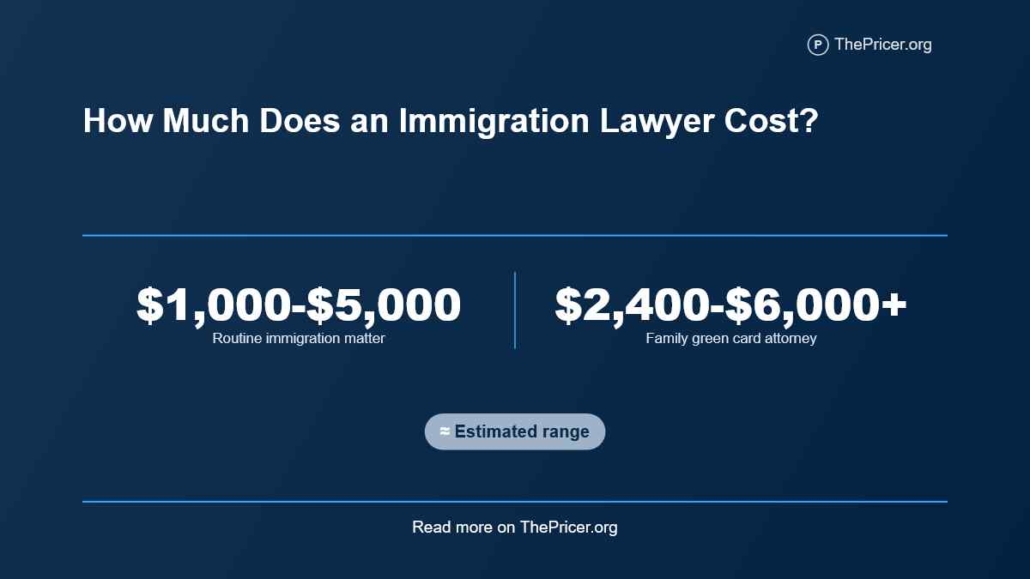
An immigration lawyer typically costs about $1,000 to $5,000 in attorney fees for many routine U.S. immigration matters. Straightforward naturalization work may cost around $1,000 to $2,800, while family-based green-card representation commonly runs $2,400 to $6,000+. Asylum, waivers, appeals, employment petitions, and removal defense can cost $5,000 to $15,000+, with especially difficult litigation exceeding those ranges.
Those figures are for legal representation. USCIS, Department of State, Department of Labor, immigration-court, medical-exam, translation, and other government or third-party costs are usually separate. In some cases, those additional charges add several thousand dollars to the final budget.
Article Highlights
Jump to sections
- Immigration lawyers commonly charge about $150 to $500 (at $30 per hour, earning that amount would take about 0.6 to 2.1 full-time workdays, before taxes) per hour when work is billed hourly.
- Routine immigration filings are often handled for a flat fee rather than hourly billing.
- Naturalization representation commonly costs around $1,000 to $2,800 in attorney fees.
- Family or marriage-based green-card representation commonly costs around $2,400 to $6,000+.
- Employment visa representation commonly costs around $2,000 to $6,000+ in legal fees.
- Asylum representation commonly runs about $3,000 to $10,000+, depending heavily on whether the case is affirmative or contested in court.
- Removal or deportation defense commonly costs $5,000 to $15,000+.
- Government filing fees are generally not included in advertised attorney prices unless the engagement agreement specifically says otherwise.
How Much Does an Immigration Lawyer Cost?
A realistic attorney-fee range for a relatively straightforward immigration matter is $1,000 to $5,000 (about 0.8 to 4.2 full-time workweeks at $30 per hour). Current market pricing varies considerably by case type. CitizenPath’s 2026 immigration-cost research, for example, calculated an all-in cost of about $8,344 for an attorney-assisted marriage-based adjustment case and about $2,902 for attorney-assisted naturalization, including government and common ancillary expenses.
Broader legal-industry guidance from Nolo’s immigration-law cost analysis also emphasizes that immigration attorneys often use flat fees for predictable filings and hourly billing for more complex matters.
| Immigration matter | Typical attorney fee |
|---|---|
| Initial consultation | $100-$400+ |
| N-400 naturalization | $1,000-$2,800 |
| I-130 family petition only | $1,000-$2,500 |
| Marriage / family green card | $2,400-$6,000+ |
| I-751 removal of conditions | $1,200-$3,500+ |
| H-1B petition | $2,000-$5,000+ |
| O-1 / complex employment visa | $3,000-$9,000+ |
| Asylum representation | $3,000-$10,000+ |
| Waiver case | $2,500-$7,500+ |
| Removal defense | $5,000-$15,000+ |
| Appeal / federal litigation | $4,000-$10,000+ |
These are planning ranges rather than regulated prices. Attorneys set their own fees, and the scope of representation matters more than the label placed on the case.
Billing Methods
Flat fees are common for predictable matters such as an I-130 petition, naturalization application, green-card adjustment package, or H-1B petition.
Hourly billing is more common for consultations, difficult evidence problems, litigation, appeals, and unusual matters where the attorney cannot accurately predict the work involved.
Stage-based billing divides a larger case into separate projects. An employment green-card case might separately price PERM labor certification, the I-140 petition, adjustment of status, Requests for Evidence, and appeals.
A flat fee does not necessarily include everything that happens later. The engagement agreement should say whether interviews, RFEs, Notices of Intent to Deny, motions, appeals, court appearances, or travel require additional payment.
Family Green Cards
Attorney representation for an uncomplicated marriage or family-based green-card case commonly costs approximately $2,400 to $6,000+ (about 2 to 5 full-time workweeks at $30 per hour).
The government portion can already be substantial. Current marriage-green-card research from Boundless’ 2026 fee breakdown puts government costs at $1,305 to more than $3,000 depending on whether the applicant adjusts status inside the United States or completes consular processing abroad.
For U.S.-based adjustment cases, Form I-130 and Form I-485 are separate filings, and related work or travel authorization may also carry separate charges. Applicants should confirm the exact current amount using the official USCIS fee schedule immediately before filing.
That means a quote such as “$4,000 for a marriage green card” must be clarified. It may mean $4,000 in legal fees plus several thousand dollars in government and third-party expenses.
Naturalization
Legal representation for a straightforward N-400 citizenship application commonly costs around $1,000 to $2,800.
The standard N-400 filing fee is currently $710 online or $760 on paper. Qualifying applicants may be eligible for a reduced fee or waiver under USCIS rules.
For a straightforward applicant paying $1,500 in attorney fees and filing online, the modeled total is:
$1,500 attorney + $710 USCIS = $2,210
At $30 per hour of gross income, $2,210 represents approximately 74 working hours, or roughly 1.8 forty-hour workweeks.
Readers budgeting for the complete process can compare those figures with our detailed guide to the cost of becoming a U.S. citizen.
Employment Visas
Attorney fees for employment petitions vary because some applications are relatively form-driven while others require extensive evidence and legal argument.
An H-1B petition commonly carries attorney fees around $1,500 to $4,000+. Current 2026 H-1B cost guidance from Boundless notes that straightforward petitions can cost employers roughly $2,000 to $6,000 or more after required government fees and legal work are combined.
The government bill can include the Form I-129 base fee, ACWIA training fee, fraud-prevention fee, Asylum Program Fee, and optional premium processing.
Employment cases can also involve labor-law rules about who is permitted to pay particular expenses. For permanent labor certification, the U.S. Department of Labor explains that an employer may not shift certain PERM-related legal and recruitment costs to the foreign worker.
Employment Green Cards
An employment-based permanent-residence case can involve several distinct legal projects:
- PERM labor certification, when required
- prevailing-wage work
- recruitment
- Form I-140
- adjustment of status or consular processing
- responses to Requests for Evidence
Attorney fees of $5,000 to $15,000+ across several stages are realistic for more involved employment-green-card matters.
Applicants pursuing an investor route face a different cost structure altogether. Our detailed EB-5 visa cost guide covers the much larger investment requirement, USCIS fees, regional-center charges, and legal expenses involved in that program.
Consular Processing
Applicants completing immigrant-visa processing abroad encounter Department of State fees rather than the exact same set of USCIS charges as a person adjusting status inside the United States.
The Department of State’s official visa-fee schedule lists immigrant-visa and Affidavit of Support charges, while the National Visa Center collects required payments through CEAC.
This is another reason not to use one “green card filing fee” for every applicant.
Asylum Cases
 Asylum representation commonly costs roughly $3,000 to $10,000+. An affirmative case prepared for USCIS may cost less than a defensive asylum case litigated in immigration court because court proceedings can require witness preparation, extensive evidence, multiple hearings, and appeals.
Asylum-related government charges have also changed significantly. Because fee rules have moved rapidly, applicants should verify the current USCIS and EOIR schedules immediately before filing rather than relying on an older cost guide.
Removal Defense
Removal or deportation defense is among the most expensive common immigration-law matters because it is litigation rather than routine form preparation.
A practical legal-fee range is $5,000 to $15,000+, although lengthy cases involving expert witnesses, multiple hearings, waivers, motions, or appeals can cost considerably more.
The court fees themselves can now be significant. The Executive Office for Immigration Review’s current fee schedule lists $1,060 for an appeal from an Immigration Judge decision, $1,060 for many BIA motions to reopen or reconsider, and $1,095 for many motions before an Immigration Judge.
The Hidden Price
The lawyer’s quoted flat fee is frequently not the complete cost.
Additional expenses may include:
- USCIS filing fees
- Department of State visa fees
- immigration-court fees
- medical examinations
- vaccinations
- certified translations
- foreign document retrieval
- credential evaluations
- expert reports
- courier and mailing costs
- travel
- interpreter services
- Requests for Evidence
- motions and appeals
A relatively inexpensive representation agreement can therefore become much more expensive if the government requests additional evidence or the case moves into litigation.
This is why clients should ask one particularly important question before signing: “What specifically is not included in this fee?”
A Worked Example
Consider a straightforward marriage-based adjustment case in which an attorney charges $4,000.
| Expense | Modeled amount |
|---|---|
| Attorney fee | $4,000 |
| I-130 online filing | $625 |
| I-485 filing | $1,440 |
| Medical exam | $450 |
| Translations / records | $250 |
| Modeled total | $6,765 |
The attorney represents about 59% of the modeled total:
$4,000 ÷ $6,765 = 59.1%
The remaining 40.9% consists of government and third-party expenses.
This is a ThePricer example rather than a national average and deliberately excludes optional work authorization, advance parole, RFEs, waivers, appeals, and unusual evidence.
When Costs Rise
The strongest price driver is usually case complexity.
A previously denied case requires the new attorney to understand what went wrong. Criminal arrests or convictions may require separate legal analysis. Prior unlawful presence, alleged misrepresentation, removal orders, unauthorized employment, or disputed relationships can completely change the work required.
Fees also rise when there are tight deadlines, missing evidence, waivers, RFEs, multiple applicants, hearings, or appeals.
This makes comparing lawyers purely by the headline fee risky. A $2,500 quote that excludes interview preparation and RFE responses can ultimately cost more than a $3,500 package that includes them.
Can You File Yourself?
Many USCIS forms can legally be filed without an attorney. Whether self-filing makes sense depends on the facts.
A clean green-card renewal or straightforward naturalization application may be manageable for some applicants. Cases involving criminal history, fraud or misrepresentation concerns, inadmissibility, unlawful presence, prior removal, previous denials, complex employment eligibility, or court proceedings carry much higher legal stakes.
An attorney does not create eligibility that the law does not provide and cannot guarantee approval. The value of competent counsel is in analyzing eligibility, identifying problems, presenting evidence, meeting procedural requirements, and explaining available strategies and risks.
Lower-Cost Help
People who cannot afford private representation may have alternatives.
The American Immigration Lawyers Association provides a lawyer-finding resource for people seeking immigration counsel.
For people who need free or reduced-cost representation, LawHelp explains how to locate nonprofit immigration assistance and accredited representatives.
The Catholic Legal Immigration Network’s national affiliate directory is another current source for nonprofit immigration legal programs.
Be especially cautious with unlicensed immigration consultants or “notarios.” Legal-aid guidance stresses that immigration legal advice should come from a licensed attorney or an appropriately accredited nonprofit representative.
Choosing a Lawyer
Start by confirming that the lawyer is licensed and in good standing with the relevant state bar. Immigration practice is federal, so the attorney does not necessarily need to be licensed in the state where the client lives, but the lawyer must hold valid authority to practice.
Ask each prospective lawyer:
- What exactly is included in the quoted fee?
- Are USCIS or court fees included?
- Are RFEs included?
- Is interview preparation included?
- Are court appearances included?
- What happens if an appeal is needed?
- Who will actually work on the case?
- Can the fee be paid in stages?
If you are comparing legal-service costs more broadly, our guide to timeshare lawyer costs shows how flat legal fees can differ from more open-ended legal representation.
What We Verified
- We checked the current USCIS fee schedule rather than relying on old immigration-cost articles.
- We verified current naturalization, family-petition, adjustment, employment, and immigrant-visa fee structures using official government sources.
- We checked current EOIR appeal and motion fees.
- We compared attorney-cost data using several independent legal and immigration sources.
- We separated attorney fees from government filing fees throughout the article.
- We distinguished routine flat-fee filings from removal litigation and appeals.
- We checked current AILA, LawHelp, and nonprofit legal-service resources for finding immigration assistance.
- We removed unsupported claims that hiring counsel guarantees or necessarily improves approval odds.
Answers to Common Questions
How much does an immigration lawyer charge per hour?
Current market pricing commonly falls around $150 to $500 per hour. Routine petitions are frequently offered for flat fees instead.
How much does an immigration lawyer cost for a green card?
Attorney fees for a straightforward family or marriage-based green-card case commonly run around $2,400 to $6,000+. USCIS fees, medical exams, translations, and other expenses are normally additional.
How much does a citizenship lawyer cost?
Legal representation for an ordinary naturalization case generally costs about $1,000 to $2,800. Government filing fees are separate unless the lawyer’s agreement explicitly includes them.
How much does a deportation lawyer cost?
Removal defense commonly costs around $5,000 to $15,000+. Appeals, waivers, expert evidence, extensive hearings, or federal litigation can push the total considerably higher.
Do immigration lawyer fees include USCIS fees?
Usually not. Legal fees and government filing fees are generally separate unless the written engagement agreement explicitly says otherwise.
Can an immigration attorney guarantee my case will be approved?
No. A lawyer can analyze the law, identify risks, prepare evidence, respond to government requests, and advocate for the client, but USCIS, the Department of State, or an immigration judge makes the actual decision.
Can I apply for immigration benefits without a lawyer?
Many applications allow self-filing. Whether that is appropriate depends on the person’s eligibility and history. Criminal issues, previous immigration violations, fraud concerns, removal proceedings, inadmissibility, and previous denials can make individualized legal advice much more important.
This article provides general cost information and is not legal advice. Immigration rules, government fees, procedures, and individual eligibility can change, so readers should verify current requirements with the responsible agency or a qualified immigration attorney before acting.
Disclosure: Educational content, not financial advice. Prices reflect public information as of the dates cited and can change. Confirm current rates, fees, taxes, and terms with official sources before purchasing. See our methodology and corrections policy.