
How Much Does It Cost To Make a Penny
Last Updated on February 24, 2023
Written by CPA Alec Pow | Content Reviewed by  CFA Alexander Popinker
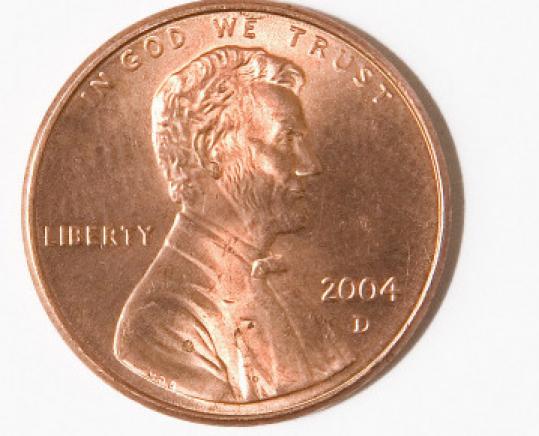
If you’re an average working man or woman in the US, you probably know what is a penny and how one looks. But how much does it really cost to make it? Without giving it too much thought you’d say it shouldn’t cost more than the actual penny value. This isn’t the case. It costs more to make a penny than its face value. Why would the US government spend more to make a penny than it would get from its value? It’s easy: the coin will be used in a lot of transactions, so the cost is worth it when you think about it.
How much does it cost to make a penny?
There are two major costs you should consider when you’re talking about the cost of making pennies (which are also called the Lincoln cents): the financial cost and the environmental expense. We’ll go over both of these prices in the article below.
The Financial Cost of a Penny
A report that came out in 2011 from the United States Mint, pointed out that it will cost about 2.1 cents to make a penny. This, of course, means that its production price is twice the face value of the coin in circulation. These costs will be split like this:
- 1.8 cents will go towards producing the penny
- 0.26 cents will go toward administrative costs
- 0.003 cents will go into the distribution efforts of the Reserve Banks
Even though they are rather expensive, the US Mint still makes a few million pennies every year.

No, We’re not talking about Penny from The Big Bang Theory
So yes, the coin’s face value is less than its actual value, because it actually costs 2.41¢ US ($0.0241 US Dollars (USD) to be exact) to make each penny. The face value of this coin was exceeded by its cost for the first time in 2006. This was due to a decision at the United States Mint, the agency of the government that prints money and strikes new coinage for the US when the composition of the penny was reconsidered.
The parts that are having the biggest impact on the final cost of making a penny are the materials that are used to make it. Pennies have that distinctive coppery color because they contain 2.5% copper. The other material used is zinc, 97.5% of a penny. The cost of metal extraction is much higher than in the past, because of all the new regulations of mining. This has made the prices of the metals used to make a penny rise dramatically in the early 21st century.
In an attempt to make the coins cheaper, the European Union used for its currency plastic in the composition of their coins. This could be something that the US government could do in an attempt to lower the cost of making pennies. This coin still remains iconic for the American people so attempts to change its composition have met serious opposition so far.
Another way of resolving the issue of the cost of making a penny would be to do away with this coin altogether. This could have a very big impact on the way people do business in the US because phrases like “It only costs a penny” would have no meaning anymore.
The penny isn’t the only coin that costs more to make than to own, the Nickel also has a face value lower than the physical cost of making. A nickel costs around 11.18¢ US to make. All of the other coins, like dimes or quarters, cost less to make than to own. To make a quarter, the US government spends around 11.14¢ US and the quarter has a face value of 25¢ US. Many US citizens believe that the costs of making pennies and nickels are balanced out by the lower costs of producing all of the other coins.
| 2022 – Manufacturing Unit Costs |
Penny | Dime | Nickel | Quarter |
| Costs of Goods Sold | $0.02 | $0.04 | $0.07 | $0.08 |
| Distribution to FRB | $0.00 | $0.00 | $0.00 | $0.00 |
| Selling & Administrative | $0.00 | $0.00 | $0.01 | $0.01 |
| Total | $0.02 | $0.04 | $0.09 | $0.10 |
 Each time the price of the materials will rise, the cost of making pennies will also rise. The Mint will have to make some tough decisions soon because it’s very unlikely that the cost of producing a penny will ever fall below 1¢, and more pennies are being made each year.
Many other government agencies from around the world have been financially accountable for distributing something that has a lower value than its manufacturing cost, so there’s a possibility that this will happen to the Mint also. This can only mean that pennies and nickels will suffer some changes to address this issue, soon, whether Americans like it or not.
It wouldn’t be the first time the penny will be changing; it happened before, in 1943 when the Mint made pennies using steel because copper was hard to get due to wartime demand.
So would we ever spend that much to make a coin? We wouldn’t and you shouldn’t also. It is illegal to make a penny, a nickel, or any other type of coin or paper money without proper licenses. Is it fair to spend more to make a currency than its final face value? If you take into account that the coin has to be durable to last years and years, then its creation price is legitimate.
Unfortunately, the cost to produce most coins — including the penny — has actually increased in recent years. The penny specifically increased more than 19% in cost. Part of the cost increase could be explained by the decrease in circulating coins. Total production has decreased, leading to an increase in the cost per individual coin.
The penny is currently the cheapest piece of U.S. currency to create. It’s about half of the cost of the next cheapest coin, which is the dime and the nickel. The quarter and half-dollar are the most expensive.
How does the Penny cost compare to other currencies?
Pennies are still the cheapest type of currency made by the U.S. Mint, followed by other coins like dimes, nickels, quarters, and half dollars. Although there is also the dollar coin, it didn’t become a part of this study. When it comes to paper money, the US $1 and $2 bills cost about 6.2 cents each to make, which makes them the cheapest to be made. They are followed by the $5, $10, $50, $20, and $100 bills, in this exact order.
What you should take out of this is that the federal government isn’t actually losing money when it comes to money being produced, as bills will cost a lot less to be made than their face value.
Also, the U.S. Mint has to release a biennial report with research into alternative metal compositions that can be used for American Coins, but so far, these reports haven’t been able to show anything groundbreaking.
The Environmental Cost of Pennies
The financial costs aren’t the only ones interesting when talking about the making of Lincoln cents. They also have an important environmental impact. It takes both zinc and copper to produce pennies and both these materials have to be mined. A lot of carbon dioxide emissions, as well as the emission of other pollutants, will result from mining. The processes used will also require a considerable amount of water, as well as electricity.
What’s also interesting is that with all of the government’s efforts to recycle as many materials as possible, the U.S. Mint never uses recycled materials when it is creating new coins.
Should the U.S. keep using pennies?
There are a lot of people that talk about getting rid of the penny completely, especially over the last decade. Due to their declining value, there are vendors that already refuse to accept pennies.
Although this isn’t taken seriously by the federal government, there are still a lot of institutions that talk about at least decreasing the cost of production for these and other coins.

love this website.
I don’t believe 2006 was the 1st time. How about 1982 when they quit using all copper? If my memory is correct a copper blank costed 1.75