
How Much Does a Stinger Missile Cost?
Updated on | Researched and reviewed by Alec Pow, Founder & Pricing Investigator
Prices, claims, and calculations checked against 8 cited sources. See our research methodology and corrections policy.
A modern FIM-92 Stinger missile is best treated as a roughly $480,000 to $620,000-class weapon based on recent U.S. production contracts and Army budget figures. That is dramatically higher than the roughly $120,000 figure commonly repeated in older articles.
The cleanest recent production benchmark comes from a $624 million U.S. Army contract for 1,300 Stinger missiles awarded to Raytheon in 2022. Dividing the contract value by the missile count gives approximately $480,000 per missile-equivalent.
But $480,000 is not a clean retail-style missile price. The contract also paid for engineering support, test equipment, obsolete-component replacement, production modernization, and factory acceleration.
More recent Army budget documents put the gross Stinger program unit measure at approximately $582,500 in FY2025 and $619,800 in FY2026. Those figures involve modernization spending and should not be treated as a manufacturer sticker price either, but together they show how far Stinger economics have moved beyond the old $120,000 estimate.
Article Highlights
Jump to sections
- A useful current Stinger cost benchmark is approximately $480,000 to $620,000 per missile-equivalent.
- The U.S. Army’s 2022 replenishment contract paid $624 million for 1,300 Stingers, or about $480,000 each if the contract is divided by missile quantity.
- That $480,000 figure includes engineering, testing, production modernization, and other costs, so it is not a bare missile factory price.
- Army budget documents show gross Stinger program unit measures of roughly $582,500 in FY2025 and $619,800 in FY2026.
- NATO announced another Stinger order worth nearly $700 million in 2024.
- The Army evaluated approximately 2,700 older unserviceable Stingers for refurbishment after the war in Ukraine increased demand.
- Stinger can engage low-altitude aircraft, helicopters, cruise missiles, and unmanned aircraft.
- The U.S. Army is now developing a Next Generation Short Range Interceptor to eventually replace Stinger.

How Much Does a Stinger Missile Cost?
The best public starting point is Raytheon’s 2022 Stinger production announcement.
The Army awarded the company $624 million to produce 1,300 missiles as part of the effort to replenish U.S. stocks after weapons had been transferred to Ukraine.
The simple arithmetic is:
$624,000,000 ÷ 1,300 = $480,000
That makes $480,000 per missile-equivalent the most transparent recent mass-production number.
But it should not be described as the bare cost of one missile.
Raytheon explicitly said the contract included engineering support, test equipment, work to address obsolete components, modernization of key parts, and investments intended to accelerate production.
In other words, taxpayers were buying missiles plus the ability to keep building missiles.
Current Budget Cost
Army budget documents provide another useful cost signal.
The Army’s FY2025 missile procurement book lists a gross weapon-system unit measure for the Stinger modification program of approximately:
| Budget year | Gross unit measure |
|---|---|
| FY2025 | $582,527 |
| FY2026 | $619,794 |
| FY2027 | $619,794 |
These are not clean new-missile flyaway prices. The budget line covers Stinger modifications and modernization work.
That distinction matters.
It would be inaccurate to say, “A Stinger costs exactly $619,794.”
A better interpretation is that recent public U.S. spending places the weapon firmly in the roughly half-million-dollar class, with the exact cost depending on whether the number includes a newly produced missile, refurbishment, upgraded electronics, factory investment, support, or ancillary equipment.
Why So Expensive?
One reason current Stinger costs look so different from historical figures is that the United States had allowed much of the production infrastructure to age.
Stinger entered U.S. service in the early 1980s. By the time Russia’s full-scale invasion of Ukraine sharply increased demand in 2022, important components were obsolete or no longer in normal production.
The $624 million replenishment contract was therefore partly an industrial-base investment.
Raytheon said the money would support:
- 1,300 newly produced missiles
- Engineering work
- Test equipment
- Replacement of obsolete technology
- Modernization of key components
- Production acceleration
This is one reason defense contract values should not automatically be divided by the number of missiles and presented as a precise unit price.
The calculation is still useful, but its scope has to be explained.
Ukraine Replenishment
The war in Ukraine transformed the economics of Stinger production.
The Department of Defense said in September 2022 that Stingers were among the weapons removed from existing U.S. inventories and sent to Ukraine under Presidential Drawdown Authority.
At the time, DoD said about $624 million had already been committed specifically to replacement Stinger contracting.
This matters because that money was not simply buying extra missiles for inventory growth.
A significant part of the spending was replacing weapons the United States already owned but had transferred to Ukraine.
The old article’s roughly $120,000 number therefore dramatically understates what replenishing a Stinger round represented in the post-2022 production environment.
The NATO Order
Demand continued beyond the initial U.S. replenishment effort.
Reuters reported in July 2024 that NATO’s procurement agency placed an order for Stinger missiles worth nearly $700 million.
That contract was expected to help sustain Stinger production into 2029.
The contract value cannot be converted into a reliable unit price because the public announcement did not provide a directly comparable missile quantity and package breakdown.
Still, the size of the award is important.
The 2022 U.S. contract was worth $624 million.
The later NATO order was nearly $700 million.
Combined, those two publicly announced demand signals alone represent more than:
$624 million + $700 million = approximately $1.324 billion
in Stinger-related procurement.
Old Missiles Matter Too
Building new Stingers was only one way the Army tried to replenish inventory.
The U.S. Army’s Stinger refurbishment program also examined approximately 2,700 previously unserviceable missiles following Russia’s invasion of Ukraine.
The original estimate suggested perhaps 1,100 of those rounds could be restored.
Army officials later expected the program to return approximately 70% of the 2,700 missiles to inventory.
That implies approximately:
2,700 × 70% = 1,890 missiles
potentially restored to service.
Refurbishing old inventory can be economically attractive when a replacement round effectively sits in the half-million-dollar cost class.
If 1,890 replacement missiles were valued using the $480,000 contract-equivalent benchmark, newly replacing that number of rounds would represent approximately:
1,890 × $480,000 = $907.2 million
That is not the documented cost saving from refurbishment. It is simply a useful scale comparison showing why restoring existing inventory can matter financially.
What Is a Stinger?
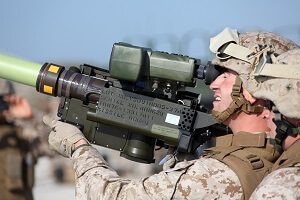
The FIM-92 Stinger is a lightweight short-range air-defense missile that can be carried and launched by ground forces or integrated onto vehicles and aircraft.
Current Raytheon Stinger information says the system has been adopted by 25 nations and all four U.S. military services.
The company describes the current Reprogrammable Microprocessor variant as capable of engaging aircraft and cruise missiles.
The Army has also upgraded Stingers for the drone threat.
Since 2019, missiles have been retrofitted with proximity fuzes that allow the warhead to detonate close to a small unmanned aircraft rather than requiring a direct impact.
That makes the modern Stinger considerably different from the Cold War missile many readers associate with Afghanistan in the 1980s.
Missile vs Launcher
Another common source of confusion is the difference between the Stinger missile and the complete shoulder-fired weapon system.
A Stinger engagement requires more than the expendable missile itself.
The complete weapon arrangement can include the missile round, launch tube, gripstock or launch assembly, identification and targeting equipment, batteries, training equipment, spare components, and support.
Mounted Stinger configurations add even more hardware.
Therefore, a military purchase described as a “Stinger system” may cost considerably more per deployable firing position than a single missile round.
This is the same accounting issue seen with larger air-defense systems. Our guide to the cost of a Patriot missile system shows why the interceptor price and complete air-defense system price can differ enormously.
Cost Per Shot
For a simplified battlefield-cost comparison, using $480,000 as the 2022 production-contract benchmark means every Stinger fired represents nearly half a million dollars of replacement-scale procurement.
Ten missiles:
10 × $480,000 = $4.8 million
Twenty missiles:
20 × $480,000 = $9.6 million
One hundred missiles:
100 × $480,000 = $48 million
Using the FY2026 Stinger modification program unit measure of approximately $619,794 pushes those modeled figures even higher.
One hundred at that rate would equal:
100 × $619,794 = $61.98 million
These calculations do not mean that the military literally receives an invoice for $480,000 or $619,794 every time someone pulls a trigger.
They illustrate the replacement value implied by current procurement spending.
Drone Economics
Stinger’s ability to engage drones creates an uncomfortable cost question.
A roughly half-million-dollar interceptor may sometimes be used against a drone that costs far less.
That can look economically irrational if the comparison stops at:
missile cost vs drone cost.
But militaries normally consider the value of what the drone could destroy.
Using a $500,000 interceptor against a $50,000 drone may still make financial sense if that drone threatens a multimillion-dollar radar, helicopter, ammunition depot, command post, or group of personnel.
This is why modern militaries increasingly use layered air defense.
Cheaper guns, electronic warfare, directed-energy systems, and specialized counter-drone weapons can deal with lower-end targets, while Stinger remains available when the threat justifies an expensive missile.
Stinger vs AMRAAM
Stinger is expensive for a shoulder-fired weapon but remains far cheaper than many larger air-defense missiles.
Our current analysis of AMRAAM missile pricing puts the FY2026 AIM-120 all-up round at approximately $1.169 million.
Using the $480,000 Stinger contract-equivalent number:
$1.169 million ÷ $480,000 = about 2.4
So one current AMRAAM round costs roughly 2.4 times the 2022 Stinger production-contract benchmark.
That price difference reflects very different missions, range, guidance systems, launch platforms, and performance.
Stinger vs Patriot
The cost gap becomes much larger higher in the air-defense stack.
Current Patriot PAC-3 MSE interceptors are measured in several million dollars per round, while complete Patriot firing units with missile inventories can cost hundreds of millions or more than $1 billion.
A Stinger at roughly $480,000 to $620,000 therefore occupies a comparatively inexpensive short-range tier.
That does not make it cheap.
It means the entire air-defense market is expensive.
The layered structure matters because using a multimillion-dollar Patriot interceptor against every low-altitude threat would be economically and operationally unsustainable.
The Replacement
Stinger is not expected to remain the Army’s primary shoulder-fired interceptor indefinitely.
The Army is developing the Next Generation Short Range Interceptor, or NGSRI.
The Government Accountability Office’s review of Army air and missile defense modernization identifies NGSRI as part of the service’s future short-range air-defense portfolio.
Raytheon completed a successful ballistic test of its candidate in February 2026 and followed it with a guided system demonstration in July 2026.
The company says the replacement is intended to offer greater range and capability than Stinger while remaining compatible with shoulder-fired and mounted applications.
Stinger therefore sits in an unusual period financially: demand is high enough to require renewed production and modernization, even as the Army spends money developing its successor.
More Stinger Development
 The Army is also experimenting with extending what can be achieved within the Stinger form factor itself.
Its Red Wasp research program applies solid-fuel ramjet technology to a Stinger-sized interceptor.
The goal is to increase effective range without abandoning the basic size class.
That R&D spending is separate from buying today’s Stinger missiles, but it highlights another hidden cost of missile programs: maintaining a weapon’s relevance can require years of engineering investment beyond the production price of individual rounds.
Readers interested in the next generation can also compare our analysis of the AIM-260 missile cost, where classified procurement makes unit-price calculations even more difficult.
Hidden Price
The biggest hidden cost of a Stinger is not the launcher. It is maintaining the industrial base.
The United States needed new test equipment, redesigned components, engineering work, supplier investment, refurbished inventory, and factory capacity just to restore production at the scale required after 2022.
That means the real cost of maintaining Stinger capability includes:
- New missile production
- Component redesign
- Service-life extension
- Depot refurbishment
- Testing equipment
- Factory tooling
- Supplier capacity
- Training equipment
- Spare components
- Future replacement-system development
The difference is visible in the 2022 contract itself.
If the 1,300 missiles genuinely cost $480,000 each on a bare production basis, there would be no room inside the same $624 million contract for all the engineering and factory work Raytheon said it also covered.
Therefore, $480,000 is better described as a contract-equivalent cost than a bare missile price.
What We Verified
Answers to Common Questions
How much does one Stinger missile cost?
A reasonable current public benchmark is approximately $480,000 to $620,000 per missile-equivalent. The lower number comes from dividing the Army’s $624 million 2022 contract by 1,300 missiles. The higher figures come from more recent Army Stinger modernization budget unit measures. Neither should be confused with an exact standalone factory price.
Why do some websites say a Stinger costs $120,000?
That figure reflects older pricing and does not match recent U.S. procurement economics. Restarting and modernizing Stinger production following transfers to Ukraine required engineering, new components, tooling, testing equipment, and factory investment.
Was the $624 million contract only for missiles?
No. It covered 1,300 missiles plus engineering support, test equipment, modernization of obsolete components, and work to accelerate production. That is why dividing $624 million by 1,300 produces a useful contract-equivalent figure rather than a pure missile price.
How much would 100 Stinger missiles cost?
Using the $480,000 contract-equivalent benchmark, 100 rounds represent approximately $48 million. Actual government purchasing costs depend on the contract scope and support included.
Is Stinger still being manufactured?
Yes. Production was expanded after the U.S. transferred substantial inventory to Ukraine, and a later NATO procurement is helping keep production active through the end of the decade.
Is Stinger still effective against drones?
Current versions include a proximity-fuze capability designed to improve performance against unmanned aircraft. However, militaries also pursue cheaper counter-drone options because firing a roughly half-million-dollar interceptor against inexpensive drones can create an unfavorable cost exchange.
What will replace the Stinger?
The U.S. Army is developing the Next Generation Short Range Interceptor. Raytheon and other industry participants have worked on competing solutions, with Raytheon conducting successful tests and demonstrations through 2026.
Disclosure: Educational content, not financial advice. Prices reflect public information as of the dates cited and can change. Confirm current rates, fees, taxes, and terms with official sources before purchasing. See our methodology and corrections policy.