How Much Does it Cost to Become a Pilot?
Last Updated on March 5, 2024
Written by CPA Alec Pow | Content Reviewed by  CFA Alexander Popinker
Learning to fly is not hard. People that used to have some of the most different jobs from all over the world have already become pilots. Although there are some exceptions, generally speaking, everyone who can drive a car can aviate. The most important thing (which depends on personality) for an individual who wants to become a pilot is to have responsibility for other people’s lives and to be a prudent pilot.
The most common obstacle to becoming a pilot and realization of this dream is the fact that people tend to believe that they won’t be able to learn how to fly and that the ideal pilot has magical qualities. Surely it is not the case, so if you decide to become a pilot, you have great chances to go home with a license, in less than a year!
People, who have both physical and mental wellness, have some physics and mathematics knowledge and, in addition, dispose of a nice bank account can attend flight school to obtain a patent.
How much does it cost to become a pilot?
The average cost of a Private Pilot License is somewhere between $17,000 and $25,000, while the average cost to be a qualified Commercial Pilot can reach around $35000. In this case, ground training means hard work and lower prices while air training can be fun and easy, but really expensive at the same time.
People are different; we all have different skills and knowledge capabilities, which leads to different training costs.
It is very important to have constant training, so you have to be careful about your budget plan and stick to it. A pilot’s skills are built up in time and therefore you must have patience in the flight learning process. If by any chance you have to interrupt your flight training, do it after your first solo flight.
If You Have Enough Money, Check Out The Most Expensive Airline Services
There are two forms of flight training: dual and solo. Dual training is the one in which a Flight Instructor shows you different maneuvers in the plane and you practice them, under the supervision of your Instructor. The solo form is constant training, where you can practice everything you have been taught.
The dual form of Instruction is the most expensive because you pay around $2,75 per minute for the operating cost of the aircraft, meaning fuel, maintenance, insurance, and also the Instructor’s fee. Solo flying is less expensive, with a price of around $2 per minute. If you want to reduce the costs you should be well-prepared and read all your training manuals carefully because this doesn’t cost you a thing.
Costs for Private Pilot Certificate, Commercial Certificate, and Other Ratings
You will find below rough estimates of the prices you will have to pay to complete the most common certificates and ratings, each listed in its own row. Most airline programs include a combination of these certifications. The actual time you will spend to complete these will be based on the full-time training, meaning that you will be flying 5 days per week.
| Certification or Rating | Cost Range | Time to Complete |
|---|---|---|
| Private Pilot Certificate | $17,000-$24,000 | 1-2 Months |
| Certified Flight Instructor Instrument | $5,000-$8,000 | 1 Month |
| Multi-Engine Add On (with 25 hours of flight time) | $15,000-$18,000 | 2 Weeks |
| Instrument Rating | $20,000-$24,000 | 1-2 Months |
| Certified Flight Instructor | $5,000-$8,000 | 1 Month |
| Commercial Certificate | $24,000-$35,000 | 1-2 Months |
As the prices are pretty high, most schools will offer different financing options.
Pilot Training Cost
Among the most important factors affecting the cost of becoming a pilot are the flight instructor’s time and aircraft-related expenses. There are also some supplies you will have to get before you start your training, but we will talk more about these in the lines below.
Supplies
You will need supplies, charts, and textbooks for any certificate or rating you will want to get. Before you can start, you will have to make sure you’ve gotten the right pilot gear, although professional brands will surely last through many years of usage. Among the most important items will be the fuel tester, pilot bag, flight computer, kneeboard, and headset.
Depending on the program you’re registering under and the agency you’re going to, these supplies might or might not be included in the price.
Flight Instructor Time
You will usually be billed hourly for flight instruction. You will have to pay for instruction time both when you’re on the ground receiving ground instructions before and after the flight, as well as while you’re flying and in the aircraft, receiving training.
Before checkrides or exams, you will also have to pay for instruction that is ground-only, to make sure you know what you are doing.
Aircraft Rentals
You will probably be billed per hour for aircraft rates, which are usually rounded to the nearest tenth. These will be billed differently depending on the school you go to. While some bill them wet, an all-inclusive number including fuel, others charge for dry, where the student will have to pay for the fuel used in flights.
The Hobbs time that is recorded on the aircraft will be used for billing the aircraft time. This begins and ends when the engine starts and stops.
The type of plane will also influence the price you will be asked to pay.
While smaller planes will cost less money to rent, making them a better value for your buck, larger planes, which are more complex, will usually cost more to rent, because they will also cost more to operate.
Cost of Pilot Exams
Written Exam
The FAA testing center will charge you a fee when you have to take your written exam. The fee is somewhere around $150, although this can vary slightly depending on the type of exam and your geographical location.
FAA Practical Exam
A designated pilot examiner, or DPE for short, will charge you for their time when they help you do your check ride. Usually, they will charge somewhere between $750 and $1,300, although the costs will likely depend on your region and the type of checkride you’re doing.
Private Pilot License Cost
The private pilot course is structured in three different phases of training. You will first have to learn what you need to fly safely with the plane, during a pre-solo phase. This part of the training will culminate in the first flight alone, a flight that is set around the traffic pattern.
The next phase involves cross-country training, in which you will have to learn about moving between airports and navigation in general. The practical exam preparation will be the last phase of the course. This is where you will have to bring all of the skills together and show that you master them.
Then, all of these will be followed by the checkride and a two-part practical exam. The first part will involve an oral question and answer session, which will be followed by a flight test in the plane you used to learn on.
According to FARs (The Federal Aviation Regulations), you will need a minimum time of 35 hours to get a private pilot certificate under Part 141 training. Under Part 61, on the other hand, you will need 40 hours of training. According to statistics, the national average is somewhere around 70 hours. This means that most pilots will need more than the regulatory minimums.
For a 35-hour flight training, the minimum private pilot license will cost around $12,000.
Instrument Rating Cost
The student pilot will follow the same general schedule for the instrument rating course as you would for the private pilot one.
Considering that you will have to complete the written exam at the end, a lot of pilots will just want to attend a formal ground school in order to make sure they are prepared for it. You will be required to go through 35-40 hours of training. These are broken into several phases. Just like in the case of the private pilot license, you will have to pass the practical exam in the end. This consists of both oral knowledge testing and a practical flight skills checkride.
You will spend about $12,000 on 14 hours of dual in the RedBird full motion simulator and 21 hours in the G1000-equipped Cessna 172SP.
Cost to Become a Commercial Pilot
When it comes to the cost of the commercial pilot license, it will be closer to $24,000. Make sure you pay attention to and work closely with the flight instructor when you get to training flights, as the exact makeup of flights you will need to get past regulations will vary quite a lot.
Multi-Engine Rating Cost
You can add a multi-engine rating to any grade of pilot certificate, regardless of whether it is ATP, commercial, or private. It is something that a lot of pilots will want to get as an add-on to the commercial certificate.
This course is made of dual instruction in a multiengine airplane, over ten hours. You shouldn’t need more than five hours of ground instructions to know everything about the plane’s systems and the technology and aerodynamics of the multiengine.
You will spend around $5,000 in total for the multiengine rating including a 7 hours course in a Piper Seminole.
People that want to become airline pilots will need at least 25 flight hours on multi-engine planes, which should cost at least $15,000.
Flight Instructor Cost
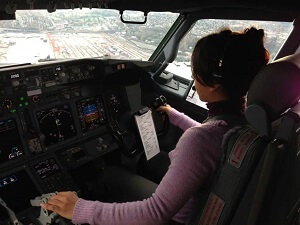 The flight instructor course is designed to revolve more around ground training. You won’t have to learn any new airplane systems or maneuvers. Instead, you will have to know the material you have learned to the point that you will be able to teach someone else.
For this CFI course, you will have to pass two written exams. One exam is the Flight Instructor-Airplane exam, which is very similar to the commercial pilot aeronautical knowledge exam.
The second exam is called the Fundamentals of Instruction (FOI), and is created around the basic teaching techniques, how to structure a curriculum and lessons, communication, and introductory learner psychology.
Expect to spend $150 on each of these two exams.
You will only need about ten hours of total flight time to prepare for this. This is because, at this point, you should already have enough flight experience. When getting the single-engine airplane rating, you will have to do spin training as well.
The CFI training course will have an estimated total cost of about $4,000 to $7,000. You will likely spend considerably more than this if you’re going for the 141 CFI program. This is because this one comes with more rigid flight requirements.
Airline Transport Pilot Cost
If you want to become an airline pilot (ATP) the qualifications involve accruing 1,500 or more hours of total flying time. Not a lot of people are able, or willing to pay for all that time. This is why the ATP remains a license for working professionals that are farther on their career path.
Before hurrying to get an ATP license, keep in mind that a big chunk of the jobs available in aviation won’t need more than a commercial pilot license.
As flight training is rather simple, the cost of getting an ATP won’t be as high as you might think.
If you’re the type of professional pilot to already have built up 1,500 flying hours, then you must already be quite experienced.
It’s not uncommon for ATP applicants to need less than 20 hours of flight training to master the checkride. You might need a little more if you don’t do a lot of instrument flying, as the ATP checkride is heavily an instrument flight.
You will also face a written exam. Most people consider the written ATP exam a really difficult one, but pilots find success most of the time by going for independent study programs while checking in with their flight instructors from time to time.
Most people don’t pay for the ATP certificate, because when they will need it, the airline they work for will be more than happy to pay for it in their place. But if you insist on paying for this, expect to spend around $5,000.
Are there any age restrictions for flight training?
Yes. The minimum age to start courses is 17 years old. To get a private pilot license (PPL) one must have at least 17 years old, for the commercial pilot license (CPL) the limit is 18 years old, and for ATPL (airline transport pilot license – large airplanes) one must be minimum 23 years old. There is no maximum age limit, but one must have a valid medical certificate for the specific course.
Check Out Our Article About The Cost of a Private Jet
What kind of medical examination is required?
Before being authorized to fly a plane, you will need a medical examination given by an AME (Aviation Medical Examiner).
Vision must be normal if you wear glasses or contact lenses; they must correct your vision, and you must distinguish the colors red and green. You cannot have nasal or throat problems that can get worse during the flight. If you have asthma or allergy it does not, necessarily, mean you cannot fly.
To be sure, ask your doctor if you can. You must have good balance and hear whispers from a meter away. You cannot have mental or neurological problems like psychosis, alcoholism, epilepsy, or any other disease that causes loss of consciousness or serious medical conditions, for example, heart attack or chronic heart diseases, diabetes, and diseases of this kind.

Leave a Reply
Want to join the discussion?Feel free to contribute!