
Cost to Send Money with Western Union
Western Union is a handy solution when you want to transfer money to a family member at home or abroad. Transfers are made in minutes or hours, and money can be withdrawn from any Western Union agency, their ATMs, or partner banks. There is also the option to receive the money directly into your account or on your debit card.
How Much Does It Cost to Send Money with Western Union?
The cost of transferring money through Western Union will be affected by various factors such as the amount of money you are sending, how fast you want the money to arrive, the place where you process the transfer (online, via phone, or at an agent location), where you are transferring the money from and where it will be picked up.
When talking about the countries, the costs will depend on the country you are sending to, the sum of money you are sending, and how you are going to fund the account (bank account or credit card). In terms of Western Union fees, you should be prepared to pay around $6 for transferring up to $50 anywhere in the United States of America, and around $100 for sending $1,000 using a credit card.
In the table below you will find the average fees for sending $100 in different countries around the world.
| To Country | Cost Quoted |
| Germany | If you send money online and deposit it into the recipient’s bank account from your bank account, $6 |
| Online or through the mobile app via credit card, $13 in fees when the recipient picks the money up at the agent’s location | |
| If you send cash in person but the recipient picks it up at the agent, you will be charged $13 | |
| When the recipient goes to the agent location but you send the money via bank account, either through the mobile app or online, you will pay $12 in fees | |
| When you send money online with your credit card deposited directly in the recipient’s bank account, you will be credited $10 | |
| United Kingdom | If you send money online and deposit it into the recipient’s bank account from your bank account, $5 |
| Online or through the mobile app via credit card, $12 in fees when the recipient picks the money up at the agent’s location | |
| When the recipient goes to the agent location but you send the money via bank account, either through the mobile app or online, you will pay $12 in fees | |
| If you send money online and deposit it into the recipient’s bank account from your bank account, $3 | |
| When you send money online with your credit card deposited directly in the recipient’s bank account, you will be credited $5 | |
| China | $8 if paid with cash in person and deposited into the recipient’s bank account |
| $11 via bank account if recipient picks up at agent location (done online or mobile app) | |
| $11 if paid with cash in person and recipient picks up via agent | |
| $10 via credit card if recipient picks up at agent location (done online or mobile app) | |
| $0 with a bank account or credit card when sent online and deposited into recipient’s bank account | |
| India | $8 if paid with cash in person and deposited into the recipient’s bank account |
| $5 via credit card if recipient picks up at agent location (done online or mobile app) | |
| $5 via bank account if recipient picks up at agent location (done online or mobile app) | |
| $2 with credit card when sent online and deposited into the recipient’s bank account | |
| $11 if paid with cash in person and recipient picks up via agent | |
| $0 with bank account when sent online and deposited into the recipient’s bank account | |
| Jordan | $10 if paid with cash in person and recipient picks up via agent |
| $11 via bank account if recipient picks up at agent location (done online or mobile app) | |
| $12 via credit card if recipient picks up at agent location (done online or mobile app) | |
| Phillippines | $8 if paid with cash in person and deposited into the recipient’s bank account |
| $5 via credit card if recipient picks up at agent location (done online or mobile app) | |
| $4 with credit card when sent online and deposited into the recipient’s bank account | |
| $10 if paid with cash in person and recipient picks up via agent | |
| $0 with bank account when sent online and deposited into the recipient’s bank account |
How do you send money via Western Union?
Transfer money in person
If you want to make a personal money transfer in the country or abroad, you can go with your ID to one of the Western Union agencies or to the branches of the partner banks. You will need to fill out a form and pay the amount you want to send, plus fees, in cash. You will then receive a receipt and a transfer control number (MTCN) to pass on to the person you are sending the money.
The recipient can then go to any Western Union counter in their city to pick up the money with their ID and transfer control number.
Money transfer online
There is also the option of making a money transfer online using a credit or debit card. You can send the money online to a Western Union agency for cash pickup, directly to the recipient’s bank account or mobile phone. Depending on the country you want to send money to, different types of services are available.
Data required for money transfer via Western Union
In addition to your ID, you need to send the operator:
You might also like our articles about the cost of a credit card, an ATM machine, or a personal check cashing.
- the name and surname of the person to whom you want the money to go;
- country of destination;
- the amount you are sending.
You will then receive a receipt with the MTCN tracking number of the transfer to communicate to the recipient.
In order to pick up the money, in addition to an identity document, the recipient needs:
- sender’s name;
- sender’s city and country;
- MTCN number;
- amount to withdraw.
Which are the additional expenses?
If you choose to use your credit card instead of your bank account in order to transfer money via Western Union, you will have to pay a fee larger than $12. Plan on spending a maximum of $10 for transferring $100.
Also, when you use a credit card, the company will see it as a “cash advance” and this means that you will have to pay a fee and a higher interest rate. In order to avoid these extra costs, you should use a debit card.
If you want to transfer the money within minutes, the fees would start at around $12 per $100. Though, the costs would be much lower if you don’t choose this sending option.
In case you choose to go to an agent location and send the money in person, then you may incur extra costs, that, in general, start at around $10. The fees will increase as the amount of money you are transferring increases.
It is important to pay attention to the exchange rates because Western Union is known for hiding fees regarding the real exchange rates.
Important things to consider
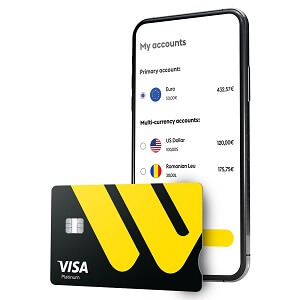 Some of the common locations which offer Western Union services include Winco Foods, Kroger, Quicktrip, Walgreens, Fry’s, 7-Eleven, and Safeway.
A money transfer via Western Union takes a few minutes to a few hours. If you need the money to arrive as quickly as possible, you can transfer it via a credit or debit card. The recipient can pick up the cash at any Western Union branch, depending on the location’s business hours.
Usually, Western Union limits transactions to $2,999, but in some situations, you can exceed this limit.
In the case of an online transfer, you can send up to $10,000 in a 12-month period before it is necessary to verify your identity.
At any time after you have sent the money, you can check the status of the transfer online. Your name and tracking number (MTCN) printed on the receipt is sufficient.
If you prefer to make a money transfer in person, you can do it at one of the Western Union agencies or at the branches of the partner banks.
In the case of an international money transfer, the recipient will usually receive the money in the local currency, and the amount will be calculated according to the exchange rate on the day of dispatch.
Tips for saving money
Avoid paying extra fees by using your bank account when transferring money through Western Union.
From time to time there are special promotions for transferring specific sums of money from and to specific locations or countries. Search online for these promotional codes in order to save some money.
There is the Western Union MyWU program that you can enroll in and gain reward points at each transfer. For instance, for every $2 in fees, you will get one point. This program saves all of your data regarding past sends, such as transfers to companies.
It will be always cheaper to send money via the mobile app or online, instead of sending it in person.
Western Union is not the only company that offers money transfer services. There are some other services you can use to send money to different cities or countries, at a lower cost.
Compare transfer fees and exchange rates carefully as they can vary by amount, currency, and destination country. Fees and charges are subject to change without notice.

Leave a Reply
Want to join the discussion?Feel free to contribute!