,

How Much Does a Dialysis Machine Cost?

Last Updated on September 24, 2025 | Prices Last Reviewed for Freshness: January 2026
Written by Alec Pow – Economic & Pricing Investigator | Medical Review by Sarah Nguyen, MD

Educational content; not medical advice. Prices are typical estimates and may exclude insurance benefits; confirm with a licensed clinician and your insurer.

Hospitals, clinics, and home programs ask about dialysis machine cost when they budget for new lines, expand capacity, or shift care closer to home. This guide puts real numbers next to the choices that buyers face, from new units with full-service agreements to refurbished gear and lease models. It covers purchase price, accessories, supplies, and support so a team can forecast both the check they write and the bills they will keep paying.

A portable home hemodialysis system is not priced like an in-center workhorse, and neither looks like a peritoneal cycler on a supply contract. The differences matter because they change the capital outlay, the pace of depreciation, and the operating spend tied to disposables and water. Costs vary. Features matter.

You will see the going rates for new and used machines, the line items that drive total cost of ownership, and practical ways to save without compromising safety. Every dollar should buy reliability, uptime, and outcomes.

Article Highlights

  • New home HD machines often list around $26,000–$47,000, as outlined by GoodRx. Refurbished in-center units can land near $3,000–$13,000 on used marketplaces like BiMedis.
  • The ESRD PPS base is $273.82 per treatment in 2025, per the Centers for Medicare & Medicaid Services.
  • Plan $6,000–$20,000 for a dialysis-grade RO system per location, based on vendor listings and pricing pages such as Alibaba.
  • Disposables like dialyzers and bloodlines create recurring spend each treatment, with examples shown by distributors like MedicalS Exim.
  • Used marketplaces provide transparent comps that help when you negotiate, for instance listings on BiMedis and DOTmed.

How Much Does a Dialysis Machine Cost?

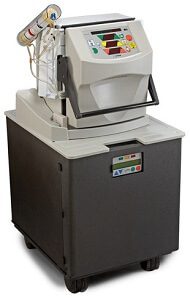
Across current sources, a new home hemodialysis machine typically lists around $26,000–$47,000 in the United States, with providers sometimes offering rental or used options that lower the upfront spend. This range tracks consumer-facing summaries on GoodRx and aligns with manufacturer pages describing portable systems like the NxStage System One for home programs.

For in-center equipment, published marketplace ranges for hemodialysis machines run roughly $10,000–$50,000 new depending on brand and configuration, while peritoneal dialysis machines can run higher because they tend to be bundled with proprietary disposables and training. Refurbished stock often lists well below new, with common models like the Fresenius 4008S showing used asking prices from the low $2,000s to the low $13,000s on exchanges such as DOTmed.

Accessories matter. Water treatment is a must for hemodialysis. Portable reverse osmosis units sized for dialysis rooms commonly price in the $6,000–$20,000 band depending on capacity and features like heat disinfection and automation, with broad price visibility on marketplaces such as Alibaba.

Use the table below to anchor expectations before you solicit bids.

Buyer scenario Typical machine choice Price notes
Home program start-up Portable home HD system $26,000–$47,000 new, rentals or used lower up-front, per GoodRx.
Community clinic refresh Refurbished in-center HD $2,700–$13,000 per unit used, model dependent, based on listings on BiMedis.
Tertiary center expansion New in-center HD fleet $10,000–$50,000 per unit new, visible on exchanges like DOTmed.
Any hemodialysis site RO water system add $6,000–$20,000 per system, capacity driven, with price ranges shown on Alibaba.

Short list, big decisions.

Real-Life Cost Examples

Hospital refresh, Midwest United States. A community hospital replaces six aging stations with refurbished Fresenius 4008S units listed around $4,850 each on a used-equipment marketplace. Capital outlay for machines lands near $29,100. The team adds a portable RO system with hot-water disinfection for $12,000, allocates $5,000 for freight and installation, and buys a one-year service plan at $1,500 per unit. First-year total, all-in, sits near $45,600 before disposables, based on listings on BiMedis and vendor pages like mcpur.

Home hemodialysis program, Southwest United States. A payer-aligned home HD pathway equips a patient with a portable machine that would cost $26,000–$47,000 new if purchased outright. Medicare Part B pays dialysis providers a bundled rate per treatment, not patients buying capital, so the machine often arrives through a provider contract with coinsurance tied to services rather than device price. In 2025 the ESRD PPS base payment is $273.82 per treatment, adjusted for case mix and wage index, as detailed by CMS and summarized for consumers by GoodRx.

Utilities and supplies add modest household costs for home HD. A peer-reviewed analysis discussed water and electricity usage for frequent treatments, which programs should disclose during training so families are not surprised by the bill, as shown in this PMC article.

Used acquisition, private clinic in Europe. A clinic buys a refurbished 4008S for €2,400 and a separate RO unit for €6,100 (about $2,600 and $6,500 as of late 2025). The refurbished machine pricing aligns with listings on BiMedis, and the RO system example aligns with vendor pages like mcpur.

Cost Breakdown

Think of the total as core unit, required infrastructure, disposables, and support.

You might also like our articles on the cost of dialysis as a medical service, iron infusion, or kidney transplant.

1) Base unit. A new home hemodialysis system prices around $26,000–$47,000 when purchased as capital, while in-center models cluster $10,000–$50,000 new and far lower when refurbished. Features that nudge price upward include higher maximum blood-flow, integrated touchscreen controls, and automation for priming and disinfection, as described by GoodRx and visible in ranges on DOTmed.

2) Water and pretreatment. Hemodialysis requires AAMI-grade water. Hospitals add reverse osmosis systems and prefilters. Portable RO units marketed for dialysis rooms commonly price in the $6,000–$20,000 range, with premium units touting automatic heat disinfection and compliance with ANSI/AAMI 13959, per vendors like mcpur.

3) Disposables. Every treatment consumes lines and a dialyzer. Market prices for dialyzers vary widely by brand and membrane, with catalogs showing unit prices from about $10 into the $20+ band and bulk bloodline sets priced separately, as seen at MedicalS Exim. The recurring nature of these consumables often dominates operating costs.

4) Software, training, and setup. Home programs require patient and care-partner training, documentation, and periodic refreshers. While those are not machine line items, they translate into dollars under the payment system through training add-ons and visit claims, discussed by Home Dialysis Central.

5) Service, parts, and warranties. Annual service contracts keep uptime high and protect boards, pumps, and sensors. Manufacturers publish parts and support channels, for example Fresenius Medical Care, and large providers keep spares on hand to shorten repairs. Expect tiered coverage, with depot repair at the low end and on-site response at higher fees.

A single purchase price can look tidy, yet total cost of ownership is the machine, the water plant, the recurring disposables, the time to train, and the predictable repairs over five to seven years, which is why teams model both capital and operating budgets before they sign.

Factors Influencing the Cost

Dialysis MachineMachine type and automation. Compact, portable home HD designs pack pumps, sensors, and safety logic into a small footprint, which pushes list prices higher than stripped-down in-center units that rely on shared plant infrastructure. Systems that prepare dialysate in the home through dedicated modules simplify logistics at the cost of additional hardware, as described on the System One page.

Brand, model year, and geography. Major brands like Fresenius and Baxter dominate supply, while niche and legacy models populate the used market. Newer revisions add comfort features and connectivity, which appraise higher. Online exchanges show wide dispersion by region, with North American and EU listings clustering higher than some Asia-based catalogs when adjusted for shipping and certification, visible on BiMedis.

Regulation and reimbursement. U.S. ESRD payment is per treatment under the PPS, not fee-for-device, so provider revenue depends on the base rate and adjustments, not the sticker price of a machine. When the base moves from $271.02 in 2024 to $273.82 in 2025 and a proposed $281.06 in 2026, capital planning shifts accordingly, especially for small facilities that watch margin per treatment, per CMS.

Supply chain and features. Global shortages in chips and pumps inflate backorders. Options like wireless reporting, integrated touch displays, on-board disinfection, and self-tests add to cost but can reduce downtime and labor. Market analysts project steady growth for dialysis equipment through 2032–2035, which supports ongoing investment but also means new features arrive quickly.

Alternative Products or Services

Dialysis is a therapy, not only a machine. In-center treatment shifts capital to the facility and bills per session through payers. Home hemodialysis transfers more tasks to patients and caregivers, with equipment provided through the clinic. Peritoneal dialysis uses cyclers and bag systems, often with lower equipment capital and higher supply cadence. For many buyers, refurbished or leased hemodialysis machines balance reliability and budget, especially when a program is scaling cautiously or replacing a few stations at a time, as summarized by GoodRx.

Ways to Spend Less

Collect at least three quotes that include the same scope: machine, RO, installation, training days, and the first-year service plan. Standardize on one brand for a unit or two to simplify spares and staff familiarity. Confirm that used machines arrive with current software, leak-test results, and documented preventive maintenance. Marketplace averages for common units like the 4008S help you reject outliers and negotiate toward fair value on sites such as BiMedis.

Leverage reimbursement context. Medicare pays facilities a bundled amount per treatment, so model capital decisions against your payment mix and case-mix profile. Track the ESRD PPS base rate and wage index adjustments for your location, using updates from CMS. Time purchases to align with planned capacity increases and training windows so new machines begin generating treatments quickly.

Ask about water. A good RO system extends membrane life and reduces service calls. Vendors publish compliance with ANSI/AAMI 13959 and highlight hot-water disinfection that cuts chemical handling. Right-sized RO plants prevent overbuying and keep utility loads in check, as shown on mcpur.

Expert Insights & Tips

  • Match machine to modality. If your roadmap includes home HD growth, prioritize platforms designed for patient use with straightforward disposables and clear training paths. Manufacturer system pages explain dialysate options that simplify logistics for homes, such as the NxStage System One.
  • Water first. Reliability problems often trace to feed water. Specify RO systems with documented dialysis use and service availability in your region, for example the Millenium HX.
  • Budget for spares and lines. Dialyzers and bloodline sets drive operating costs. Distributor and catalog listings illustrate unit price ranges and confirm how quickly these items add up at scale, as shown by MedicalS Exim. Keep one month of buffer stock.
  • Use real market comps. Public equipment exchanges list hundreds of refurbished units with average asking prices that make a strong starting point for negotiation. Track model and hours on marketplaces like BiMedis.

Hidden costs to watch

Installation and freight can add $1,000–$5,000 to multi-unit purchases depending on site prep. Annual service plans commonly sit in the low thousands per unit for on-site coverage. RO consumables, filter changes, and monthly water tests create a steady drumbeat of small invoices. Pricing snapshots for RO systems and components appear on vendor pages and marketplaces like Alibaba.

Answers to Common Questions

What drives the biggest price differences between machines?
Modality and feature set. Portable home systems, automation, and integrated disinfection push list prices up compared with basic in-center platforms, as seen on the System One page.

How do Medicare payments relate to machine budgets?
Facilities are paid per treatment under the ESRD PPS, not per device, so leaders model capital against the $273.82 base and local wage index adjustments to understand payback, per CMS.

Are refurbished machines a safe choice for clinics?
Yes when sourced from reputable vendors with documented PM, current software, and warranty. Public marketplaces show common models and typical asking ranges to benchmark offers, for example BiMedis.

What water system should we plan for?
An RO plant certified for dialysis, sized to your chair count and run time, with hot-water disinfection and AAMI-grade water claims. Vendors publish compliance and specifications, such as mcpur.

Do patients buying home machines pay these sticker prices?
Usually not. Home machines are furnished through providers, and patients have coinsurance on services rather than buying capital outright, with consumer context summarized by GoodRx.

Notes on sources: Consumer price context from GoodRx, payment figures from CMS, used-equipment pricing on BiMedis and DOTmed, and RO system specs from vendors like mcpur.

0 replies

Leave a Reply

Want to join the discussion?
Feel free to contribute!

People's Price

No prices given by community members Share your price estimate

How we calculate

We include approved comments that share a price. Extremely low/high outliers may be trimmed automatically to provide more accurate averages.

Leave a Reply

Your email address will not be published. Either add a comment or just provide a price estimate below.

$
Optional. Adds your price to the community average.