
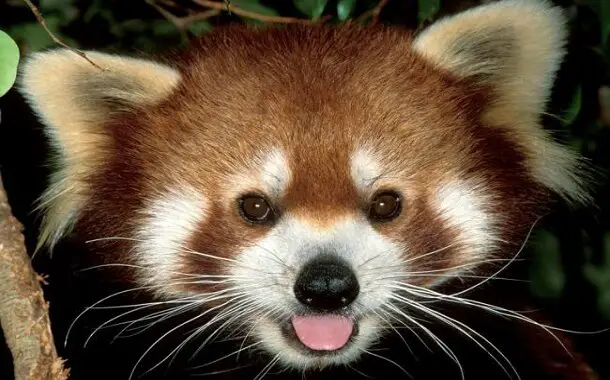
How Much Does A Red Panda Cost?
If you’ve ever seen how adorable red pandas are in one of the multitude of videos you can find all around the Internet, then you’ve surely wondered whether getting one as a pet is possible.
But if this thought stays with you and you’re really set on getting an exotic pet like this, then let’s find out how much a red panda costs and if you can even own one.
How Much Does A Red Panda Cost?
Being an endangered species, red pandas have only been sold on the black market, where the cost to purchase one can be anywhere between $2,500 and $5,000. Keep in mind that you should never buy a pet from the black market for many reasons, one of the most important ones being that this is illegal and can land you in prison.
You can still symbolically adopt a red panda from one of the NGOs fighting to protect them and conserve their habitat. The starting adoption price is usually somewhere around $50.
NOTE: There isn’t a store or place called the Black Market. Any good, service, or in this case, pet, bought illegally is bought from the black market. As red panda selling, buying, importing, or owning is illegal, you shouldn’t get one regardless of its origins.
How Much Does It Cost To Adopt a Red Panda?
As stated above, you can only adopt a red panda symbolically, through one of the NGOs or associations protecting these creatures. In most cases, the starting adoption package is priced at around $50.
But why aren’t you allowed to get a red panda?
This is because red pandas are considered an endangered species. Currently, there are less than 10,000 red pandas in the world, with the numbers still decreasing.
Reasons for Conservation of the Red Panda
The Red Panda is not only part of the family “Ailuridae” but it is also the only animal in this family. Red pandas are not related to the popular giant pandas in any way. This means that if there’s no red panda around, this family is gone completely. Red pandas are so unique, that there really isn’t an animal like it.
You might also like our articles on the cost of a shark, rhino, or gorilla.
Its absence would have such a big ecological impact that it would cause all kinds of problems aside from the sadness that comes from the loss of yet another type of creature.
Biologists do extensive research into the presence of red pandas to see the overall health levels of their habitat. Other species also benefit from the conservation of the natural habitat of the Red Panda. Among these are the Himalayan Black Bears as well as several types of birds. Red Pandas are balancing the ecosystem around them.
With the Red pandas going extinct, a lot of their natural predators will also be in danger. Furthermore, Red Pandas have bamboo as their main food source. Bamboo plants are known to overrun the forests they grow in if they aren’t controlled naturally by animals. This restricts the ability of other plants to develop in the forest.
Reasons Why You Shouldn’t Keep a Red Panda as a Pet
Although there are several videos on social media that portray different wild animals kept as pets or in captivity, the origin of these videos isn’t very clear. Although it’s sad to consider this, some of these animals are captured from their wild habitats while others are obtained illegally.
There are still some videos that show the actual life inside national zoos, wildlife sanctuaries, or rescue centers, where the animals have to be kept because they wouldn’t survive on their own in the wild. Although Red pandas caught on camera seem like they would be great pets in captivity, this is far from the truth.
 Not only is owning a Red Panda illegal, but keeping it will also be very detrimental to their overall health. A Red Panda isn’t a good pet to own as it is far worse than any cat or dog you’ve come across, regardless of how rambunctious they might have been. Keeping it in your home would be a really bad idea. These animals are known for their long claws that they usually use to climb trees, so they really aren’t made to live indoors.
You risk major damage to your home, belongings, and even family members if you keep an animal with such claws inside your home. The anal glands of these animals also release a smell that is unbearable. They will stink up your home whenever they feel threatened or even upset.
Even if they are happy, they will use the strong scent to mark their territory. As soon as you bring a Red Panda inside your home, it will consider the place its territory and will mark it in the same way as it would in the wild.
This problem isn’t solved by placing the animal inside a cage. You will have to provide the Red Panda with significant room for climbing and foraging, which means a pretty big enclosure. As soon as they feel trapped or confined in a space that isn’t big enough, they will release the strong scent as a way of warning you.
The Red Panda is also a great escape artist. YOu surely don’t want to find yourself chasing a wild animal around your home or worse, in your neighbor’s yard, while they’re expressing the anal glands freely.
The diet of a Red Panda is made of bamboo and fresh leaves, things that you might have trouble finding when you need if you need to feed the animal in captivity. Even if you get your hands on the occasional bamboo, it’s pretty much impossible to keep pace with this animal’s needs to keep it healthy and fed.
Most indoor environments are too warm for their coats. They also have no possibility of taking on normal behaviors like foraging and climbing. Although they can live to about 23 years in their natural environment, in captivity this number shortens drastically, due to them living an unhealthy, unhappy life.
They are also far from social creatures. They have a solitary life, aside from the breeding season when they look for other Red Pandas for breeding. So they have no need to be around humans or other animals.
Conclusion about this exotic pet
This article should have opened your eyes to the fact that it is illegal to purchase a red panda and the only people selling them are poachers, smugglers, and hunters. Buying, owning, selling, importing, or poaching for their fur can have legal repercussions so we are totally against this.
You can still symbolically adopt a red panda by contributing to an NGO that protects these creatures. Even if buying one would be legal, keeping a red panda as a pet would be a horrible experience. They would have a miserable life in captivity and make the life of their owner miserable as well.
stop chatting…red panda is nothing more and nothing less than a simple raccoon. That’s it. Who cares if only have 10k red pandas in the world? That too much raccons out there. Buy it if u like it, just care about yr pets if when they get old. Think before u buy it that any pet will consume yr time and u need care about they food and a good place to live. I prefer adopt a children instead of have a pet, bc we have a lot children in the world that needs more our loves that a simple pet.