ThePricer Media
  • Latest: When Is an Electric Car Actually Cheaper?
  • Cost Guides
  • News & Investigations
  • Daily Price Puzzle (60s)
  • Methodology
  • Press & Mentions
  • Contact
  • Click to open the search input field Click to open the search input field Search
  • Menu Menu
Medical Topics, Health & Beauty

How Much Does EVO ICL Cost?

Updated on September 13, 2026 | Written by Alec Pow
This article was researched using 14 sources. See our methodology and corrections policy.

EVO ICL surgery currently costs about $4,000 to $6,000 per eye at many U.S. refractive practices, or roughly $8,000 to $12,000 for both eyes. That planning range is supported by a published EVO package of $4,000 to $5,000 per eye that includes measurements, the lens, surgery, one year of postoperative care, an enhancement guarantee, and lifetime consultations, plus Beverly Hills EVO pricing of $5,000 to $6,000 per eye.

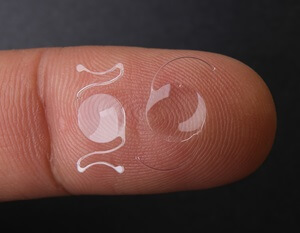
EVO ICL is an implantable collamer lens placed behind the iris and in front of the natural lens to correct myopia. The toric version also treats eligible patients with myopic astigmatism. Clinic packages cover different amounts of testing, facility care, surgery, and follow-up. Package scope matters.

Article Highlights

Jump to sections
  • Does EVO ICL Cost?
  • What Your Quote Should Include
  • Standard EVO vs Toric Pricing
  • Who EVO ICL Is For
  • EVO ICL vs LASIK Cost
  • FSA, HSA, and Financing
  • Long-Term Cost and Break-Even
★ Prefer ThePricer on Google
  • Plan around $4,000 to $6,000 (at $30 per hour, earning that amount would take about 3.3 to 5 full-time workweeks, before taxes) per eye, or $8,000 to $12,000 for both eyes.
  • A Michigan promotion charges $1,882 per eye, well below the broader examples reviewed.
  • One practice lists standard EVO at $4,595 and toric EVO at $4,995 per eye.
  • The FDA expanded the indicated age range to 21 through 60 in November 2025.
  • A contact-lens spending model reaches break-even near 13 to 20 years.
EVO ICL Cost

How Much Does EVO ICL Cost?

The current U.S. market has a wide spread because practices package the procedure differently. Beach Eye Care’s lens and surgery pricing places the lens itself at $500 to $1,500 (about 0.4 to 1.3 full-time workweeks at $30 per hour) per eye, puts total surgery at $4,000 to $7,500 per eye including exams, surgeon fees, and follow-up care, and describes EVO as self-pay care at that practice. That difference shows why the old article’s $1,000 to $1,500 lens figure cannot serve as the headline patient price.

Published price example Price per eye Scope
Khanna Vision Institute $4,000 to $5,000 Lens, surgery, measurements, one year of postoperative care, enhancement guarantee, lifetime consultations
Hamilton Eye Institute $5,000 to $6,000 Published EVO ICL surgical price
Beach Eye Care $4,000 to $7,500 Total surgery including exams, surgeon fees, and follow-up care

Those clinic prices are documented examples, not a statistically representative national sample. They place the ordinary planning conversation in the low-to-mid thousands per eye, while local promotions can sit well outside that band. For a two-eye procedure, doubling $4,000 to $6,000 gives a working budget of $8,000 to $12,000. The useful next step is to compare what each clinic includes rather than treating every per-eye number as the same product.

Related guides

  • How Much Does a Facelift Cost?
  • How Much Does Brachymetatarsia Surgery Cost?
  • How Much Does a Vasectomy Cost?

What Your Quote Should Include

An all-in EVO quote can cover much more than the implant. The Khanna package cited above includes pre-operative measurements, the EVO lens, surgery, one year of postoperative care, an enhancement guarantee, and lifetime consultations. A two-eye worked package using that published rate is calculated below.

  • Eye one package $4,000 to $5,000 (about 3.3 to 4.2 full-time workweeks at $30 per hour).
  • Eye two package $4,000 to $5,000.
  • Calculated bilateral total $8,000 to $10,000.
  • Named inclusions cover measurements, both lenses and procedures, stated follow-up care, the enhancement guarantee, and lifetime consultations.

A different practice may define the package differently. The published examples here show that a lens price can be separated from the surgical episode and that follow-up terms can vary. The Beach Eye Care figures cited earlier illustrate the size of that distinction because its lens-only estimate tops out at $1,500 per eye while its complete surgical range reaches $7,500 per eye. The gap can exceed the price of the device several times over.

Ask for one written estimate that names the services covered. If a clinic quotes $4,000 per eye and another quotes $5,000 per eye, the $1,000 difference may look decisive until one offer includes a year of follow-up and the other bills later visits separately. Check the pre-op examination, lens, surgeon, facility, medications, follow-up period, enhancement terms, and charges for removal or exchange if those services become necessary. That scope check protects against comparing a lens price with a complete surgery package.

Standard EVO vs Toric Pricing

At some practices, EVO Toric ICL carries a higher fee than standard EVO. Filutowski Eye Institute publishes standard and toric rates of $4,595 per eye for standard EVO ICL and $4,995 per eye for toric EVO ICL. The posted difference is $400 per eye. Two standard lenses total $9,190, while two toric lenses total $9,990.

ThePricer’s bilateral calculation puts the toric premium at $800 for two eyes at this provider. A mixed case with one standard lens and one toric lens would total $9,590. These figures are arithmetic based on one clinic’s current fee schedule, not a national toric surcharge.

Fraser Eye shows how far another pricing model can move. Its Fraser flat-rate offer is $1,882 per eye and includes pre-operative measurements, the procedure, surgeon and facility fees, and postoperative follow-up. Both eyes would cost $3,764 at that advertised rate. That is less than the price of one standard EVO eye at several other practices reviewed here, so it belongs in the article as a location-specific promotion rather than the baseline U.S. expectation.

Who EVO ICL Is For

EVO ICL is a phakic intraocular lens, meaning the eye’s natural crystalline lens stays in place. The implant sits behind the iris and in front of the natural lens. It adds optical correction without removing corneal tissue. The FDA EVO approval summary covers myopia, describes EVO Toric for eligible patients with myopic astigmatism, places the implant behind the iris and in front of the natural lens, and reports a 327-patient clinical study in which 75.9% of implanted eyes had 20/20 or better vision at six months.

EVO ICL Lens

The U.S. age indication changed recently. The FDA approved an FDA age expansion on November 14, 2025, moving the indicated range from ages 21 through 45 to ages 21 through 60. Candidacy still depends on the eye measurements, prescription history, and medical screening performed by the refractive surgeon.

The FDA indication does not include hyperopia or presbyopia. EVO corrects distance vision for myopia, so the surgical price should not be read as payment for every future focusing need. An older patient should not treat a $4,000 to $6,000 per-eye quote as a purchase that eliminates every future eyewear need.

EVO ICL vs LASIK Cost

LASIK is cheaper upfront on current national pricing. A 2026 2026 LASIK cost survey puts the U.S. average at $2,246 per eye. Against the $4,000 to $6,000 per-eye EVO planning range used here, EVO costs about $1,754 to $3,754 more per eye. Relative to the LASIK average, that is roughly 78% to 167% more upfront.

The comparison needs clinical boundaries. LASIK reshapes corneal tissue, while EVO adds a lens inside the eye and leaves the central corneal tissue unremoved. Candidacy is determined by the refractive examination and differs between procedures. Price should be compared only among options that remain medically appropriate for that person’s eyes.

A promotion can also erase the usual price gap. Fraser Eye’s previously cited offer charges the same $1,882 per eye for EVO ICL, LASIK, and PRK. That does not make those procedures interchangeable, but it proves that the EVO premium is not a fixed national device surcharge. Readers comparing laser-based options can also check the current SMILE Pro eye surgery cost before comparing packages with different technologies and follow-up terms.

FSA, HSA, and Financing

The manufacturer financing FAQ says EVO can be paid with FSA or HSA funds, advertises financing as low as $300 per month for about 24 months for qualified borrowers, and uses $600 per year as an example for popular daily disposable contacts. The financing illustration totals $7,200, so it does not fully fund a bilateral procedure priced at $8,000 to $12,000 unless another payment, different term, or different procedure price closes the gap.

The Beach Eye Care example cited earlier presents EVO as self-pay care at that practice. That does not establish every insurance plan’s benefits. Before using a tax-advantaged account or financing, ask the medical and vision plans for a benefit determination and compare that answer with the clinic’s written cash package.

The 2026 tax-account limits also changed from the old article. The IRS lists 2026 FSA and HSA limits of $3,400 for health FSA salary-reduction contributions, $4,400 for HSA self-only coverage, and $8,750 for HSA family coverage. HSA eligibility requires a qualifying high-deductible health plan and other federal conditions. Those amounts are contribution limits, not guaranteed discounts on surgery.

The account limits show how much of the low-end bilateral budget could be funded with one year’s new contributions. A $3,400 FSA limit equals 42.5% of an $8,000 surgery budget. A $4,400 self-only HSA limit equals 55%, while the $8,750 family limit is slightly above that low-end surgery figure. These comparisons describe contribution capacity, not tax savings or available account balances.

Long-Term Cost and Break-Even

The old claim that EVO automatically saves about $25,000 over a lifetime is too broad. Contact-lens spending depends on lens type, replacement schedule, insurance benefits, prescription, and how long the person would otherwise wear contacts. A more useful comparison starts with a disclosed annual contact-lens assumption and asks when recurring spending equals the one-time surgical budget.

The manufacturer’s FAQ cited earlier uses $600 per year for popular daily disposable contacts and $12,000 over 20 years. Using an EVO bilateral planning range of $8,000 to $12,000, dividing the surgery cost by $600 produces a simple break-even range of about 13.3 to 20 years. The $8,000 scenario reaches the contact-lens total after about 13 years and 4 months. The $12,000 scenario reaches it after 20 years.

This is a spending model, not a promise of savings. It leaves out routine eye care, financing interest, glasses that may still be needed, future reading glasses, contact-lens solution for products that require it, and any later eye procedure. EVO does not remove the need for ongoing eye-health checks. Readers budgeting beyond surgery can compare the cost of an eye exam without insurance separately rather than treating refractive surgery as lifetime eye care.

Risks, Follow-Up, and Quote Checks

The FDA’s FDA phakic lens risks say patients may need another eye operation to reposition, replace, or remove a phakic lens and list increased eye pressure, endothelial cell loss that can affect corneal clarity, cataract, retinal detachment, infection, inflammation, and visual symptoms. These risks do not mean the procedure is inappropriate for an eligible patient. They do mean a cheap quote should never be evaluated without surgeon qualifications, examination findings, follow-up care, and the plan for complications.

Postoperative coverage can change the value of two similar quotes. Ask how many visits are included, how long follow-up remains covered, and what happens if the lens needs repositioning or exchange. A $500 lower quote can lose that advantage if later visits or facility care are excluded. “Removable” still means another eye procedure is needed.

Makes sense if

  • Your refractive surgeon confirms that EVO fits your prescription and eye anatomy.
  • The quote states what testing, lens, facility, surgery, and follow-up care are included.
  • You compare EVO with refractive options that remain medically appropriate after examination.
  • You can fund the procedure without mistaking monthly financing for the surgical price.

Does not make sense if

  • The price shown covers only the implant but is presented as the complete bill.
  • The clinic markets standard U.S. EVO as a treatment for farsightedness or presbyopia.
  • The written quote omits follow-up and enhancement terms.
  • You assume future glasses or eye care will never be needed.

The Ocumetics Bionic Lens cost is not a like-for-like EVO comparison because the product has a different regulatory status.

Verification

  • Checked the professional EVO directions and confirmed that the EVO central port supports aqueous flow and removes the routine preoperative peripheral-iridotomy step associated with older non-EVO designs.
  • Confirmed the FDA post-approval study tracks continued safety and effectiveness after U.S. approval.
  • Cross-referenced Envue all-inclusive pricing of $4,500 per eye, including its stated lack of added charges for astigmatism, high prescriptions, or enhancements.

Answers to Common Questions

How much does EVO ICL cost for both eyes?

Using the current planning range, a bilateral budget is about $8,000 to $12,000. Promotions can be lower and some practices can be higher.

Does EVO ICL cost more than LASIK?

Often. The 2026 LASIK average is about $2,246 per eye, versus the EVO planning range of $4,000 to $6,000 per eye. Promotions can narrow the gap.

Does insurance pay for EVO ICL?

Coverage depends on the plan. One provider cited above presents EVO as self-pay care, while employer and vision benefits can differ. Ask for a benefit determination before surgery.

Can I use an HSA or FSA for EVO ICL?

Yes. For 2026, the health FSA limit is $3,400. HSA limits are $4,400 for self-only coverage and $8,750 for family coverage.

Does EVO ICL correct presbyopia or farsightedness?

Not under the standard U.S. FDA indication. EVO treats myopia, while EVO Toric also treats eligible patients with myopic astigmatism.

Disclosure: Educational content, not medical advice. Pricing varies by provider, location, and insurance. Confirm eligibility, coverage, and out-of-pocket costs with a licensed clinician and your insurer. See our methodology and corrections policy.

by Alec Pow
ThePricer cost research Independent price research used by media, universities and public institutions.

We research provider pricing, market examples, buyer reports, hidden fees and public records.

Methodology · Citations · Newsroom
© 2014 - 2026 - ThePricer Media, LLC, 4 Grove Street, New York, NY, 10014, Phone: (212) 431-2441
We don’t use affiliate links or paid placements. All sources are cited only for verification.
  • Link to X
  • Link to LinkedIn
  • Link to Facebook
  • Link to Instagram
  • Link to Pinterest
  • Link to Youtube
  • Contact Us
  • About Us
  • Press & Mentions
  • Careers
  • Meet the Founder
  • Privacy Policy
  • Editorial Ethics
  • Methodology
  • Corrections
  • Disclosure
  • Terms and Conditions
Scroll to top Scroll to top Scroll to top