How Much Does an Outboard Motor Cost?
Updated on | Written by Alec Pow
This article was researched using 11 sources. See our methodology and corrections policy.
A new outboard motor usually costs $1,000 to $4,500 for small portable models under 25 hp, $5,000 to $12,000 for many 40 to 115 hp motors, $15,000 to $20,000 for many 150 hp motors, and $25,000 to $45,000+ for large 250 to 400 hp offshore motors before rigging, propeller, installation, freight, tax, and dealer fees.
The installed price is the number that matters. A $15,500 outboard can become an $18,000 to $22,000 repower once controls, cables, gauges, prop, battery work, old-motor removal, engine prep, labor, and tax are added.
Outboard motor pricing is driven by horsepower, shaft length, steering type, throttle type, brand, controls, warranty, emissions system, rigging compatibility, and whether the motor is sold loose, dealer-prepped, or fully installed on the boat.
Article Highlights
Jump to sections
- Small portable outboards usually cost $1,000 to $4,500 (at $30 per hour, earning that amount would take about 0.8 to 3.8 full-time workweeks, before taxes).
- Midrange outboards from about 40 to 115 hp often cost $5,000 to $12,000.
- A 150 hp outboard commonly lands around $15,000 to $20,000 before full rigging and installation.
- Large 300 hp outboards can list around $30,000 to $36,000+, depending on controls, shaft length, color, and dealer pricing.
- Dealer prep alone can add about $490 to $560 on some online listings.
- Propellers, controls, gauges, steering, batteries, freight, installation, tax, and old-engine removal can add thousands.
- Evinrude is now mostly a used-market brand because BRP discontinued Evinrude E-TEC and E-TEC G2 production in 2020.

How Much Does an Outboard Motor Cost?
| Outboard size | Common new-motor price range | Common use |
|---|---|---|
| 2.5 to 6 hp | $900 to $2,000 (about 0.8 to 1.7 full-time workweeks at $30 per hour) | Inflatables, tenders, small jon boats, sailboat auxiliary use |
| 8 to 20 hp | $2,000 to $4,500 | Small fishing boats, utility boats, portable setups |
| 25 to 40 hp | $4,000 to $7,500 | Aluminum fishing boats, skiffs, small workboats |
| 50 to 90 hp | $7,000 to $12,000 | Pontoons, bay boats, larger aluminum boats, small center consoles |
| 115 to 150 hp | $12,000 to $20,000 | Runabouts, bass boats, center consoles, repowers |
| 175 to 250 hp | $18,000 to $30,000+ | Larger single-engine boats and twin-engine offshore setups |
| 300 to 400 hp | $28,000 to $45,000+ | Offshore boats, performance hulls, heavy center consoles |
Current dealer listings show the spread clearly. Boat Specialists listed a Mercury 150 hp outboard at $15,553, with a required $490 dealer engine prep fee. The same dealer listed a Yamaha 300 hp DEC outboard at $36,021, and Yamaha 300 hp scratch-and-dent examples around $29,994.
What You’re Actually Buying
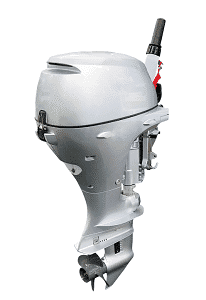
An outboard motor is a self-contained marine engine mounted on the stern of a boat. It provides propulsion, steering thrust, trim, and reverse through its lower unit and propeller. Unlike an inboard engine, an outboard sits outside the hull and can often be serviced or replaced without opening the boat structure.

The motor price may include the engine itself and little else. Some small portable motors are close to ready to use. Larger remote-steer outboards often need controls, cables, gauges, steering parts, harnesses, a propeller, a battery setup, mounting labor, and dealer inspection before the boat is usable.
The same horsepower can also come in different versions. A 150 hp outboard may have a 20-inch shaft, 25-inch shaft, mechanical controls, digital controls, counter-rotation, white paint, power steering integration, or a commercial-duty configuration. Those choices change the quote before the boat ever touches water.
Horsepower Is the Starting Point
Horsepower sets the broad price band, but it does not finish the quote. Shaft length has to match the transom. Steering and throttle systems have to match the boat. A propeller has to match the engine, hull, load, and target rpm range.
A dealer listing can make this easy to miss. Boat Specialists notes on a Yamaha 300 hp listing that the prop is not included and that a required $560 (about 2.3 full-time workdays at $30 per hour) dealer engine prep fee applies. Yamaha Canada also states that advertised pricing does not include items such as pre-rigging, title, licensing, insurance, registration, installation of added accessories, taxes, and other fees on its outboard pricing disclosure.
This is the main do-not-compare trap. A loose outboard price, a dealer-prepped outboard price, and a fully installed repower price are not the same number. A dealer quote that includes controls, prop, install, water test, and gauges can be a better deal than a lower engine-only price.
Small Portable Outboards
Small outboards from 2.5 to 20 hp are the easiest category to price because many are sold as portable motors. They are used on tenders, inflatables, small aluminum boats, canoes, sailboat auxiliary mounts, and light fishing boats.
The lower end still has choices. Manual start is cheaper than electric start. Short shaft is not interchangeable with long shaft on the wrong transom. A 20 hp portable motor may cost several times the price of a 2.5 hp motor because it needs more displacement, stronger lower-unit parts, and heavier mounting hardware.
Tohatsu’s product lineup shows why small motors and midrange motors should not be grouped together. Its current outboard range includes portable, midrange, and high-power models, with midrange models from 25 to 140 hp and high-power models up to 250 hp. A small portable motor is a different purchase from a 90 hp or 150 hp repower.
Midrange and 150 hp Repower Costs
The 90 to 150 hp range is where buyers often run into the installed-cost gap. These motors are common on pontoons, bass boats, bay boats, fish-and-ski boats, and smaller center consoles. They are too large to treat like portable equipment, so installation and rigging become part of the real budget.
A $15,553 Mercury 150 hp listing plus $490 dealer prep already reaches $16,043 before shipping, tax, controls, gauges, propeller, old-motor removal, installation, and any steering changes. Add $2,000 to $5,000 for a normal repower layer and the working budget moves toward $18,000 to $21,000+.
That is why repower quotes can feel high compared with online engine listings. The dealer is not only hanging an engine. The shop has to remove the old motor, inspect the transom, mount the new engine at the correct height, route controls and harnesses, install gauges, fit the prop, perform a test, validate warranty steps, and water-test the boat when needed.
Large Offshore Outboards
Large 250 to 400 hp outboards have higher equipment costs and more expensive mistakes. A 300 hp engine can be mechanical or digital, right-hand or counter-rotating, white or gray, and rigged for single, twin, or multi-engine setups. A twin-engine boat doubles many costs.
Mercury’s outboard listings at Boat Specialists show 400 hp Verado V10 examples above $42,000. At that level, even the accessories become expensive. Controls, display integration, steering, stainless props, batteries, and labor can move a large repower far beyond the engine price.
A high-horsepower outboard is also a hull decision. The boat has a maximum horsepower rating, transom weight limit, shaft requirement, and steering requirement. Exceeding those limits can create safety, insurance, warranty, and resale problems.
Electric Outboards and Trolling Motors Are Not Direct Substitutes
Electric outboards and trolling motors can be cheaper to run and easier to maintain, but they are not direct replacements for every gasoline outboard. A small electric motor can work well for a dinghy, pond boat, restricted lake, or sailboat auxiliary use. It may not replace a gasoline 90 hp or 150 hp motor for long runs, heavy loads, or offshore conditions.
The comparison has to include battery cost. A low-looking electric motor price can require one or more lithium batteries, a charger, wiring, battery box, and mounting work. For short-distance use, that can still make sense. For range-heavy use, gasoline remains the practical choice for many buyers.
Installation, Rigging, and Dealer Prep
Installation can be a few hundred dollars on a simple small-motor swap or several thousand dollars on a larger repower. The widest spread comes from controls, gauges, steering, wiring, old-engine removal, transom condition, and whether the new motor matches the old rigging.
Some dealers show this difference clearly. A 2026 Yamaha F300 repower listing from Sandpiper Marine priced the package at $29,900 and stated that the price includes controls, cables, key switch, Yamaha Command Link gauge, stainless prop, installation, and water test. That is not the same as an engine-only listing.
Ask whether the quote includes these items:
- Dealer engine prep or pre-delivery inspection
- Propeller, hub kit, and prop fitting
- Controls, key switch, cables, harnesses, and gauges
- Steering parts or hydraulic steering upgrades
- Old-motor removal and disposal or trade-in handling
- Freight, tax, title, registration, and water test
Maintenance Costs After Purchase
Outboard ownership continues after installation. Yamaha says basic maintenance includes changing engine and lower unit oils every 100 hours, flushing the engine, replacing fuel filters, preventing corrosion, and treating fuel. Mercury says a FourStroke’s first maintenance usually occurs at the 100-hour mark, including engine oil and oil filter service.
A small portable owner may spend less because the motor uses less oil and fewer parts. A large offshore owner may spend much more because the engine has more cylinders, larger filters, more fluids, more anodes, and higher labor cost. Twin engines double many maintenance items.
Winterization, fuel-system care, water-pump service, spark plugs, gear oil, anodes, thermostats, prop repair, and diagnostic labor can all enter the ownership budget. A cheap used motor can become expensive if the first season reveals compression, lower-unit, or fuel-injection problems.
Used Outboard Motor Prices
Used outboards can save money, but the discount should reflect age, hours, corrosion, compression, service records, lower-unit condition, control compatibility, and parts availability. A motor that starts on a hose is not automatically lake-ready.
Evinrude needs special context. BRP announced in 2020 that it would discontinue production of Evinrude E-TEC and E-TEC G2 outboard engines. Used Evinrude motors can still be bought and serviced in some markets, but they should not be treated like a current new-motor brand.
Before buying used, budget for a compression test, scan report where applicable, gear-oil check, water-pump inspection, prop inspection, and sea trial. If the seller will not allow inspection, the discount should be large enough to price in the risk.
Mini Cases: What Different Buyers Pay
Small fishing boat: A buyer chooses a $3,800 20 hp outboard and pays $200 for shipping or pickup costs and small setup items. The working total is about $4,000, assuming the boat already matches the shaft length and controls.
150 hp repower: A buyer starts with a $15,553 Mercury 150 hp outboard and adds $490 dealer prep, $900 for prop and rigging parts, $1,500 labor, and $1,200 tax and local fees. The total is about $19,643.
300 hp installed package: A buyer chooses a $29,900 installed Yamaha F300 package that includes controls, cables, key switch, gauge, stainless prop, install, and water test. With $2,100 in taxes or local charges, the working total is about $32,000.
Worked Example: The Real Cost of a 150 hp Outboard
Start with a new 150 hp outboard at $15,553. Add $490 for dealer engine prep, $600 for a propeller and hub kit, $700 for controls, harnesses, and gauge changes, $1,400 for removal and installation labor, and $1,250 for tax and registration-related charges.
The engine-only price was $15,553. The working installed total is $19,993. If the boat also needs hydraulic steering work, transom repair, a new battery, or major wiring cleanup, the same repower can move above $22,000.
When Paying for a New Outboard Makes Sense
Makes sense if:
- The boat hull is sound and worth repowering.
- The current motor is unreliable, underpowered, or expensive to repair.
- The new motor matches the boat’s horsepower rating, shaft length, and transom weight.
- The quote includes enough rigging detail to compare dealer offers fairly.
- You plan to keep the boat long enough to benefit from warranty and reliability.
Does not make sense if:
- The boat needs structural repair before it can safely carry the motor.
- The engine price looks good only because prop, controls, gauges, and installation are missing.
- The horsepower exceeds the boat’s capacity plate or insurance limits.
- A used motor has no compression numbers, service records, or sea-trial option.
- The repower cost approaches the value of a better boat already fitted with a good motor.
How to Avoid Paying for the Wrong Motor
Match the motor to the boat before shopping by price. Check the boat’s capacity plate, shaft length, steering setup, control type, fuel system, transom condition, and current rigging. A motor that is cheap because it has the wrong shaft length is not cheap.
Get two quotes when possible: one for the engine only and one for the installed package. The installed package should list prep, prop, controls, gauges, harnesses, labor, freight, tax, and water test. That makes dealer quotes easier to compare.
Used buyers should insist on proof. Compression numbers, engine hours, service history, diagnostic printouts, lower-unit oil condition, and a cold start reveal more than polished paint.
What We Checked
- Checked current 150 hp pricing through a Mercury 150 hp dealer listing, which showed $15,553 and a required $490 dealer prep fee.
- Confirmed large-engine pricing through a Yamaha 300 hp listing, which showed a sale price of $36,021.
- Cross-referenced installed package pricing through Sandpiper Marine’s Yamaha F300 listing, which stated that $29,900 included controls, cables, gauge, stainless prop, installation, and water test.
- Verified advertised-price exclusions through Yamaha Canada’s disclosure, which says outboard advertised prices do not include pre-rigging, taxes, registration, installation of added accessories, or other fees.
- Confirmed Evinrude’s current-brand status through BRP’s 2020 announcement that it would discontinue Evinrude E-TEC and E-TEC G2 outboard production.
Related Boat Costs
A repower often exposes other boat expenses. If the hull needs cosmetic or structural work, fiberglass boat repair costs can change the decision. Older seats and panels may also need work once a boat is being upgraded, which makes boat upholstery repair pricing worth checking. Buyers comparing propulsion styles may also look at airboat costs, where the engine and hull setup are very different from a standard outboard boat.
Outboard Motor Cost FAQ
How much does a 150 hp outboard motor cost?
A new 150 hp outboard often costs $15,000 to $20,000 before full rigging, propeller, tax, and installation.
How much does a 300 hp outboard cost?
Many 300 hp outboards cost $28,000 to $36,000+, depending on brand, controls, shaft length, color, and dealer pricing.
How much does outboard installation cost?
Simple installation can be under $1,000, but larger repowers with rigging, controls, gauges, prop, and old-motor removal can add $2,000 to $5,000+.
Does an outboard motor come with a propeller?
Not always. Many larger outboard listings exclude the propeller because the correct prop depends on the boat, load, and target rpm.
Is a used outboard motor worth buying?
It can be worth buying if compression, hours, lower unit, service records, and sea-trial results are strong. A cheap used motor with unknown history can become expensive quickly.
Disclosure: Educational content, not financial advice. Prices reflect public information as of the dates cited and can change. Confirm current rates, fees, taxes, and terms with official sources before purchasing. See our methodology and corrections policy.