
How Much Does Remote Starter Installation Cost?
Last Updated on July 17, 2023
Written by CPA Alec Pow | Content Reviewed by  CFA Alexander Popinker
The greatest invention after the internal combustion engine is the remote start of the engine. Especially in winter, on blizzards, snow, frost, etc. but also in summer, when the asphalt melts.
Starting the engine remotely is a function of comfort first of all and secondly, a function of maintenance and prevention for the good operation of the engine and the avoidance of unpleasant situations that involve towing/car shop specialists and additional expenses. The feature is available for a large number of car models, but some models remain limited, enabling only the manufacturer to activate this feature. Also, for older models, the configurations are no longer done considering that it is not worth investing in older models because the costs are not justified.
The remote engine start function allows users to start the engine before reaching the car to bring the temperature in the passenger compartment to a comfortable level. This is useful in both cold and warm seasons. The function can be limited by a time interval – for example, 20 minutes, so as not to forget the engine running in case you have changed your program.
How Much Does a Remote Starter Installation Cost?
The overall cost of a remote starter installation is anywhere between $150 and $420, and this includes installation and starter costs. The price of a remote starter is influenced by a few factors such as the age, the model of your vehicle, and the features of the remote starter.
When talking about the cost of remote starter installation it will depend on the car’s setup, the type, and the mechanic you choose to go to. Just for the starter, you will have to pay anywhere between $60 and $210, and for the installation another $85 to $160.
For the most basic remote starter, which will only start, lock, and unlock your vehicle, you will have to pay anywhere between $60 and $80. These estimates are only for the car remote, without including the installation costs.
For the remote starter that comes with a car alarm and keyless entry, expect to pay anywhere between $75 and $130.
Be prepared to pay anywhere between $140 and $190 for a car remote starter that has an alarm, keyless entry, and security system pager. With the help of this system installed, you will know if the trunk or a door is opened, if the windows are opened, if the car is running, and a lot more. You will get all of this information from up to 2500 feet away.
Expect to pay around $410 for the best remote starters on the market which will notify you when the car engine has been turned on and will also help you with turning on the lights. Also, these starters will set customized timers, turn on the defroster, and a lot more.
You might also like our articles about the cost of a car keyless entry installation, garage door opener installation, or the cost of programming a key fob.
You can find car starters for a wide variety of vehicles such as Toyota, Hyundai, Volkswagen, Buick, or Ford, that range in price from $55 to $130 at many car part stores.
For instance, the price of the highly-rated Bulldog RS1100 remote starter is $70 to $85. This starter can be easily installed, has a range of up to 400 feet, and comes with a 4-button transmitter, plus dedicated start/stop buttons.
In the table below you will find some price estimates for one remote starter and the installation of a remote start, depending on the car make and model.
| Model | Total with Installation |
|---|---|
| Toyota Corolla | $275 to $450 |
| Toyota Camry | $275 to $500 |
| Honda CR-V | $225 to $450 |
| Honda Civic | $225 to $375 |
| Ford Fusion | $200 to $400 |
| Ford Focus | $175 to $325 |
| Ford F-Series | $225 to $450 |
| Chevrolet Silverado | $225 to $425 |
In the table below you will find the average costs just for the installation, charged by some well-known companies.
| Company | The average for JUST The Installation |
|---|---|
| Ziebart | $250 to $450 |
| Walmart | $115 to $350 |
| Pep Boys | $200 to $400 |
| Midas | $180 to $400 |
| Best Buy | FREE (with promotion) to $200+ |
What should be included in these price estimates?
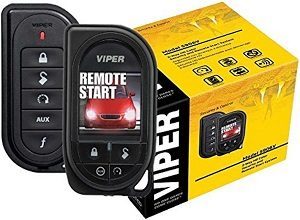 The only thing that will be included is the actual remote starter kit, but it depends on the company you choose. There are companies that will include the basic installation costs as well, like the Viper remote, but it rarely happens.
Most new remote starters come with two key fobs.
The characteristics of remote staters will vary as there are models that will only start the engine, while others may also include a keyless entry, window defrost, a trunk release, and heated seats.
The majority of remote starters will come with a kind of limited warranty.
The control module will be mounted and the wires will be connected to the starter, door locks, and lights during the professional installation process. Then will be a keyless entry installed so you will be able to unlock the doors. Also, an alarm will be installed as well, if included.
What are the extra costs?
The installation will be an extra cost in case you purchase a remote starter from a company like Commando. You can ask for installation instructions, but it is recommended to go to a professional. For example, the Car Tunes company will install the remote starter for $55 to $110. In case you buy the remote starter from them you have free installation.
In case you lose your key fob, then you will have to pay an extra fee to buy a new one or to replace it.
If you are thinking about how much it costs to uninstall the remote stater, then you should know that you will have to pay the same amount as you did for the installation.
If the remoter stater fails and has to be repaired you will have to pay an additional price. This job can be done by a technician or by a third-party vendor.
Important things when you install a remote start
Before buying a remote stater make sure it will work with the make and model of your car.
In case you have the remote start system installed at a third-party company make sure it is an authorized dealer.
The majority of manual transmission cars require a push of the clutch in order to start the engine, so the remote starters will not work with these vehicles.
You may also want to install an alarm when installing a remote starter system. This way you will be able to save on an alarm.
Top brands to take into consideration
- Viper
- Astra
- Python
- Bulldog
How can I save money on a remote start installation?
Keep an eye out for promotions and sales available from time to time at the majority of the stores.
Buy a remote starter with the basic features as you will not need all the extra characteristics all the time.
Take into consideration the age of the car as on older cars it will not be worth installing remote starters.
It would be a good idea to install the remote starter on your own as there are many online tutorials that will tell you everything you need to know about the installation process.
The benefits of a remote car starter
- Engine heating – It is the first benefit but a long-term benefit. Heating the engine components before departure ensures slow wear over time, automatically low repair costs, and engine reliability and functionality throughout the period of use.
- Thermal comfort in the passenger compartment – This is the main reason why people have a remote starter installed. You can start the vehicle 10-15 minutes before, warm up your car before going in, and go to work immediately, both in summer and especially in winter. The principle of climate operation in most car models is the following – the climate starts on the settings that were when the engine stopped and thus reaches the level of comfort in the passenger compartment.
- Defrosting windows – In the cold season, the remote start ensures the heating of the windows in a few minutes, which comes with 3 benefits:
- You don’t waste time cleaning the frozen windows.
- The heated windshield ensures the wipers come off, and eliminates the rupture of frozen slides or damage to wipers.
- For autos that have frameless windows at the front doors, heating considerably reduces the chances of damage to the system of lifting/closing the door windows.
- Battery charging – Advanced remote systems, with machine parameter monitoring, allow battery voltage checks, and you can set them if you want to start the engine to automatically charge the battery when it drops below 11V. These starters are designed to help you and save you from an unexpected surprise of a discharged battery due to which you can no longer leave by car.
Final words
In conclusion, a remote starter works with the push of a button and saves you from a lot of inconveniences when it is very cold, or very hot outside. It is an investment for your own comfort that proves to be more useful than you would expect.

Leave a Reply
Want to join the discussion?Feel free to contribute!