
How Much Does Sebaceous Cyst Removal Cost?
Last Updated on December 27, 2023
Written by CPA Alec Pow | Content Reviewed by  CFA Alexander Popinker
Skin tumor formations and their treatment have been a real health problem with the alarming increase in incidence in recent decades. Prolonged sun exposure, genetic inheritance, unhealthy eating, and stress are considered some of the most important triggers for the appearance and development of these tumors.
A sebaceous cyst is a type of cyst, located under the skin. It is located anywhere on the body, but mainly on the scalp, face, trunk, and genitals (scrotum, lips), and can occur on any type of skin surface. The cause of its appearance is the blockage of the evacuation canal of the sebaceous gland, most often by the keratin in the skin.
This leads to the accumulation of sebum – with a characteristic appearance and smell- in a sac-shaped shell, which gradually increases in size. Over time, the increase in volume or other traumas, lead to cracking of the sac and infection of the contents, which turns into a painful abscess, more difficult to treat with the possibility of leaving scars.
How much does sebaceous cyst removal cost?
The cost of removing one sebaceous cyst can go from $160 up to $370 without health insurance can cost, depending on the location and size of the individual’s affected areas. While this price range is certainly expensive for someone who cannot afford it, there are other options available if one decides not to go with surgery to remove a cyst.
Before your doctor can say whether or not you have a cyst, you have to take into consideration the cost of an office visit. The initial consultation may not include any tests, which can be somewhere between $85 and $170, but this may vary depending on the provider you go to.
You might also like our articles about the cost of acne treatments, keloid removal, or mole removal.
If you have health insurance, you can talk with your provider to see if a procedure like this one is covered or if you met your deductible. If it’s covered, the costs will be quite low since you’re responsible for only the deductible and/or copay fees. It is important to know that insurance companies won’t do any procedures unless the doctor deems them medically necessary.
Dr. David Hansen said that the cost of the initial visit is around $90 and the surgical procedure can be anywhere from $185 to $360 depending on factors like size or location.
On SteadyHealth.com forum members said they had paid an average cost of $210 for the surgical removal of a single cyst at their local doctor’s office, and up to $1,550 for multiple cysts removed in one surgery.
The sebaceous cyst removal procedure
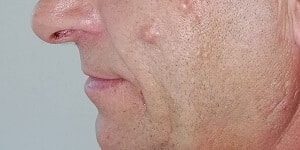 A diagnosis is performed on the location of the cyst by the doctor, whether he is a plastic surgeon or a dermatologist. This happens before any surgery or incision to confirm it, as there are different types of cysts. This usually involves visually inspecting the area in question and asking relevant questions about how it has been acting, what other symptoms have occurred recently, etc.
The cyst removal is a medical procedure and consists of excision and suturing of the skin, the intervention being carried out with local anesthesia. The removal of the sutures is done at 7 days in case of lesions from the facial region and at 14 days for the rest of the localizations. Proper excision involves the complete removal of the skin cyst, thus avoiding the risk of recurrence.
Removing a sebaceous cyst that is already infected is much more difficult than simply excising the uninfected cyst. In the infected form, connections are established between the gland and the surrounding cellular tissue, making it much more difficult to excise completely.
The board-certified doctor should let you drive home after the appointment as long as they have used local anesthetic.
After the cyst has been removed, all excised formations are examined under a microscope (biopsy examination), although most of them are benign.
What are the extra costs?
In order for the surgery to heal as fast as possible, the doctor may prescribe medicine. Also if there was an infection, medical treatment is necessary.
Important things to consider about the sebaceous cyst treatment cost
If left untreated, the cyst will grow larger, cause pain and discomfort, and may even become infected with bacteria. If this were to happen, it’s so important to see a doctor in order to prevent the situation from getting worse. Even if they aren’t causing problems right now, these cysts won’t go away on their own; rather than occurring spontaneously as most people think (even though that’s technically impossible), they’ll continue growing until rupturing.
If you want to know how much the cost of sebaceous cyst removal is, ask for an insurance code beforehand and check with your insurer. They should be able to let you know as the costs depend on your insurance and how much it would set back in out-of-pocket expenses, as some companies refuse to pay because sebaceous cysts can be considered non-essential or cosmetic procedures.
Treatment options to avoid cyst removal surgery
Common types of cysts are not associated with risks of developing complications and can even withdraw or shrink. But in most cases, sebaceous cysts are harmless and grow slowly.
Patients may resort to various methods of treatment for aesthetic reasons, as cysts cause discomfort or if there is a risk of infection.
Steroid injections
When the cyst begins to become inflamed, steroid injections underneath the skin may be given to help reduce it and reduce inflammation. In some cases, swelling may recede but, if this method does not work, other more invasive techniques are recommended.
Drainage
Drainage involves removing fluid from the inside of the cyst, especially recommended when signs of inflammation and pain appear. This procedure costs less and can ensure that the cyst is reduced, but does not guarantee that the substance will not accumulate again in the already-formed cavity, which will not be removed. Prior to the procedure, antibiotic administration may be recommended to reduce inflammation or possible infection. If you are too sensitive
How do you prevent the cost of sebaceous cysts removal?
The best way to prevent the formation of a sebaceous cyst is to prevent blockage of the sebaceous glands by respecting the best possible hygiene. People who are dealing with problems such as pimples and excess sebum are more prone to the formation of these unsightly swellings, as well as those who sweat a lot.
In such situations, it is recommended to take showers after intense physical activity and on hot days, as well as to avoid the accumulation of sebum and perspiration on the skin. These people should also consider the use of special care products that do not contain oils or other substances that may help block pores. Occasionally, exfoliation can also be used to remove layers of dead cells and sebum and clean the skin well.
Clothing can also help cover the pores and sebaceous glands, with very tight cut or thick materials, which do not allow the skin to breathe. Therefore, a good way to prevent such cysts is by avoiding these types of clothes.
A sebaceous cyst looks like a pimple under the skin that, although most of the time does not mark a serious condition, can cause some discomfort. Sometimes it can withdraw on its own, but other times there is a risk of it continuing to grow, become inflamed and even become infected. Never try to treat such a cyst at home, have it removed by a dermatologist and follow his treatment recommendations.

Leave a Reply
Want to join the discussion?Feel free to contribute!